explainers
How Russia’s children’s rights commissioners went from protecting orphans to deporting kids
Source: Meduza
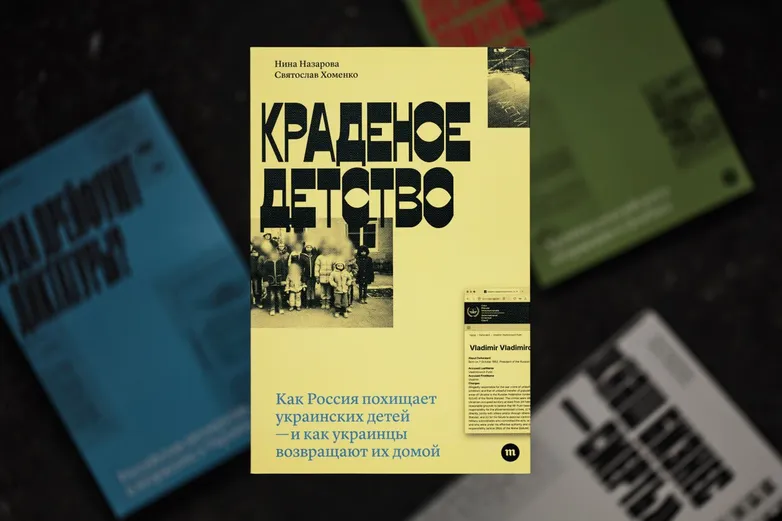
The post of Russian presidential commissioner for children’s rights is relatively new: It was created in 2009. Only four people have held it since. In their book “Stolen Youth: How Russia Kidnaps Ukrainian Children — And How Ukrainians Get Them Back,” published by Meduza, journalists Nina Nazarova and Sviatoslav Khomenko say that by the time the current commissioner, Maria Lvova-Belova, was appointed, the office “had already been firmly associated with defending conservative values and supporting Kremlin policies for more than a decade.”
The officials tasked with protecting children’s rights were largely busy doing something else: endorsing forced marriages of minors in Chechnya, illegally removing Ukrainian children from their homeland, and trying to strip women of the right to abortion. Here is a brief look at everyone who has served as Russia’s children’s ombudsman.
To learn more about how Russian authorities ensure that Ukrainian children can’t or won’t return home from Russia, or make them unwilling to do so, please buy Nina Nazarova and Sviatoslav Khomenko’s book. We published it jointly with the StraightForward Foundation, which helps produce uncensored nonfiction about Russia.
Alexey Golovan
Children’s ombudsman from September 1 to December 26, 2009
Before his appointment
Alexey Golovan trained as an engineering physicist before retraining as a social worker in 1993 and later as a lawyer. He began doing social work long before qualifying: From 1989 to 1991, he worked as an inspector at a public guardianship and custody bureau. He then worked at the Lenin Soviet Children’s Fund, helping children in state institutions for orphans and children without parental care. In 1991, he founded the charitable center Souchastiye v Sudbe. When Russia introduced regional children’s ombudsmen in 2002, Golovan was the first to hold such a post.
Mikhail Klimentyev / TASS / Profimedia
In office
President Dmitry Medvedev created the post of Russian presidential commissioner for children’s rights on September 1, 2009, and appointed Golovan. The human rights advocate, who had spent years defending orphans’ housing, property, and other rights, resigned just four months later “of his own accord.” Golovan’s colleagues called the resignation “a step he was forced to take.”
How people reacted to his resignation
Ella Pamfilova, then chair of the Presidential Human Rights Council: “The news caught me off guard. It’s not just bewildering — it’s shocking. I can’t even imagine what made him submit his resignation.”
Tatyana Tulchinskaya, director of the Here and Now foundation, which helps orphans: “I’m completely at a loss. I saw nothing to suggest this was coming: Alexey Golovan had a clear approach to his work and a lot of plans. […] Usually, ‘of his own accord’ means someone doesn’t want to air their dirty laundry, but perhaps there really were personal reasons I don’t know about. The news is unexpected — I can’t think of anyone more professional or better suited to the job than Alexey Golovan.”
Lyudmila Alexeyeva, chair of the Moscow Helsinki Group: “Golovan was doing his job and wanted to keep doing it. Replacing him makes no sense at all. Clearly, this was done under pressure.”
The former ombudsman still refuses to comment on his resignation.
What he does now
Golovan returned to helping individuals and working at Souchastiye v Sudbe, which he still heads. In 2012, he joined the Moscow Helsinki Group, which the Moscow City Court ordered dissolved in 2023.
Pavel Astakhov
Children’s ombudsman from 2009 to 2016
Before his appointment
Astakhov began practicing law in 1991. His clients included Valentina Solovyova, founder of the Vlastilina pyramid scheme, Media-Most and NTV head Vladimir Gusinsky, and many entertainment stars. For several years, he hosted the popular television show “Chas suda” (“Court Hour”). He also hosted “Tri ugla s Pavlom Astakhovym” (“Three Angles with Pavel Astakhov”) and “Delo Astakhova” (“Astakhov’s Case”). He wrote a series of detective novels about a lawyer named Artyom Pavlov. He was one of the leaders of the For Putin movement.
Anton Novoderezhkin / TASS / Profimedia
In office
During his first year and a half in office, Astakhov frequently traveled to inspect orphanages. By his own account, he personally visited 1,248 institutions. At the time, reports of accidents involving children and incidents at orphanages appeared on his website almost daily. He also established a children’s ombudsman post in every region.
During Astakhov’s tenure, Russia passed a law banning foreigners from adopting orphans (the measure was seen as a response to the U.S. “Magnitsky list”). Astakhov also supported one of Russia’s first criminal investigations into “rehabilitation of Nazism,” which targeted a 16-year-old over social media posts.
Once, when asked about the forced marriage of a 17-year-old girl to a 47-year-old man in Chechnya, he publicly said he saw nothing wrong with it: “There are places [in our country] where women are already wrinkled at 27.”
Another widely remembered remark by Astakhov was: “So, how was your swim?” He put the question to teenagers who had survived a tragedy on Lake Syamozero in Karelia, where 14 children drowned in a storm. After that, a petition demanding his resignation appeared on Change.org. He responded by calling his critics “stupid and blind” and claiming that pedophiles wanted him to resign.
What he does now
In 2016, Astakhov returned to practicing law. He also hosts “Prostye chudesa” (“Simple Miracles”) on the Orthodox Christian television channel Spas.
In 2023, Astakhov released the propaganda film “S chego nachinayetsya Rodina” (“Where the Motherland Begins”), in which he harshly criticized Ukraine’s education system. It was followed by the documentary “Chudo na fronte, ili V okopakh ateistov net” (“A Miracle at the Front, or There Are No Atheists in the Trenches”), in which people who fought in what Russia calls its ”special military operation” recount their spiritual revelations.
In June 2026, all European Union member states imposed sanctions on Astakhov.
Anna Kuznetsova
Children’s ombudsman from 2016 to 2021
Before her appointment
Anna Kuznetsova, a Penza native, priest’s wife, and mother of seven, founded the nonprofit Blagovest (dissolved in 2020) and the Pokrov foundation (which she headed until 2016). Both specialized in helping orphans, low-income families, and large families. At Blagovest, Kuznetsova also provided pre-abortion counseling. In 2014, she joined the All-Russia People’s Front and became head of the Penza branch of Mothers of Russia.
In 2016, she was elected to Russia’s seventh State Duma on United Russia’s nationwide party list but declined her seat immediately after the election.
Vladimir Gerdo / TASS / Profimedia
In office
Kuznetsova is an outspoken opponent of abortion and a proponent of the pseudoscientific theory of telegony. As children’s ombudsman, she championed “traditional values,” calling in particular for restrictions on the sale of abortion medications, tougher penalties for pedophiles, and “prescreening of information” on the internet. Kuznetsova urged Russian schools to introduce “Family Studies” courses (such classes were later introduced). She also demanded bans on certain children’s books and proposed that Vladimir Putin change United Russia’s logo by adding “a mother, children, and bear cubs” alongside the bear.
What she does now
In 2021, Kuznetsova was relieved of her post after deciding to run for the State Duma again. She is now a deputy speaker of the Duma. In 2023, Kuznetsova co-authored a bill introducing criminal penalties for justifying and promoting extremism. After Russia’s full-scale invasion of Ukraine began, she claimed that Coca-Cola had been buying Ukrainian children for their organs.
She is under sanctions imposed by all European Union member states, Canada, and the United States.
Maria Lvova-Belova
Children’s ombudsman since 2021
Before her appointment
Lvova-Belova helped orphans at Blagovest in Penza alongside her friend Anna Kuznetsova, the former children’s ombudsman. In 2014, she founded Kvartal Lui there, a rehabilitation center that prepared young people with disabilities leaving orphanages to live independently. She later opened a residential home for young people with severe disabilities, then began building an entire residential neighborhood in Penza for orphans with disabilities.
In 2016, Kuznetsova became Russia’s children’s rights commissioner. According to the news outlet Verstka, starting that year, “Lvova-Belova’s career took off, and state funding for her projects rose sharply.” Also that year, the Russian Orthodox Church awarded her the Order of the Holy Equal-to-the-Apostles Grand Prince Vladimir, Third Class. The following year, she joined Russia’s federal Civic Chamber.
Sergei Karpukhin / TASS / Profimedia
In 2018, Lvova-Belova became one of Vladimir Putin’s official campaign proxies in the presidential election. In 2019, she ran for the Penza City Duma as a United Russia candidate but declined her seat after winning. She nevertheless soon secured a seat in the Federation Council representing the Penza region.
In office
In March 2022, Lvova-Belova first indicated that Ukrainian children removed from Russian-occupied territories would be placed in the care of Russian families. She said that Vladimir Putin had “unconditionally supported” the decision and told her to “act in the children’s interests.”
Lvova-Belova’s statement drew a sharp protest from Kyiv. “The forcible transfer of civilians, particularly children, to the aggressor state bears the hallmarks of abduction,” Ukraine’s Foreign Ministry said. “Such actions are a gross violation of international law.”
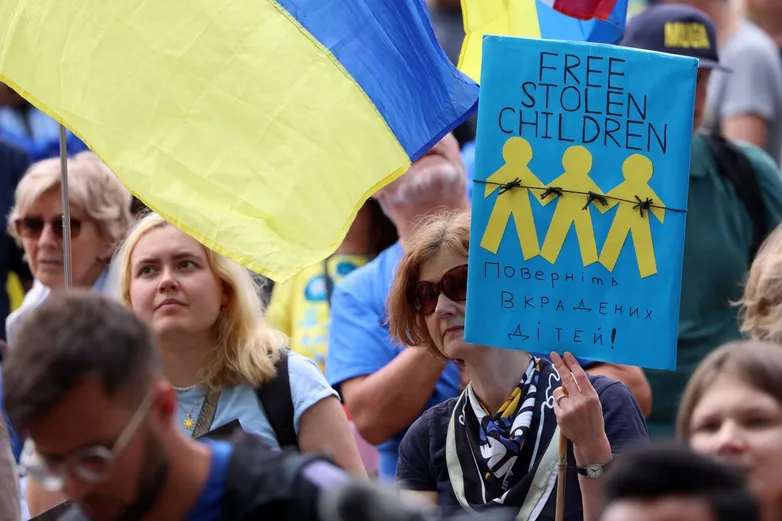
In the first year of Russia’s full-scale invasion of Ukraine alone, at least 6,000 Ukrainian children were taken to Russia and annexed Crimea in what Russian authorities called an “evacuation.” Journalists at TV Rain found that at least 400 children ended up in Russian orphanages and boarding schools, where they were forced to watch Russian Defense Ministry briefings about the “elimination of Nazis.”
In 2022, Lvova-Belova herself adopted a teenager from Mariupol, even though he had legal guardians in Ukraine at the time. The boy was granted Russian citizenship through an expedited process.
On March 17, 2023, the International Criminal Court in The Hague issued an arrest warrant for Lvova-Belova on the grounds that she was allegedly responsible for the war crime of unlawfully deporting children. Yale researchers had previously called Lvova-Belova a key figure responsible for forcibly removing children from Ukraine. Ukrainska Pravda also calls her the “chief overseer” of this process.
In 2024, she divorced her first husband and married Orthodox Christian billionaire Konstantin Malofeyev, whose money, according to Ukraine, the European Union, the United States, and Canada, helped start the war in Ukraine in 2014.
In 2026, Lvova-Belova became one of the top five candidates on United Russia’s federal list for the State Duma election. Dmitry Medvedev selected the five candidates to be the party’s public face in the election.
Meanwhile, Russia gradually began returning Ukrainian children to their families. In “Kradenoye detstvo,” journalists Nina Nazarova and Svyatoslav Khomenko say Lvova-Belova maintains that she had not planned to keep the children in Russia and “continues to insist that Russia never obstructs family reunification.”