
stories
Andrey Chibis spent seven years consolidating power in Russia’s Arctic Murmansk region. Now the Kremlin loyalist is in police custody on charges of funneling public money abroad.
Source: Meduza
stories
Andrey Chibis spent seven years consolidating power in Russia’s Arctic Murmansk region. Now the Kremlin loyalist is in police custody on charges of funneling public money abroad.
Source: Meduza

Murmansk Governor Andrey Chibis attends a Federation Council roundtable in Moscow in 2026.
Andrey Chibis’ VKontakte page
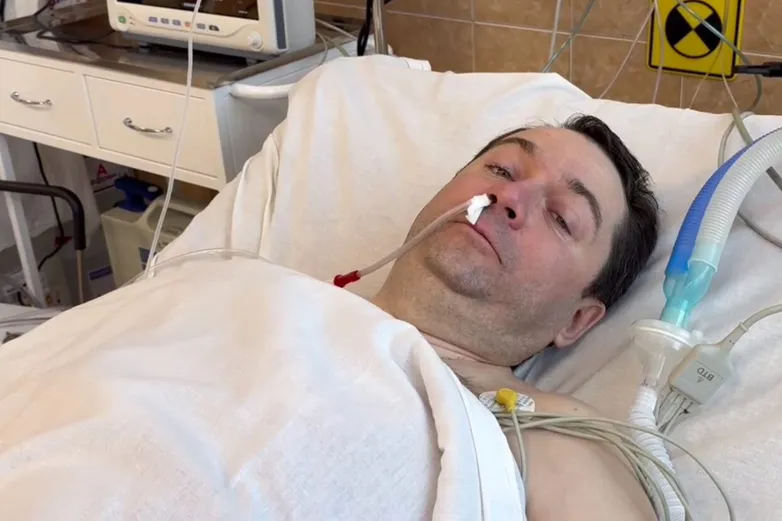
On November 23, police detained Murmansk Governor Andrey Chibis as he stepped off the plane at Moscow’s Sheremetyevo Airport. He had flown to Moscow on official business. Authorities opened a criminal case against him on suspicion of fraud and embezzlement, making him the first sitting governor to face criminal proceedings since the war began. Chibis took charge of the Murmansk region in 2019 and was reelected in 2024. Over the past several months, law enforcement has repeatedly opened criminal investigations into key members of his team. Meduza tells the story of Andrey Chibis, a bureaucrat who developed a taste for publicity and came up with the slogan “Na Severe zhit!” (“Live in the North!”).
In late November, Chibis became a suspect in a case involving fraud, embezzlement, and the transfer of public funds earmarked for rebuilding the Apatity-Kirovsk highway abroad. He was also charged with fraud in connection with the construction of a center for gifted children and young people. The central office of Russia’s Interior Ministry is handling the case.
Chibis ran the region for more than seven years and became the first sitting governor to be detained since the war began.
Authorities began opening criminal cases against members of the governor’s inner circle in the spring. That was when Ashot Bablumyan, the former head of the region’s Moscow office, and Oganes Shankoyan, a businessman close to him, were arrested. Their cases involved the construction sector: both were suspected of embezzling funds and moving the money to Kyrgyzstan. Investigators have now accused Chibis of the same offenses.
In July, law enforcement officers arrested Dmitry Ignatov, the former head of the regional road agency Murmanskavtodor. In late October, they arrested Andranik Musatyan, the director of the Murmansk water utility Vodokanal and a close associate of the governor. RBC reported that Musatyan was the one who gave a statement implicating Chibis.
A source who works with the presidential envoy’s office in the Northwestern Federal District told Meduza that the governor’s arrest was “no surprise” to him or his colleagues. “They’d been closing in on him for a while. They held off during the State Duma campaign because he was heading United Russia’s [regional] slate. Once the voting was over, they could go after him,” he said.
Chibis became head of the Murmansk region in 2019; before that, he was a deputy construction minister. At the time, the Kremlin’s domestic policy team was promoting the idea of “technocrat governors” — career officials without political ambitions who take jobs running regional governments.
Chibis fit that profile. In the early 2000s, he earned a law degree and then worked as a lawyer for Georgy Shpak, a candidate for governor of the Ryazan region. After Shpak won, Chibis began his career in government, first in the Ryazan region and then in his native Chuvashia.
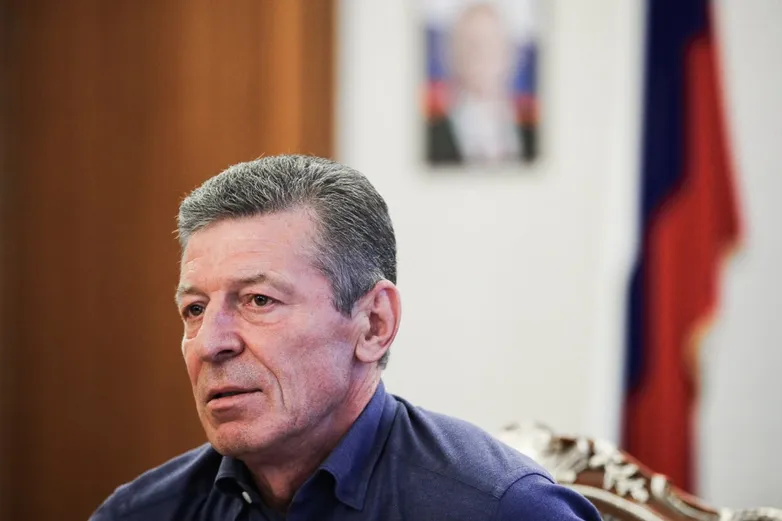
In 2006, Chibis moved to the federal government to head a department at the Regional Development Ministry. In 2007, he got a new boss: incoming minister Dmitry Kozak, a member of Vladimir Putin’s inner circle.
After Kozak became deputy prime minister in 2008, Chibis took over Russian Communal Systems, a company in oligarch Viktor Vekselberg’s Renova group. In 2009, Alexander Kharichev, by then a former Presidential Administration official, joined the same company. (Kharichev is now considered one of the closest allies of Sergey Kiriyenko, who heads the Kremlin’s domestic policy team, and runs the Presidential Administration’s Directorate for Social Analysis and Monitoring.)
Chibis returned to government in 2013 as deputy construction minister and chief housing inspector. The ministry was overseen by Deputy Prime Minister Dmitry Kozak.
Like many other relatively young officials, Chibis took professional development courses at the Russian Presidential Academy of National Economy and Public Administration. The training program became known as the “school for governors” and was closely associated with a new generation of “young technocrats” who went on to lead Russia’s regions. In 2019, Chibis became governor of the Murmansk region.
Other graduates of the “school” became governors before Chibis. Alexander Tsybulsky and Stanislav Voskresensky, both deputy economic development ministers, took over the Arkhangelsk and Ivanovo regions, respectively. Deputy Industry and Trade Minister Gleb Nikitin took over the Nizhny Novgorod region. The assumption was that they saw these posts as a steppingstone to higher-ranking jobs in the federal government.
In 2022, a source close to the Presidential Administration’s domestic policy team who knows the Murmansk governor personally told Meduza: “Chibis is probably the only governor from that crop who actually likes the job. The others just dream about getting back to Moscow, preferably as ministers. He likes having all the power to himself, even if it’s only in one region. That’s what keeps him going.”
Before he was appointed governor of the Murmansk region, Chibis was seen as a likely pick to become governor of either the Kursk region or the Ivanovo region, but he ended up heading north. A source close to the envoy’s office in the Northwestern Federal District said this happened thanks to Kozak’s patronage. “It’s not Kursk, it’s not Ivanovo. It’s an Arctic outpost, with big projects. You’re always on the radar of the higher-ups,” he said. (Since the full-scale war began, however, the governor of the Kursk region has taken on a bigger role and more responsibility than governors in the north.)
Chibis really did love being in the public eye. In 2022, an acquaintance of the governor told Meduza about his passion for motorcycling and described something that happened during a motorcycle trip across the country:
He decided to stop at a house by the road to ask about housing conditions and utility service. He was deputy construction minister back then. People were stunned when this guy in motorcycle gear and a helmet started asking them about repairs and how the neighborhood was kept up. The local officials were in a panic.
The governorship offered new opportunities for PR. But the region would be difficult to govern.
His predecessor, Marina Kovtun, had clashed with Alexey Veller, an influential United Russia figure and the mayor of Murmansk. Veller’s formal title was city council speaker, and he held a seat on the council. His ally Andrey Sysoyev ran the city administration, and most council members were loyal to Veller. The feud cost Kovtun her job, but that didn’t scare Chibis off. Soon after taking office, Chibis clashed with the defiant mayor, too.
In 2022, a source close to the Kremlin’s domestic policy team told Meduza that the governor and the former mayor “were bound to clash.” He attributed it to Chibis’ short temper and domineering personality. Two other Meduza sources, one in the Presidential Administration and another in the federal government, described the governor the same way.
“What governor would agree to play second fiddle in his own regional capital, especially someone like Chibis?” the source close to the Presidential Administration said.
In 2021, Chibis managed to ease Veller out by sending him to the State Duma. But the former mayor retained a “controlling stake” in the city council through a bloc of loyal members, and his ally Tamara Pryamikova became speaker. In 2022, the council, still loyal to Veller, blocked the appointment of Deputy Governor Yury Serdechkin as head of the regional capital’s administration.
Serdechkin got the job only after the Kremlin and the envoy’s office stepped in. Council member Igor Morar became speaker. Veller lost control of the council in the 2024 city elections, and that same year Serdechkin took over the city administration as mayor rather than city manager.
Of course, the governor had other priorities during those years besides his political feud with the former mayor. Chibis said he came up with the slogan “Live in the North!” It became a widely used part of the region’s branding. He often appeared in public wearing clothes bearing the slogan.
Andrey Chibis’ VKontakte page
He also ordered streets in Murmansk and other communities to be decorated in winter. During his tenure, the region began hosting food, music, and film events as part of the Teriberkafest festival in Teriberka, one of the region’s best-known villages. Andrey Zvyagintsev’s film “Leviathan” was shot in this village on the shore of the White Sea, and tourists from all over the country have been visiting ever since.
However, the governor alienated many residents by bringing in “outsiders” from his native Chuvashia and the Construction Ministry to fill posts in the regional government. Chibis also drew criticism for naming women who looked like fashion models to ministerial posts. Critics questioned whether the appointees could do the job. Education Minister Anna Golovina, for example, was found to have a poor grasp of spelling and punctuation rules.
A regional official who spoke to Meduza in 2022 pointed to an unusual feature of the Murmansk region. Major national industrial groups “look after” towns where they own assets and control local social and political life. PhosAgro is “in charge of” Kirovsk and Apatity, for example, while Nornickel oversees Pechenga and Northern Fleet personnel oversee some villages. “Chibis is a king without a [feudal] domain of his own,” the official said.
According to the source close to the envoy’s office in the Northwestern Federal District, little has changed in recent years, but the governor “realized that the government budget is his biggest asset, especially now that the ‘real economy’ is shrinking.” Residents, meanwhile, still had mixed feelings about him. “He’s all about PR, everything’s for the tourists, the government is a revolving door, and not much actually changes,” the same source said, describing their mood.
In 2022, the source close to the Presidential Administration said that despite how much he liked speaking to crowds and getting publicity, Chibis “doesn’t see or understand” the region’s residents.
A regional official who spoke to Meduza on condition of anonymity described Chibis’ treatment of his staff as impersonal, even “digital.” “There’s nothing personal, and he never shows any appreciation. All he cares about are the high-profile projects and the reports on them.” Because he liked making promises and courting publicity, people in the region nicknamed Chibis the “chattering bird.”
In 2024, the Murmansk governor survived an assassination attempt when a resident of Apatity attacked him. The attacker said he acted out of dislike for the official and on orders from “voices in his head.”
Kozak became Chibis’ patron in the 2010s after being impressed by his work at the Regional Development Ministry. That may explain why, after becoming governor, Chibis had to deny a rumor that the two were related. “Dmitry Nikolayevich Kozak and I have done a lot of work together, and we still do,” Chibis said. “He’s a senior colleague I respect a lot, and he does a lot to help the Murmansk region.”
After Kozak left his post as deputy prime minister for infrastructure to become deputy head of the Presidential Administration in 2020, the governor’s influence began to wane.
“He looked to several people for backing. He tried Yevgeny Nagorny [Putin’s son-in-law and the director of Murmansktransgaz] and the Kremlin’s domestic policy team. The team was friendly toward him given that he and Kharichev had worked together at Vekselberg’s company. But they never saw him as one of their own. At some point it became clear he wasn’t going any higher than governor,” said the source close to the envoy’s office in the Northwestern Federal District.
The same source called Chibis a “convenient target” for law enforcement. “[For a long time] he hasn’t had anyone powerful to protect him. Kozak left the Presidential Administration. And every official has broken some rule or other.”
According to investigators, Chibis and Ashot Bablumyan, then head of the Murmansk region’s Moscow office, formed an organized criminal group in 2022 to steal public funds and move them abroad, including to Kyrgyzstan, through companies they controlled.
The case covers two alleged offenses. Investigators classified the first as large-scale fraud. It concerns a 132.7-million-ruble construction project in Murmansk for a center serving gifted children and young people. The contractor, Oganes Shankoyan’s company Severstroy, received an advance of about 39 million rubles but never did the work.
The second allegation concerns the embezzlement of 1 billion rubles set aside for major repairs to the Apatity–Kirovsk highway. Another account identifies the road as the one leading to Teriberka, a village on the Barents Sea coast. As with the youth center, some of the money was moved abroad.
According to a political strategist close to the Presidential Administration, Chibis was loyal to the federal authorities and tried to meet all of their demands. That, the strategist believes, makes the Murmansk governor’s situation “very alarming” for other regional officials.
From Meduza’s archives
At Meduza, we are committed to transparency about our use of artificial intelligence in the newsroom. The story you’re reading was written by one of our living, breathing journalists and translated from Russian using an AI model configured to follow our strict editorial standards. This translation process is the result of extensive testing and refinements to ensure our English-language coverage is timely and accurate. A Meduza editor reviews every draft before publication.
If you find any errors in this translation, please contact us at [email protected].
To read Meduza’s exclusive content in English, please subscribe to our newsletter.