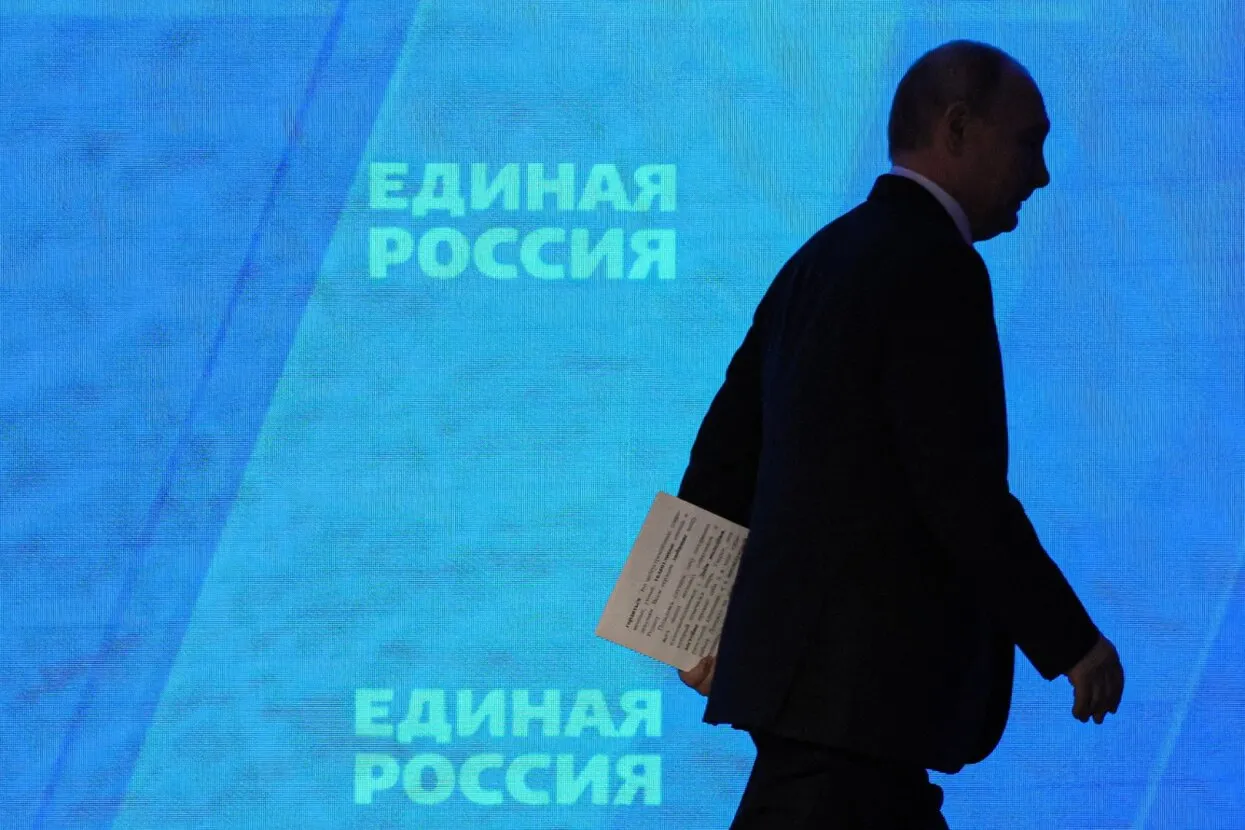
United Russia’s ratings are falling, so why is the Kremlin demanding better election results? Putin joined the campaign.
Warning: this text contains profanity. If that is unacceptable to you, please do not read it.
Russia’s Presidential Administration has raised the KPI targets set for regional officials based on how the ruling party, United Russia, performs. In regions that are neither prone to protest nor overly loyal — where the party’s ratings run average — the new target is 47%.
Back in July, Meduza reported that the Kremlin’s political bloc had lowered the targets for these regions from 50% to 45%. The Russian business daily Vedomosti wrote in June that United Russia’s nationwide KPI had been cut from 55% to 50%. Sources told Meduza the reduction reflected falling ratings for the party and the president, driven by a gasoline shortage, rising prices, and public fatigue with the war.
Two deputy governors overseeing domestic policy, a political strategist who works with regional authorities, and a source close to the Presidential Administration told Meduza about the sudden increase in the targets.
In regions with average support for the authorities, the KPI rose from 45% to 47%, while in regions with a “higher degree of mobilization,” it rose from 50% to 52-53%. Nationwide, United Russia is now expected to score “more than 50%.”
“Things are heating up,” the political strategist who works with regional authorities complained to Meduza. He had welcomed the earlier cut in his region’s KPI with relief, since United Russia’s ratings were falling and the targets no longer matched reality, but the increase now worries him.
The deputy governors Meduza spoke with share this concern.
“When the KPI depends on reality at least to some extent, that’s reasonable. It’s clear that the results [of the election] and real ratings are different things. But when the rating is falling, and your KPI gets raised, the situation isn’t normal. Normally there’s a direct correlation, not an inverse one,” one of the deputy governors said.
The official said he’ll need to step up “administrative-industrial mobilization” to hit the new targets. Efforts by state-funded organizations and state corporations to get Russians to vote — often through coercion — are typically known as “corporate mobilization.” But in private directives, officials have recently begun calling this tool something new.
“We’re already squeezing out [what we can]. Many people are used to it: they’re understanding about it, so to speak. Those who really don’t want to vote usually weren’t pressured much. Well, now we’ll have to,” the same source suggested.
Meduza has previously reported that authorities tightened corporate mobilization efforts. At large workplaces, employees have been designated “mobilization foremen,” responsible for tracking turnout among a group of colleagues ranging from 10 to several dozen people.
A deputy governor and a political strategist who works with regional authorities say the higher KPI means factoring in a larger share of outright fraud, which Meduza’s sources modestly call “correction.”
“It’s mockery! When they announced the increase, they also talked about legitimacy, about making the results look believable. But those are mutually exclusive things!” the regional official said. “When you’re meeting the targets, you demand that your subordinates bring more people out to vote. If there’s room for correction at some polling station, you give it a higher percentage.”
According to him, officials often exceed the Kremlin’s KPI out of excess caution, but “no one has ever been punished for that.”
He and other sources — another deputy governor and a political strategist working in the regions — say officials have started facing pressure at conference calls with presidential envoy offices to deliver strong election results. “Otherwise, we’re fucked,” one regional official summed up.
At one presidential envoy’s office, officials tied the high target directly to Vladimir Putin’s involvement in the party’s campaign: “the president has put his shoulder to the wheel, we’re working for him.” A source close to the Presidential Administration also links the higher KPI to Putin’s active role in the campaign.
Putin has been actively touring regions beyond the reach of Ukrainian drones and has already met with the top five candidates on United Russia’s list. During his remarks at the second stage of the United Russia congress on August 22, he spoke of “the unity of the front and the rear,” and said he was confident the election results “will confirm the stability of the state, the maturity of the political system, and its ability to withstand any external threats, blackmail, and aggression.”
“He’s lending his personal rating, plus he personally spoke about voting at the [party] congress. There’s no turning back now,” says the source close to the Presidential Administration.
Even so, he calls raising the KPI under current conditions “illogical and wrong.” A political strategist close to the Presidential Administration had earlier not ruled out a further cut in the KPI, but that forecast came before Putin became actively involved in the campaign.
“From a political-technology standpoint, lowering the targets is still the right move,” the political strategist said. “But now the work is aimed at making sure the president is satisfied: he supported the party, it got impressive numbers, and we’ve once again proven something to the West.”
At Meduza, we are committed to transparency about our use of artificial intelligence in the newsroom. The story you’re reading was written by one of our living, breathing journalists and translated from Russian using an AI model configured to follow our strict editorial standards. This translation process is the result of extensive testing and refinements to ensure our English-language coverage is timely and accurate. A Meduza editor reviews every draft before publication.
If you find any errors in this translation, please contact us at reports@meduza.io.
To read Meduza’s exclusive content in English, please subscribe to our newsletter.
Andrey Pertsev
Is that true?
Yes. According to the latest poll by the Russian Public Opinion Research Center (VTsIOM), United Russia’s rating fell to 37.2% from 39.2%. The Public Opinion Foundation (FOM) found that the ruling party’s rating dropped from 37% to 33% in early August and has held there since.