‘We lived in peace, and now they’re bombing us’: Ukraine hit two huge Wildberries warehouses near Moscow and in Tambov, killing eight. A correspondent went to see how one town is coping.
Overnight on July 18, Ukrainian forces struck two of the largest warehouses operated by Wildberries, the Russian online retailer — one in Elektrostal, outside Moscow, and the other in Kotovsk, a small city in the Tambov region, near the regional capital. The two attacks left 80 people injured, and eight employees at the Kotovsk warehouse were killed. A correspondent for the news outlet Bereg traveled to Tambov to see how the attack has affected residents. Meduza has translated the article into English.
Warning: This article contains explicit language.
‘Small-business owners hurt by the attacks keep showing up’
A woman stands outside the regional legislature building in Tambov, holding a purple Wildberries bag bearing the slogan “People choose.”
I hail a Yandex Taxi to reach the burned-out warehouse of an online marketplace in Kotovsk — a city with regional status that, until 1940, was just a settlement folded into Tambov.
The app finds a driver, but he cancels. It happens twice. The fare may be part of the problem: for a half-hour ride, the app is asking just 130 rubles.
In the parking lot outside the legislature, a checkered cab sits waiting for passengers. Its driver also refuses the trip. “I won’t go there, sorry. There are cops there. They can hassle anyone, and I don’t need that.”
Tambov
Google Maps
I stop in at a Wildberries pickup point near the legislature to check how orders are being handled after the warehouse attack.
“Our pickup point is mostly used by students — there’s a technology institute and a humanities institute nearby. But not only them, of course. People order everything — from pythons to pita bread,” says a young employee dressed almost as if she were at home, in loose-fitting plaid pants and a patterned T-shirt. The pickup point is unbearably hot.
A sprightly woman of about 70 walks in and asks whether her order has arrived — she says she has been waiting more than 10 days. The employee checks the order number: only part of it has come in. “How much longer?” the customer grumbles, picking up her bag.
“And they need it urgently,” the employee mutters almost under her breath after the woman leaves. “You’ve seen it online — pickup point workers already get it from customers. And after the strike it’s even worse: ‘Why is my order delayed? Why was my order canceled? I’ll sue you!’ Go ahead and sue, I think. And I ask myself: haven’t they been reading the news?”
The attack on the warehouse caused delivery delays, the employee says. Some orders were canceled, but “it wasn’t a catastrophe.”
She says sellers who trade on Wildberries are hoping to win compensation through the courts, and she passes along the number of a local lawyer who helps individuals and sole proprietors with property disputes.
.
Meduza News
“My calendar has been full since July 18 — small-business owners hurt by the attacks keep showing up,” said Mikhail, a lawyer whose name has been changed. “Before the strikes, the city was living its life, barely noticing [the war]. But now that it’s touched someone’s salary, someone’s business, someone’s orders — well, you get it.”
The main question these sellers bring to him: Can they sue the marketplace for goods lost in the fire?
Wildberries management announced payments to the families of those killed and to those in serious condition — 2 million and 1 million rubles, respectively. Tambov Governor Yevgeny Pervyshov also promised to pay 1.5 million rubles from the regional budget to the family of each person killed, 600,000 rubles to the seriously wounded, and 300,000 rubles to injured warehouse employees.
Wildberries chief executive Tatyana Kim said the company was still working out the scale of payments to sellers and other financial support measures. According to a statement from Wildberries, sellers will not receive compensation. Instead, the marketplace is offering a package of questionable perks: free delivery of goods to regional warehouses; discounted loans (which must be taken out through WB Bank) and deferrals on existing loans; and free insurance consultations provided by Sber.
Mikhail believes compensation from the marketplace is winnable in court. “You need to go through the courts and challenge the force majeure language in the platform’s new terms of service. The injured party can contest the new agreement and request payment, since the platform bears responsibility for goods stored on its premises. But that means court. That takes time.”
‘There’s nowhere to go, understand? They blew up the warehouse.’
At a coffee shop in one of the city’s shopping centers, the only lactose-free milk available today is almond — brought in from the nearest grocery store. “We usually have coconut and banana milk on the menu too, but we ordered a particular brand of those on WB (Wildberries — Bereg’s note). It didn’t arrive. We had to run to Pyaterochka,” the barista says.
On a bench along the pedestrian stretch of central Kommunalnaya Street — locals call it Tambov’s Arbat — a tanned man in a sleeveless shirt has taken off his socks and is rubbing his swollen, blistered feet right there on the street. I offer him a bandage.
He thanks me and explains: it’s the uncomfortable shoes he was issued at the work site. By trade he’s a mechanic, but he picks up jobs as a loader — that kind of work comes up more often. He’s not afraid of hard labor.
He came to Tambov last week for a job. On Sunday, July 19, he was supposed to head to the warehouse in Kotovsk with other shift workers. “I hadn’t seen the news, didn’t have time for the internet,” he tells Bereg. “I come to meet my guys — we were supposed to be leaving by bus for Kotovsk. They’re standing there smoking, no vehicle. And they tell me: ‘We’re not going anywhere. What, you don’t know shit? It’s completely fucked over there. There’s nowhere to go, understand? They blew up [the warehouse], those sons of bitches!’”
The shift worker sticks bandages on his blisters, pulls on his socks and shoes, and says: ”‘Sons of bitches’ — he said it right. People got killed. And now we’ll be left with jack shit until I find new work.”
Between the Arbat and the legislature building, on a tree-lined walkway, two college students sit. The Saturday attack on Kotovsk frightened them, they say. “Everyone in the city was scared, I think. Some people got angry, but mostly it was fear,” says the young woman in the black T-shirt. “What do you do now? We’re scared too. The sirens go off at night.”
The damaged Wildberries logistics center in Kotovsk
Astra
They have no desire to leave Tambov — they don’t see the point. Posts about the attacks on Kotovsk are apparently “disappearing” from local community pages on social media, they also say. Whether that is true is hard to say. In some city groups, posts about the strike are still visible.
On Tambov’s Arbat, a smiling musician of about 60 plays “Wind of Change” by Scorpions on an electric guitar. On a bench across from him sits an elderly local woman in a light linen suit, a scarf around her neck.
Nearby, a bronze sculpture of a merchant’s wife leans against a pedestal, looking rather like her. Single-story buildings from the pre-revolutionary era line both sides of the street, and we strike up a conversation about architecture.
“The merchants who lived here built them. They traded here, lived here, stored their goods here,” the woman says.
“Back then there were no enormous logistics centers,” I say.
“And back then there were no drones. Our ancestors had it good, you know,” she says.
Her son, a military engineer, is away on assignment in Kursk. He was supposed to be home by now, but the assignment was extended by another week.
The Kursk region has faced intense attacks in July, but the woman in the linen suit finds a silver lining in her son’s assignment: “That’s better than a trench. And he can’t go in a trench. He’s got a brain!”
The national TV channels she watches ignored the news about the attacks on the warehouses in Elektrostal and Kotovsk, but she heard about them from neighbors anyway. “The war has reached us now,” a friend who has sat down beside her on the bench cuts in. The woman in the linen suit shakes her head.
The moment of the attack on the logistics center in Kotovsk, Tambov region, July 19, 2026
Exilenova+
“Isn’t that right? Why do you keep shaking your head?” the second woman continues. “You love your Putin, and this is his doing. We were living in peace, and now they’re firing on us. Happy now? Enough with the head-shaking!”
It isn’t the first time the two friends have argued about politics; they had even agreed not to raise the subject. But today, it seems, they couldn’t hold back.
“Yes, I love Putin! So what? Are you going to have me shot?” the Tambov woman in the linen suit answers heatedly.
“If I could, I’d shoot you — believe me. Right up against the Kremlin wall with you, and off to be shot!”
“And was it better before? Under that drunk [Boris Yeltsin]?”
“I think it was. At least he was a human being — a real one. You could believe him. And there was freedom under him. And we grew so sure of ourselves, so sure freedom was here to stay now … that we elected a KGB man. It was a mistake, a big mistake. And don’t look at me like that.”
The friends agree on one thing: the city will never again live as it did before. Before July 18, they explain, Tambov had not come under Ukrainian attack, so people are on edge and frightened.
A makeshift memorial to those killed at the warehouse in Kotovsk
Post-
Both women are mistaken. Tambov and the surrounding region had appeared in the news before, and local authorities had said Ukrainian drones were shot down by air defense forces. In December 2025, a drone attack set fire to the Nikiforovskaya oil depot in the settlement of Dmitrievka, 50 kilometers (31 miles) from the regional capital. Pervyshov at the time attributed the fire to “falling drone debris.”
And in early June 2026, in Michurinsk — about an hour’s drive from Tambov — a strike set fire to the Progress plant, which manufactures equipment for aviation and missile control systems and has been hit by Ukrainian attacks multiple times: in 2024, 2025, and 2026.
* * *
Two young men sit at a table in a Vkusno i Tochka — the fast-food chain that replaced McDonald’s in Russia. The first, in a blue T-shirt, is typing something on his phone while listening to his friend.
“Write a description of that guy in the comments,” the friend says, leaning over to see the screen.
“Why would I write some description? I’ll just attach his photo, and that’s it. Writing out a whole description… It’s easier to see him once. People who know him will definitely recognize him from the photo,” the first one says, irritated.
The man in the blue T-shirt — Pavel — is looking for a colleague he worked with at the Kotovsk warehouse the night of the attack. In a local community group, he writes that the two of them “carried him on their backs until the ambulance arrived.” He is asking his colleague to come forward.
Authorities reported that the attack and the resulting fire at the Kotovsk warehouse killed eight people and injured 25.
No official mourning period was declared in the region after the attack on Kotovsk. But concerts scheduled in the city park, along with several other entertainment events, were canceled.
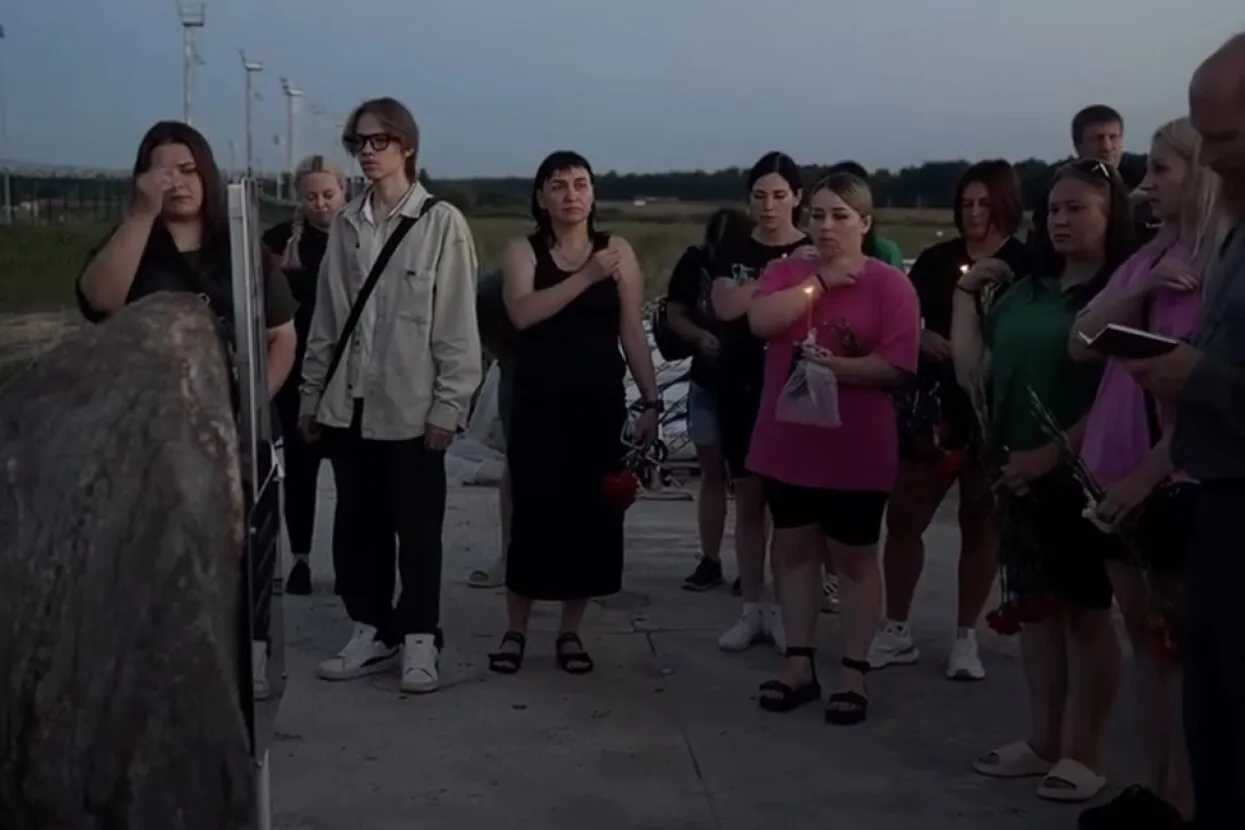
Wildberries has already announced that the warehouse will resume operations on July 23. On the evening of July 20, residents of the Tambov region brought flowers to the commemorative stone that had been laid outside the Kotovsk warehouse to mark the start of its construction.
At Meduza, we are committed to transparency about our use of artificial intelligence in the newsroom. The story you’re reading was written by one of our living, breathing journalists and translated from Russian using an AI model configured to follow our strict editorial standards. This translation process is the result of extensive testing and refinements to ensure our English-language coverage is timely and accurate. A Meduza editor reviews every draft before publication.
If you find any errors in this translation, please contact us at reports@meduza.io.
To read Meduza’s exclusive content in English, please subscribe to our newsletter.
Bereg