

Kremlin Press Service / Anadolu / Getty Images
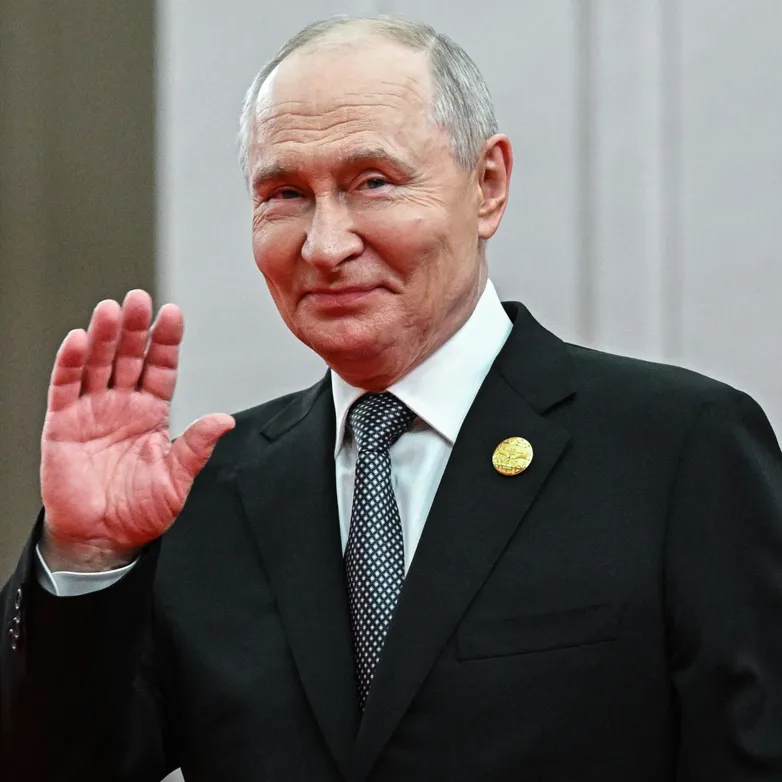
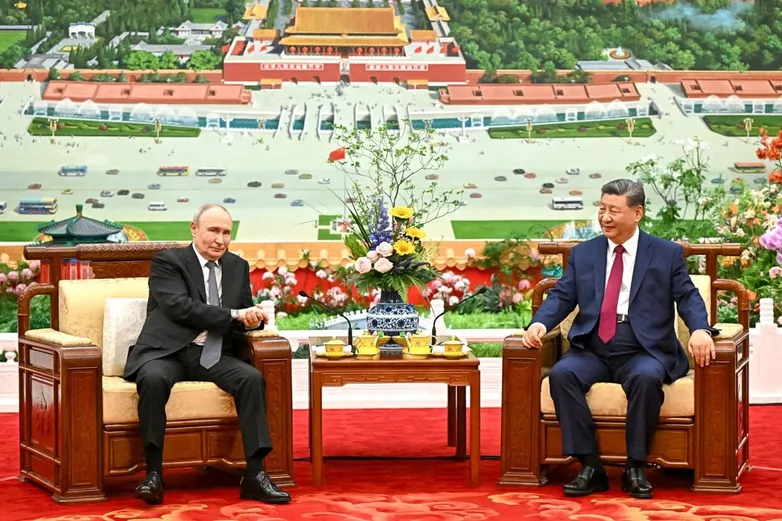
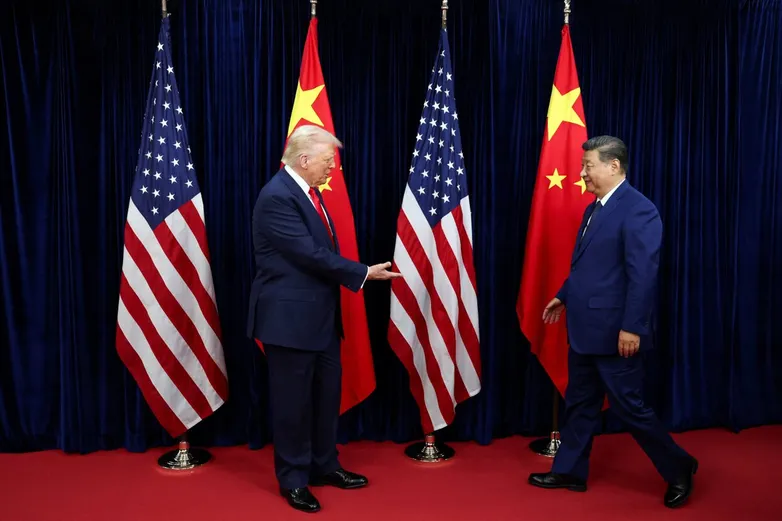
The leaders of Russia, the United States, and China met in person for the first time on November 19 in the Chinese city of Shenzhen. Symbolically, the meeting was unprecedented, but in substance it produced modest results: Vladimir Putin, Xi Jinping, and Donald Trump talked for an hour and a half and adopted a declaration that touches on several important issues but sticks to general language. Commentators concluded that the summit was no repeat of the 1945 Yalta Conference, where the leaders of the Soviet Union, Britain, and the United States divided postwar Europe into spheres of influence. Meduza has gathered what outlets in the United States, Europe, Ukraine, Russia, and China are saying about the summit.
United States
The New York Times
[At the banquet] Mr. Xi had Mr. Trump sit next to him at the head table, while Mr. Putin sat farther away with [Xi’s wife, Peng Liyuan]. Some people have interpreted that as the Chinese leader possibly snubbing Mr. Putin. But in two years, Mr. Trump will likely be gone from the world stage, and Mr. Putin and Mr. Xi could be dining together again as leaders of their nations and, in their eyes, great men.
Bloomberg
“The three leaders generated enormous media attention but did not reach any substantial agreements or produce any concrete deliverables likely to alter global geopolitics,” said Adam Farrar, a senior analyst at Bloomberg Economics who previously held a senior post on the U.S. National Security Council under the Trump and Biden administrations. “Yalta this was not.”
The Atlantic
The leaders at the Yalta summit in 1945 really were able to decide the fate of smaller countries over their heads and against their wishes. Certainly the American president no longer has any cards, to use his own words, in Ukraine, which despite being cut off from all U.S. military and financial aid has continued fighting, with European backing and its own resources. […] Putin cannot dream of dominating European countries whose combined GDP is so much larger than his own country’s, and Xi is still far from being able to dominate Asia either.
The Washington Post
Going into the three-way meeting, Putin had hoped to find a path to ending the war in Ukraine, and Trump had hoped to discuss nuclear arms reductions. But the joint declaration issued after the talks showed no significant progress on either issue. Xi emerged as the biggest winner by demonstrating China’s central role in international negotiations.
Ukraine
Evropeiska Pravda
Overall, Vladimir Putin benefited from the summit in China. It’s unpleasant to say, but that’s the reality. What he gained most was publicity. It’s impossible to prove that the popular comparison between this meeting and the 1945 Yalta Conference originated in Russia, but the fact remains: it plays into Moscow’s hands.
[But] despite the Kremlin’s wishes, the world was not carved up “three ways,” partly because China opposes such a division. Russia failed to secure the agreements it wanted in the three-way format specifically. What’s more, the final outcome of the “summit of three” doesn’t reflect positions that are fundamental for the Kremlin, and to some extent it constrains Russia’s actions. Then again, Putin has never been particularly bothered by Russia’s commitments on paper.
China gained even more: both the meeting itself and the agreements reached there worked in its favor.
Ukrainskyi Tyzhden
The Shenzhen meeting showed that even the three countries with the most sweeping geopolitical ambitions can’t count on agreeing on a common strategy just because they sit down together. There was no new Yalta in China. But the summit showed that the great powers are increasingly looking for ways to negotiate the future of the international order among themselves. And for Ukraine, the question is […] whether Kyiv will be able to influence the decisions on which its future depends.
Russia
Novaya Gazeta Europe
The grandiose statements before the meeting [between Putin, Trump, and Xi] stood in sharp contrast to results that were, to put it mildly, unremarkable. Xi drew media attention, for example, by likening nuclear weapons to the sword of Damocles hanging over humanity and calling for them to be banned outright and eliminated for good. But there was nothing new in that statement: the Chinese leader advocated the same thing back in 2017, for example. Both times, though, Xi qualified his call with the words “ultimately” and “over time.”
Kommersant
Comrade Xi had no desire to decide Ukraine’s fate together with Putin and Trump. Beijing’s lack of diplomatic engagement on Ukraine today stands in sharp contrast to its efforts three years ago.
In February 2023, China unveiled its plan to end the war in Ukraine, drawing considerable attention around the world. […] Among other things, the plan called for “respecting the sovereignty of all countries,” “ceasing hostilities,” “keeping nuclear power plants safe,” “facilitating grain exports under the Black Sea Grain Initiative,” and — wait for it — “promoting post-conflict reconstruction.”
As of November 2026, the course of the war makes it clear that China’s earlier proposal either fails to win over all sides or amounts to little more than a wish list. Either way, it remains a nonstarter.
China
China Daily
The first-ever face-to-face meeting between the heads of state of China, Russia and the United States in Shenzhen on Thursday has sent positive signals for a new paradigm of strategic coordination and communication in major-country relations. […]
On major sensitive issues concerning one another, it is important to communicate in advance, try to see things from one another’s perspective, act with caution, and in particular, not to challenge the red lines of one another. […]
As the main victors of World War II, the three countries should steadfastly safeguard the postwar international order.
Global Times
China, Russia and the US have different national conditions, but this doesn’t mean confrontation is inevitable. By communicating in advance, considering issues from one another’s perspectives and acting with caution on major sensitive matters involving each other’s interests, particularly by refraining from crossing each other’s red lines, major powers can indeed avoid the “Thucydides Trap.”
The Taiwan question […] constitutes the first red line that must not be crossed by any country seeking to develop relations with China. For a long time, the reason “Taiwan independence” separatist forces have repeatedly dared to test the limits of danger is precisely that they have clung to the illusion of exploiting tensions among major countries, attempting to profit from their rivalries.
Europe
The Telegraph
Putin wanted the symbolic victory of being treated on equal terms by Xi and Trump, even though Russia’s economy is less than a tenth of the size of America’s and barely an eighth of China’s.
Yet Putin was also seeking points of substance. He wanted Trump to agree to a form of words opposing both energy sanctions on Russia, and Ukraine’s long-range strikes on the country’s energy infrastructure. Putin also wanted his counterparts to denounce the International Criminal Court (ICC), which has indicted him for war crimes in Ukraine.
Putin got almost all of the above.
China was reserved toward Putin. […] Trump, by contrast, called Putin “my friend” and went along with him on every point, as the joint statement [by the leaders of the three countries] shows. The document’s second point reads: “The three countries plan to increase the production and supply of refined petroleum products for the benefit of all nations. They reaffirmed the importance of stable energy flows.”
International sanctions and Ukraine’s ongoing destruction of Russian oil refineries are the main barriers to larger shipments of petroleum products from Russia, the world’s third-largest oil producer. By signing the statement, Trump indirectly came out against both Ukraine’s actions and his own sanctions on Russia.
The icing on the cake for Putin was the joint statement’s third point: “The three heads of state […] agreed that the International Criminal Court and other similar bodies must not abuse their jurisdiction.”
The United States has always opposed the ICC, but getting Trump to sign on to such a sharp condemnation of the court was a clear win for the only leader at the meeting facing war crimes charges.
Der Spiegel
I think each of the three — Trump, Putin, and Xi — will believe he came out the winner. Trump, because he once again managed to distract the American public for a few days from the mostly bad news he’s facing at home. Putin, the weakest of the three, because he got to bask in the glory and power of the other two. But the real winner was most likely Chinese President Xi Jinping. […] He got to show how far he believes China has come.
Gazeta Wyborcza
At best, the Shenzhen summit merely cemented the status quo. Putin’s and Trump’s statements give a very different impression of where things stand. Power is now precariously balanced among a weakening United States, an increasingly confident but still inward-looking China, and a dangerous Russia gripped by apathy, nihilism, and paranoia.
Russia, China, and the U.S.
At Meduza, we are committed to transparency about our use of artificial intelligence in the newsroom. The story you’re reading was written by one of our living, breathing journalists and translated from Russian using an AI model configured to follow our strict editorial standards. This translation process is the result of extensive testing and refinements to ensure our English-language coverage is timely and accurate. A Meduza editor reviews every draft before publication.
If you find any errors in this translation, please contact us at [email protected].
To read Meduza’s exclusive content in English, please subscribe to our newsletter.