
stories
The Kremlin used to ask friendly outlets to play down its domestic policy chief, Sergey Kiriyenko. Journalists say they’re now told to mention him at every opportunity.
Source: Meduza
stories
The Kremlin used to ask friendly outlets to play down its domestic policy chief, Sergey Kiriyenko. Journalists say they’re now told to mention him at every opportunity.
Source: Meduza

Sergey Kiriyenko at the 15th congress of A Just Russia in Moscow. October 25, 2025
Contributor / Getty Images
Sergey Kiriyenko, who heads domestic policy in Russia’s Presidential Administration, has generally kept a low profile in Russian politics. Since October, however, he has spoken regularly at public events about his favorite subject — the eventual return of Russian troops from the front in Ukraine and the need to “reintegrate” them into civilian life. Journalists at state-run and pro-government outlets have started following his appearances closely, even though the Kremlin used to ask them not to draw unnecessary attention to him. Meduza special correspondent Andrey Pertsev learned from sources with ties to the Russian authorities why Kiriyenko felt the need to put his work in the spotlight.
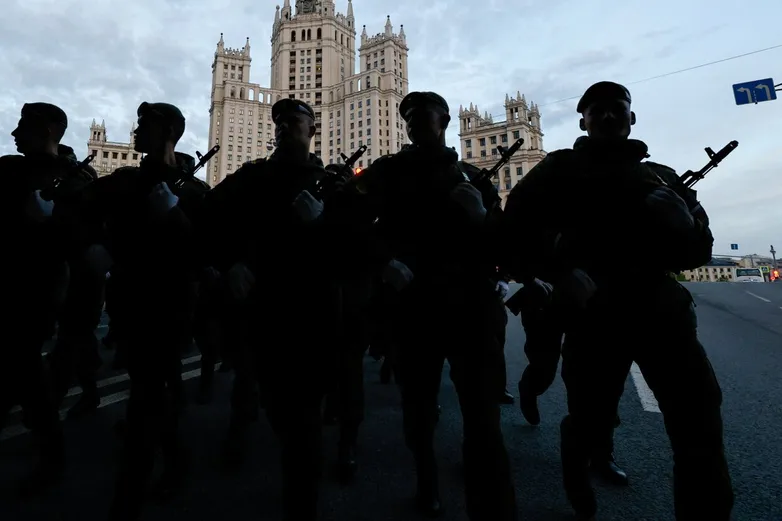
At a November 13–14 seminar for United Russia’s newly elected State Duma deputies, Kiriyenko urged the lawmakers to start preparing now for the 2030 presidential election and the 2031 parliamentary election. He also told them to prepare for “victory, when those who fought in the special operation come home all at once.”
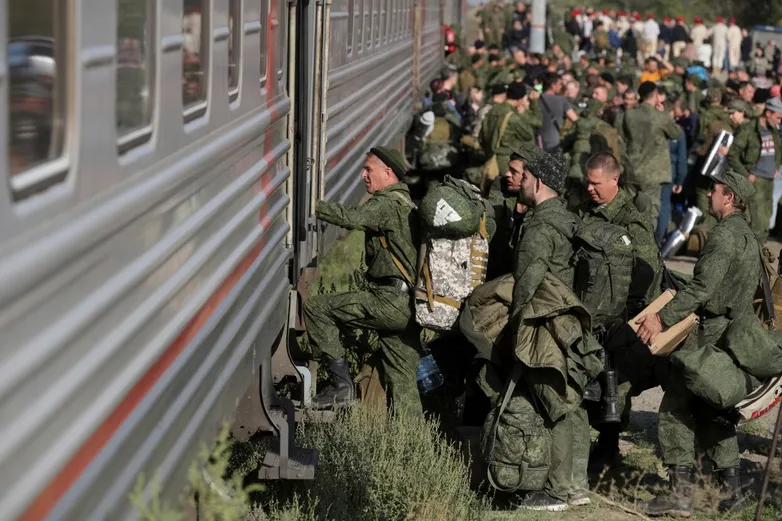
Helping soldiers readjust to civilian life is the Kremlin domestic policy chief’s favorite subject. At a seminar for regional vice governors in charge of domestic policy two years ago, Kiriyenko was already talking about troops returning soon from the front in Ukraine. In the summer of 2024, Meduza reported that in another speech to regional officials, Kiriyenko had referred to veterans of what the Kremlin calls its “special military operation” as “the new Afghanistan vets,” a reference to Soviet veterans of the war in Afghanistan.
“[In his speech, Kiriyenko] made it clear that quite a few people would be coming back. People could get upset or scared, or they could lash out at the soldiers. They’d lump them all together. Crime could go up. That’s a problem,” one participant at the 2024 event told Meduza.
What else did Kiriyenko say at that event?
Two participants in that event and a source close to the Kremlin said Kiriyenko stressed that war participants “adapt poorly” to civilian life. He also raised a subject rarely discussed in Russian politics: many volunteers joined the war to get out of prison, and some who returned home have committed new crimes, including robbery, murder, and rape (Meduza has reported on these cases here).
Of course, Kiriyenko was speaking not only about former convicts but about military personnel in general. He stressed separately that society’s reaction to military personnel today differs from how it greeted World War II veterans in the 1940s and Afghanistan war veterans in the late 1980s and early 1990s.
One of the seminar’s participants recounts Kiriyenko’s speech this way:
There weren’t as many people killed and wounded in Afghanistan. And after World War II, soldiers returned to a country that had suffered through the war and knew what it was. They joined in the rebuilding; they were respected, and people understood what they had fought for.
Now, soldiers are returning to a country where most of the population doesn’t know what war is and has only seen it on television. But they’ve been through an extreme situation where the usual rules don’t apply. Society isn’t very ready to understand or accept them.
After the State Duma campaign ended, Kiriyenko decided to talk publicly again about what comes next for veterans of the Kremlin’s “special military operation.”
Kiriyenko has also been making more public appearances. On October 18, he spoke to finalists in “Leaders of Russia,” the Kremlin’s flagship competition to recruit management talent. A seminar for regional vice governors responsible for domestic policy is planned for late November at the Senezh management training center outside Moscow. The exact date is still to be determined. Kiriyenko is due to speak at the seminar, where he’ll review the Duma election results again and assign new tasks to officials.
A political strategist who works with the Presidential Administration and a source close to senior Russian government officials said Kiriyenko “took a break” from public life right after the parliamentary elections. They said he wanted to keep a low profile until major personnel changes in the Kremlin and the government were complete. “But then the president put those decisions on hold, though a few positions did change hands,” the source close to the government said.
At the height of the 2026 State Duma campaign, two employees of pro-government media outlets told Meduza that any mention of Kiriyenko in the press, even a positive one, generally had to go through an extra round of approval.
“SVK wants to keep a low profile. If he goes to an event or visits the new territories [parts of Ukraine that Russia claims to have annexed], for example, we’re asked to avoid drawing attention to it or just give it a brief mention without details. If they want more detail, like a quote from a speech, they’ll say so,” one of them said.
Now, the same journalists said, they’re required to cover events Kiriyenko attends, and they “must mention” his name whenever possible. Vedomosti’s detailed article on his speech at the November seminar for United Russia lawmakers, for example, is free to read, though most articles on the newspaper’s website are available in full only to paying subscribers.
A political strategist with ties to senior officials on the Kremlin’s domestic policy team told Meduza that Kiriyenko now wants to “stay in the conversation and on the president’s radar.”
The next scheduled federal elections are still a long way off, and of course it’s in his interest to keep talking to the president directly and regularly. Regional campaigns don’t give him a reason to stay in touch like that. He needs another subject, so SVK has gone back to talking about what happens when the guys fighting in Ukraine come home. He keeps pushing the issue.
While discussing Kiriyenko’s efforts to “keep [the president] interested in the team’s lower-profile work,” two political strategists recalled a meeting of the Presidential Administration’s domestic policy team in late October. They said Kiriyenko praised the work of Alexey Goreslavsky, the director of the Internet Development Institute (IRI).
He had particular praise for the IRI-funded film “Rozhdenie imperii” (“Birth of an Empire”). Vladimir Putin liked it so much that every user of the Gosuslugi government services portal suddenly received a message urging them to see it in theaters.
One of the strategists believes Kiriyenko is now using the same playbook by urging officials to keep the soldiers’ return from the front in mind. “Basically, Lyosha [Goreslavsky] has the right idea. He’s playing to an audience of one. If that one viewer likes it, that’s what matters. You don’t have to worry about winning over the wider public. The important thing is that we [at IRI] were the ones who picked [the proposal] and paid for it,” the source told Meduza.
Alexander Kharichev, who heads the Kremlin’s Social Monitoring Directorate, is also trying to “keep Kiriyenko in the conversation.” The strategist with ties to senior officials on the Kremlin’s domestic policy team said Kharichev is “helping the boss with the ideological agenda.”
On November 13, for example, Kharichev announced that a new law ranking traditional values would be passed. “We’re pushing traditional values, too. We’re ranking them and handling the ideological side of things,” Meduza’s source said, describing Kharichev’s intentions.
That said, traditional values are more of a side issue in Kiriyenko’s current work. Both political strategists who work with the domestic policy team told Meduza that Kiriyenko’s main focus is “reintegrating soldiers.” They said he brings it up in public as well as at closed-door Presidential Administration events.
Not all officials and strategists, however, share Kiriyenko’s views on the soldiers’ future. A source close to senior government officials told Meduza that Putin “is interested in the issue of reintegrating veterans of the war in Ukraine,” but that Kiriyenko “makes too much of it.”
“Kiriyenko is drawing attention to work [with soldiers] that usually stays in the background. He’s making it a priority. Things were different after Afghanistan and Chechnya. Conscripts fought in those wars. Many had no trade or profession, and they had next to no life experience. They came home knowing only how to fight. Back then, helping them settle back into civilian life and fighting crime really were urgent concerns. Conscripts don’t make up the bulk of the troops at the front now. Most are older guys with some life experience and a trade or profession,” the source told Meduza.
In the source’s view, returning veterans may be angered by the gap between what they were paid at the front and what they earn in civilian life.
“But for people who are used to fighting and getting paid well to take those risks, there’s the Africa Corps,” the source close to senior government officials said. “[At closed-door events,] Sergey Vladilenovich is always talking about helping [soldiers] get back to civilian life, training them, and offering them courses to prepare for new jobs. But has he actually asked them if they need any of that?”
From Meduza’s archives
At Meduza, we are committed to transparency about our use of artificial intelligence in the newsroom. The story you’re reading was written by one of our living, breathing journalists and translated from Russian using an AI model configured to follow our strict editorial standards. This translation process is the result of extensive testing and refinements to ensure our English-language coverage is timely and accurate. A Meduza editor reviews every draft before publication.
If you find any errors in this translation, please contact us at [email protected].
To read Meduza’s exclusive content in English, please subscribe to our newsletter.