
stories
Russian Harvard scientist Kseniia Petrova speaks to Meduza after U.S. prosecutors drop smuggling charges over undeclared frog embryos
Source: Meduza
stories
Russian Harvard scientist Kseniia Petrova speaks to Meduza after U.S. prosecutors drop smuggling charges over undeclared frog embryos
Source: Meduza

Kseniia Petrova’s personal archive
Kseniia Petrova, a Russian biologist at Harvard Medical School, was detained in February 2025 as she returned to the United States from a work trip to France. She was charged with smuggling for trying to bring frog embryos into the country for research and held in federal prison. Petrova’s case drew widespread attention and outrage from the scientific community. On November 4, a court dismissed the case after prosecutors dropped the charges, citing “an assessment of the office’s priorities and resources.” Petrova, who has spoken out openly against Russia’s war on Ukraine, is now seeking political asylum in the United States.
— Are congratulations in order? Have all the charges been dropped — both smuggling and making false statements?
— Yes, all of them. Though I haven’t really had a chance to talk to my wonderful lawyers yet, so I don’t understand the legal details very well.
— Your case went on for a year and a half. So you had the threat of a 20-year sentence hanging over you all that time?
— Well, of course, we never expected 20 years. We thought about the different ways things could go, but as my lawyer said, it was unlikely I’d get any prison time. Even if the court found that there had been smuggling, it was still such a minor incident.
— Still, the charge seems pretty disproportionate, and so does the whole prosecution. Did you feel they were coming down on you too hard?
— I did, yes. It seemed like the prosecutors and the government were being completely unreasonable. But I had two absolutely wonderful lawyers who seemed to me like knights fighting for good against evil.
It became clear pretty quickly at the hearings that the judges were very skeptical of the prosecutor’s position. Every ruling went in my favor. So I felt protected by democracy and hoped justice would prevail.
A year ago, the prosecutors made me an offer: They would drop the case, but I would be deported. And everyone said, “Why put yourself through a court case here? You’d probably be better off leaving and staying out of it.” But I felt so sure of myself! We’re going to win. I don’t want to go anywhere. I’m staying. My lab is here, my work is here, my life is here.
— Am I right that the prosecutors ultimately dropped the charges themselves? With the strange explanation that they didn’t have the resources to keep prosecuting you?
— Yes, [their explanation was] that they had more important cases.
— What happened? What was the turning point? Did the publicity scare them?
— The latest court ruling probably played some part. Back in the spring, one of my lawyers filed a complaint or a petition — I don’t know the exact term — arguing that my prosecution was vindictive. Basically, they were prosecuting me because they wanted revenge: There was a campaign against Harvard at the time. On that basis, my lawyer wanted to ask for an investigation and get additional documents. Correspondence, for example, about how the case began, why, and who initiated it.
The court sided with me and agreed that, yes, it was very suspicious that they suddenly brought criminal charges against me after I’d spent two months in immigration detention. They [the prosecutors] were required to give us those documents. And maybe they got scared and decided it would be better to drop the case. Maybe there really was something in there that would have allowed the court to find that the prosecution had been motivated by something like that.
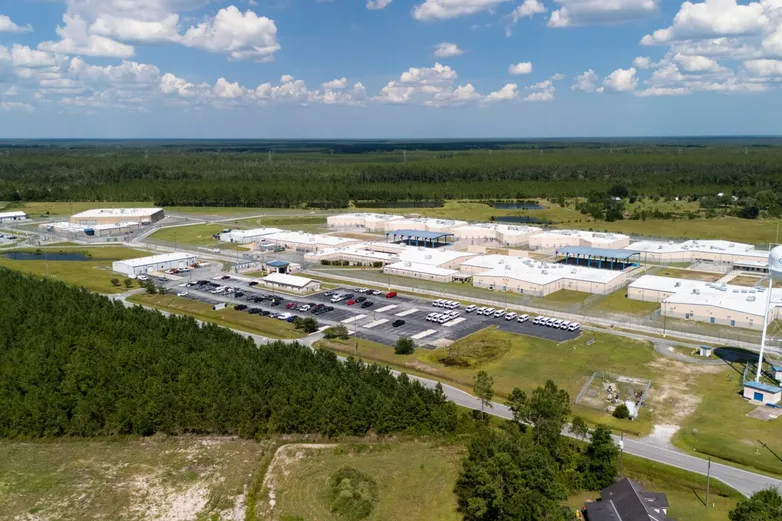
U.S. immigration detention


— So when you were arrested, there wasn’t a smuggling charge yet?
— The whole thing was so absurd! First, they just revoked my visa at the airport. They said, “Now you can fly back to France.” I said, “All right, fine.” Then they asked me, “Are you afraid of being extradited to Russia?” I said, “Yes, I am. I was arrested once, and I don’t want to face criminal charges.”
And from that moment on, that was it — I had absolutely no control over anything. They put me in a holding cell at the airport, and the next day they took me to a local jail in the neighboring state of Vermont. For a week, I had no idea what was going on.
They told me they were going to hand me over to ICE [U.S. Immigration and Customs Enforcement]. I didn’t know what ICE was. I’d left for France before [Trump’s] inauguration, hadn’t been reading the news, and didn’t know a campaign against immigrants had begun. Then my first lawyer found me in that ICE jail.
— One of the charges against you was making false statements — you allegedly tried to hide the fact that you were carrying biological materials. Is that even possible? It’s not as if you were carrying these frogs in your pocket, right?
— It was all really stupid, actually. My flight from France was in the morning, and I still had to stop by the lab to pick up the samples. I was doing everything at the last minute, rushing around. I had split the samples into two batches: one in a box I kept with me the whole time, and the other in my luggage.
I arrived in Boston feeling terribly tired: I had jet lag. And when they asked me at passport control whether there was anything suspicious in my luggage, somehow I forgot about the second batch. I said, “No, no.” And then I remembered: “Oh my God!” I explained that I’d forgotten, and the man seemed to understand. But it was still really stupid.
We went to have my luggage inspected. They started taking out all my samples, examining them, and asking questions. I explained, “These are this kind of frog, those are that kind.” Well, they’re not actually frogs — they’re very tiny frog embryos. And they weren’t alive at all. They were samples prepared for examination under a microscope. It’s not as if I was carrying live frogs that could escape.
I explained everything, and the man said, “We’ll probably hold on to your samples, but you’ll be going home soon.” They asked me a few questions — where I was from and which institution I worked at. And then some other woman showed up and started talking to me in a completely different tone.
She immediately took my phone and started reading through it. She questioned me all over again, much more aggressively this time. She asked, “Where did you work in Russia?” She asked about every place I’d visited during my trip to France, who I’d met, which friends from Russia I’d seen. And afterward, they told me my visa had been revoked. I guess I was just unlucky to have her on duty at the airport.
— Was this woman from ICE?
— From CBP [U.S. Customs and Border Protection].
— Did she even have the authority to revoke your visa?
— In August of this year, a judge ruled that revoking my visa had been unlawful. That woman had no grounds to do it.
— What were those three months in immigration detention like?
— Well, it’s the same as jail, except instead of little cells for a few people, there’s an enormous room with an enormous number of bunk beds, right next to each other. The toilet and a few showers are in the same room. You spend the whole day in there. We were supposed to get an hour outside every day, but that didn’t always happen.
There are two TVs on the wall — one in Spanish, because there are so many Spanish-speaking immigrants there. They’re on at full volume. There’s also a table where you can sit if you manage to get a seat. There’s constant noise and commotion — some people like to sing, some like to pray. And it’s always cold, and the food is awful, just unbearable.
After three months, they moved me from immigration detention to jail. And that was a regular American jail.
The detention center felt like an enormous kindergarten to me, because none of the immigrants held there were involved in crime. They were easygoing and cheerful, always trying to decorate everything around them: They made paper flowers and little crafts. The guards tore it all down and said it wasn’t allowed. But they kept doing it anyway. Jail was an absolute shock. Most of the people held there were involved with drugs. It was a very difficult time.
— Did you have any contact with the outside world?
— Yes, there was a phone, but calls were very expensive. Someone on the outside had to put money on your account. The calls had a time limit. Toward the end, a woman’s voice would say, “You have three minutes left,” “You have one minute left,” and then the call would cut off.
At first, my lawyer and I didn’t know whether we should seek a lot of publicity about my arrest. We really hoped I’d be released, and too much media attention might get in the way.
But I was denied release twice, with boilerplate claims that I was a flight risk.
Kseniia Petrova leaves federal court surrounded by colleagues and lawyers. June 12, 2025
Jonathan Wiggs / The Boston Globe / Getty Images
— I read that your own messages about bringing the embryos into the country were used as evidence in your criminal case. Were you unsure whether you needed a permit? Or did your research supervisor, Leon Peshkin, ask you to take the risk?
— I’m still not sure a permit is needed. Nobody ever worried about samples like these. Usually nobody takes any interest in them.
— Why bring them from France? Don’t they have them in America?
— We have exactly the same frogs in America. Exactly the same species. But I just got greedy. We’d produced some really good samples [at the lab in France]. We’d spent two weeks working incredibly hard, and I thought I’d save time that way. I thought I’d get back, put them straight under the microscope, and have a look.
They were very tiny embryos that had already been prepared — frog eggs, in everyday language. They’d been cut into very thin slices, or sections, and mounted on special glass slides. Some others had been partly prepared and were in paraffin.
The project we were working on was about embryonic development. Frogs are actually amazing. Probably not many people know this, but they’re a very good model for studying embryology, because their development happens entirely outside the body and they’re very easy to manipulate. A great many discoveries in biology were made using frog embryos.
I’d never worked with frogs before Harvard. When I saw them for the first time, I thought, “My God, if they’d shown me this at school, I would’ve loved biology so much more.” It’s just an incredible miracle, being able to watch life develop at every stage through a little microscope.
— Did your research supervisor come up in the investigation at all? Was he questioned?
— He was going to be a witness in my case. But I don’t think he did the right thing. He got really scared, even though he was only a witness. He left the country and said he didn’t want to testify for health reasons.
That was probably the scariest moment, because the criminal case was so completely absurd and ridiculous. And yet, for some reason, witnesses were running away.
— Did Harvard support you?
— Oh, very much. It’s covering all my lawyer’s fees — I could never have afforded him myself. Everyone was so sympathetic. They testified about what a good person I am and said I should be released.
The support was just incredible. Members of Congress stood up for me, as did Nobel laureates Paul Nurse and Martin Chalfie. Lots of great scientists supported me publicly and privately. Bruce Alberts supported me, and later he sent me a signed copy of his magnificent book “Molecular Biology of the Cell.” Keith Yamamoto, Nick Lane. Michael West spoke in my defense in court, and so did Marc Kirschner, the head of our lab.
Of course, they don’t know me personally. And of course, I don’t deserve any of this at all. But they stood up for me — simply to defend democracy, [to speak out] in an absurd case against an immigrant who hadn’t actually committed any crime. I just didn’t declare some biological samples.
I still can’t keep up with all the messages, because I have to work. So many people have written to congratulate me: teachers from school, colleagues from previous jobs. I need to reply to everyone, and that takes a lot of time.
— I noticed, by the way, that even Russian state media were mostly on your side, despite your opposition to the war. Even Putin’s Human Rights Council. Did the embassy contact you or try to help at all?
— There was some contact once. They said they were ready to offer whatever help they could. As for the Russian media, it seemed to me that the narrative was mostly: She ran off to America, and look what they do to people there.
— How did you end up at Harvard in the first place?
— I’m a bioinformatician. In a nutshell, that means using mathematical or computational methods to study biological data. When the war began, I was finishing my master’s at the Moscow Institute of Physics and Technology, and I realized I really didn’t want to stay in Russia. Before that, though, I’d never thought I’d leave the country at all. I hadn’t considered it as part of my career. When the war started, I realized that [living in Russia] was completely impossible, and I had to do something. So I started looking for a job or a PhD position.
And that’s how I found Leon. If it hadn’t been for him, I wouldn’t have stood a chance. I had almost no publication record, just one or two [papers]. In that sense, I was incredibly lucky. I’m not actually some great scientist. I hope to get a little better someday, but I’m not there yet.
— I’m sorry, I have to ask. I found your résumé online for a cleaning job. Is science in Russia really in such bad shape?
— That’s really funny. I just love opera. For some reason, one day I thought, what if there’s a cleaning job at the Bolshoi Theater? I could work there and listen to opera…
I actually got a very good education in Russia — thanks to my parents and the Soviet legacy at the Moscow Institute of Physics and Technology [Petrova studied at its School of Biological and Medical Physics]. I had excellent training. But after finishing my studies, I was still trying to find myself and couldn’t figure out what to do. I think things are tough for science in Russia right now.
— Do you miss Russia?
— Terribly. I love Russia very, very much, and I really hope the regime changes so I can go back.
When I got the offer to go to Harvard, I was in shock. I thought Harvard was something divine, somewhere up on Mount Olympus, where everyone was an absolute god, a genius, and I’d go there and be completely out of place. And they’d fire me right away anyway. But it turned out that my school, which specialized in math and physics — an ordinary school, really — was so good that I didn’t feel out of my depth here at all. And that made me very proud of my country.
— Did you return to your research at Harvard after you were released?
— I’m doing something completely different now. After I got out of jail, I didn’t have permission to work for another six months. My visa still hasn’t been reinstated — even though the judge ruled that revoking it was unlawful, immigration matters are handled by other people and agencies that are more tightly controlled by the government.
— So you don’t have a visa now?
— No. That’s why we were so afraid that after the judge ordered my release, before the final verdict in the criminal case, ICE would come, grab me, and I’d be back in detention. The judge said she was barring ICE from touching me. But the case is over, and now I don’t even know whether I have any protection.
I’m applying for political asylum and waiting for the final hearing. My former boss left Harvard, and now he’s opening a lab somewhere else. But I stayed. As soon as I got permission to work again, they hired me back at the same lab I’d been in before. And I just joined my colleagues’ projects.
What interests me most right now is studying aging and extending life — specifically, extending the time people stay healthy. It’s what’s known as “healthspan” — the years a person stays healthy.
And I want to become a real scientist, so I can finally earn all the attention and all the help I’ve been given, all the incredible support I’ve had from around the world. I just feel as if people rallied around me and protected me, and in the end it helped. These days, I suppose you don’t usually expect a happy ending. But this time, I got one.
At Meduza, we are committed to transparency about our use of artificial intelligence in the newsroom. The story you’re reading was written by one of our living, breathing journalists and translated from Russian using an AI model configured to follow our strict editorial standards. This translation process is the result of extensive testing and refinements to ensure our English-language coverage is timely and accurate. A Meduza editor reviews every draft before publication.
If you find any errors in this translation, please contact us at [email protected].
To read Meduza’s exclusive content in English, please subscribe to our newsletter.
Interview by Maria Zholobova