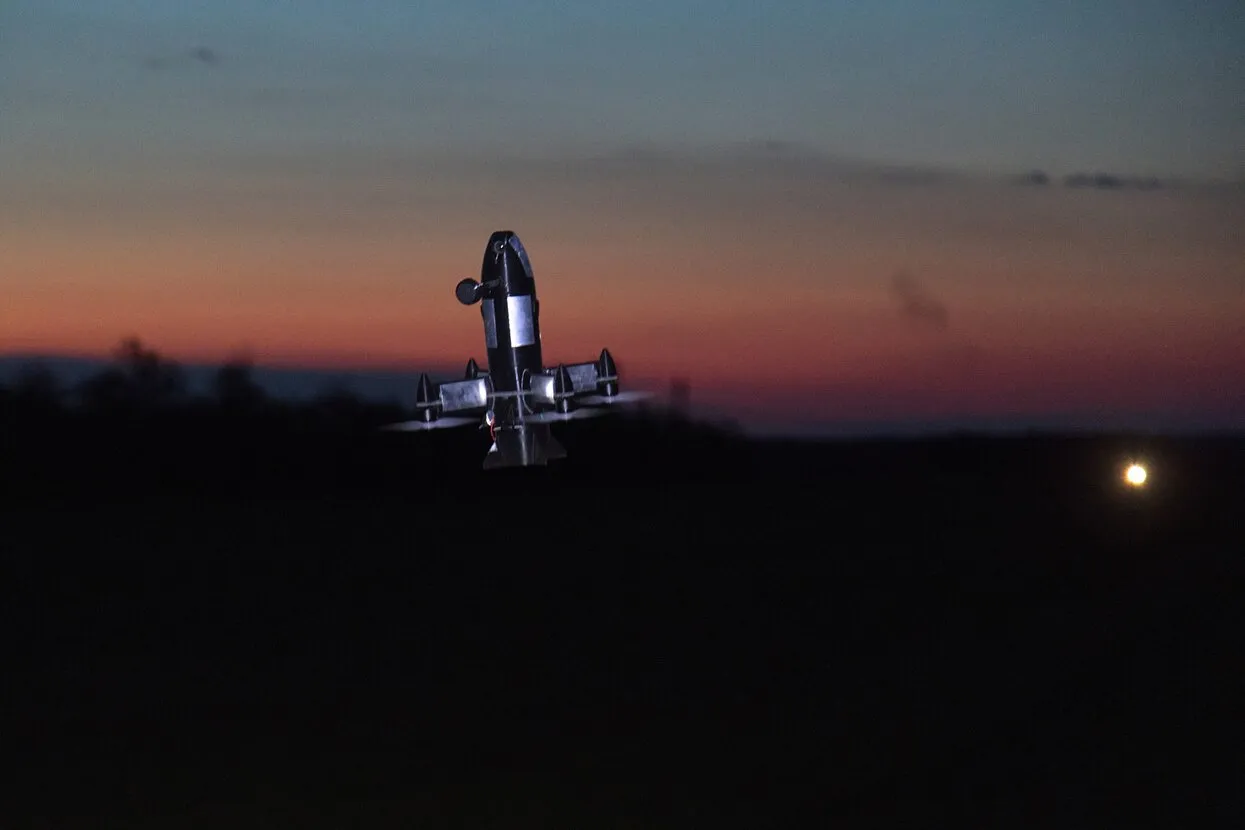
How drones came to decide the war in Ukraine, and why no army has found the weapon that stops them
Ukrainian strikes on Russian oil refineries and transport well behind the front lines — a hundred kilometers away or more — have forced Russia’s Defense Ministry to launch an overhaul of the country’s air defenses. Defense Minister Andrei Belousov has promised that by November, Russia will complete a new integrated, layered air defense system capable of countering drones across the country’s entire territory, from the front lines to the deep rear. And Russia isn’t alone in struggling with drones. Ukraine, though it has built an “integrated and layered” system — based on precisely the principles Belousov describes — still can’t protect either its troops or its rear. Meanwhile, in the Middle East, Iranian drones (and those of pro-Iranian proxies) continue to attack U.S. and allied military and civilian targets. The result: drones have altered the dynamics of two major wars at once: decisively defeating an opponent has become impossible, and conflicts inevitably grind to a stalemate. So what technologies could reverse this trend and help in the fight against drones?
Drones have been used in wars before. Why has so much changed recently?
The most widespread drones — used en masse by Ukraine, Russia, and Iran and its proxies — have filled three niches at once, all of which stood empty until the start of this decade.
- Precision weapons, once the preserve of a select few wealthy, technologically advanced militaries, are now available to virtually anyone who wants them. As a result, many warring countries and non-state actors (and even more that aren’t fighting yet) have sharply narrowed the gap with the world’s leading armed forces, which carried out their “precision-strike revolution” back in the 1980s and 1990s. Today, any military organization on the planet — even one with modest financial resources — can conduct targeted strikes on enemy assets and wage sustained aerial strike operations. And whereas the spread of missile technology was until recently constrained in part by international treaties, drone production rests on a massive civilian market for components.
- That same market has allowed militaries in various countries to fill another niche. Until recently, producing precision weapons was an expensive proposition even for the richest and most advanced countries — so expensive that they couldn’t stockpile these weapons in sufficient quantities for years of intensive warfare. Such weapons were treated instead as an exclusive advantage for a massive first strike, one that could crush nearly any adversary incapable of responding in kind. Relatively cheap drones, by contrast, make it possible to wage prolonged, high-intensity wars.
- Finally, new-generation drones have quickly proliferated across conflicts of wildly different geographies and circumstances because they’ve had no natural predator: today’s air defense and electronic warfare (EW) systems weren’t built to counter them. Existing air defense infrastructure struggles both to detect drones and to shoot them down. This is what’s driving militaries around the world to develop a fundamentally new short-range air defense. The drones most popular before Russia’s full-scale invasion of Ukraine failed when they met conventional air defenses. Drones were expected to replace manned aircraft, and various countries built reusable drones in a range of sizes — both Ukraine and Russia planned to rely on them heavily. But these aircraft didn’t survive their collision with reality on the battlefield. Ukraine’s armed forces lost nearly all of their Turkish-made Bayraktar drones within the first months of the war, and Russia’s military was forced to abandon its own analogs (with rare exceptions, such as the Kursk operation). The battlefield — from the front lines to the rear — was taken over by drones previously classified as loitering munitions. They landed in what seemed like the narrow niche of cruise missiles and precision-guided artillery shells — and upended warfare.
So are drones really a superweapon that could displace every other tool of war?
For all their virtues, loitering munitions have plenty of shortcomings. Here are just the main ones:
- Today’s drones can’t effectively hit hardened targets because their payloads are limited — a shortcoming that flows directly from their chief advantage: cheapness. This weakness is why both Iran and Russia continue to lean heavily on expensive and scarce ballistic missiles in their aerial strike operations, while Ukraine is trying to acquire a similar capability. On the battlefield, meanwhile, drones can’t accomplish many offensive tasks: an adversary can mount a passive defense from fortifications (not just purpose-built ones, but also, say, building basements). The upshot is that neither the Russian nor the Ukrainian military can wipe out all of the other side’s drone operators across a wide area — and neither can wage maneuver warfare. This is the root cause of the positional stalemate: drones let the enemy spot any attempt to concentrate forces and strike equipment and personnel caught in the open. Advancing a hundred meters takes days or weeks of preparation and often requires the right weather. And a significant share of the preparatory work is still done not by drones but by aviation (with glide bombs) and artillery.
- Cheap loitering munitions usually can’t hunt for targets on their own (their cameras are too crude and their flight time too short). Reconnaissance falls to more expensive, dedicated scout drones, which are also more vulnerable to air defenses. The best defense against the drone threat is to destroy these reconnaissance drones, which render the battlefield “transparent” — and that’s exactly what both sides in the war in Ukraine are doing.
- So far, every drone requires at least one human operator — and will as long as drones use only elements of machine vision rather than full-fledged artificial intelligence systems that can find targets and make “kill” decisions on their own. Drone warfare forces and other specialized units soak up an enormous amount of a scarce resource: trained personnel. That’s a luxury for armies already short of infantry and other specialists.
- Finally, drone forces have proven difficult to integrate into combined-arms structures and put to work in major offensive operations. Drone units in both the Ukrainian and Russian militaries respond far better to simple incentives — say, metrics based on the number and type of targets destroyed — than to complex tasks like fully clearing the battlefield of the enemy’s strike and reconnaissance assets or supporting other branches in battle. The paradox is that large, specialized drone units are demonstrably better at hitting targets (measured by the number of drones expended per kill) than small operator teams embedded in motorized rifle or mechanized units, as Belousov, among others, has said. But they’re harder to fold into the army’s structure and task with supporting mechanized units. This shortcoming may well be temporary, solvable through organizational effort (and such work is already underway). For now, though, development is moving in the opposite direction: toward specialized units.
Countries that carried out the precision-strike revolution before masses of drones appeared on the battlefield don’t necessarily need to drop everything else and pour money into drones of their own. Rather, they need to accelerate the development of cheap missiles and guided bombs free of drones’ shortcomings. That would let them fight prolonged wars without worrying about exhausting their stocks of precision weapons. Drones can supplement such arsenals, but they can’t fully replace them.
New systems for defending against enemy drones, on the other hand, are essential for every army that plans to conduct offensive operations — and for every country that doesn’t want to fall victim to a potential adversary’s air campaign. For now, these integrated, layered systems are at an early stage of development, as are their components. Fortunately for the world’s militaries, there are two “proving grounds” — one in Russia and Ukraine, the other in the Middle East — where these systems can be tested in combat.
What components does an air defense system need to counter the drone threat?
Arms manufacturers, military officials, and researchers in every warring country — from the U.S. and Israel to Ukraine and Russia — agree that an effective air defense system must have three components (without any one of them, the system won’t work):
- Sensors operating on different physical principles, capable of detecting drones and tracking their routes at every stage, in every zone, and at every altitude;
- Weapons with munitions comparable in cost to the drones themselves, along with platforms — both stationary and mobile — to carry them;
- Information systems capable of pulling data from the sensors and cueing the weapons — as well as predicting drones’ routes, distributing targets among different air defense and EW installations, eliminating the risk of friendly fire, and so on.
The understanding is there; the problem is execution. Drones themselves and the tactics for using them are constantly changing; tools that perform well in one setting fail in another; and the drones used on the battlefield have almost nothing in common with those used to strike the rear, just as the threats that different sensors and weapons must handle differ, too. It might seem that no single, universal counter-drone system could exist at all. But that’s nothing new for military planners: building “conventional” air defense systems (or, say, protection for armored vehicles) looks exactly the same. First you have to develop the individual components and learn to mass-produce them — and then adapt them to different conditions in the fight against an enemy whose technology never stands still.
What kinds of drone detection sensors are there?
Radar
- Unlike large drones of the Bayraktar type, loitering munitions are rarely used to scout targets on their own (at the front, they often attack targets already found by reconnaissance drones, while in the rear they fly pre-programmed routes). That allows their operators to plot the entire route at low and extremely low altitudes, radically complicating detection by the radars of conventional air defense systems.
- Drones, of course, aren’t entirely invisible to radar: they carry neither special low-observability features (so-called stealth technology) nor the powerful onboard electronic warfare equipment found on many cruise missiles and aircraft. The main problem is detection range, a consequence of their low flight altitude and small size. Even radars positioned high up — on rooftops, towers, and masts, or hilltops — can spot a drone only a few kilometers out. Reliable detection therefore requires a dense network of radars.
- Radar’s advantage is that it can be used not only to detect a drone but also to guide weapons onto it — that is, missiles or interceptor drones. Ideally, hundreds of mobile fire teams with their own radar equipment would be scattered across the territory being defended. Both sides in Russia’s war in Ukraine understand this: Ukraine’s military receives mini-radars from its coalition partners, while Russia’s buys them from China. Both are also pursuing their own designs.
- At the front, active (emitting) radars are harder to use: their radio emissions make them a conspicuous target for the enemy. Even so, today’s systems for countering fixed-wing reconnaissance drones most often consist of exactly that pairing — a radar plus interceptor drones. For detecting small FPV (first-person-view) drones, radar is almost useless.
- Early detection of low-flying long-range drones could, in principle, be handled by radar surveillance aircraft (spotting cruise missiles at low altitude is one of their core specialties). But neither the Ukrainian nor the Russian military has enough of them to keep such planes on constant airborne duty. The U.S., for its part, made heavy use of these aircraft over the Persian Gulf during its exchange of strikes with Iran — though even that didn’t help much against drones. Mass-produced, relatively cheap radar reconnaissance drones designed specifically to detect long-range drones are likely coming soon; such projects are already in development.
Optical sensors
- Short-range air defense systems have long used optical detection equipment, including sensors that operate in the infrared range. But drones’ low flight altitude hampers optical tools as well: drone routes are often plotted so that obstacles physically block the aircraft from view. These systems aren’t suited to early detection of incoming drones or to scanning large areas.
- Despite these limitations, optical sensors — and, at the front, the naked eye — remain the primary means of detecting drones and directing counter-drone systems onto them.
- Interceptor drone systems and the advanced machine-gun systems used by mobile fire teams include electro-optical detection stations and sights.
- On both sides, the front is strewn with cameras and electro-optical systems, used to watch ground targets and drones alike. These systems are themselves high-value targets for enemy drones.
Acoustic sensors
- Ukraine’s military came up with this concept as soon as Russia’s long-range Geran (Shahed-type) drones appeared early in the war. At first, Ukrainian troops strapped cellphones — networked together, microphones switched on — to utility poles and trees. Specialized sensors came later.
- Acoustic systems’ main jobs are detecting drones early, scanning large areas, and tracking targets (identifying incoming drones’ routes). At the front, meanwhile, experienced soldiers can recognize an approaching FPV drone by ear. This has caught the attention of weapons manufacturers: work is already underway on acoustic sensors that, combined with other tools, can provide precise targeting for systems that shoot down FPV drones on the battlefield. Israeli companies lead the field: Israel’s armored vehicles came under attack from Hezbollah drones during the campaign in Lebanon. Against the Israel Defense Forces, Iran’s proxies used almost nothing but fiber-optic-controlled drones, which are hard to detect or suppress with electronic warfare. The plan is to mount detection systems, integrated with weapons, directly on armored vehicles.
Electronic warfare (EW)
- Detecting drones by their radio emissions — and jamming them electronically — was the primary way of fighting them from the very beginning. Unsurprisingly, drone evolution has trended toward defeating electronic warfare, and today’s drones are less and less susceptible to it.
- Commercial quadcopters, the backbone of drone arsenals in the first year of Russia’s war in Ukraine, were vulnerable to EW because they were controlled by radio signal on a standard frequency. But just months into the jamming fight, operators of DJI’s Mavic quadcopters received new firmware that let them change frequencies.
- EW has never fully suppressed the satellite navigation signals that long-range drones use to plot their routes. Drone designers solve the problem by installing dedicated systems that counter jamming and spoofing (signal substitution).
- Drones entirely impervious to EW appeared relatively quickly: fiber-optic-controlled drones, drones with machine-vision elements, and so on.
- Finally, EW systems’ inherent flaws haven’t gone anywhere: they affect not just enemy drones but friendly ones, and EW antennas, which emit radio signals, are easy to find and destroy.
- Even so, electronic warfare remains an important part of any anti-drone defense. It may be impossible to win this fight outright with EW, but the need to circumvent electronic countermeasures makes drones much more expensive to produce.
Effective counter-drone systems must combine a wide range of sensors into a single detection, tracking, and targeting network.
What kinds of anti-drone weapons are there?
The chief requirement for any anti-drone weapon is a cheap munition. Because drones are inexpensive, mass-produced precision weapons, expending traditional air defense missiles on them is far too wasteful (besides which, many missiles — heat-seeking ones, for example — are ineffective against drones).
Machine-gun and cannon mounts
- It quickly became clear that ordinary small arms and even anti-aircraft guns can’t reliably counter low-flying, maneuvering drones. There are two problems: aiming at a drone that appears in view for seconds or even fractions of a second, and countering entire drone swarms, which demand an enormous number of weapons (and a correspondingly large number of personnel). Though these mounts are evolving rapidly, neither problem has been solved to this day.
- Ukraine and Russia, as well as the states at war in the Middle East, are fielding mounts with electro-optical sights and automatic fire control systems. There are stationary systems that protect fixed sites and mobile ones (installed on vehicles) that can cover drones’ approach routes. But a great many of these mobile fire teams are needed, since all of the systems have short detection and engagement ranges.
- There are two approaches to making fire effective against small, maneuverable targets: a high rate of fire with a heavy volume of very cheap rounds, or more expensive rounds capable of destroying a target without a direct hit.
- In the Middle East, the U.S. defended its bases against Iranian drones with rapid-fire C-RAM systems, which spit out, in a matter of seconds, hundreds of rounds costing a few dollars apiece.
- Russia is developing — and trying to bring into mass production — cannon turrets that fire more expensive shells with proximity fuses, capable of destroying targets with a near miss rather than a direct hit. The expectation is that these turrets will expend fewer rounds than rapid-fire systems.
Interceptor drones
- Ukraine’s military began fielding systems with AI-enabled interceptor drones more than a year ago. The main producer is a company owned by former Google chief executive Eric Schmidt. Ukraine has even offered such systems to Persian Gulf countries suffering from Iranian strikes.
- Russia has developed its own interceptor drone, the Yolka (“Fir Tree”), to counter drones on the battlefield. These machine-vision-equipped interceptors carry no warhead, destroying drones with kinetic energy alone. The Yolka was later adapted to fight larger long-range drones in the rear — though in that role, the lack of a warhead makes “falling debris” scenarios over residential neighborhoods and other civilian sites more likely (the target drones aren’t destroyed outright, only damaged).
- On the whole, systems that pair an array of sensors with interceptor drones capable of homing in on targets via onboard machine-vision devices (or external ones, receiving a signal from ground systems) have proven effective. An interceptor’s kill probability is likely lower than that of many anti-aircraft missiles, but the technology’s cheapness offsets the difference. Ukrainian interceptors also reportedly carry a parachute system that lets them land intact after a miss.
- Interceptor drones’ drawbacks remain their short range (though it exceeds that of gun systems) and the limits of electro-optical guidance. The Yolka’s effectiveness, for instance, reportedly drops when the drone is launched “into the sun.” And when these systems are used to cover drone routes across large territories — that is, as part of mobile fire teams — they require huge numbers of trained personnel.
Aviation
- Mobile fire teams are, despite the name, not mobile enough to cover vast spaces. That leaves aviation as the only truly mobile platform for anti-drone weapons — the only one capable of quickly delivering them to any point and of shielding large areas from massed raids.
- Aircraft can detect targets themselves using their standard onboard radars, and many countries’ fighter jets are integrated into data-sharing systems with other targeting assets (such as radar and optical reconnaissance planes).
- For now, manned aircraft — both planes and helicopters — do the counter-drone work. These platforms are always in short supply (which is why Ukraine, for example, has mobilized even light aircraft for the anti-drone effort). But unmanned systems are already in development.
- Aviation’s main problem remains the shortage of cheap munitions comparable in cost to a drone. Guns and machine guns aren’t very effective, while standard air-to-air missiles, designed to destroy aircraft and cruise missiles, are usually too expensive. The West, however, has already created special munitions for fighting cheap drones. The U.S. developed APKWS kits, which consist of a laser designator on the aircraft and a laser-signal receiver on the rocket — together, they convert unguided Hydra air-to-surface rockets into an effective and relatively cheap (under $30,000) anti-drone weapon. The rockets have been used in the Middle East and supplied to Ukraine for its F-16 fighters. France is developing similar weapons.
- Down the road, expect mass-produced unmanned fighter aircraft — armed, for example, with interceptor drones or electromagnetic weapons.
Electromagnetic weapons
- Many countries are developing laser and microwave weapons to destroy drones. The appeal is obvious: in theory, these systems have an extremely cheap “munition” — each “shot” costs little more than the electricity it uses. But mass deployment is still a long way off, and these systems, too, have flaws of their own.
- Laser systems, some of which have already been tested in combat against drones, require a large power source, which limits their mobility. There are also problems with “reload” speed, meaning defenses risk being quickly saturated in a massed attack. Laser weapons are likewise sensitive to weather conditions and to an enemy’s use of smoke screens and aerosols.
- Microwave “cannons” haven’t yet been tested in real combat but are already considered a cornerstone of the air defense of the future. The idea is that these guns would destroy the onboard electronics of drones (and missiles) — and could take out an entire drone swarm with a single shot. In testing, the American Leonidas system downed 49 drones at once. But before such cannons can be deployed, a host of problems must be solved — for instance, ruling out friendly fire against the electronics of one’s own systems, both military and civilian.
Active protection systems on the battlefield
- Creating effective battlefield counter-drone systems is a challenge unto itself. Without such systems, war against an adversary using drones en masse threatens to harden into positional stalemate: an army loses the ability to concentrate forces and wage maneuver warfare. Ukraine’s military, Russia’s, and the IDF in Lebanon have all learned this firsthand.
- Armored vehicles, for one, need active protection — meaning a combination of sensors that can rapidly detect an incoming drone and weapons that can instantly destroy it. Israel has tried to modify its active protection systems (APS, which fire a countermunition to meet an incoming threat — an anti-tank missile or grenade) to fight drones. The result was a system capable of countering drones that drop grenades onto the roofs of tanks and armored personnel carriers (a tactic Hamas fighters used heavily in Gaza). But even these systems are ineffective against fiber-optic-controlled kamikaze drones. In southern Lebanon, the IDF was reduced to fighting Hezbollah’s drones passively: dispersing its vehicles, fitting them with “cope cage” screens, covering supply routes with netting, and so on.
- Developing effective methods of fighting drones on the battlefield will likely take years. Vehicles and infantry will need the means to detect enemy drones (including those that emit no radio signals), along with systems for tracking down and striking enemy drone operators. And all of these systems will have to improve continuously as the enemy’s drones evolve without pause.
What kinds of systems integrate the sensors and the weapons?
- Ukraine has long used software that gives users — from top commanders to mobile fire teams — a comprehensive picture of the air situation drawn from different sensors and reconnaissance systems, issues danger alerts, distributes targets among weapons, and more. In Russia, according to Belousov, similar programs are to be created in the coming months.
- The AI revolution is helping this software along: existing models excel at rapidly processing large volumes of data — the kind of work humans do poorly.
- Near-future software will likely give a sharp boost to the “anti-drone air defense” systems that already exist.
So will someone manage to build an effective defense against drones anytime soon?
As Ukrainian and Russian military personnel say, everything in the drone war changes every few months: for every counter-drone tool, drone manufacturers find an answer. The effectiveness of the Ukrainian-American interceptor drone systems, for example, can be judged not by the claims of Ukraine’s military or the manufacturers but by the Russian army’s response: in recent months, Russia has attacked Kyiv — a city well defended by interceptor drones — not with standard Gerans but with versions equipped with turbojet engines. Such an engine costs roughly 10 times more than the piston motor of an “ordinary” long-range drone, but it lets the new drones fly at twice the speed or more, making them hard for the relatively slow interceptors to hit.
In the near term, counter-drone weapons likely won’t win the evolutionary struggle against drones outright — not in the rear, and certainly not on the battlefield. But they can make drone strikes far more expensive.
After all, precision cruise missiles costing millions of dollars — which only a handful of countries can produce — are, in essence, drones themselves, just with more powerful engines, counter-EW and stealth features, advanced navigation and targeting systems, and so on. And now cheap, mass-produced drones are being forced to evolve in the same direction: toward greater complexity and costlier components. Little by little, this is stripping them of their main advantages.
At Meduza, we are committed to transparency about our use of artificial intelligence in the newsroom. The story you’re reading was written by one of our living, breathing journalists and translated from Russian using an AI model configured to follow our strict editorial standards. This translation process is the result of extensive testing and refinements to ensure our English-language coverage is timely and accurate. A Meduza editor reviews every draft before publication.
If you find any errors in this translation, please contact us at reports@meduza.io.
To read Meduza’s exclusive content in English, please subscribe to our newsletter.
Meduza
What’s this?
The Mavic is a series of drones made by theChinese firm DJI, one of the most widely used in the world.
Controlled reception pattern antennas
Antennas with a controlled radiation pattern. This is a type of satellite navigation receiver designed to protect against signal jamming and spoofing. The receiver’s antenna typically consists of several independent elements arranged in a specific geometric configuration, each of which picks upthe signal; the data is then processed by a computer.
And what’s this?
These are homemade anti-drone canopies made of rebar and mesh netting.