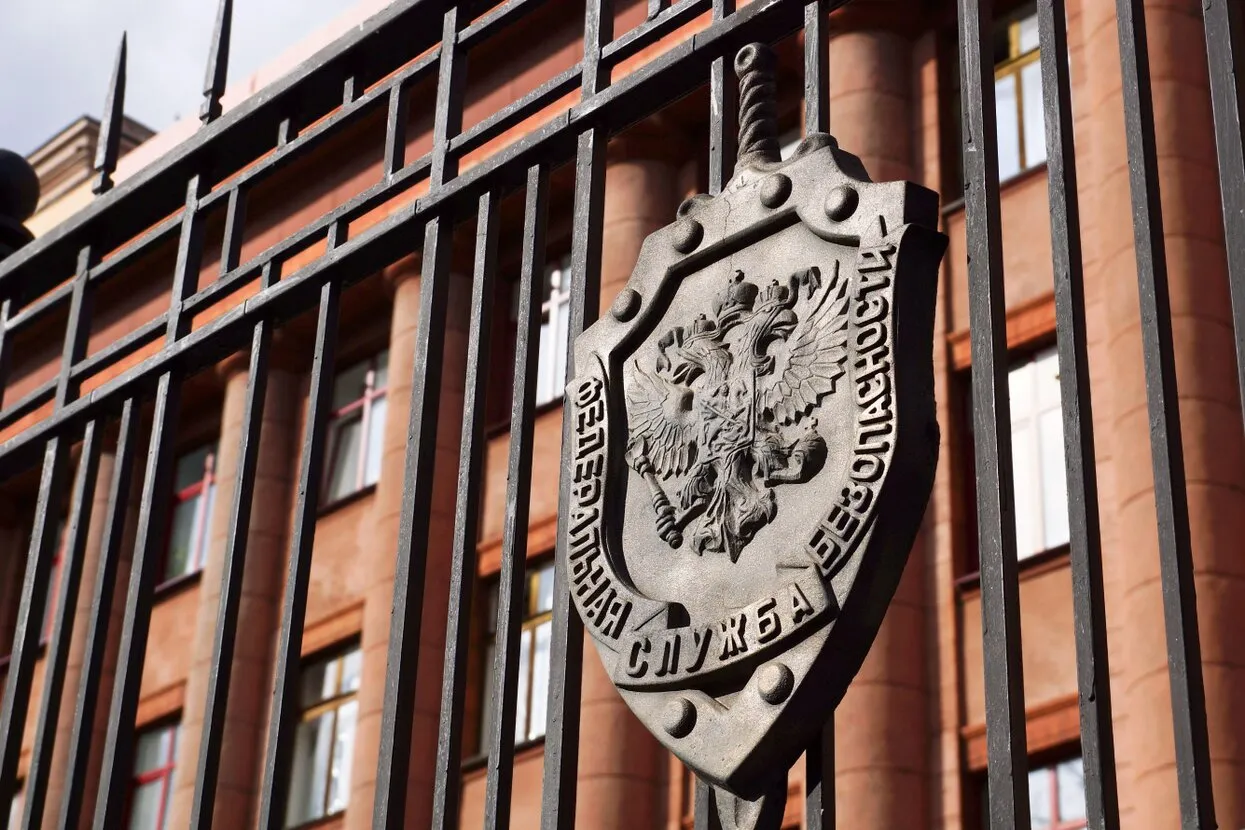
The Russian ‘counterterrorism’ unit behind Alexei Navalny’s poisoning tried to automate its search for domestic dissent using Meta’s Llama 2. After a year and a half, the project collapsed.
The FSB’s Second Service is officially charged with protecting the constitutional order and combating terrorism. In practice, the unit works to stamp out dissent in Russia: it has plotted the assassinations of opposition politicians, works to restrict internet access, and monitors the news for signs of dissent. To automate that last job, the “Dvoyka” — as the Second Service is known — commissioned an AI-powered system for monitoring news outlets and social media in the spring of 2024. The developer was the Kazan-based company Mikord, which had also worked on components of Russia’s unified military registry and was hacked in December 2025. iStories examined material from that breach relating to the FSB’s news monitoring system. The system was called PAUK — Russian for “SPIDER.”
What the FSB’s Second Service is known for
The unit traces its origins to July 1998, when it was established within the FSB as the Directorate for Constitutional Security. The following year it was merged with the FSB’s counterterrorism department to form the Department for the Protection of the Constitutional Order and Counterterrorism, which became a “service” in 2004 and is known inside and outside the FSB simply as the Second Service.
Gennady Zotov, the first head of what would become the Second Service, said in 1998 that his directorate was guided by the law rather than by politics: “It is absolutely irrelevant to us what views a person holds or which party they belong to. We see our task as protecting the foundations of the constitutional order, preventing the development of political extremism and nationalism, and countering negative phenomena regardless of where they originate.”
The news the Second Service collects today covers terrorism and sabotage, domestic and foreign policy, protests, the opposition, political prisoners, and migrants. Journalists have also established in recent years that the Second Service helped poison the politicians Alexei Navalny and Vladimir Kara-Murza, took part in Russia’s sports doping program, and worked on internet censorship.
How the ‘Dvoyka’ commissioned PAUK
In 2024, the Kazan-based IT company Mikord landed two major government contracts at once: one to build components of Russia’s unified military registry — which came to light in December 2025, after Mikord was hacked — and one to develop an AI-powered news monitoring system for the FSB, which had not previously been reported. iStories links Mikord’s run of high-profile clients to Russia’s former communications minister, Nikolai Nikiforov, whose wife had long been in business with Mikord’s founder.
Mikord’s internal data, obtained by iStories, shows that the primary client under the second government contract was the FSB’s Center for Information Protection and Special Communications, though the likely end user was the Second Service itself, whose officers were to take part in the key stages of development and rollout. The system’s name, PAUK, stood for “Portal for Analytics and Content Management” — and, not coincidentally, spelled the Russian word for “SPIDER.” It was meant to automate the news monitoring the Second Service does by hand.
A sample of the PAUK interface provided by the client. An FSB officer leaves a comment: “Note for reference, for use in work.”
iStories
PAUK was to run on two separate networks: an external one with internet access and an internal one without. A web crawler would pull news items from a set list of sources onto the external network, where an on-duty FSB officer could edit them, rate them, add comments, and decide which ones went into the summary for management. The system tagged each item with categories, keywords, and the names of anyone mentioned. Those summaries would be stored on the internal network and supplemented with data from the FSB’s internal databases. An AI assistant connected to the internal network would help officers search through the data.
To build PAUK, Mikord used Western technology. Officers’ questions were to be answered by Llama 2, a large language model built by Meta — which Russia has designated an “extremist organization.” Chat histories would be stored in MongoDB, a database whose maker backed Ukraine in 2022 and pulled out of Russia.
In the fall of 2025, after a year and a half of work, PAUK was suspended. An IT specialist who reviewed the documentation told iStories that the team appeared to lack the experience and expertise to work with language models. A separate source familiar with the project said Mikord had missed its deadline and never produced a working service.
How the Second Service monitors the news
To compile the list of sources PAUK was supposed to monitor, the FSB handed Mikord real summaries the Second Service had produced between January 2024 and June 2025. iStories analyzed nearly 5,000 news items from those summaries to determine which media outlets and social media platforms the FSB’s Second Service monitors and what kinds of stories interest it. The main findings:
- The Second Service closely tracks not only news about terrorism and the suppression of dissent — its priority areas of work — but also the pressure on migrants in Russia, as well as protests, strikes, and interethnic conflicts in Europe.
- One of the Second Service’s main news sources is independent media. Over the course of a year and a half, more than 550 items from these uncensored outlets made it into the Second Service’s summaries — over 10% of the roughly 5,000 items it collected in that time.
- The outlet most frequently cited in the Second Service’s summaries, by a wide margin, was Aktivatika, which covers civic activism and repression in Russia. In the first half of 2025 alone, the FSB pulled 244 Aktivatika stories into its summaries — one of every six items in the Second Service’s reports for those six months. RusNews and Govorit NeMoskva followed.
- The summaries contained many items drawn from the FSB’s own press releases. The Second Service is also interested in how independent media cover it. One summary flagged a Meduza article about Sergei Dubov, a Second Service officer who has helped persecute artists and musicians.
iStories
The Second Service drew on more than 1,000 sources for its summaries, including media outlets, Telegram and YouTube channels, and VK groups — far more than a duty officer can read in a day.
The Second Service most likely already uses a system similar to PAUK: Kribrum, a media and social media monitoring service founded in 2010. One of its founders was entrepreneur Natalya Kaspersky, who recently tried to get the Second Service’s attention over internet blocking in Russia. PAUK may have been the “Dvoyka’s” attempt to replace that outside service with one of its own.
At Meduza, we are committed to transparency about our use of artificial intelligence in the newsroom. The story you’re reading was written by one of our living, breathing journalists and translated from Russian using an AI model configured to follow our strict editorial standards. This translation process is the result of extensive testing and refinements to ensure our English-language coverage is timely and accurate. A Meduza editor reviews every draft before publication.
If you find any errors in this translation, please contact us at reports@meduza.io.
To read Meduza’s exclusive content in English, please subscribe to our newsletter.