Armenia’s pro-Russian opposition may now hold the key to Pashinyan’s peace deal with Baku
Did Pashinyan win, or didn’t he?
He won — with a caveat. Pashinyan’s Civil Contract party took 49.8% of the vote, enough to secure a parliamentary majority and form a government without coalition partners, but short of the supermajority needed to call a referendum on constitutional amendments. Pashinyan needs that referendum to sign a peace treaty with Azerbaijan: Baku is demanding that Yerevan strip its Constitution of all references to reunification with Nagorno-Karabakh. At 65% or above, Civil Contract could have called the vote unilaterally. Instead, the party will have to court allies among Armenia’s pro-Russian opposition that has no interest in holding such a vote.
Will Armenia now turn away from Russia?
Probably not. In the run-up to the vote, Moscow mounted a pressure campaign against Yerevan, accusing Pashinyan of moving closer to the West. Russian authorities banned imports of Armenian fruit, demanded a referendum on the choice between the EU and the Eurasian Economic Union, and threatened to raise gas prices and repeat the Ukrainian scenario. Pashinyan trolled Vladimir Putin but said he had no intention of choosing between Europe and Russia. After the election, he repeated that position, though in a more conciliatory tone. Analysts expect him to continue building ties with the West while trying not to antagonize Moscow. Armenia’s economy is too dependent on Russia to risk that relationship for a still-nascent rapprochement with Europe.
At Meduza, we are committed to transparency about our use of artificial intelligence in the newsroom. The story you’re reading was written by one of our living, breathing journalists and translated from Russian using an AI model configured to follow our strict editorial standards. This translation process is the result of extensive testing and refinements to ensure our English-language coverage is timely and accurate. A Meduza editor reviews every draft before publication.
If you find any errors in this translation, please contact us at reports@meduza.io.
To read Meduza’s exclusive content in English, please subscribe to our newsletter.
Eurasian Economic Union
The Eurasian Economic Union, whose members include Russia, Armenia, Belarus, Kazakhstan, and Kyrgyzstan.
Already underway
After the elections, Pashinyan was reported to be discussing his Civil Contract party joining the European People’s Party (EPP). This is the largest supranational alliance of center-right and Christian democratic parties in Europe. The EPP also holds the largest faction in the European Parliament.
What Pashinyan said
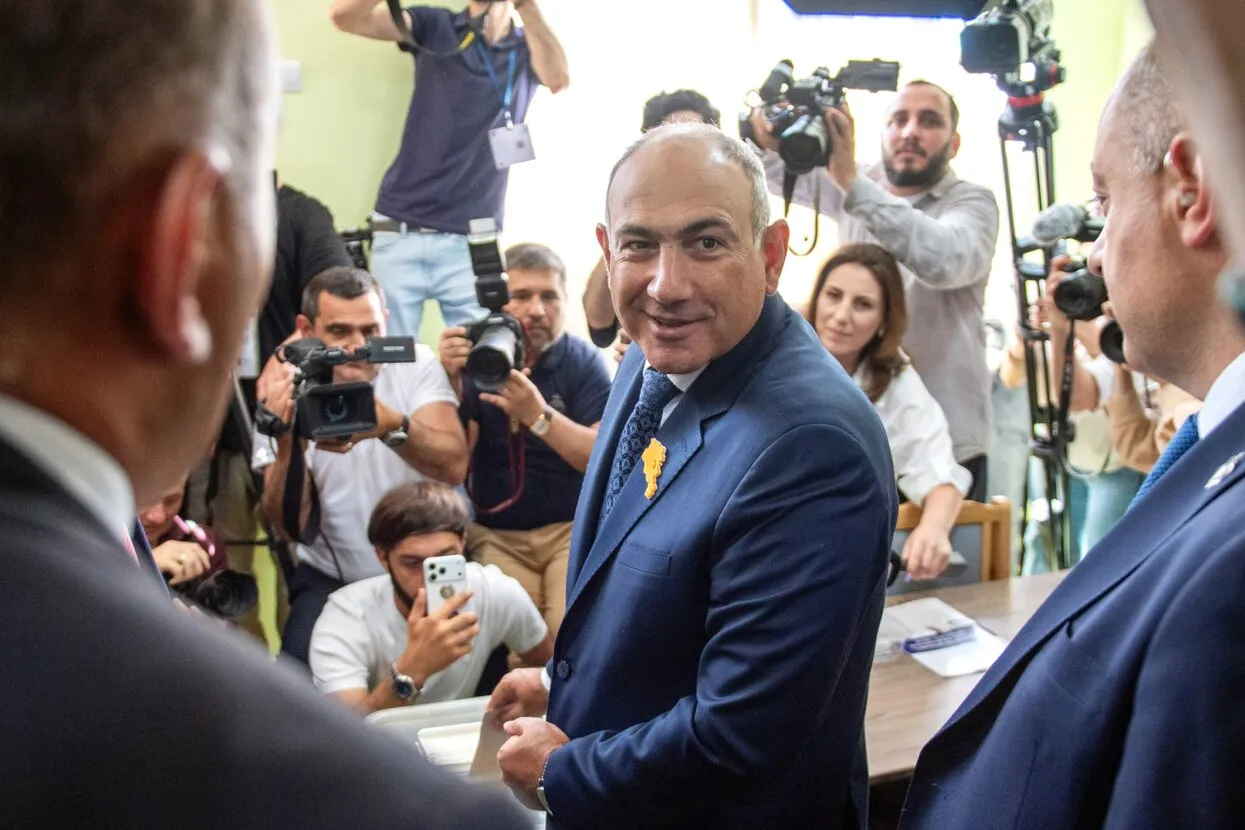
On June 7, after casting his ballot, Pashinyan said he sees no tension between Russia and Armenia: “Some forces operating in Armenia are trying to create tension in Armenia-Russia relations. That tension is not being created for the simple reason that we have very close relations with the president of the Russian Federation.”
On June 8, speaking about his electoral victory, Pashinyan pledged that Armenia would continue moving toward the West while also remaining in the Eurasian Economic Union: “We will continue the course of rapprochement with the European Union, but we will also continue our participation and membership in the Eurasian Economic Union; we will continue to develop relations with Russia and other member states of the Eurasian Economic Union. We will, of course, work to strengthen ties within the Eurasian Economic Union.”