
explainers
How Ukraine’s military uses Starlink — and what would happen if the Trump administration cut off its satellite communications entirely
Source: Meduza
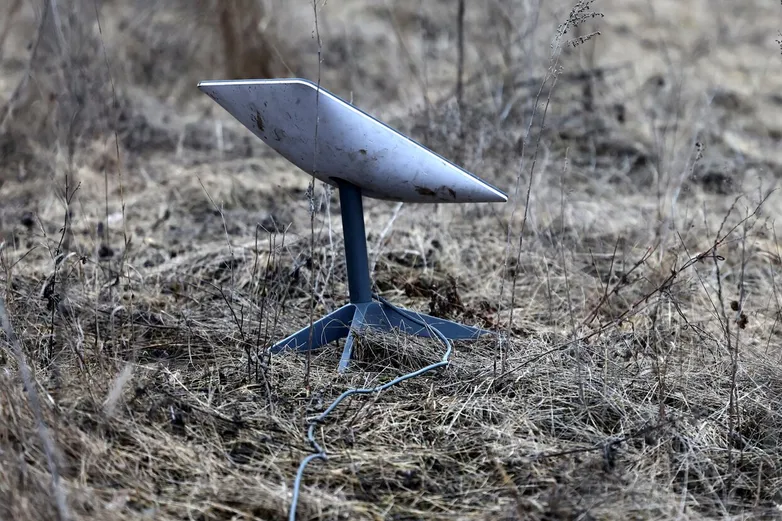
A Starlink terminal at positions held by Ukraine’s 65th Separate Mechanized Brigade near the village of Robotyne in the Zaporizhzhia region. January 23, 2024.
Andre Alves / Anadolu / Getty Images
In its dispute with Volodymyr Zelensky, Donald Trump’s administration quickly used its strongest leverage. It did more than threaten to halt military aid to Kyiv — it immediately restricted the most important part of that aid: U.S. satellite communications. On the morning of October 14, Ukraine’s military command reported that drones equipped with Starlink terminals (more precisely, their military counterpart, Starshield) had begun losing their connections at speeds above 160 kilometers per hour (about 100 mph). This caused several operations to fail. The next day, the speed threshold at which connections cut out fell to 60–80 kilometers per hour (about 37–50 mph). This created even more serious problems for Ukraine’s armed forces, whose command and communications depend directly on satellite links. A day later, however, the speed limit rose again. It remains unclear exactly how the White House is making these decisions (sources cited by Western media say the Trump administration is behind the restrictions). All that is clear is that Washington is not seeking to cripple Ukraine’s military command system immediately. Even so, Ukrainian commanders should consider finding a replacement for this crucial system, which depends entirely on the United States.
What has happened to Ukraine’s military satellite communications in recent days?
The first speed limits on satellite terminals using Starlink, a service operated by Elon Musk’s SpaceX, took effect in early 2026. At the time, the stated purpose was to help the Ukrainian military. The limits came in response to Russian drone units’ widespread use of the terminals to strike deep inside Ukraine. In particular, in late 2025, the Russian Defense Ministry’s Rubikon special unit set up a system for attacking moving targets on the Pokrovsk–Dnipro highway with drones guided by video feeds. The highway is the Ukrainian military’s main supply route in western Donbas. Ukrainian terminals continued to work because they had access to the protocols used by Starshield — SpaceX’s military division, created specifically to fulfill contracts with the U.S. Department of Defense (or, officially, the Department of War).
A separate SpaceX subsidiary established in late 2022 to take part in military programs. The U.S. government helps oversee the company, which has received Pentagon contracts. Musk hopes Starshield will become the main contractor for Golden Dome, the megalomaniacal missile defense system Trump is promoting.
About 180 dedicated satellites have also been launched for military use. Unlike Starlink satellites, they use cameras operating in different spectral bands to monitor Earth’s surface. In particular, the new satellites are believed to have already become part of the early-warning system for ballistic missile launches, though there is no precise information on this.
Starshield’s military satellite communications, however, still rely on the much larger civilian Starlink constellation. Software separates military communications functions — stronger encryption, protection against electronic warfare, and the ability to bypass restrictions — from civilian functions.
The speed limits were followed by a complete shutdown of all terminals in Ukraine that were not listed in a special Defense Ministry registry. According to sources cited in media reports, Ukraine’s then-defense minister, Mykhailo Fedorov, reached an agreement with Musk to create this system, cutting off Russian forces’ access to satellite communications through smuggled terminals. The Russian military, which had also come to rely on Starlink for both aerial and ground operations, had to scramble for alternatives. It largely solved the problem, but access to Starlink gave Ukraine’s armed forces an advantage in communications and command that they retain to this day. More on that below.
Now the Trump administration, which, unlike Joe Biden’s administration, does not consider itself obliged to support Ukraine unconditionally, has used this dependence on SpaceX’s services to pressure Kyiv.
- First, Zelensky suspects that the United States deliberately stopped supplying Ukraine with information about Russian ballistic missile launches (Starshield is part of the launch detection system). The White House is also threatening to cut off other intelligence.
- Second, on October 14, speed limits were imposed on Starlink/Starshield terminals used by the Ukrainian military.
According to Ukrainian military personnel and politicians, the speed limit changed over the following 24 hours. Some drones lost their connections for 20 seconds at speeds as low as 60 kilometers per hour (about 37 mph). Finally, former Defense Minister Fedorov said on X that, as of October 15, satellite connections were working reliably at speeds up to 160 kilometers per hour (about 100 mph). He thanked Musk personally for the fix. The SpaceX owner immediately declined to take credit, saying that all Starshield decisions are made by the U.S. Department of War and President Trump himself.
How and why does Ukraine’s military use U.S. satellite communications?
Starlink/Starshield technology has long underpinned Ukraine’s military command system and is deeply integrated into many aspects of the war. Individual infantry units use satellite communications, including units that are effectively surrounded. Many units buy terminals themselves or receive them from volunteers, then register them in the special registry mentioned above. Headquarters at various levels use satellite connections to access shared command systems and coordinate directly with other units.
Ukrainian drones equipped with Starlink terminals operate over the front line as relays, providing connections for other drones and radio-controlled ground vehicles. Another, less common way to control these ground “robots” is to install a terminal directly on each one. Without an airborne relay or a terminal of their own, these vehicles, which have become absolutely indispensable for supplying troops in recent months, cannot be controlled: They almost always operate below the radio horizon of any ground-based communications antenna.
Starlink terminals are also installed on attack drones and other weapons. Starshield communications are essential to Ukraine’s campaign of strikes on Russian forces at medium depth behind the front lines. At least some of the drones attacking Russian transport in occupied territory 50–150 kilometers (about 30–95 miles) from the front — for example, on the highway running along the Sea of Azov toward Crimea — carry Starlink terminals and act as relays for other attack drones. Ukrainian long-range drones equipped with terminals and video cameras have also long been used to strike targets in Crimea.
Read more
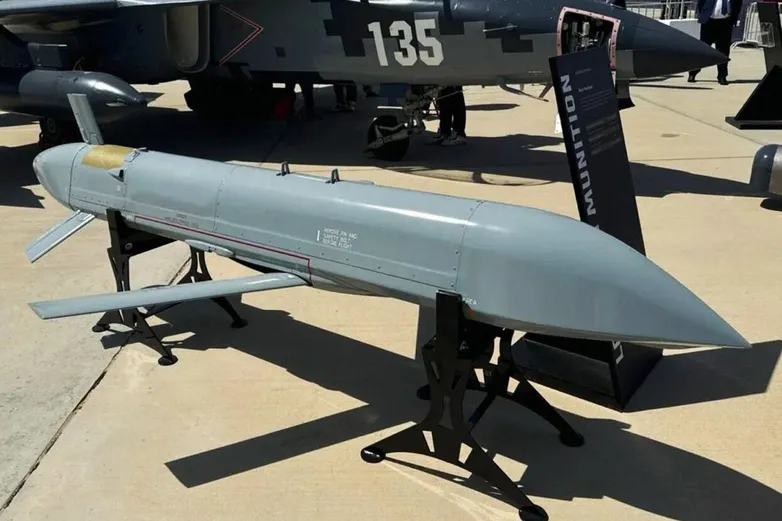

After the United States introduced the speed limits, Ukrainian sources reported that satellite communications were also being used on a new generation of interceptor drones capable of taking on Russian jet-powered drones. In recent months, Russia has used large numbers of these drones to attack targets far behind Ukraine’s front lines. The sources did not specify how the interceptors use these connections.
Before the Trump administration began its latest pressure campaign against Kyiv, Ukraine had been trying to persuade Musk or the Pentagon to enable Starlink service over Russia — naturally, only for terminals held by Ukrainian forces. The idea was to equip long-range drones striking Russia’s rear areas with video cameras so operators could attack mobile targets as well as fixed ones with known coordinates, such as factories, warehouses, and data centers. This would allow Ukrainian forces to strike targets such as Iskander-M ballistic missile launchers and fighter-bombers at air bases.
Kyiv’s request was denied, so Ukrainian long-range drones — apart from those attacking Crimea and other occupied territories — still use inertial navigation systems combined with GPS satellite navigation rather than being controlled by operators.
What would restrictions on Starlink/Starshield use mean for Ukraine?
That depends on the speed limit.
- Cutting off connections at speeds above 160 kilometers per hour (about 100 mph) makes it extremely difficult for drones to strike mobile targets, such as trucks, at medium depth behind the front lines: Attack drones generally fly faster than that. There are ways to adapt, however, such as using slower relay drones. Satellite communications would also become completely unusable on interceptor drones capable of taking on jet-powered drones: These interceptors need to fly several times faster than the limit.
- If the limit is set at 60–80 kilometers per hour (about 37–50 mph), drone operations across the front will be disrupted, including “Baba Yaga” multicopters. Satellite communications terminals will have to be installed on all unmanned ground vehicles, substantially increasing the cost of front-line operations. Ukrainian forces will have to forgo a large share of long-distance FPV drone strikes, which are currently possible mainly thanks to relay drones.
- Finally, a complete shutdown — unlikely, but still possible if the dispute between Trump and Zelensky worsens — would deprive Ukraine’s armed forces of their established communications and command system altogether. This threat means Ukrainian commanders need to start looking for a replacement for Starlink now.
What could the Ukrainian military use instead of Starlink?
No system outside the U.S. administration’s control is available to Ukraine as a direct replacement for Starlink. Its European counterpart, Eutelsat OneWeb, has been through bankruptcy proceedings; EU and British authorities are now working to incorporate the OneWeb constellation, which has 600 satellites in orbit, into a new system called IRIS². Even if the new program goes ahead, it will have less bandwidth than Starlink. It is quite possible that the Chinese systems Guowang and Qianfan will become available to the Russian military before IRIS² becomes available to Ukraine’s military.
However, the Russian military’s experience shows that alternatives to satellite communications exist. Within a few months of the unexpected shutdown of all the smuggled Starlink terminals Russian forces had been using in Ukraine, those forces built a communications system based on mesh networks.
A technology built around computer nodes that can each act as a switch for other devices on the network.
For the military, this means a system of airborne and ground-based communications relays that can be used to control drones tens of kilometers from their operators’ positions.
The Russian military has managed to replace some of the satellite communications provided by smuggled terminals both at the front and on long-range drones. Its mesh system is, of course, inferior to Ukraine’s Starlink-based system: Mesh relays are unevenly distributed among Russian units, and much of their equipment comes from private “volunteers” rather than the Defense Ministry. The ground antennas that act as the network’s main nodes are vulnerable to detection and strikes by Ukrainian forces.
Ukraine has even threatened strikes against Belarus, where, Kyiv says, the Russian military has installed antennas used to control the mesh networks of drones attacking the Ukrainian capital. Even so, mesh networks could serve as a makeshift substitute for a Starlink-based system if satellite communications were cut off completely.
At Meduza, we are committed to transparency about our use of artificial intelligence in the newsroom. The story you’re reading was written by one of our living, breathing journalists and translated from Russian using an AI model configured to follow our strict editorial standards. This translation process is the result of extensive testing and refinements to ensure our English-language coverage is timely and accurate. A Meduza editor reviews every draft before publication.
If you find any errors in this translation, please contact us at [email protected].
To read Meduza’s exclusive content in English, please subscribe to our newsletter.
Meduza