Officials in Russia’s Belgorod warn residents about toxic counterfeit banknotes, possibly dropped from balloons
Counterfeit 5,000-ruble bills that could pose a health hazard have turned up in several districts of Belgorod.
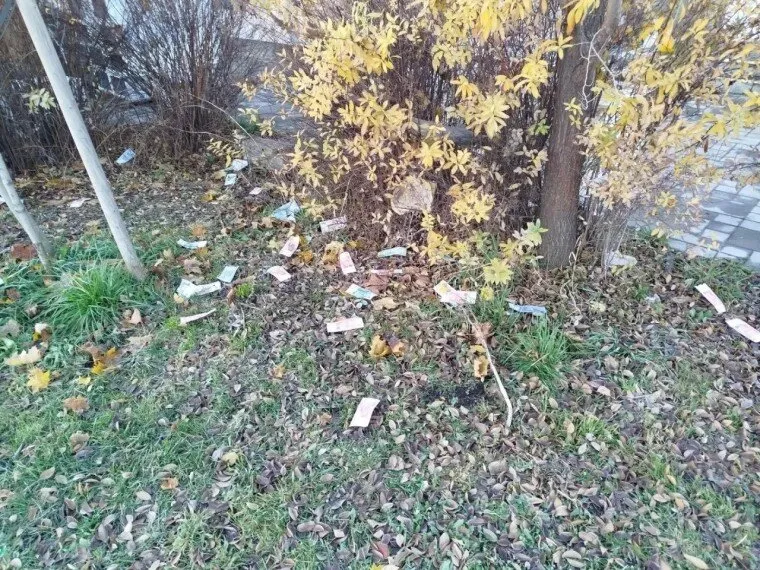
Press Service of the Belgorod Administration
“There is a risk that the bills may bear traces of hazardous chemicals, and contact with them could cause harm,” the city administration warned.
The Belgorod-based news outlet Pepel suggested that the counterfeit bills may have been dropped from balloons spotted over the border districts.
Press Service of the Belgorod Administration
In late October, Pepel reported on leaflets designed to resemble counterfeit 5,000-ruble bills that were dropped from balloons in the colors of the Ukrainian flag near the village of Razumnoye in Belgorod District. One of the leaflets reportedly carried an appeal to Russian soldiers and a QR code linking to the chat for the “I Want to Live”.
It is unclear whether the counterfeit bills the Belgorod administration warned about carry similar markings.
On November 21, authorities in the Russian-occupied part of Ukraine’s Donetsk region said a local resident was hospitalized after an unknown substance poisoned him when he picked up a 5,000-ruble bill at a bus stop in Makiivka. The Health Ministry of the self-proclaimed Donetsk People’s Republic (“DNR”) told the Russian state news agency TASS that no other such cases had been recorded.
A 10-year-old boy in Krasnogorsk, in the Moscow region, suffered a hand injury in November 2025 when he picked up an explosive device disguised as a bundle of cash from the ground. In April 2026, a teenager in Perm suffered burns in an explosion when he picked up a device disguised as a bundle of bills from the ground. No detentions have been reported in connection with the criminal cases opened over these explosions.
At Meduza, we are committed to transparency about our use of artificial intelligence in the newsroom. The story you’re reading was written by one of our living, breathing journalists and translated from Russian using an AI model configured to follow our strict editorial standards. This translation process is the result of extensive testing and refinements to ensure our English-language coverage is timely and accurate. A Meduza editor reviews every draft before publication.
If you find any errors in this translation, please contact us at reports@meduza.io.
To read Meduza’s exclusive content in English, please subscribe to our newsletter.
“I Want to Live”
The “Unified Center for Receiving Appeals from Russian Servicemen on Surrendering into Captivity, ‘I Want to Live,’” is a project launched by the Ukrainian authorities, specifically the Coordination Headquarters for the Treatment of Prisoners of War. As the project’s website notes, it is backed by Ukraine’s Main Intelligence Directorate and Defense Ministry. In December 2022, Meduza published an interview with Vitaliy Matviyenko, a representative of “I Want to Live,” given to the Belarusian outlet Zerkalo.