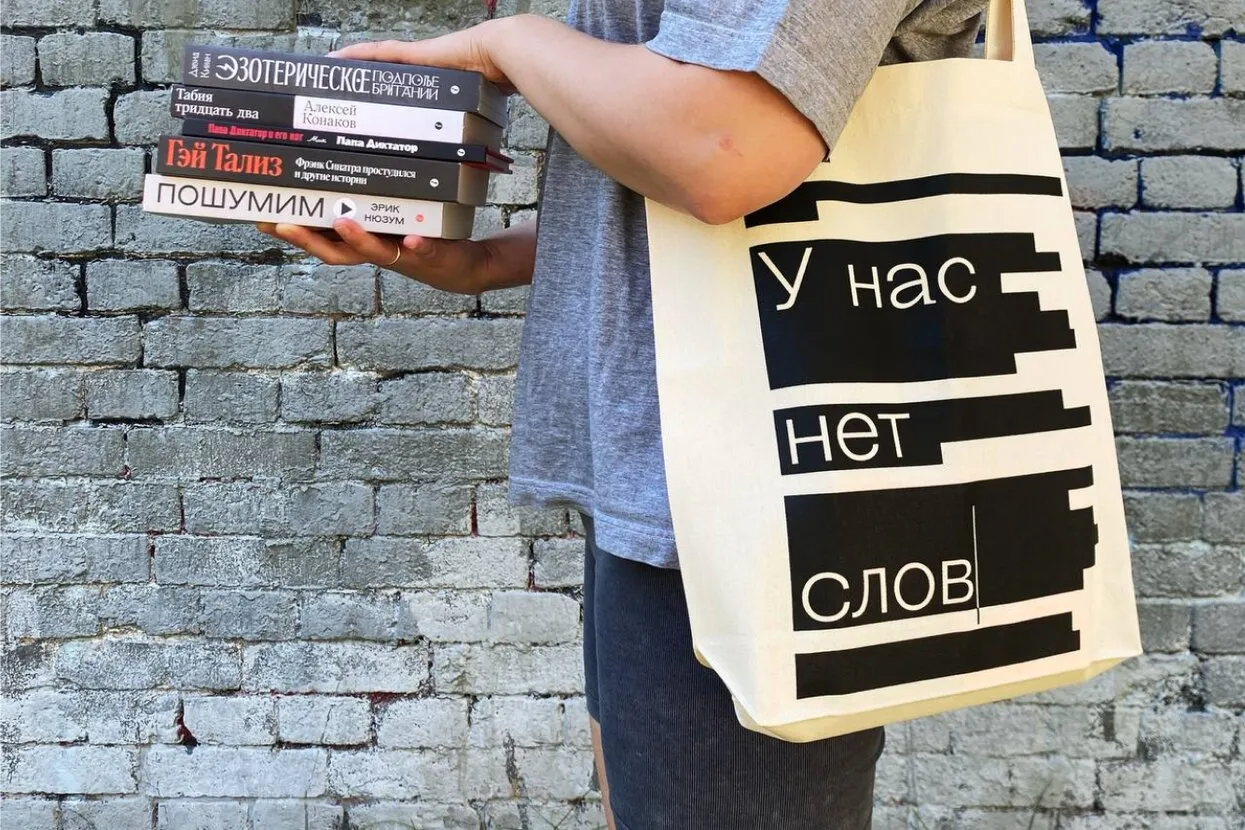
Why the closure of Russian publisher Individuum is such a loss for Russian-language literature
Individuum is closing. In its 11 years, the publisher’s team showed that there was another way to publish literature in Russian: with energy, flair (just look at their covers), and speed. Founded by people with media backgrounds, the publisher always understood what interested readers at any given moment. Literary critic Alex Mesropov explains why its closure cannot be ignored.
Many people have a favorite Individuum book.
In 2020, I picked up Brian Raftery’s “Best. Movie. Year. Ever.” and realized I was no longer surprised to see nonfiction published in Russia in paperback, with original cover designs — just like in the West. It’s the kind of book you want to display prominently on your shelf.
And that’s before you get to what’s inside: Raftery’s book explores the landmark films of 1999 that many millennials remember from childhood. The publisher had thought of everything: owning such a beautiful book made you feel special, while its subject connected you with other readers — fans of “The Blair Witch Project” or “The Sixth Sense,” for instance.
Perhaps that was Individuum’s greatest achievement: choosing its books made you feel both unique and part of something shared and important.
The people at Individuum were true publishing nonconformists: they wanted to publish radically different books in Russian — and that led to a genre they called “adventure nonfiction.”
They also made sure their books were professionally produced. I think many, if not all, of those who worked with them would confirm how different their approach was from that of other Russian publishers. Original design, thorough editing, their own research and fact-checking, decent pay, attention to authors’ views — everything reflected their professionalism.
Individuum reminded us that independent publishing involves more than selfless devotion to culture. Everyone involved deserves respect, and that should be normal.
Perhaps they managed all this because they had worked outside the book industry. Alexey Dokuchaev and Mikhail Vrubel, who founded Individuum in 2015, came from media and film. Felix Sandalov, who became editor-in-chief in 2018, had worked in the media for more than a decade, including at Afisha in its heyday. Maxim Balabin, who later became the publisher’s art director, had also worked there. Their books were available as ebooks through the easy-to-use Bookmate service. In other words, they all understood modern media, how it changes reading habits, and what interests young readers.
So what was new about their “adventure nonfiction”? Individuum knew that many people in Russia had unique professional experiences that could interest others — all that remained was to turn those experiences into gripping books. Publishers had previously overlooked these experiences: Russian nonfiction was very conservative.
But in the Russian media of the late 2000s and the first half of the 2010s, people with unusual experiences had already begun sharing them. You could find excellent long-form writing that connected personal stories with issues of public importance. Individuum approached the writers with a proposal: let’s turn your long-form pieces into great books. Whether you were an anthropologist or a reporter, a young mother or a stage actor made no difference. Everyone had a right to tell their story, especially if their experience was unlike anyone else’s.
This approach produced books that became hits in 2019–2021 and cemented Individuum’s reputation as one of Russia’s leading publishers: Olga Allenova’s “Forpost” (“Outpost”), Daniil Turovsky’s “Vtorzheniye” (“Invasion”), Robert Garayev’s “Slovo patsana” (“A Boy’s Word”), Maxim Semelyak’s “Znachit, uragan” (“That Means a Hurricane”), and others. These books explored different — often ugly — sides of contemporary Russia. They brought readers stories that had been pushed out of public view: uncomfortable testimony about the terrorist attack in Beslan, the story of Russian hackers working for the Kremlin, a chronology of the rise of criminal culture in Tatarstan in the 1990s, and the rightward turn of Russia’s cultural elite in the 2000s.
The writers’ personal perspectives made these stories emotionally engaging and, surprisingly, even universal (good editing probably had a lot to do with that). Writers and readers found a sense of solidarity: it turned out that professional anthropologists, doctors, and reporters with international experience worried about the same things as ordinary young city dwellers. You could even talk about those problems with the authors in terms you both understood: the editors had made sure the books were clearly written. Readers would then go to book launches and fairs, where they met these authors, sometimes also running into them at vodka bars or rallies. And all of this was thanks to one independent publisher.
Individuum did more than publish the latest Russian-language nonfiction — it also released a wide range of translations. These included internationally acclaimed classics of journalism that had long been unavailable in Russian, such as John Hersey’s “Hiroshima,” as well as unusual books about women’s place in society, from Stoya’s “Philosophy, Pussycats, & Porn” to Christine de Pizan’s “The Book of the City of Ladies,” written in the 15th century.
Its fiction was distinctive, too: think of the novels and short stories of Roman Mikhailov, who quickly attracted a community of fans, or Charlie Kaufman’s “Antkind” — a brilliant, challenging novel by a director whose work is equally brilliant and challenging.
The publisher had an excellent instinct for what to release. Producing a timely book quickly, without sacrificing quality, became routine. Have all your friends taken up birdwatching? Here’s a classic on the subject. Or become technology skeptics? Here’s a book for you. Is everyone arguing about gender? Here’s the big new book from the United States.
That remained true throughout, including the last two years, when Alexey Kiselyov was editor-in-chief. Bold new bestsellers kept coming out during that period, too — under very different, very difficult conditions.
Since 2022, the publisher has done more than stay relevant — it has become even more relevant. As everyone watched the state destroy documentary theater in Russia, Individuum published a book by the founder of Teatr.doc. As years of debate continued over mass killings and who bore responsibility for them, it published a book about genocide and retribution.
When books in Russia began appearing with passages removed because of censorship, it released an edition of “Yevgeny Onegin” with cuts. And when the state began persecuting publishers, it released a scholarly study of literary policy in the Third Reich.
The publisher’s team had faced pressure from law enforcement even before the war, but the first truly devastating blow hit its imprint, Popcorn Books, in 2025. It was Popcorn Books that had published the young adult hit “Leto v pionerskom galstuke” (“Pioneer Summer”).
A call by one “well-wisher” to set fire to the publisher’s office was followed by a sequence of events familiar from the news of recent years. The Justice Ministry added employees and authors of Popcorn Books and Individuum to its register of “foreign agents.” Online booksellers — including Labirint — began withdrawing their books from sale. Novels and nonfiction with queer themes disappeared from stores after the “international LGBT public movement” was declared extremist.
The forced sale of Individuum to businessman Denis Kotov in 2022 and the transfer of control to the publisher Eksmo in 2023–2024 did not change the situation. The criminal prosecution known as the “publishers’ case” began in May 2025, when three Individuum employees were charged under a law concerning an “extremist organization.” In 2026, they received suspended sentences.
In this appalling situation, public support from the frightened book industry was barely visible. Only the publisher’s readers offered real help. But there were obstacles even here: Moscow’s Non/fiction and several other book fairs repeatedly refused to let Individuum participate — often at the last moment, when staff were already setting out books at their booths. In 2026, the publisher said it was closing.
Still, Individuum will not disappear without a trace. And its legacy goes beyond books. A community formed around the publisher in which young writers, editors, translators, and other professionals learned a great deal from one another. Some have left the country and others have stayed, but there is no doubt that these young publishing professionals will, in one way or another, carry on the work Individuum began. The gripping, bold books about contemporary life that readers have grown accustomed to over the past 11 years will continue to appear in Russian.
At Meduza, we are committed to transparency about our use of artificial intelligence in the newsroom. The story you’re reading was written by one of our living, breathing journalists and translated from Russian using an AI model configured to follow our strict editorial standards. This translation process is the result of extensive testing and refinements to ensure our English-language coverage is timely and accurate. A Meduza editor reviews every draft before publication.
If you find any errors in this translation, please contact us at reports@meduza.io.
To read Meduza’s exclusive content in English, please subscribe to our newsletter.
Alex Mesropov
What kind?
In 2020, the Tatarstan prosecutor’s office reviewed the book Slovo Patsana for banned content and extremism.