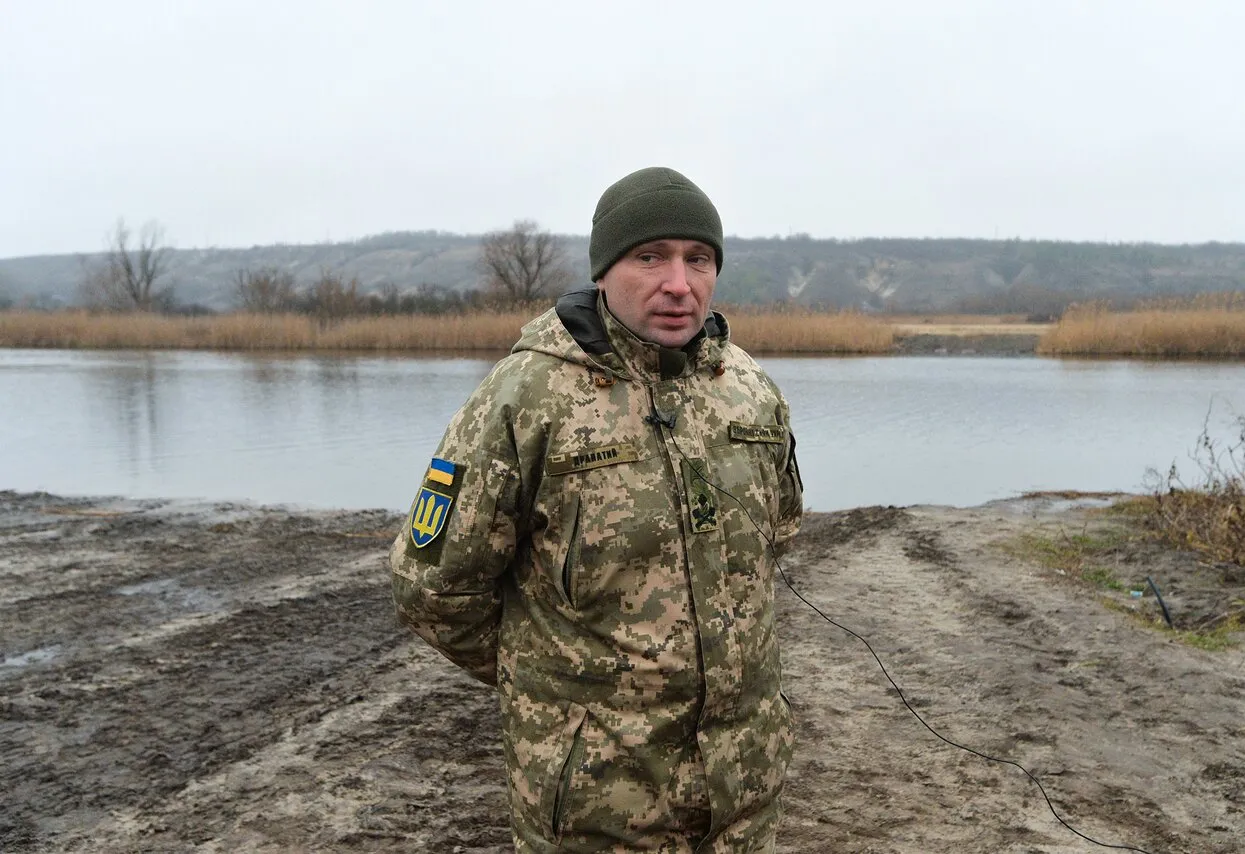
How does a general who resigned over the deaths of 12 soldiers return a year later to lead Ukraine’s army? Meet Mykhailo Drapatyi, the new commander-in-chief.
Volodymyr Zelensky has appointed General Mykhailo Drapatyi as Ukraine’s new commander-in-chief. He replaces General Oleksandr Syrskyi, whom Zelensky dismissed at the height of a political crisis: Mykhailo Fedorov, who had also been dismissed as defense minister days earlier, had accused Syrskyi of scheming and blocking military reforms. Protests in support of Fedorov broke out in Kyiv and other major Ukrainian cities, and demonstrators demanded Syrskyi’s removal as well. Ukrainian journalist Kostiantyn Skorkin explains who Drapatyi is and why his appointment is not simply a concession to the protesters.
Zelensky thanked Syrskyi for his service in an address on July 21, the day he announced the change in command. Zelensky said he had already agreed with Drapatyi on the military’s priorities: striking Russia’s rear areas, closing Ukraine’s skies to Russian attacks, and improving Ukraine’s mobilization system.
Over the previous several days, Zelensky had met with senior officers to weigh possible successors. Drapatyi, commander of Ukraine’s Joint Forces, was among the front-runners.
In 2014, Drapatyi fought in the Donbas as a major. By 2022, he was a brigadier general.
Drapatyi, 43, belongs to a new generation of Ukrainian officers with no Soviet service behind them; his entire career has been built inside independent Ukraine’s military. He is the youngest commander-in-chief in the country’s modern history, a distinction that previously belonged to Valery Zaluzhny, who took the post at 48.
Drapatyi was born in Kamianets-Podilskyi, in the Khmelnytskyi region of western Ukraine. He studied at the Kharkiv Institute of Tank Troops, then began his military career in the 72nd Separate Mechanized Brigade, based in Bila Tserkva, in the Kyiv region.
During the war in the Donbas, the 72nd Brigade was redeployed to the Mariupol area. When supporters of the self-proclaimed Donetsk People’s Republic tried to seize the city on May 9, 2014, the battalion under Major Drapatyi’s command was ordered to help retake a police headquarters the separatists had seized.
During the fighting, an infantry fighting vehicle at the head of Drapatyi’s tank column smashed through a barricade the separatists had thrown across a Mariupol street. Video of the moment became one of the symbols of the start of the war in eastern Ukraine. The operation failed: Mariupol stayed in separatist hands until June 2014, when the Azov and Dnipro-1 battalions drove them out.
An armored personnel carrier breaks through a barricade in Mariupol on May 9, 2014
Battle for Ukraine
A vehicle belonging to pro-Russian forces sits in front of the Mariupol city administration building they had seized, on April 30, 2014
Sandro Maddalena / NurPhoto / Corbis / Getty Images
Mariupol, back under Ukraine’s control, on June 13, 2014
Ali Atmaca / Anadolu Agency / Getty Images
In early June 2014, the battalion under Drapatyi’s command took part in an operation near the Russian-Ukrainian border. Its goal was to cut the separatists’ supply line from Russia. Ukrainian forces came under fire from the Russian army and were surrounded near the town of Izvaryne, and they fought their way out in heavy combat.
Drapatyi later recalled:
There were days when we came under nonstop fire from every type of artillery and mortar for seven hours straight. We were badly outmatched, help wasn’t coming, ammunition was running out, and almost all of our equipment had been knocked out of action. That’s when the units made a breakout attempt. Not everyone made it out, but those who broke through truly became heroes.
A dugout used by Ukrainian border guards near Izvaryne in June 2014
podrobnosti.ua
In the end, the Ukrainian force under his command broke out of the encirclement and linked up with the main body. The troops saved much of their heavy equipment.
Pro-Russian forces at the time offered the Ukrainian armed forces a “green corridor” to withdraw from the encirclement. But Drapatyi chose to fight his way out instead.
Later events suggested he had probably been right: in August 2014, a Ukrainian force in the same situation near Ilovaisk trusted the enemy’s promises and came under devastating fire as it withdrew. Vladimir Putin said at the time that “the Ukrainian military took advantage of the pause the militia had given them to attempt to use force.”
Drapatyi was promoted to lieutenant colonel after the operation. He spent some time at the National Defense University of Ukraine in Kyiv, then returned in 2016 to the Anti-Terrorist Operation zone in eastern Ukraine — first as chief of staff of the 30th Separate Mechanized Brigade, then as commander of the 58th Separate Motorized Infantry Brigade, a post he held until 2019.
In 2021, Drapatyi received the Queen’s Sword, a British military award, as the top graduate of the operational-strategic level course. Melinda Simmons, then Britain’s ambassador to Ukraine, presented it to him.
Mykhailo Drapatyi receives the award from UK Ambassador Melinda Simmons in 2021
Melinda Simmons / X (Twitter)
In August 2021, Drapatyi became deputy commander of Ukraine’s Joint Forces, the grouping responsible for the Donbas. He oversaw troop training and was promoted to brigadier general that year.
Drapatyi made his name in the fall 2022 counteroffensive, then took responsibility for the deaths of soldiers in a Russian strike during exercises.
After Russia’s full-scale invasion began, Drapatyi became head of Operational Command South. His troops defended Kryvyi Rih, President Zelensky’s hometown, against the Russian advance.
From August to November 2022, Drapatyi helped lead the counteroffensive that retook Kherson and the part of the Kherson region on the right bank of the Dnipro River. Ukraine’s Defense Ministry called him one of the key organizers of the victory in the battle for Kherson, when he headed the Kherson operational grouping.
In February 2024, Drapatyi was appointed deputy chief of Ukraine’s General Staff.
During the Russian offensive in the Kharkiv region from May to September that year, Drapatyi commanded the Kharkiv operational-tactical grouping, which halted the advance.
From September to November, with the Kharkiv front stabilized, he took charge of the Luhansk grouping, which held a section of the Donbas front. He was promoted to major general at the same time.
Those commands gave Drapatyi considerable standing in the ranks. Subordinates described him to the Ukrainian outlet Ukrainska Pravda as a commander who protects his soldiers’ lives and does everything possible to minimize casualties.
Drapatyi became commander of Ukraine’s Ground Forces in late November 2024. (One of his predecessors in that post, General Oleksandr Syrskyi, had become commander-in-chief earlier that year.)
By early summer 2025, however, he had resigned, taking responsibility for the deaths of soldiers at a training range in the Sumy region, where a Russian Iskander missile struck troops during exercises. Twelve soldiers were killed. Drapatyi said at the time: “I didn’t push hard enough, didn’t persuade, didn’t change the way we treat the individual in the ranks. That’s my responsibility.”
Two days later, he was appointed head of Ukraine’s Joint Forces Command, a strategic-level command body that plans and conducts Ukraine’s joint operations. The job formally made Drapatyi the third-ranking officer in the military, behind the commander-in-chief and the chief of the General Staff.
Rustem Umerov, then the defense minister, said Drapatyi had been given the Joint Forces so that he could concentrate entirely on the front and on combat. Drapatyi himself said he took the job after a long conversation with the president.
In October 2025, Drapatyi was appointed to head the Joint Forces grouping defending the Kharkiv sector. Ukrainian media linked the move — which narrowed his authority — to his conflict with Syrskyi, who reportedly saw the popular commander as a dangerous rival who might unseat him.
When Syrskyi clashed with Defense Minister Fedorov, Drapatyi sided with Fedorov.
Sweeping reforms of the Ukrainian military, aimed chiefly at technical modernization, began after Fedorov became defense minister in January 2026.
Drapatyi backed the new minister; Syrskyi clashed with him. (Zelensky later acknowledged the conflict. Syrskyi denied it.)
The cooperation between Fedorov and Drapatyi caused discontent in the army’s leadership. According to Fedorov, Syrskyi reprimanded Drapatyi several times. The conflict ended with Fedorov’s dismissal, which set off a political crisis. Drapatyi was one of the few senior officers to speak out openly in support of the ousted minister.
Amid the crisis and the protests, Zelensky held a series of meetings with senior officers to take stock of the army and the front — meetings that amounted to a casting call for a new commander-in-chief. Several officers spoke in Syrskyi’s defense. The protesters wanted him gone.
Kyiv residents protest the dismissal of Defense Minister Mykhailo Fedorov on July 21, 2026
Svet Jacqueline / ZUMA Press Wire / Scanpix / LETA
Zelensky announced on July 21 that he had decided to dismiss Oleksandr Syrskyi and appoint Mykhailo Drapatyi as Ukraine’s new commander-in-chief.
Drapatyi thanked Zelensky for his trust and Syrskyi for his work strengthening the military. Syrskyi, in turn, said he was leaving his successor an army “on the offensive.”
A Rating Group poll found that 55% of Ukrainians supported Syrskyi’s removal; 72% had opposed Fedorov’s.
Drapatyi has already made his first appointments. Major General Ihor Skibiuk, who commanded Ukraine’s Air Assault Forces, has become chief of the General Staff. The two served together in the Kherson region in 2022.
Valery Zaluzhny, the former commander-in-chief and now Ukraine’s ambassador to Britain, said the new commander-in-chief “will have it very hard”: “[Drapatyi] will have it significantly harder than he imagines. But Mykhailo will certainly never have to feel ashamed. A person of honor has no idol, so he has nothing to lose. The only thing he has is his duty.”
Fedorov called Drapatyi “a breath of fresh air and a new source of hope.”
Mykhailo Drapatyi shakes hands with President Volodymyr Zelensky a day before being named commander-in-chief of Ukraine’s Armed Forces, on July 20, 2026
Ukrainian Presidential Press Office / AP / Scanpix / LETA
Kyrylo Budanov, Zelensky’s chief of staff, backed Drapatyi’s candidacy. Ukrainian political analyst Volodymyr Fesenko said the change was more than a concession to public anger: of the handful of plausible candidates, he said, Drapatyi was the best prepared for the job.
At Meduza, we are committed to transparency about our use of artificial intelligence in the newsroom. The story you’re reading was written by one of our living, breathing journalists and translated from Russian using an AI model configured to follow our strict editorial standards. This translation process is the result of extensive testing and refinements to ensure our English-language coverage is timely and accurate. A Meduza editor reviews every draft before publication.
If you find any errors in this translation, please contact us at reports@meduza.io.
To read Meduza’s exclusive content in English, please subscribe to our newsletter.
Kostiantyn Skorkin
“Azov”
The 12th Special Forces Brigade of Ukraine’s National Guard. Azov formed as a volunteer battalion during the war in the Donbas in 2014, was later reorganized into a regiment and then a brigade, and became part of the National Guard. Russian authorities designate Azov a terrorist organization, and its activities are banned in Russia.
ATO, the “Anti-Terrorist Operation”
In April 2014, Ukraine’s acting president, Oleksandr Turchynov, announced the launch of an anti-terrorist operation in the country’s east — the term Kyiv used officially for years to describe the armed conflict in the Donbas.
Queen’s Sword
The award goes each year to the top graduate of the operational-strategic level of training at Ukraine’s Ivan Chernyakhovsky National Defense University. The United Kingdom first gave the honor to the Ukrainian university in 1995.