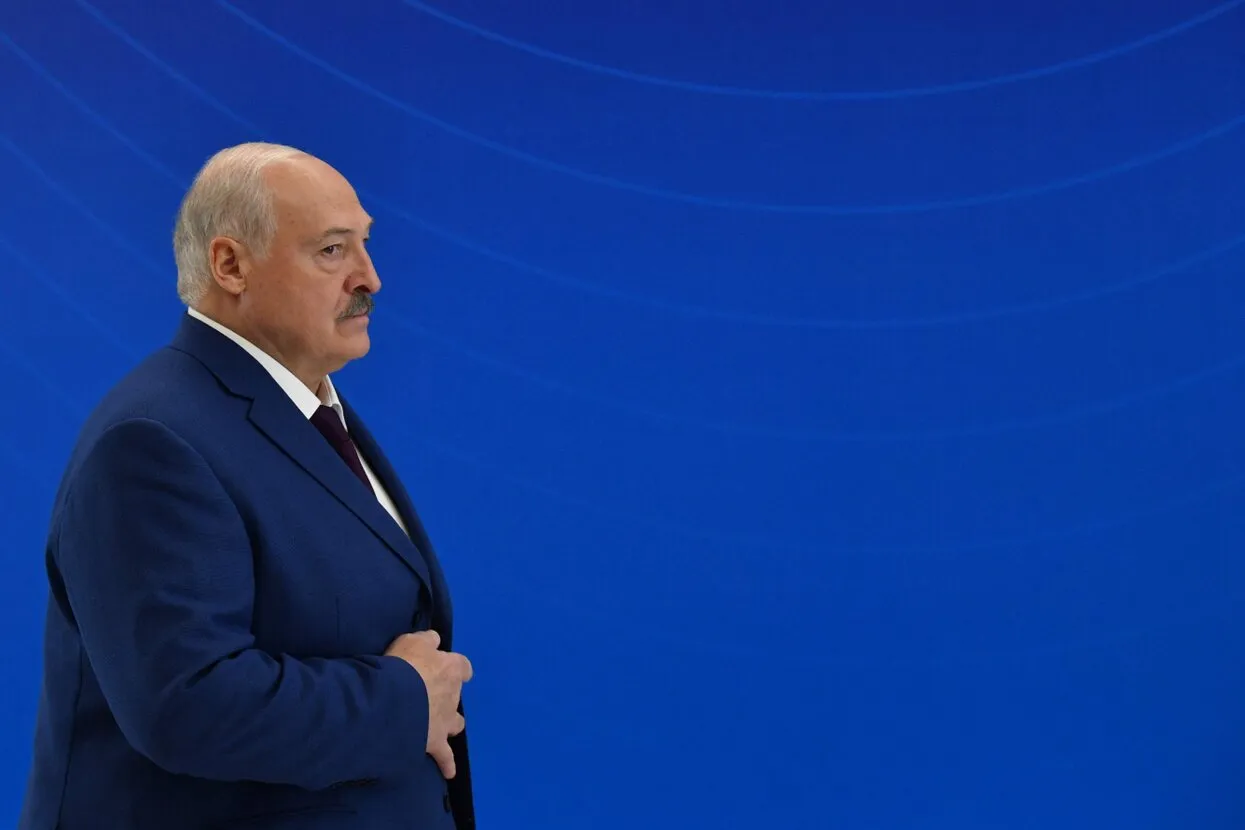
Caught between Kyiv’s ultimatums and Moscow’s financial blackmail, Lukashenko faces mounting pressure over the war in Ukraine
Russia has stepped up pressure on Belarus this year in a bid to draw the country deeper into the war in Ukraine, The Wall Street Journal reported, citing current and former European and Russian officials. According to those officials, Moscow wants to use Belarusian territory to expand drone strikes against Ukraine, pull a portion of Ukrainian forces away from Donbas, and conduct operations against NATO countries that border Belarus.
A former Russian intelligence officer told the WSJ that Moscow conducts its negotiations with Alexander Lukashenko primarily through Russia’s ambassador to Belarus, Boris Gryzlov, using financial support that Minsk depends on as leverage.
There are no signs that Russia will draw Belarus further into the war in the near term, the WSJ’s sources said — though they stressed the possibility remains, particularly given that Russia has recently slowed its advance in the Donbas and has faced intensifying Ukrainian strikes on its rear areas, triggering a fuel crisis across the country.
Russia has been using Belarusian territory and infrastructure for attacks on Ukraine since the start of the full-scale war. In 2023, Lukashenko said he was prepared to enter the war fully if Ukraine attacked Belarus. Over the past month, however, he has twice promised that he would not allow Belarus to be drawn further into the Russia–Ukraine conflict.
“Belarus is completely exposed to the Ukrainian military. We fully understand that our key infrastructure — including production and logistics facilities — would come under attack,” Lukashenko said in an interview with Al Arabiya recorded on June 12.
On June 17, a bus carrying Belarusian children came under drone attack in a Russian border region. A woman accompanying the children was killed and six more people were injured, including four children. Russia and Ukraine blamed each other for the attack. Lukashenko claimed that “the drone was Ukrainian,” but on the whole responded to the attack with restraint.
On June 19, Volodymyr Zelensky stepped up pressure on Lukashenko. Commenting on Lukashenko’s promises not to enter the war, Ukraine’s president said this should be proven not in words but in deeds. “There are relay stations on his towers. On his territory, along two regions bordering Ukraine, there is equipment that directs fire at Ukrainian civilians. Can he remove it? I think a week would be enough for him to do that. If he doesn’t, we will,” Zelensky said.
What relay stations? Commentary from Meduza's "Explainers" desk
Ukraine has long claimed that antennas located on Belarusian territory are part of two-way video communication systems used with Russian long-range drones of the Geran and Gerbera type that attack Kyiv. Russia’s armed forces, like Ukraine’s, use mesh networks for video communication with drones: UAVs equipped with cameras and special modems serve as aerial relay stations for one another, allowing communication to be maintained over tens and hundreds of kilometers. But they receive their primary signal from ground-based relay stations. Ukraine believes that Russian relay stations for mesh networks in the Kyiv area are located in Belarus.
Zelensky did not specify exactly how Ukraine might “remove” the relay stations. Ukraine’s Foreign Ministry ambassador-at-large Yaroslav Chornohor, who oversees relations with Belarusian democratic forces, told Zerkalo that physical destruction of the equipment was not necessarily what was meant. “A similar situation already occurred in February. Back then, it proved possible, so to speak, to remotely suppress those relay stations,” Chornohor said.
Experts are divided on whether Zelensky’s ultimatum should be taken seriously. In a conversation with Zerkalo, former Ukrainian ambassador to Belarus Ihor Kyzym called it a “test of nerve,” while the editor of the Ukrainian outlet European Pravda, Serhii Sydorenko, expressed the view that Ukraine is genuinely prepared to move to strikes on Belarusian territory. Political commentator for Radio Liberty’s Belarus service Yury Drakakhrust pointed out that such a strike would become a casus belli — a pretext for war between Belarus and Ukraine — which would benefit only Russia.
Analyst Alexander Friedman, commenting on Zelensky’s threat, offered this view: “Official Minsk has, on the whole, taken steps toward de-escalation. But those steps were perceived by Kyiv as a sign of weakness. And so it seems to me that in Kyiv, the view has formed that Lukashenko is weak, unsure of himself, and afraid of Ukraine. And in such a situation, [it makes sense] to press him, to play on his nerves, and even to issue an ultimatum… [Especially since] Ukraine right now has a completely new sense of self, if you look at it, and [a new] self-confidence. […] It would be strange if, under such conditions, they didn’t try to press Lukashenko.”
Zelensky’s ultimatum alarmed residents of Belarus. Belarusian propagandists reacted aggressively: Grigory Azarenok advised Zelensky to “sober up.” Belarus’s military, however, took a conciliatory stance, reiterating the promise not to be drawn into the conflict. Lukashenko has yet to comment on Zelensky’s remarks about the relay stations — even though nearly a week has passed. He has, however, announced a meeting with Vladimir Putin (at which Zelensky’s ultimatum will also be discussed, the Kremlin assured) as well as some kind of “extended trip” abroad.
At Meduza, we are committed to transparency about our use of artificial intelligence in the newsroom. The story you’re reading was written by one of our living, breathing journalists and translated from Russian using an AI model configured to follow our strict editorial standards. This translation process is the result of extensive testing and refinements to ensure our English-language coverage is timely and accurate. A Meduza editor reviews every draft before publication.
If you find any errors in this translation, please contact us at reports@meduza.io.
To read Meduza’s exclusive content in English, please subscribe to our newsletter.