
stories
As Russian Orthodox Patriarch Kirill turns 80, Meduza retraces how he went from backing Ukrainian self-determination to defending Moscow’s full-scale invasion
Source: Meduza
stories
As Russian Orthodox Patriarch Kirill turns 80, Meduza retraces how he went from backing Ukrainian self-determination to defending Moscow’s full-scale invasion
Source: Meduza

Alexander Zemlyanichenko / AP / Scanpix / LETA
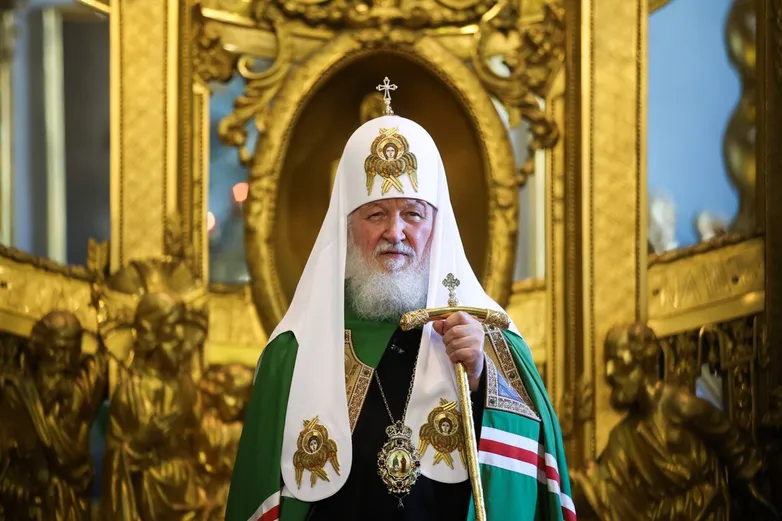
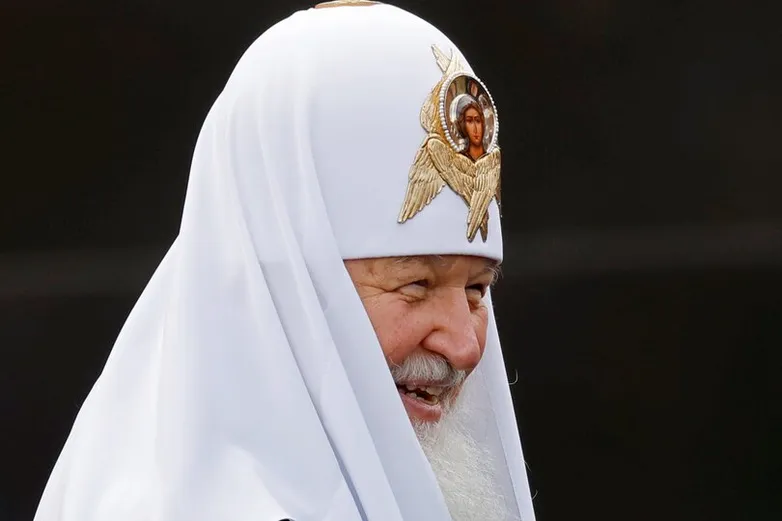
Patriarch Kirill (born Vladimir Gundyaev) turned 80 on November 20. Since 2009, he has led the Russian Orthodox Church while binding it ever more closely to the state. The Kremlin bolsters the church’s standing, and church leaders back the government’s agenda across the board. But Kirill wasn’t always such an open ally of Russian President Vladimir Putin and accomplice to his regime. Kirill’s own words show how the church became a political force and a vehicle for propaganda under his leadership. Meduza traces how the former KGB agent’s rhetoric went from compassionate to bellicose over the years.
Patriarch Kirill's church career
April 3, 1969: Takes monastic vows and the name Kirill
1969–1971: Rises from hierodeacon to archimandrite
1976–1984: Bishop of Vyborg
1984–1988: Archbishop of Smolensk and Vyazma
1988–1991: Archbishop of Smolensk and Kaliningrad
1991–2009: Metropolitan of Smolensk and Kaliningrad
2009–present: Patriarch of Moscow and All Russia
Kirill also served as rector of the Leningrad Theological Academy and Seminary from 1974 to 1984. From 1989 to 2009, he held a key post in church diplomacy as chair of the Moscow Patriarchate’s Department for External Church Relations.
January 14, 1987
Peacemaking is also our response to God’s gift of adopting us as his children and a moral prerequisite for receiving that gift. Peacemaking knows no bounds. It means peace in our hearts, in our families, in our parishes, among the people we work with, in churches and countries, and among peoples and states.
From a sermon at a joint prayer service held alongside a meeting of the World Council of Churches’ Executive Committee in Geneva
May 26, 1993
Making nationalism the highest principle means perpetuating and legitimizing the strife that tears humanity apart. It means destroying the ties of brotherhood among the peoples that made up Russia in the past and those that make it up today.
From the address “The Revival of Orthodoxy and the Renewal of Russia,” delivered at the opening of the First World Russian People’s Council in Moscow
Kirill, the Russian Orthodox metropolitan of Smolensk and Kaliningrad, Muslim mufti Ravil Gainutdin, right, and Buddhist lama Dashi-Nyama Garmazapov answer questions after a July 24, 1997, news conference at Moscow’s Danilov Monastery, where a statement by Russian Orthodox Patriarch Alexy II was released.
Alexander Zemlianichenko / AP / Scanpix / LETA
January 13, 1998
Political involvement is unbecoming of the church.
From the address “The Majority Church Amid Religious Freedom,” delivered to a delegation from the Dutch foundation De Burcht
May 26, 1999
Our spiritual tradition puts God at the center, so we regard anthropocentric humanism, which puts humanity at the center, as foreign to us. We are prepared to respect it, but we can never accept it as an absolute and unconditional good.
From the article “Circumstances of the Modern Age: Liberalism, Traditionalism, and the Moral Values of a Europe Coming Together,” published in NG-Religiya, a supplement to Nezavisimaya Gazeta
September 16, 1999
The separation of church and state is unquestionably good for the church, whatever the system of government.
From the address “The Russian Orthodox Church on the Threshold of the Third Millennium,” delivered at the Seventh International Conference on Russian Spirituality
February 17, 2005
I hope we can all show one another more compassion, give more of ourselves to one another, be more forgiving, and learn to accept each other as we are.
From a live interview with Soyuz, the Yekaterinburg Diocese’s TV channel
May 18, 2005
Today the main challenge for believers is moral relativism (double standards), which is being imposed on society under the guise of protecting human rights.
From remarks at a roundtable on human rights and personal dignity in Moscow
February 28, 2006
Human rights are the main issue in Russia today.
From remarks at council hearings “Human Rights and Personal Dignity: The View of the Church and Society”
June 7, 2006
I’d like to sincerely thank United Russia’s leaders for inviting me to speak to you. I believe the party’s work is very important for maintaining political stability in our country today. As a representative of the church, I think it matters that the party appeals to traditional spiritual and moral values even though it wasn’t founded with a religious focus. I think that’s the right approach.
From a speech to United Russia representatives, at the party leadership’s invitation, at the Bor resort outside Moscow
August 22, 2007
These days, there’s often pressure to politicize the church. If that happens, it will perish.
From an interview with Radio Mayak
Metropolitan Kirill, center, then head of the Moscow Patriarchate’s Department for External Church Relations, visits the Church of the Nativity in the West Bank city of Bethlehem on October 27, 2007.
Ammar Awad / Reuters / Scanpix / LETA
July 23, 2009
It’s not the church’s role to act as the opposition. If it becomes the opposition to the government, it too becomes part of the political process. Nor is it the church’s role to do the government’s political bidding.
From an interview with Ukrainian journalists ahead of his first visit to Ukraine
January 7, 2012
If the authorities remain unresponsive to protests, that’s a very bad sign. It shows they can’t adapt.
From an interview with the Rossiya 1 TV channel
February 8, 2012
And what about the 2000s? It took a miracle from God and the active involvement of the country’s leaders to get us out of that terrible, systemic crisis, which was destroying the very foundations of our society.
From remarks at Vladimir Putin’s meeting with the leaders of Russia’s traditional religious communities at the official patriarchal residence in Moscow’s Danilov Monastery
July 21, 2013
Lately we have faced enormous temptations. In some countries, the law endorses and justifies the choice to sin, and people who follow their conscience and oppose laws imposed by a minority face repression. This is a very dangerous, apocalyptic sign. We must do everything we can to ensure that the law never endorses sin in the lands of Holy Rus, because that would mean the nation was on a path to self-destruction.
From a sermon after the Divine Liturgy at Kazan Cathedral on Red Square in Moscow, on the feast commemorating the appearance of the Kazan Icon of the Mother of God
March 2, 2014
The Ukrainian people must decide their own future without outside influence.
From an address to the acting head of the Kyiv metropolitan see, the bishops, the priests, and all the faithful of the Ukrainian Orthodox Church about the situation in Ukraine
March 14, 2014
For more than 400 years, there have been attempts to tear the Russian World apart.
From remarks after the Liturgy of the Presanctified Gifts at Moscow’s Cathedral of Christ the Savior, on the 38th anniversary of his consecration as a bishop
August 1, 2014
No goals can be achieved through war.
From a sermon marking the centenary of Russia’s entry into World War I
March 20, 2016
Today we are talking about the global heresy of worshiping humanity, a new form of idolatry that casts God out of human life. […] This is the chief heresy of our time, and it could lead to apocalyptic events. The church must now marshal the full force of its words and ideas to overcome it.
From a sermon after the Divine Liturgy on the Sunday of the Triumph of Orthodoxy
October 15, 2019
Liberalism, at its core, is about putting yourself at the center of your life. And if I’m at the center, what could be above me? Of course that’s a sinful idea, because putting yourself at the center of your life means turning away from God. God must be at the center of our lives. But liberalism takes God out of people’s lives and puts the individual at the center instead.
From remarks at a ceremony marking the 90th anniversary of the birth of Metropolitan Nikodim (Rotov)
Russian Orthodox Patriarch Kirill, left, talks to President Vladimir Putin, right, during the Easter service in the Cathedral of Christ the Savior in Moscow, Russia, on April 28, 2019.
Alexander Zemlianichenko / AP / Scanpix / LETA
March 6, 2022
For eight years, there have been attempts to destroy what exists in the Donbas. And what exists in the Donbas is a rejection, a fundamental rejection, of the so-called values now being promoted by those who seek power over the world. There’s a test of loyalty to that power today, a kind of ticket into that “happy” world of overconsumption and apparent “freedom.” And do you know what the test is? It’s very simple and terrible at the same time. It’s a gay pride parade. Demands to hold a gay pride parade are the test of loyalty to that powerful world. We know that people or countries that reject those demands don’t become part of that world; they become outsiders to it.
From a sermon on Forgiveness Sunday
April 3, 2022
Let me say it once again. We are a peace-loving country. Our people love peace and have endured a great deal. Few European peoples have suffered as much from war as we have. We have no desire to go to war or do anything that might harm others. But our history has taught us to love our homeland, and we will be ready to defend it as only Russians can.
From remarks after the liturgy at the Main Cathedral of the Russian Armed Forces on the Fourth Sunday of Great Lent
April 10, 2022
May the Lord help us all unite in this difficult time for our homeland, including by rallying around the government. And may he give those in power a deep sense of responsibility for their people, humility, and the willingness to serve them even at the cost of their lives.
From a sermon after the liturgy at the Church of the Intercession of the Most Holy Theotokos in Moscow’s Lyuberetskiye Polya district on the Fifth Sunday of Great Lent
May 3, 2022
Russia has never attacked anyone. It’s remarkable that a great and mighty country has never attacked anyone — it has only defended its borders.
From a sermon after the liturgy at the Cathedral of the Archangel in the Moscow Kremlin on Radonitsa
September 25, 2022
We know that many are dying on the battlefield today in a war that pits brother against brother. The church prays for the fighting to end as soon as possible and for as few brothers as possible to kill one another in this fratricidal war. At the same time, the church recognizes that when someone stays true to his calling out of a sense of duty and the need to fulfill his oath, and dies in the line of duty, what he has done surely amounts to a sacrifice. He gives his life for others. That is why we believe this sacrifice washes away all the sins he has committed.
From a sermon after the liturgy at the Alexander Nevsky Skete on the 15th Sunday after Pentecost
January 19, 2023
We know that the grave threats facing peace, our country, and even all humanity today stem from an idea some madmen have gotten into their heads. They think they can now defeat Russia, a great power with formidable weapons. For generations, Russians have been strong and determined to win. They’ve never surrendered to an enemy, and they’ve always prevailed. Or those madmen think they can do what people now call “reformatting” Russia. That means imposing supposed values that don’t deserve the name, so Russians will be like everyone else and submit to those with the power to control most of the world.
As we know, the drive to defeat Russia has now taken a very dangerous turn. We pray to the Lord that he will bring those madmen to their senses and help them understand that any desire to destroy Russia will mean the end of the world.
From a sermon after the liturgy at Moscow’s Epiphany Cathedral on the feast of the Baptism of the Lord
April 21, 2025
Our country’s whole history is the most convincing proof that God is with us! And what about our Orthodox president, who came from the ranks of the security services? How did it happen that, out of the thousands who worked there, the Lord called one of them to lead Russia? Of course, there are different ways to explain how it happened. I see only one explanation. It’s divine providence. For the first time since the tsarist era, an Orthodox Christian leads our country. He is a modern man, exceptionally well educated and deeply committed to defending his homeland.
From a speech at a banquet after the Divine Liturgy at the Patriarchal Cathedral of the Dormition in the Moscow Kremlin
Patriarch Kirill of Moscow and All Russia conducts the Divine Liturgy at the Main Cathedral of the Russian Armed Forces (Cathedral of the Resurrection of Christ) near Kubinka, west of Moscow, on May 6, 2026.
Sergei Bulkin / TASS / Profimedia
More on Patriarch Kirill
At Meduza, we are committed to transparency about our use of artificial intelligence in the newsroom. The story you’re reading was written by one of our living, breathing journalists and translated from Russian using an AI model configured to follow our strict editorial standards. This translation process is the result of extensive testing and refinements to ensure our English-language coverage is timely and accurate. A Meduza editor reviews every draft before publication.
If you find any errors in this translation, please contact us at [email protected].
To read Meduza’s exclusive content in English, please subscribe to our newsletter.