news
Ukraine hit the Crimean Bridge with Ruta missiles from a firm Russian-born Mikhail Kokorich founded in Switzerland after the U.S. barred him from his own startup’s technology
Source: Meduza
news
Ukraine hit the Crimean Bridge with Ruta missiles from a firm Russian-born Mikhail Kokorich founded in Switzerland after the U.S. barred him from his own startup’s technology
Source: Meduza
Ukraine has begun gradually releasing details of its successful strike on the Crimean Bridge. Ruta drones helped bring down one of the bridge’s spans. The drones are made by a company founded by Mikhail Kokorich, a Russian-born businessman who left Russia after it annexed Crimea and later had to give up running his U.S. startup. Here’s what we know about him.
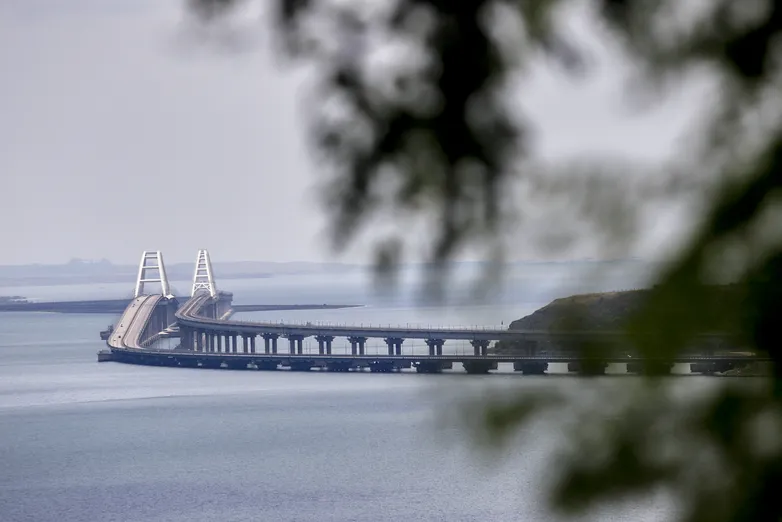
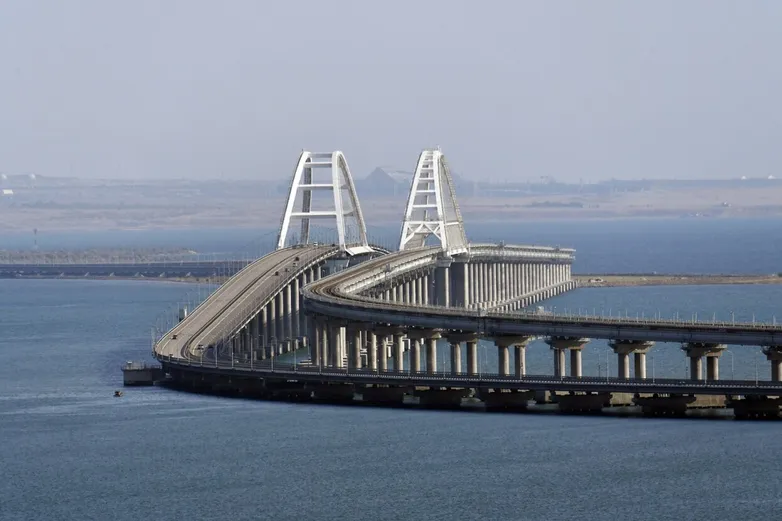
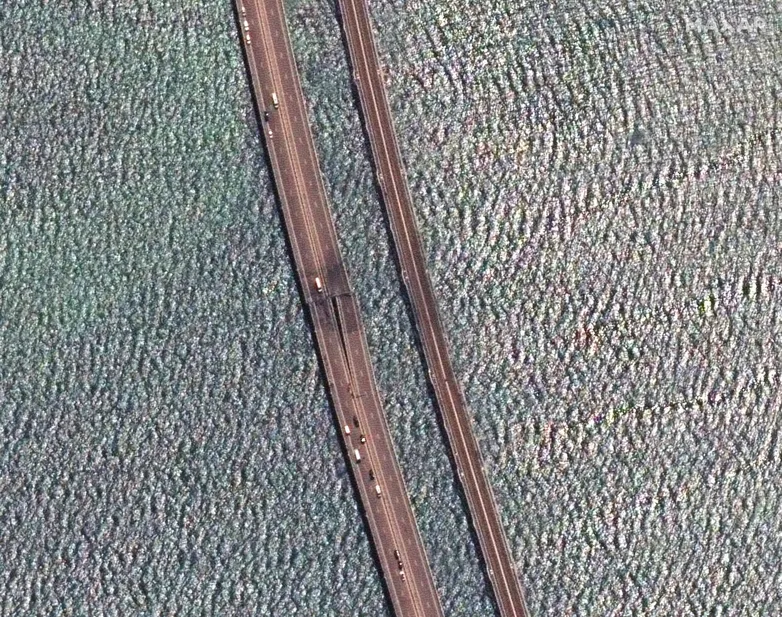
Ukraine struck the Crimean Bridge overnight November 16–17, causing one of its spans to collapse. Ukrainian President Volodymyr Zelensky then thanked the Ukrainian military and the Security Service of Ukraine and called the attack an “unprecedented operation.” Zelensky said Neptune and Flamingo missiles, as well as Ruta drones, were used during the key phase of the operation.
Destinus, a Dutch aerospace and defense company, develops and manufactures the Ruta missiles Zelensky referred to as drones. The company reported the strikes on the Crimean Bridge in a LinkedIn post.
According to the company, Ruta missiles hit the bridge on two consecutive nights. The missiles damaged the bridge’s superstructure overnight November 15–16. Seven more missiles struck the following night, bringing down one of the spans. LORD/Da Vinci systems were also used to suppress Russian air defenses. “We are proud to support the Ukrainian defense forces in their fight to defend Ukraine and Europe, and we commend their commitment, courage and professionalism,” Destinus said.
Destinus was founded by Mikhail Kokorich, a Russian-born businessman who once owned the Tekhnosila home appliance chain and founded Dauria Aerospace, Russia’s first private space company.
Kokorich, 50, was born in the Chita region and left Russia in 2014. In an interview with journalist Elizaveta Osetinskaya, he said that his space startup at the time, Dauria Aerospace, had contracts with Roscosmos and operated a U.S. division. After the annexation of Crimea, as the first sanctions against Russia were being imposed, Kokorich suggested that Dauria Aerospace’s investors and shareholders split the company into separate U.S. and Russian businesses so each could be built up independently. But he couldn’t persuade them. “That’s when I decided I had no future running that kind of business in Russia,” he said.
Kokorich moved to the United States. In 2017, he and entrepreneur Lev Khasis founded Momentus, a startup that developed space tugs to move payloads into their intended orbits. The startup soon ran into trouble because of Kokorich’s Russian citizenship. Kokorich first had visa problems. Under national security law, U.S. authorities then barred him from accessing his own company’s products because space technology is considered suitable for both civilian and military use.
In January 2021, Kokorich stepped down as CEO of Momentus. “After that, I decided my love affair with the U.S. had to end, and I’d be the one to break it off,” he said.
From the United States, Kokorich moved to Switzerland, where he founded a new company, Destinus. In October 2021, he described his idea for the startup this way: “We’re trying to build a cross between a plane and a rocket. It takes off like a plane, fires up its jet engine once it’s high enough, essentially leaves the atmosphere, flies 50 to 60 kilometers, and then lands like a regular plane.” That, he said, could cut cargo delivery times.
Cristophe Archambault / AFP / Scanpix / LETA
After Russia launched its full-scale invasion of Ukraine in 2022, the company shifted to developing military technology. In 2023, former Ukrainian Finance Minister Oleksandr Danyliuk joined the company as its president. In April 2026, Destinus announced a joint venture with the German defense group Rheinmetall to produce “advanced missile systems,” including “cruise missiles and ballistic rocket artillery.” Commenting on the partnership, Kokorich said Europe was “entering a new phase of scaling missile production.”
Kokorich finally renounced his Russian citizenship in January 2024, two years before the Rheinmetall announcement. He said he did so as soon as he was able to obtain citizenship in another country. “The way I see it, I left Russia a long time ago. I did my part. I started a lot of businesses in Russia and paid a huge amount in taxes. Russia as a country — and I mean the government — didn’t hold up its end of the bargain with me,” he told journalist Alexander Plyushchev in an interview in August 2024.
Although he renounced his citizenship, Kokorich joined the Anti-War Committee, set up in 2022 by Russian opposition figures who had left the country. In October 2025, Russia’s Federal Security Service opened a criminal case against members of the Anti-War Committee, over allegations that they sought to seize power by force and created what the agency called a “terrorist community.” Along with Kokorich, those named in the case include Mikhail Khodorkovsky, Garry Kasparov, economist Sergei Guriev, former Prime Minister Mikhail Kasyanov, and nearly 20 others.
From Meduza’s archives
At Meduza, we are committed to transparency about our use of artificial intelligence in the newsroom. The story you’re reading was written by one of our living, breathing journalists and translated from Russian using an AI model configured to follow our strict editorial standards. This translation process is the result of extensive testing and refinements to ensure our English-language coverage is timely and accurate. A Meduza editor reviews every draft before publication.
If you find any errors in this translation, please contact us at [email protected].
To read Meduza’s exclusive content in English, please subscribe to our newsletter.