
stories
In 1993, Novaya Gazeta reporters posing as a foreign buyer’s representatives were offered uranium pellets, plutonium plates, and a Soviet SS-20 nuclear warhead
Source: Novaya Gazeta

stories
In 1993, Novaya Gazeta reporters posing as a foreign buyer’s representatives were offered uranium pellets, plutonium plates, and a Soviet SS-20 nuclear warhead
Source: Novaya Gazeta
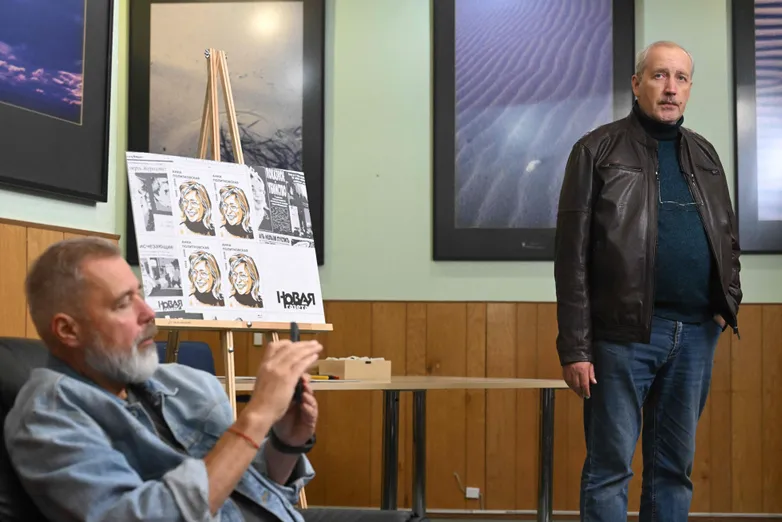
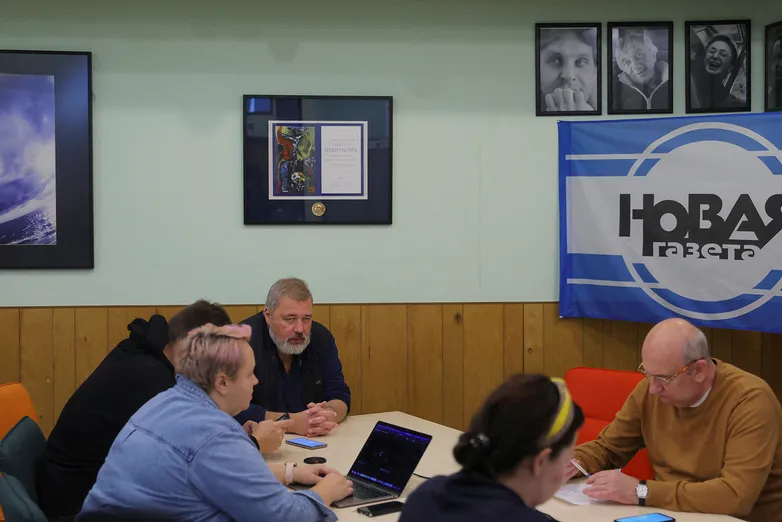
In late October, Novaya Gazeta said it was closing after 33 years. It’s been Russia’s oldest independent publication, and it has documented every major event in the country’s modern history, from the shelling of the Russian parliament building in 1993 and the wars in Chechnya to the start of Russia’s full-scale invasion of Ukraine and Yevgeny Prigozhin’s mutiny.
Together with RIMA and Kronika, Meduza is publishing one of Novaya Gazeta’s first investigations, from when it was still called Novaya Yezhednevnaya. Written by Dmitry Muratov, Kirill Belyaninov, and Vladimir Filin, it examines a time when private individuals could buy nuclear weapons in Russia.
On November 5, World Digital Preservation Day, RIMA, an archive of Russia’s independent media, and Kronika, an international project preserving independent journalism and digital media archives, are opening the complete Novaya Gazeta archive: every print issue since 1993, the newsrooms’ websites, and special projects. Some of this material was previously unavailable. It is now all in one place, freely accessible, with full-text search.
Related reading
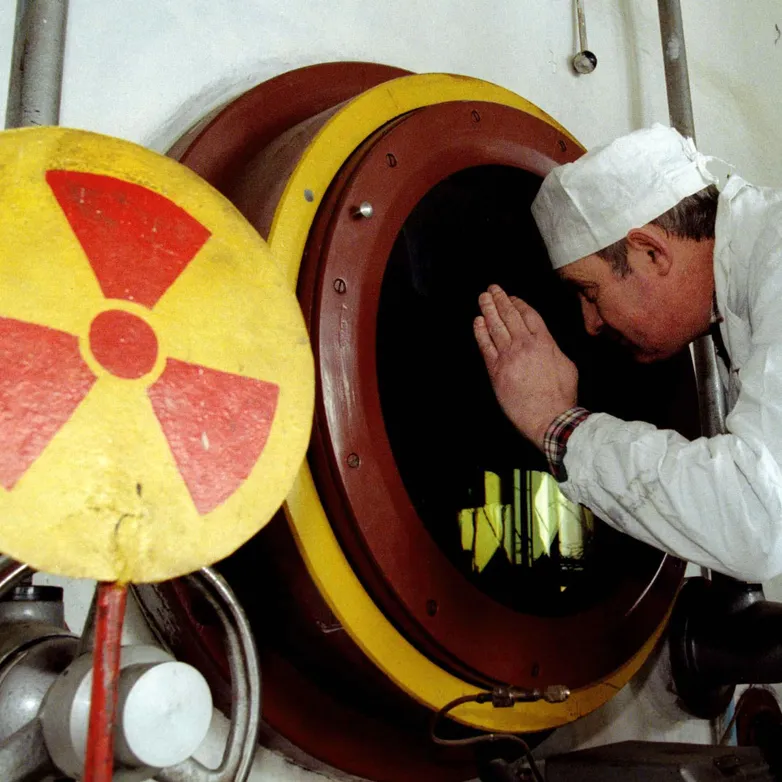
To repeat the original 1993 headline: In Russia, a private individual can buy an atomic bomb. You can get one whole or, if you’re short on money or really want to make one yourself, buy it in parts. We intend to prove that a bomb, or its components, can be bought and sold. We discovered this during a two-month investigation, posing as representatives of a major foreign businessman. Regrettably, we have to leave out certain details, names, and addresses so some maniac can’t use the facts we’ve gathered to declare himself a nuclear power someday.
The sellers
Across the Commonwealth of Independent States, there is a fairly extensive network of “fans” [slang for dealers who mostly “blow hot air”] — dealers in rare earths, platinum and gold scrap, beryllium, osmium isotopes, and, finally, so-called red mercury. The business is considered highly profitable, although most of the time these “fans” are just selling hot air: They bluff, take a deposit, and run off with it.
Any “fan” can pull a battered certificate from his pocket attesting to the quality of his “red mercury,” even though no such substance exists in nature and the certificate was either bought from the Giredmet research institute or forged.
On the side, “fans” might sell chocolate bars or cultivate friendships with Russia’s top officials. Take Sadykov, director of the Yekaterinburg conglomerate Promekologiya, who secured permission from Yeltsin and Burbulis to export this very “mercury.”
Still, the “fans” do pull off some deals. The dealers are a distrustful lot, and their ranks often include former servicemen, arms factory workers, employees of defense ministries and research institutes, and retired security service officers. Getting into the “fan” network is difficult, but possible. We did.
The “fans” generally steal their radioactive materials and rare earths. Sometimes they ship them out disguised as scrap metal. We know of one case in which an entire container of an extremely rare material used to detonate a nuclear explosive was written off at a restricted-access facility. It was simply listed as lost in a fire.
Thanks to their well-established old connections, the “fans” always know about the defense industry’s latest technological developments. During one deal, we were offered a radar-absorbing coating for aircraft. The Americans used the same technology to build the Stealth aircraft. Later, we were shown a container of the material.
The “fan” network has fairly harsh rules: If one dealer manages to pass off clay wrapped in lead as plutonium to another and the fraud comes to light, the culprit owes a “penalty” — a hefty sum. There is also “mirroring,” where each partner puts up the same amount of money. If, say, one demands a $5,000 deposit, the other has the right to insist that he hand the same amount to a third party. And if the goods fail the quality check… One of our “partners” once disappeared. It wasn’t until a week later that we learned the associates he had cheated were holding him hostage until he paid the penalty. He turned down our offer to help free him: Once you break the network’s rules, there’s no getting back in.
All payments involving the “fans” are made in foreign currency. Even mentioning rubles is considered bad form, though there have been cases of payment “at the exchange rate.” Some say they have accounts at foreign banks, and the network has its own “bankers” who help move the money. They very rarely take the entire sum in cash, preferring to receive about 10% in “hard cash” and have the rest transferred to a bank.
The goods are shipped out through the Baltic states. Until the “goods” are delivered, one of the sellers stays with the buyer as a hostage. The “fans” don’t specialize in any one commodity: They’re willing to get anything if they think the client has money. So as soon as we showed clear interest at one of the meetings held to “check us out” and proved we could pay, we were offered… a batch of weapons-grade plutonium.
An announcement of the next installment of the investigation on the front page of Novaya Gazeta, No. 17, July 16, 1993
A dirty bomb
At the appointed time, we arrived at an unassuming office in one of Moscow’s most prestigious neighborhoods, equipped with radiation meters and protective suits borrowed from Greenpeace’s Moscow office. Our task: to collect a sample of the goods for testing — a few grams of plutonium in a lead container. The seller pulls a lead tube, flattened at one end, from a safe. The radiation meter shrieks wildly: Within 10 seconds, the beta radiation reading is 2,000 (!) times the normal level. For packaging, we are offered a cardboard cookie box.
The gamma spectrometry results: americium-241, uranium-237, plutonium-241, europium-154, thorium-232, uranium-238, cesium-137.
The conclusion: The sellers were passing something else off as “pure plutonium.” But scientists said the container’s contents were “an Irish terrorist’s dream come true,” an ideal material for making a radiological bomb — or, more simply, a dirty bomb. There would have been enough plutonium to poison a quarter of Moscow.
The rules in such cases are harsh, and we followed them. We had a tough conversation with the sellers. As compensation for our lost time — 24 hours — they offered us $1,000 or a batch of the “real” goods. The deadline was a week. Meanwhile, word came from a town outside Moscow, which we’ll call N, that a batch of uranium was already waiting for us.
Uranium in pots and milk cans
The uranium really was waiting. In a milk can sealed with lead for safety. The uranium pellets had been stolen from an enrichment plant that employs a substantial share of the town’s residents. This despite the plant’s extremely tight security: sentries, several rows of barbed wire, OMON riot police, and its own security service. There are metal detectors and radiation meters at the checkpoints, and cameras in the most unexpected places. But people still steal.
And in town N, people aren’t afraid of radiation: “If we’re still alive after all this time, nothing’s going to happen to us now.” Every kid in town N knows about the high-level radioactive waste burial sites, the contaminated trucks and tractors, and the forests fenced off with barbed wire: “Stop! Danger zone.” There are rumors of a special psychiatric hospital where workers from the underground workshops spend years in treatment. In a town where people long ago stopped noticing the unbearably yellow smoke from the smokestacks, uranium pellets are handled as calmly and matter-of-factly as a carpenter handles a log.
The plant worker whom the middlemen introduced us to didn’t go into much detail about how the pellets were smuggled out. “People carry them out in cooking pots, too,” he said. He did say he had only 10 kilograms on hand at the moment, but could bring out more if needed. Then he left to fetch a couple of pellets from the milk can hidden in his garage and bring them back in a homemade container.
The result: We really did receive pure uranium-238. But the enrichment level was closer to that of nuclear fuel than to that of weapons-grade material. Still, after Chernobyl, nobody needs an explanation of what a few kilograms of “reactor-grade” uranium can do…
We didn’t even bring up a penalty with this seller. He was just trying to escape poverty. He just happened to have found work at a uranium enrichment plant. Had he worked at a meatpacking plant, he would have offered us all-natural ham just as cautiously.
More on Novaya Gazeta
‘The plutonium’s here. We’ll cut off a piece now’
Meanwhile, the “network” was working flat out for us. Material began arriving from caches and secret warehouses. At our next meeting, the sellers who had previously foisted spent fuel on us said: “All set, we’ve got your 242.” That meant another shipment of plutonium had arrived in Moscow from Siberia. What happened next is beyond anything a normal person could dream up.
After rummaging in his safe, the seller pulled out a sheet of lead folded into an “envelope.” He spent about five minutes fiddling with it before extracting a broken piece of metal plate that he said was coated with weapons-grade plutonium. The plate was about the size of a pack of cigarettes and 2 to 3 millimeters thick.
“But I can’t give you the whole plate,” he said. “It’s worth far too much money.”
We refused to put down a deposit. So the seller took a hammer and wire cutters and, before our eyes, spent 20 minutes breaking off a piece weighing about 6 grams. Dust from what later turned out to be a scandium coating flew around the room. Then he held a radiation meter up to the plate. “Ten times the natural background level,” he said proudly, and asked whether we had a container. We didn’t. He sighed, took a chisel, and cut off a piece of lead. Then he rolled it into something resembling a tube and put the plate inside. The radiation meter was shrieking like mad, but by then we felt just like those workers at the uranium plant.
The test showed plutonium.
Admittedly, obtaining 1 kilogram of plutonium would have required at least 80 kilograms of plates. We were offered 1.8 kilograms immediately, followed by another 25 kilograms. With payment in advance, they promised to supply any quantity.
Read about three decades of Russian history through Novaya Gazeta’s reporting and investigations in RIMA’s collection.
The boss arrives
Our “boss,” Roger Cook, an almost bona fide American, came to the meeting. Roger decided to play along: A silver Volvo 940 helped him look the part, and his financial knowledge convinced the sellers we were serious. (Though we should say right away that Cook, acting like a true enterprising American looking to make some extra money, could not resist telling the television network ITN that he had witnessed an extraordinary deal in which he had been offered 25 kilograms of pure weapons-grade plutonium. The world’s biggest news agencies treated this as a major sensation.)
The exchange between the overseas buyer and our sellers deserves particular attention.
Buyer: The material’s not great, but if you have enough of it, we might be interested.
Seller: We have almost two kilograms.
Buyer: I need more, about 25 kilograms.
Seller: We’ll have to consult with the others…
Buyer: How much do you want?
Seller: $45,000 per kilogram. That includes delivery.
Buyer: To where?
Seller: We can deliver to Vilnius. But you have to pay in cash.
Buyer: Nobody carries that kind of money around in a suitcase.
Seller: Right. So 20% here in cash, and the rest to our account at Union Bank in Finland.
Buyer: The goods are interesting, of course, but this isn’t what you promised us.
Seller: We were cheated ourselves, but right now they’re preparing a batch of pure plutonium enriched to weapons grade in Tomsk-7 especially for you.
The meeting ended with another surprise. The seller left the room and returned dragging an extremely heavy, lead-sealed jar that looked like the kind used for pickled tomatoes. As proof of the goods’ quality, he even produced a certificate for… a uranium-plutonium mixture (see facsimile). The “uranium-plutonium mixture” was giving off so much radiation that the meter started howling again.
We simply declined to buy this material: Opening the “jar” and taking our own sample was far too risky.
Californium and other faraway places
The next sellers appeared unexpectedly: They simply called and said a container of highly radioactive material, quite suitable for making a detonator for a nuclear explosive, had been sitting in yet another Moscow office for six months.
“No problem,” the owner of the goods said to us, comfortably settled in an office right next to a Moscow government agency. “Here’s the quality certificate, with full details of the item’s dimensions and weight.”
- Quality certificate
- Nuclear reactor products
- Product name: Uranium-plutonium mixture
- UO (238) + UO (235) + Pu (239) = 1000 g 70% 10% 20% 100% Results of product mass analysis Content in uranium-plutonium mixture — 20% Product quantity — 1000 g Mass fraction in mixture — 200 g Impurities in product — 0.01% No decay products detected in mixture
- WARNING!!! Do not subject the container to sharp impacts during transport
The final installment of the investigation in Novaya Gazeta, No. 18, July 21, 1993
And he showed us an entirely official certificate for californium-252, a highly radioactive, extremely rare, and rather expensive substance. Our objections about the unusual nature of the goods didn’t particularly bother the seller. Nor did our doubts about whether they had been legally obtained.
“There was a fire at the plant, and afterward they simply wrote off about a kilogram and a half of the stuff. Listed it as lost. So nobody’s looking for it, and you won’t get into any trouble with the law. I have plenty of friends at one of the missile forces’ military academies. They’ll open this thing up for you, carry out all the certification tests, and give you all the data.”
We were not, however, given a sample.
“You see,” the seller said, “there are only 6.5 grams in the container. If you ‘pinch off’ a bit for testing, who knows how many hundreds of thousands you’d be taking?”
A gram of californium-252 sells for $1.2 million on the world market…
The fact that colleagues from Austria had brought us an identical certificate did not faze the seller at all:
“There aren’t many buyers — the goods are pretty specialized. So that certificate’s been making the rounds in Europe for about eight months.”
The owner of the goods arrived the next day. He went over the details of the testing and said he was willing to deliver the goods to Germany himself.
“Put down $30,000 and the container’s yours,” he said. “You have to understand, the people who stole all this from the plant have been threatening me for six months. I spent a lot of money getting the goods to Moscow, and there’s no buyer.”
Back to plutonium!
After a week of silence, the outfit that had already foisted “substandard” goods on us several times finally got in touch. The phone conversation was brief and quite striking:
“We’ve got a container of weapons-grade plutonium. It’s somewhere near Ryazan right now, but it’ll be in Moscow tomorrow.”
The next day, they gave us all the details of its “journey”: The container had been transported in a fuel tanker with Ukrainian license plates. While trying to “extract” a sample for us, they had broken the combination locks and removed a few grams of the substance. Then the goods disappeared. Phone calls every half hour got us nowhere, and eventually we were told the KGB had seized the goods. Their owners, however, had managed to slip away unnoticed. A typical “fan” story, frankly.
“Ah,” one of the middlemen said later, waving a hand dismissively. “The usual ‘airborne troops’ — they’ve always peddled hot air, and they always will. They don’t even know what they’re selling. They heard from someone that you can make big money selling plutonium, so they’re trying to sell anything that’s even a little radioactive. Though it’s possible they’ll stumble across some real plutonium completely by chance. People steal everywhere, after all.”
The bomb
They offered us the bomb without any fuss. The same way a haberdashery sells socks. “If the californium and the radar-absorbing coating don’t suit you,” the seller said, “there’s also a whole warhead. From an SS-20.” And he shoved a photograph under our noses: In some garage, with gasoline cans in the background, a nuclear warhead stood as if it were the most ordinary thing in the world. Admittedly, we had never seen one before and were willing to believe him.
“$150,000 and you can take it away,” the seller said. “It’s right here in Moscow…”
P.S. We didn’t have $150,000 — or even $150 — so we took it for free… Some people in bulletproof vests helped us.
For all the news about the archive of Russia’s independent media, follow RIMA’s Telegram channel.
At Meduza, we are committed to transparency about our use of artificial intelligence in the newsroom. The story you’re reading was written by one of our living, breathing journalists and translated from Russian using an AI model configured to follow our strict editorial standards. This translation process is the result of extensive testing and refinements to ensure our English-language coverage is timely and accurate. A Meduza editor reviews every draft before publication.
If you find any errors in this translation, please contact us at [email protected].
To read Meduza’s exclusive content in English, please subscribe to our newsletter.
Dmitry Muratov, Kirill Belyaninov, and Vladimir Filin for Novaya Gazeta (July 1993)