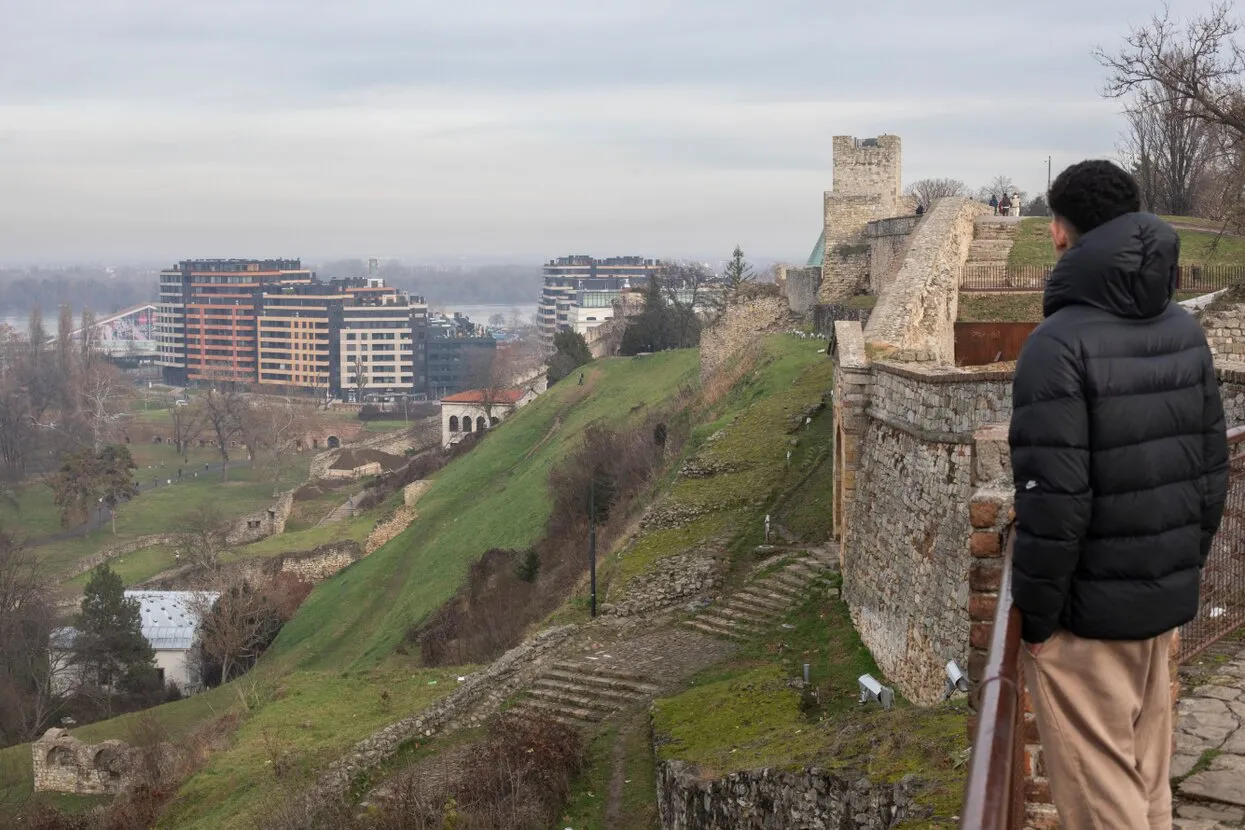
Russians who fled after the 2022 mobilization tell Meduza how they rebuilt their lives abroad — and what they’ve lost along the way
On the fourth anniversary of Russia’s mobilization, we asked you, our readers, about your experiences living abroad. We received many letters from all over the world — thank you so much! While many of you say you’re happy with your lives abroad, almost every story includes struggles with adjusting to a new place or missing Russia. Here are some of the most representative letters.
Please note: Our Russian-language newsroom screened every submitted letter for AI-generated text, but even the most thorough checks cannot rule out manipulation entirely. Bear that in mind as you read.
Nikolai, Serbia
Overall, I’m happy with my life. I wouldn’t say I’ve fallen in love with Serbia, but I like it more every year (despite its obvious drawbacks). The climate is better here [than in Russia], and people are welcoming and friendly. They’ve shown me a lot of kindness. Over these four years, I’ve settled in and found several groups of friends with shared interests. They’re all Russian speakers; I haven’t managed to make friends with locals yet. In Belgrade, whatever your interests, you can find Russian-speaking friends and all kinds of things to do in Russian. And you don’t need a VPN here, either.
The hardest part of living abroad was getting through the first three years with undiagnosed depression. And I miss Russia all the time. Our countryside, the air, the feeling of belonging. As [rock musician Yuri] Shevchuk sang, “Somewhere there’s more kindness and freedom, but no homeland.” That’s the whole truth.
I’m not coping with that feeling at all. I tell myself I did the right thing. Every time I read the news, I understand why I’m here rather than there. It’s terribly sad, but I try to think about the future and how to survive and thrive in a changing world. The past was beautiful, but it’s not coming back. Let’s thank it and let it live on in our hearts. There are lots of new friends and new roads ahead.
Anya, Spain
I’ve managed to get a residence permit I can rely on, rent a decent apartment, get insurance, and open a bank account. Thank you, Spain, for your relatively lenient immigration policy. Even if everything suddenly goes wrong and I can’t renew my residence permit, nobody will deport me. I’ll be able to keep living in this country and eventually get legal status anyway. Knowing that makes life a little less stressful.
I should also say that Spain is a fantastically beautiful country. It’s the most beautiful place I’ve ever lived. Everything else is complicated: In more than four years, I haven’t managed to adjust to the pace of life here, make friends with women who share my outlook, or get used to the noise, the cultural differences, and so on. I’m thinking about moving to another country. It’s scary, but staying in Spain is hard for me.
Barcelona. 2026
Paco Freire / SOPA Images / LightRocket / Getty Images
In Spain, I’ve found myself living in two painfully disconnected realities. I work for a nonprofit that helps political prisoners, and every day I read and process all the most horrifying news about political persecution in Russia. Meanwhile, outside my window, life is carefree. People stroll slowly down the streets, many look happy, and families often gather on their little balconies, laughing loudly and talking a lot.
Every couple of weeks, there’s some kind of celebration here. Beautiful green mountains rise in the distance, it’s sunny every day, and after school, children happily run around our courtyard while their parents chat over beer or coffee. A couple of kilometers (about a mile) away, you can hear the sea.
But on my laptop and in conversations with my husband in the kitchen, it’s arrests, torture, searches, deaths, and war. Sometimes I feel like I’m losing my mind. It can be hard to believe that so much happiness and peace (like we have in the town where I live) can exist in the same world, at the same time, as so much pain, destruction, and suffering (in Russia and because of Russia’s actions).
I feel like I’m not coping, and there’s a gaping black hole in my chest. Sometimes I don’t notice it as I go about my daily routine, but that sense of loss is there in the background every day. I desperately miss my family, Moscow as it was in 2018–2019, and my friends, who have either scattered around the world or stayed in Moscow.
I often look at old photos. I guess that helps a little. An unplanned call with a friend who now lives in Berlin helped once, too. She’s struggling as well, and she really misses her home in Moscow. Realizing I’m not alone in this pain eases it a little.
Max, Israel
Overall, I’m happy with my life, but it’s been very hard. On the other hand, you become more resilient as you go through it. The little things that used to seem like insurmountable problems turned out to be just that — little things. I love my new country for its spirit of freedom. You really feel it when you talk to people, and it’s in the air everywhere.
The hardest part was the endless waiting and the uncertain future. I was going through the repatriation process, and the wait for consular screening dragged on for two and a half years, which I spent in the mountains in Kyrgyzstan. It felt like time had stopped, like being in prison. Except the prison is in your head. My grandmother died while I was living abroad. We were very close, and I still feel guilty that I couldn’t come to say goodbye.
Haifa. 2022
Alamy / Vida Press
I miss people, I miss the places that gave me strength. I have to find new ones, and that’s turned out to be hard. I miss the conifer forests and the green carpet underfoot in summer (I’m from Novosibirsk). I miss the changing seasons. Luckily, I have a close circle of friends. We message every day and call several times a week. Without that, it would be much harder. When I feel especially sad, I put on music and go for a walk until I’m tired. You can get through anything — the main thing is not to lose yourself.
Asya, Vietnam
Apart from being here without a visa, which means I can’t get any paperwork sorted out, I really like it. It’s a very beautiful country. Friendly people, delicious food. The language is difficult but interesting. The vibe reminds me of Russia in the 2000s, when the economy was growing and people’s incomes were rising, too. People here are generally optimistic about the future.
It was hard to find a job and to cope with being laid off while living abroad, not knowing what would happen and feeling like I could be deported at any moment or refused entry on my next visa run. But that’s all just part of life. The hardest thing was saying goodbye to my grandmother without knowing it was the last time we’d see each other, and that when she died, I wouldn’t be there.
Hanoi, Vietnam. 2022
Andy Soloman / UCG / Universal Images Group / Getty Images
I hardly miss Russia. I miss my relatives and friends, but Russia since the war began feels very bleak and unwelcoming to me. I visited in 2024, and it was terribly depressing to see how everything had changed.
Viktor, Kazakhstan
I work remotely, so I haven’t lost any income, but the standard of living in Moscow is still miles ahead of Astana’s. It felt like I’d taken a step backward. I haven’t managed to fall in love with my new country. I feel pretty neutral about it. People here are basically the same as in Russia. There’s no difference, and if it weren’t for the different currency and a few other little things, it would feel like I’d just moved to another Russian region.
I haven’t had any particular difficulties — I’m an IT professional whose skills are in demand. Surprisingly, Russian bank cards are accepted almost everywhere here. If all else fails, you can withdraw cash from an ATM. I rented an apartment. Then I moved to another one in a more convenient neighborhood.
In Russia, I didn’t socialize much in person. And you can talk to people online anywhere. I used to love walking through Moscow’s parks — the climate here and the lack of forests get me down. I’m thinking of moving back to Russia. In the end, I wasn’t mobilized, and I don’t see any signs of another mobilization. But I don’t particularly regret moving. I got to live in another country. That’s a useful experience, too.
Related reading
Yevgenia, Israel
I don’t like Israel, and I feel like a stranger in this country. I’m here because it was easiest [here] to get citizenship right away and not have to think about renewing a residence permit and so on.
I don’t like the Middle Eastern mentality. I really love Moscow, where I lived my whole life.
It was hard to lose all the social capital I’d built up. In Russia, I’m in a good field, I have a job, and I have prospects. Here, I once got turned down for a cashier job in a store. That made the whole situation feel absolutely hopeless.
For the first two years, I kept thinking I’d be back soon. That I just had to wait it out, get by here somehow, without intending to stay and put down roots. Now I understand that there’s nowhere to go back to, but I don’t want to be here. Even though I now have a well-paid job in my field here, I still feel like I don’t belong in either place.
Dmitry, Serbia
In 2022, I had no idea how to go on living.
I left for Serbia a couple of months after the war began, taking a week off from my drinking binge. Even through that drunken haze, it was clear that things in the country were going to get worse fast, and if they closed the borders, it would soon be all over. It’s very easy for a country with fresh memories of its totalitarian past to slip right back. We’ll have it all: beatings, handcuffs, and split lips…
I left with very little money, about 300 euros. For the first six months in Serbia, I lived in a tent in parks, hitchhiked on visa runs, grabbed whatever odd jobs I could, and bought almost everything I needed at flea markets. Drank rotgut, ate expired food.
A kiosk near the border between Serbia and Bosnia and Herzegovina, the most popular destination for Russians making visa runs. Sremska Rača, Serbia
Instagram iva
I still ended up in debt: I didn’t have a skill suited to the local job market, a remote job, or, most importantly, any foreign language skills. I’ll learn! I thought. Turned out it wasn’t easy.
The life I knew was over, and there was no clear future in sight. I could just close my eyes and fall. It turned into the wildest trip of my life.
In the late 2000s, I was at a teacher-training college. Our art teacher was a gray-haired old guy; I don’t remember his name. Once, he assigned us a drawing on any subject we liked. I drew a road winding through a field, with people hanging from poles on both sides, and a vehicle heading off into the distance with “NKVD” [the Soviet secret police] written on the back. After class, the teacher returned my drawing with the initials heavily crossed out. I was indignant: What for?! He told me it was dangerous. I remember thinking: You’ve completely lost your marbles, old man… Look around, those days in Russia are long gone, and they’re never coming back. Why the hell did you have to ruin my drawing!
Oh, you saw it coming, old man. You were so right.
[…]
Throughout my adult life in Russia, I traveled without a care, loved adventure, worked interesting jobs, and wrote poetry and prose. I stayed out of politics. Yeah… Politics doesn’t affect you until it does… In February 2022, everything fell apart and my plans collapsed. As BG [rock musician Boris Grebenshchikov] sang: “Now our word is a sum of syllables, it’s time to set sail from these shores.”
There was no time for homesickness. But things gradually got better. I learned a trade that saved me. I’m still on shaky ground here: no residence permit, no employment contract, no home of my own, and no certainty about tomorrow. But I’ve never regretted leaving: With my anxiety, I wouldn’t have been living in Russia, just suffering. In those first days, weeks, months, years, I’d open the news every morning and feel glad I wasn’t there, wasn’t in Russia, wasn’t part of the shame, wasn’t in a trench. I still do.
In Serbia, I started living again in many ways. I went through the 12 steps, discovered sobriety, learned some of the language, and recovered from depression and a host of ailments I’d never paid attention to before. This journey isn’t over yet, and who knows how long recovery will take, but it’s maintenance now, rather than emergency repairs.
I’m 39. Life is just beginning.
Anonymous reader, Armenia
At first [living abroad], things were easier. I had a good job and could afford the very high cost of living abroad. Now the job market is in chaos, there’s no work, and we’re developing our own product, but that’s hard with absolutely no money. There were stretches when one egg and half a potato a day was a pretty normal diet. There simply aren’t any alternatives. We’re not giving up, and we keep working our asses off. I hope that’s light I’m seeing at the end of the tunnel and that I’ll be able to get back to a normal life. But I wouldn’t say no to a little pile of money falling into my lap :))
Yerevan. 2026
Alexander Patrin / TASS / ZUMA Press / Scanpix / LETA
There may be a lot of things in Armenia that I can’t accept deep down, but that’s just my view. I’m a guest here, and even when I want to grumble about something, I always remember that at the most terrifying moment of our lives, Armenia simply took us in, sheltered us, and cared for us. That matters more than all the everyday difficulties. I’ve already designed a tattoo I’ll get before I leave, as a reminder of Armenia.
When things were going well, I often missed Russia, though I was also glad I’d had the chance to leave. When your daily diet is an egg and half a potato, homesickness is the last thing on your mind.
Ksenia, Lithuania
I left with four children and my elderly dad. I’m the only adult in the family and the only source of income. First I went to Armenia, then Montenegro. I lived in Montenegro for four years, and this year I moved to Lithuania on a humanitarian visa.
Here, my younger children have started school and kindergarten, both free of charge and taught in Lithuanian. I really like the climate (I’m from St. Petersburg). The older two have grown up in that time and now live independently (in Germany and St. Petersburg). I’m a freelancer, but I had savings, and I’m managing to earn a decent living. I work a lot, fortunately.
The hardest thing is the uncertainty and not being able to plan anything. Montenegro went and tightened its residency rules, so I had to look for a way to move to the EU on a humanitarian visa. That option was open to me because I’m a journalist at an antiwar publication. Still, it wasn’t easy and took a huge effort. By then, I didn’t know where else to run.
Vilnius. 2026
© Marnix Vos / Alamy / Scanpix / LETA
Having to jump through endless bureaucratic hoops is hard for me, too, as are the constant unexpected expenses (Dad’s expensive medical care — he won’t get insurance because he hasn’t paid taxes). But staying in Russia would have been a hundred times scarier, and now going back is no longer an option for me.
I’ve always been a patriot of Europe, and I still am. Yes, maybe I’ll never see part of that Europe again (St. Petersburg and Lviv). But I drove all over the Balkans in my own car before I had a Schengen visa. Now I travel all around Lithuania and a little in other countries. Churches, little bridges, new cities, fresh air, Goethe and Mickiewicz — that’s how I keep from missing [Russia].
Anna, Georgia
My life has turned out great. I found a job that pays in foreign currency, got married, and got a dog. Georgia has low taxes and beautiful scenery, and it’s not hard to get a residence permit.
The hardest thing is knowing that the city I never got to say goodbye to has changed forever, and even when I occasionally visit my family, everything there still feels foreign. It’s hard to realize that I can never get my old life back. It’s difficult to get close to people, because for a couple of years, all my new friends were ready to leave at any moment, and the loneliness was very intense. And it’s frightening to have absolutely no idea what the future holds. Not even my own future — the world’s.
In my fourth year away, I don’t miss Russia. I’m just afraid of that country now. I don’t long for Russia, but I do long for my grandparents, whose health keeps them from coming to see me. As for Russia — you start getting used to the idea that it’s no longer part of you.
Hi, I’m Katya.
I’ve been running Meduza’s crowdfunding since 2021. Today, supporting Meduza is a crime in Russia. You can be sent to prison just for donating. We’re still able to do our work thanks to thousands of our Russian readers who now live abroad. But even they’re no longer safe.
Imagine you’ve left Russia, but then your mom becomes seriously ill. It could be your last chance to see her, so of course you go home. At the border, you’re interrogated. Officers hack into your phone and search for any trace that you’ve donated to Meduza.
The Kremlin is counting on that fear, and it’s working. People are afraid to donate. I’m afraid for our supporters, because any one of them could end up in prison. And I’m afraid for Meduza. Without crowdfunding, we simply can’t continue. So if you live outside Russia and don’t have to worry that donating to Meduza could keep you from going home to your family, I’m asking for your help. Please support our work.

Svetlana, Kazakhstan
We left as a family: First, in September 2022, my husband and our son, a university student, rushed off to Kazakhstan. Once they’d settled in and my husband had found a job and an apartment, I flew out to join him in February 2023 with our younger son, who was still little. Of course, it wasn’t all easy, especially since we left without preparing, without connections or any support.
But we managed, and now, four years later, we’re doing fine. After three years, our older son has resumed studying in his field, now at a local university in Almaty (I really hope he’ll stick with it and get his degree this time). Our younger son goes to kindergarten. My husband works for a Western company and supports us all, and I’ve become a homemaker (I worked as a doctor in Russia). We didn’t manage to get permanent residence permits under the old rules, though, and now that’s become extremely difficult following changes in the law this spring. Oh well, we’re in our fourth year of living here on temporary residence permits — so far, they’re still issued without any problems.
We live in Almaty. I like that you really feel a shared background, almost as if you’re not entirely abroad ;) There’s a lot that’s familiar in people’s social lives and everyday routines here. We speak Russian, and people are generally friendly, easygoing, and very good with children. In my view, there’s much less xenophobia than in Moscow (where we came from).
Almaty. 2026
Jakub Porzycki / NurPhoto / Getty Images
The men in our family left almost as if they were fleeing, without preparing, into the unknown, and that put us all under enormous psychological strain: fear, anxiety, exhaustion, depression… But our motivation (saving our son from the war) got us through all that, and we probably had some luck, too. We dealt with all the other questions and problems “as they came up,” including with help from other people who’d relocated — people in the same boat.
I should say right away: We had money when we left Russia (we always have a financial cushion). It covered about four months of living expenses — just until my husband’s first paycheck.
Of course we miss Russia, because our whole old life is back home, along with our relatives and loved ones and our beloved pets (cats). We go home once a year: my husband for about a week or two to take care of things, and me with our younger son for two months (this year, we were in Moscow in July and August). Our older son last went two years ago — after that, he said he wasn’t going to take the risk anymore.
Regular phone calls with loved ones who stayed in Moscow help with the homesickness, as do those occasional trips. It also helps that we’re here together and support each other, and that we’ve more or less settled into life in a new place. Now that I have free time, I try to talk more with local people, make connections, and build friendships so I’m not socially isolated.
So far, I consider our move a success (though without permanent residence permits, our long-term future here is pretty uncertain).
Alexander, Portugal
Right now, everything’s good. We made it. I haven’t been back to Russia in all this time, and honestly, I don’t want to at all. Portugal has its quirks, like anywhere else. But overall, it’s very good here. You feel safe. People are very kind and helpful. Everyone’s upbeat.
An anti-Putin demonstration in Lisbon. 2024
Horacio Villalobos / Corbis / Getty Images
The hardest part of living abroad is the uncertainty and fear. We left without jobs, with two small children and the last of our savings. I wasn’t prepared for my parents to betray me. They think I’m a coward and an idiot. And they don’t mince words. I haven’t spoken to my father since September 2022. Or rather, he hasn’t spoken to me.
I don’t miss Russia at all. The first two years were hard. I was constantly doubting my decisions and getting no support whatsoever from my parents. At the very moment when you need that support more than ever.
I worked with a psychologist. At first, I tried to get through it all on my own. But it’s incredibly hard. In the end, I more or less managed to get through it in the fourth year. Now I’m afraid to go to Russia, and I have no reason [to visit] or need to go. I’m not the same person anymore.
Anastasia, Turkey
Overall, I’m happy with life abroad. Children and mothers are treated with great care. You see it in people and in the surroundings — flowers everywhere, well-kept parks, lots of greenery, children’s playrooms. I got into one of the country’s best universities, Istanbul University, a public institution, for just 140,000 rubles a year. I changed jobs, and it turns out I’m good at teaching — now I work for myself.
[In Russia], I always tried to find beauty around me. Apartment blocks, blizzards, a little river, even trash (I’m serious!). Turns out, when you don’t have to look for beauty because it’s just there, you feel noticeably better. Well-kept houses, landscaped grounds, a tower you can see from anywhere in the city…
The hardest things are the language barrier and the culture. It scared me how curious and friendly everyone was. People warned me they were being two-faced. Maybe. I don’t know what’s really going on in people’s heads.
Of course I feel nostalgic. I miss familiar things, books from Ozon [a Russian online retailer], the local planetarium, and trips that take no more than 40 minutes.
Istanbul University
Konstantin Kalishko / Zoonar GmbH / Alamy / Scanpix / LETA
From time to time, I miss Russia. When nothing around you makes sense, you’re drawn to what does. Then my mom tells me how drones thundered overhead all night, how there’s no gas, how they didn’t fall asleep until 5 a.m. and sat in the hallway — and this is central Russia, not far from Moscow. And I realize that books from Ozon and the planetarium aren’t worth it :(
When I was in school, I really wanted to move abroad. That was my teenage rebellion. Mom said our local university had an exchange program and that a friend of hers had gone to Canada that way and stayed there. I believed her and came up with a plan. I graduated from school in 2021, and in 2022… they shut everything down, blocked everything, and canceled it all. Sad. I miss what Russia could have been.
Alexander, France
Our new life is really only just beginning. How could you not love France? My wife and I now have refugee status and 10-year residence permits. Our daughter is 7 months old; she was born here in France. I blog about our new life and am starting to relaunch the small business I had in Russia. I hope someday I’ll also be able to return to journalism at an independent news outlet. We have a future in France. We didn’t have one in Russia.
The worst things were the living conditions and the sense of hopelessness during the first months of the asylum process. Before that, it was hard bouncing between countries and being turned down for a Turkish residence permit and a German humanitarian visa.
We miss our parents and friends. The country and our hometown, less so. Everything has changed so much. We made a deliberate decision to leave. We knew there was no going back. We need to survive; this isn’t the time for homesickness. We’ve been through a lot. It should get easier from here.
Yekaterina, Peru
I should say right away that I haven’t moved abroad for good. I divide my time between two countries and travel to Russia. I left and spent a year away, thinking I’d use that year to figure things out and decide whether to stay. In the end, I settled on living between the two.
Overall, I’m happy, but of course there are lots of irritating little things, and I miss home. In Peru, I like the climate, people’s friendliness and openness, and the relaxed atmosphere. And most of all, the feeling of freedom and safety.
Lima, Peru. 2024
Sheng Jiapeng / China News Service / VCG / Getty Images
[What I don’t like is] missing home and not having people around who understand me. The quirks of the local culture — people don’t stick to agreements or keep promises, everything takes a long time and causes a lot of stress.
I often miss [Russia], and I deal with it by going back.
Konstantin, Georgia
Money has been very tight since the first month, and it still is. I left in September 2022 with a salary of around 50,000 rubles, and little has changed since then. I constantly have to look for cheaper housing, put up with the living conditions, cut way back on groceries, and eliminate any nonessential spending.
Financially, I feel like I’m constantly sitting on a powder keg. But setting aside my own money problems, I like Georgia, its character and distinctiveness. Sometimes I sense an inner freedom in the people around me — and occasionally even in myself — that I’d never known before. I also regularly think of Lem’s line, “A human being needs another human being.” I think Georgia embodies that idea beautifully.
Tbilisi
RuelleRuelle / UCG / Universal Images Group / Getty Images
The hardest thing is being completely unable to get legal residency in any country and facing an uncertain future that, in most scenarios, threatens to force me back to Russia. Much as I’d like to, I can neither feel at home nor make plans for the future, because right now, “There’s only a moment between two visa runs, and that moment is called life.”
I prepare carefully for each visa run in case it goes wrong, work out where I’ll go next, and take other precautions, but I know things can always get worse, to the point where even precautions won’t help.
The list of countries I can afford to live in is pretty short, and many of them are tightening their immigration laws, so being a perpetual tourist is my biggest vulnerability. One small “tectonic shift,” and I’ll either have to literally live out of suitcases or be forced back to the country where I’m a citizen. Those thoughts are depressing.
The only Russia I really miss is the Russia of the past — the Russia of my youth, which was already deeply troubling for all sorts of reasons but was still much more carefree. I also miss being able to feel relatively safe and, at the same time, fully part of things — as a member of a team and of society, a citizen, and a native speaker of the language. The list goes on.
Sadly, in today’s circumstances, you have to choose. I’m locked in a constant, bitter argument with myself: Who made what mistakes, and when, that led us to where we are now? And what was my own part in it? Thoughts like these help me pass the days — not cheerfully, but that’s how it is.
Viktor, Serbia
I’m happy with life abroad. In Serbia, I have friends, a relationship, and hobbies. I’ve started earning more. Belgrade is small compared with Moscow, where I lived before I left. I simply have time to do more.
The first year to year and a half was emotionally hard, though. But without that crisis, I wouldn’t have gone to therapy, which turned out to be super helpful.
I definitely miss Russia at least once a week. I long for the life the war took away from me. But I remind myself that I’ve already built a good life in Serbia. If I have to leave Belgrade, I’ll definitely miss it, too. And reading the news from Russia brings me back to reality and keeps me from sinking into homesickness.
At Meduza, we are committed to transparency about our use of artificial intelligence in the newsroom. The story you’re reading was written by one of our living, breathing journalists and translated from Russian using an AI model configured to follow our strict editorial standards. This translation process is the result of extensive testing and refinements to ensure our English-language coverage is timely and accurate. A Meduza editor reviews every draft before publication.
If you find any errors in this translation, please contact us at reports@meduza.io.
To read Meduza’s exclusive content in English, please subscribe to our newsletter.
Meduza