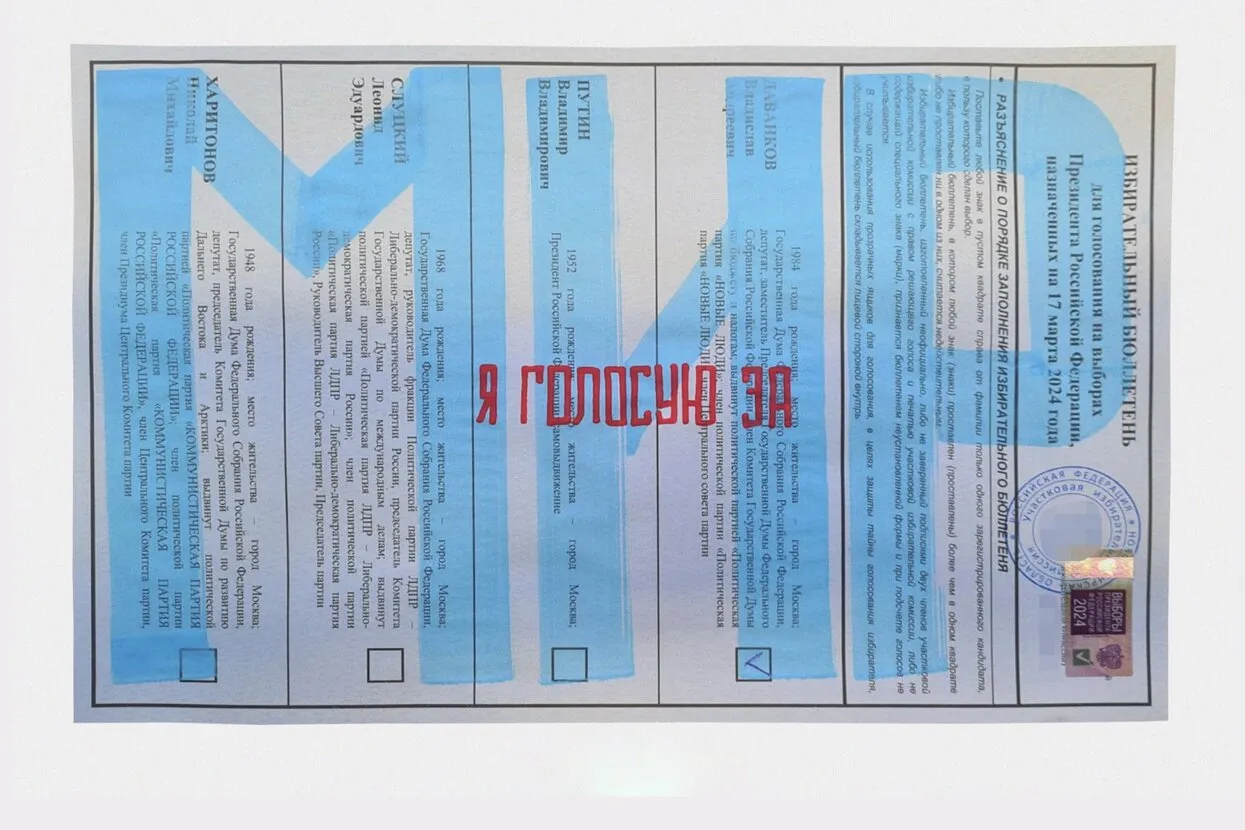
Russia’s election outcome is all but predetermined. But does a protest vote still matter?
For 20 years now, Russian voters have had no way to vote against all candidates. The corresponding line was removed from all ballots in the summer of 2006 (including in State Duma elections). That leaves voters whose preferred candidates were blocked from running to decide on the most effective way to express protest. We looked into what strategies exist for this and whether anything Russians do can make a difference at all.
Some of the scenarios described in this piece assume that the election commission will act honestly — preventing ballot-stuffing and not falsify the results. We wouldn’t count on that.
Boycott the election
You won’t affect the outcome of the election.
A boycott would lower the official turnout figure — but only if the vote count is honest and no one casts a ballot in your place. It wouldn’t change the final results. The law on elections to the State Duma, the lower house of Russia’s parliament, eliminated the 25% minimum turnout requirement in 2007 — a threshold that would equal about 28 million voters today. Since then, an election has been considered valid no matter how many people show up to vote.
Without additional tools like opinion polls, observers also have no way to distinguish voters who deliberately boycotted the election as a form of protest from those who simply stayed home for other reasons. Your protest would go unnoticed.
Vote for a different federal party list
Your vote could either have no effect on the outcome at all, or reduce the percentage won by United Russia.
State Duma elections carry a 5% threshold, so, to simplify, only parties that clear it can compete for the 225 seats allocated through the federal electoral district.
In other words, a vote for a party that falls short of that threshold has no effect on how State Duma seats are distributed — it’s as if you never voted at all. Article 89 of the law on elections to the State Duma spells out the methodology in detail: the Central Election Commission first tallies only the votes cast for parties that cleared the threshold, then uses that total to allocate the 225 seats.
Vote for a different candidate
You can reduce the chances that a United Russia candidate wins and gets a seat in the State Duma.
Single-member district races for the State Duma don’t have runoffs. Whichever candidate wins a simple majority takes the seat. That makes it most effective to back the strongest challenger to the authorities, since protest votes split among several other candidates won’t change the outcome. Voters can identify that candidate by studying pre-election opinion polls themselves or relying on experts’ picks, such as the “Smart Voting” list compiled by FBK, an anti-corruption organization.
Take your ballot home
You won’t affect the outcome of the election. But you might uncover fraud at your polling station.
The law on elections to the State Duma doesn’t bar voters from taking their ballot home as a keepsake. Doing so won’t affect how seats are distributed, but election commissions are required to record any ballots taken away in their final report. These documents can later be found on your region’s election commission website.
If you take your ballot home, check line 11 of the precinct election commission’s report: “Number of lost ballots.” That line reflects the gap between the number of ballots issued and the number found in ballot boxes or left unused. A zero there would mean the commission ignored the shortfall — and most likely padded the count with at least one extra vote for someone.
Spoil your ballot
You won’t affect the outcome of the election. But mass protest is easier to spot this way.
Spoiling a ballot properly means marking at least two boxes next to party or candidate names — an X, a checkmark, or any other mark. That gets the ballot declared invalid, so it won’t count toward the distribution of seats. Election officials tally invalid ballots separately, recording the total in line nine of the precinct election commission’s final reports (separately for the single-member and party-list votes).
A mass protest by voters spoiling their ballots would show up both at individual polling stations and nationwide. For comparison, when votes for federal party lists were counted in the 2011, 2016, and 2021 Duma elections, 1.57%, 1.87%, and 2.08% of ballots, respectively, were declared invalid.
One more thing: deliberately invalidating a ballot requires marking at least two boxes. Otherwise, the vote could still be counted. Cross out an entire list of candidates or parties with a pen, for instance, but accidentally mark even one box, and the commission will count it as a vote for that option.
Cast an empty ballot
You shouldn’t affect the outcome of the election. But it all depends on the honesty of the election commission members.
An empty ballot is formally considered invalid too, and such ballots are counted together with spoiled ones. The problem is that a blank ballot can easily be turned into a valid one with a single stroke of a pen. That leaves voters to rely entirely on the good faith of whoever is counting the votes.
Leave an obscene or anti-war message on your ballot
A ballot with such a message could end up either valid or invalid. But cast it carefully — so you don’t end up with a fine.
Extraneous writing on a ballot doesn’t by itself determine whether it’s declared valid or invalid. That depends on whether the writing overlaps a voting box, and how many boxes are affected.
Voters who choose this approach should be extremely careful. In 2024, despite the officially declared secrecy of the ballot, several voters were detained for writing anti-war slogans on their ballots and charged with offenses including “discrediting” the military or minor hooliganism. Courts sentenced them to fines and administrative detention.
At Meduza, we are committed to transparency about our use of artificial intelligence in the newsroom. The story you’re reading was written by one of our living, breathing journalists and translated from Russian using an AI model configured to follow our strict editorial standards. This translation process is the result of extensive testing and refinements to ensure our English-language coverage is timely and accurate. A Meduza editor reviews every draft before publication.
If you find any errors in this translation, please contact us at reports@meduza.io.
To read Meduza’s exclusive content in English, please subscribe to our newsletter.
Denis Dmitriev
Why is this a simplification?
This holds only if another condition is also met: parties that clear the 5% threshold must together account for more than half of all votes cast.
If they fall short of that combined share, other parties are added to the seat distribution one by one until the total reaches 50% of votes cast.
Что это такое?
Это один из главных принципов выборов в России. И в рамочном законе, и в законе о выборах депутатов Госдумы утверждается, что гражданин РФ участвует в выборах «на основе всеобщего равного и прямого избирательного права при тайном голосовании». То есть никто не должен знать, как он распорядился своим голосом, если он сам этого не пожелает. Нарушение тайны голосования считается уголовным преступлением и должно караться вплоть до пяти лет лишения свободы (статья 141 Уголовного кодекса РФ).