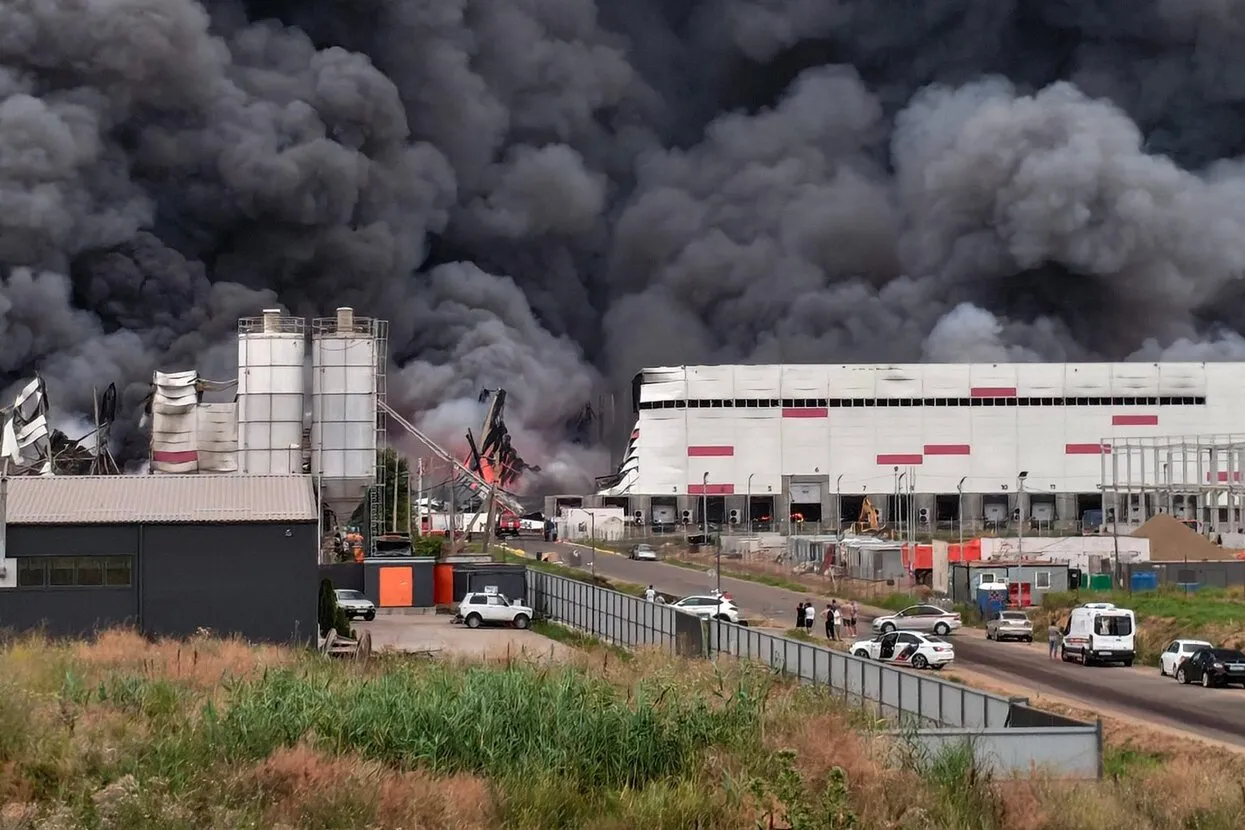
‘This isn’t about fairness, it’s about survival’: What Meduza’s Ukrainian readers think about Kyiv’s strikes on Wildberries
At the end of July, we asked readers what they think about the Ukrainian army’s strikes on Wildberries warehouses, and then published a piece featuring a selection of their letters (most of them from readers in Russia). In the days that followed, we received hundreds of new messages from readers in different countries sharing their views on what’s happening. Many of these letters came from readers in Ukraine. Here are some of them.
Ukraine’s Armed Forces are striking Wildberries. These attacks directly affect tens of thousands of Russians — not only the marketplace’s employees, but also the small business owners who make a living through Wildberries, as well as their families. What do you think about these developments? If the warehouses are being used to support the Russian military, are they “legitimate targets”? Do you consider strikes on such facilities to be justified retaliation for the enormous losses Ukraine has suffered as a result of Russia’s aggression? Or do you think this makes it harder for Ukraine to argue that it is fighting a “just war”?
Oleksandr
Kharkiv
Folks, what are you even talking about? Our oil refineries were already burning back in April 2022, and strikes on businesses and civilian infrastructure started from day one. Once Shahed drones entered the picture, they began hitting random warehouses and workshops every day. And I won’t even get into the energy sector.
Where does this bitterness come from? Where do these thoughts of “oh, now everyone’s equal” even come from? This isn’t about saving face, or even about fairness — it’s about survival. A huge aggressor still wants to destroy us, with its missiles, drones, waves of infantry, and tanks. It still wants to come into our homes, snuff out life, freedom, and hope, and carry out purges and filtration with basements and torture chambers. The worst of the aggressor’s planned war crimes are still ahead of us. Just ask the colonel — sorry, I mean General Omurbekov. If it’s even remotely possible to knock whole percentage points off such an aggressor’s GDP within a couple of weeks, it should be done.
Why, in the fifth year of a defensive, existential war, should our military play innocent and pass up such opportunities? This is unpleasant for civilians — I feel no schadenfreude — but only someone with amnesia could be outraged by this and put [Ukraine and Russia] on equal footing.
Once again: nothing threatens you, and nothing ever did. Nobody was planning to come into your homes. There are no execution lists. You don’t have to worry about SBU majors showing up to go through your phones. You don’t have to worry about your cities being leveled — that’s simply impossible given your stockpile of nuclear weapons. None of this comes close to “the same thing.” You’re only just starting to get a small taste of our 2022.
Maria
Kyiv
Honestly, I find it almost funny to read debates over whether the strikes on Wildberries are legal. Some people are so eager to insist they’re illegal that they’ve put that question front and center.
Is it really such a bad military objective to make a large share of the population unhappy about what the Russian government is doing? Russia constantly uses imprecise weapons in its strikes on Ukraine, killing civilians — and children are often among the dead. Here, with minimal casualties, people lose money and some of their comfort. Are these really comparable?
It’s not really about whether military supplies are stored there, and it’s not about revenge either. If it were about revenge, financial losses would still never compare to lost lives. What matters is that far more people have started remembering that something terrible is happening around them, beyond their own personal lives. And that offers at least some hope of minimal internal pressure on the authorities.
I know there are plenty of sympathetic, thoughtful, understanding people in Russia. But you have to admit there are also plenty who preferred to ignore the war entirely. It seems that’s gotten harder to do now.
Anastasia
Kyiv
Say the Ukrainian government decided: “We’re pacifists. We won’t strike warehouses or other major Russian facilities. We’ll spare the people there. We’re not like them” — this after Russia has struck anything and everything without ceremony.
How could you even “sell” that idea to the Ukrainian people and the military? How could you forbid such strikes against a backdrop of this much grief? Who would even listen? It’s simply impossible.
Everything comes down to “fairness,” not “legality.” Once Russia has hit a given kind of target in Ukraine, that same kind of target becomes legitimate.
Everyone in Ukraine has suffered — literally everyone — to a greater or lesser degree. I’ve suffered less than most: I only lost windows, and over five years of war I’m now replacing them for the second time (five of them). So if someone in Russia has to go through the same thing, I’ll consider that quite fair.
Yevhen
Kyiv
I’m amazed by people who accuse Ukraine of fighting by the wrong methods — the methods good is supposed to fight by — of turning into fascists themselves by hitting Wildberries, and who say they can no longer sympathize with Ukraine.
So Ukraine, which Russia forced into this war, is somehow supposed to fight by some incomprehensible Jedi code of honor, while Russia has spent years productively dropping glide bombs on frontline cities of a million-plus people (and that’s far from a complete list of Russia’s heroics). But hey, at least you over there will sympathize with us.
It sounds like you’re suggesting Ukraine should wage this war not to win, or even just to avoid losing, but so we look nice and tidy in your eyes. Lol. Maybe you should ask your tsar to start following that Jedi code — who knows, maybe Ukraine will catch up to Jedi standards too. Or is that too dangerous to put in your petitions?
Are the Wildberries warehouses a legitimate target? Maybe not legally, but by any common-sense standard, yes. Wildberries is definitely not a kindergarten, a school, or a residential building — it’s part of an economy that works for the war, and a fairly substantial part of it. If it can be destroyed, with minimal human casualties, then it should be; otherwise it will keep earning money that helps the tsar keep fighting. And spare us the moralizing: wake a sleeping evil, and you get what’s coming to you.
Oles
Kyiv
They say adults really only change their minds after something shocking happens. When the war began, my family and I were 18 kilometers (11 miles) from Hostomel airport, the point where the Russian army launched its assault on Kyiv. Two days later, I evacuated my family deeper into the country. We left everything behind: our business, our house, our normal way of life, our hopes for the future. Over five years of war, Ukrainians have gone through every stage of acceptance. And now, reading Russians’ opinions about the war on Meduza and watching videos about Wildberries on social media, I’m seeing, for the first time, those same stages in the eyes of Russian citizens — the same ones Ukrainians went through in 2022.
I have many relatives in Russia. A handful emigrated. Most stayed. The ones who stayed are sitting on their asses, doing nothing. Only a few were ever against the war. Do I believe half of Russians support Putin? Yes — and you don’t even need the Russian Public Opinion Research Center (VTsIOM) to tell you that. I see it in my own family. Both now, over Wildberries, and back then at the Upper Lars crossing, Russians were outraged en masse not because they oppose the war, but because of the discomfort.
Does Russia now need the same shock therapy Ukraine went through? Apparently, yes. History is cyclical. In Germany, half the population supported Hitler starting in 1938, when 500,000 Jews were deported — and that was before the full-scale war even began. It took the Germans another 30 years after the war to officially acknowledge the crimes of fascism. I think in Russia, this process will be far more painful.
Dmytro
Kyiv
For Ukraine, this war itself is legal and just, because Ukraine is fighting for its own freedom — not for Zelensky, Zaluzhnyi, or Fedorov. Any strikes on Russia are legal and just. Civilian deaths there are collateral damage. It happens. You could debate justice if there were massive, deliberate bombings of residential buildings. But there aren’t — these are strikes on industrial facilities that ultimately, directly or indirectly, serve the war and earn money for it. So I don’t see any reason to blow this problem out of proportion.
A warehouse in Elektrostal that burned down after a Ukrainian military strike.
Reuters / Scanpix / LETA
Yevhen
Ukraine
Look, Russia has nuclear weapons, and if the country’s existence — or even just the current government’s — were threatened, the whole world would end up covered in nuclear ash.
Ukraine, meanwhile, has lived under existential threat for five years now. Putin laid out the goals of the “SVO” clearly enough — “Ukraine was invented” — and attacked from every direction. If Ukraine hadn’t given up its nuclear weapons in exchange for security guarantees from the very neighbor now destroying it, entire cities would be burning instead of Wildberries and oil refineries.
That’s why I don’t think terms like “justified,” “legal,” or “moral” should even apply when the question is fighting an aggressor for your own existence.
Ivan
Poltava
I know this is an exaggeration, but it feels like the authorities finally heard us. For a couple of months now, I’ve been writing in the comments under opinion leaders’ posts and telling drone operators I know that we needed to hit Wildberries in response to the attacks on Nova Poshta terminals. Sunday was my “I told you so” day.
Only this way will “dear Russians” grasp the scale of the shitshow now unfolding in Ukraine. I want to reassure them: you’re now going through what we went through in 2022–2023. Lines of 100+ cars at gas stations, drones overhead, strikes nearby — we’ve had all of it already. You’ll get used to it. You don’t have a choice.
I was walking back to work after lunch when a drone flew past me and straight into the office where I work — I was literally 400 meters (1,300 feet) short of making it there. It’s an ordinary civilian business. My colleagues were in shock at the time. Now we laugh about it. The repairs got done, and everything’s been restored — only the line for company cars got pushed way back, and I’m still waiting on mine. Right now they’re bombing gas stations in our region, so I’d recommend getting used to life without your favorite gas stations too — at least in the border regions.
Stefan
Volyn region
I read letters to Meduza from “good Russians” in St. Petersburg, as well as from “dissenters” who emigrated to Serbia, Armenia, and elsewhere, and I’ve come to understand more and more that this war was inevitable. They can criticize their government all they like, but on some subconscious level they’re still imperialists who blame Ukraine for defending itself “too actively” against their own country’s aggression.
I’d like to remind these “good Russians” that here in Ukraine, in the fifth year of the full-scale war, news of a residential building leveled to its foundation in our capital, several dozen lives cut short in a single night, has become background noise. And all of it is happening because of their taxes, their silence, their “I’m not interested in politics.”
And here they are, talking about Ukraine’s “war crimes” over strikes on warehouses belonging to the marketplace giant Wildberries. Yes, these are legitimate targets. And yes, these strikes aren’t the only ones that count as “justified retaliation.” I’d like this to be only the beginning.
Vlad
Kyiv
The past can’t be changed. Every action should be aimed at building an acceptable future. This isn’t really about Wildberries, or revenge, or making the war more visible inside Russia, or supplies for mobilized soldiers. It’s about the prospect of a banking crisis.
The debt on the balance sheets of banks linked to Wildberries’ counterparties is deteriorating in quality. Financial risk management tools simply weren’t built for strikes like these. The real question is how much resilience the banks have left. The hope is to crack the war economy. A wave of defaults would slow the growth of Russia’s armed forces and change how the military decides to use missiles and drones. It might even help stop the fighting with minimal casualties.
Roman
Kharkiv
The strikes on Wildberries caused a minimal number of casualties. And they happened on the very same days that a country observing no rules of war whatsoever fired ballistic and cruise missiles at Ukraine, collapsing entire sections of apartment buildings. Meanwhile, every expert in Europe, and the Russian opposition, watches Ukraine expecting it to fight a “clean” war, in strict accordance with every provision of the UN Charter.
The Russian government openly says, without seeing anything wrong with it, that it threatens and carries out strikes on civilian facilities in order to freeze Ukrainian citizens come winter. It says this outright and treats it as normal. The president openly threatens to “drive Ukraine back to the Stone Age” and does everything he can to make that happen — deliberately targeting civilian infrastructure, mockingly setting strike footage to cheerful music, and claiming that a power plant that got hit somehow supplies the Ukrainian military rather than pensioners who then literally freeze to death.
If the strike on Wildberries is going to be called a “war crime,” it needs an asterisk explaining that it’s 1/1000th of what Russia does — and I’m not even counting the constant executions of prisoners of war, which have become too numerous to keep track of. Russia has also been bombing Nova Poshta branches almost daily for three years now, leaving an unknown number of thousands dead or wounded — a toll that’s a fraction of a percent of what happened at Wildberries. So putting Ukraine and Russia in the same sentence when talking about war crimes in this war is outright mockery and distortion.
Context and scale matter — just as it matters who’s the aggressor and who’s defending (even under the UN Charter, the defending side has the right to take a range of actions on enemy territory).
Valery
Kyiv
A couple of weeks ago, a missile hit my former building, tore through three floors, and killed people. The building was sealed off, residents were evicted, and nobody knows what they’re supposed to do or where they’re supposed to live now.
My point is, after cases like this, I couldn’t care less whether the strikes on Wildberries are justified or not, and I care even less about burned clothes. Russian society brought a dictator to power who started this war — now it’s time to reap what it sowed.
Renar
Kyiv
I’m baffled by phrases like “this will only turn away part of the people who sympathize with Ukraine,” said in reaction to Ukraine’s strikes on the aggressor. So you think that if a country gets attacked, its citizens are obligated to defend it regardless of their personal views? Fine, I agree — that’s exactly what happened with most of Ukraine’s population in 2022. We’re defending ourselves against a treacherous aggressor. As for “those who sympathize with Ukraine”: we no longer care whether such people even exist in an aggressive, increasingly fascist Russia.
Alla
Kyiv
It’s not Ukrainians’ fault that Russians drove their own country into dictatorship and into attacking a neighboring state.
For the fifth year now, Ukraine has been fighting, with its own people, against an occupier with a population five times its size.
So what steps are justified to stop this war? I believe any step that saves Ukrainian lives.
Vitaliy
Odesa
I’m surprised by attempts to accuse Ukraine of striking warehouses that supposedly hold no military equipment. So what if they don’t? We’ve been living under shelling of anything, anytime, for five years now, so you, “dear Russians,” had better get used to it too. You’re afraid of repression, you don’t want to protest, and plenty of you actually support the “SVO” — but then you should understand that two sides can play the game of “shelling civilian infrastructure.” And we weren’t the ones who started it in 2022.
Smoke from a fire following a strike on a Wildberries warehouse in St. Petersburg on July 24, 2026
“Meduza”
Oleksandr
Kyiv
The targets are unambiguously illegal. Whether they’re justified, I can’t say — nobody’s explained that to the public. Ukraine’s leadership understands the public mood, the fatigue, even the hypocrisy of some draft dodgers. They know that, worst case, people simply won’t think it through, and more likely they’ll just be pleased.
I’m not a supporter of Ukraine’s ideas, but I recognize that Ukraine, in principle, won’t have to explain whether it’s waging a just war — it wasn’t the side that attacked, after all. And it seems, as other respondents have noted, there were proposals on the table to suspend airstrikes.
Honestly, [Military analyst Ruslan] Leviev is right that this is a war crime and shouldn’t happen. Everything else is mental gymnastics. But Ukraine isn’t a fully independent country — it fights with resources that aren’t its own and has to coordinate a great deal. Ideas have to be sold to sponsors first. And if the sponsors did buy into this one, I’d like to believe there was still some intent behind it that could bring the war to an end sooner.
Artem
Lviv
Strikes on Wildberries aren’t a military objective. From the standpoint of international law, this is a straightforward war crime. And Zelensky’s justification — that the warehouses sell something to the military — strikes me as a weak explanation. Honestly, it’s not clear whether the military leadership actually believes that or is just using it as an excuse.
As I see it, Ukraine is trying every possible way to destabilize the situation inside Russia and fuel growing public discontent. Small businesses, even if they don’t contribute much to the country’s revenue, are still part of the economic chain, and [destroying them] could hit the economy hard down the line, in indirect ways. Given the size of its opponent, Ukraine is relying on a strategy of a thousand small cuts, and these strikes fit that approach.
Yes, it’s a war crime. But the whole war is one big crime. What difference does it make who killed more soldiers, or whose actions were worse — it’s all a tragedy of equal magnitude. Trying to sort out right now who caused more harm, or who didn’t think things through, is absurd. The victors write history anyway, and afterward you can spin any action however you like. Right now, it’s in our interest to do everything possible to stop [Putin].
There’s only one person who started this war, and its continuation depends directly on him. Every single one of Ukraine’s actions stems from what he does and what he says.
If he doesn’t want to end it, if he wants the fighting to continue, then we’ll do everything possible to make him want it to end, by direct and indirect means alike. Sorry, Russians, for the trouble we’re causing you. But if you won’t deal with him, we will — by direct and indirect means.
Anton
Odesa
Ukrainian strikes on Wildberries are a response to Russian strikes on Ukrainian logistics companies. In wartime, almost any strike can be justified somehow, so the term “legitimate target” is, for me personally, highly questionable — the number of civilians killed by a given strike is a far more telling measure.
Fortunately for Russians, Ukraine is far more careful in choosing targets and flight paths for its strikes — especially strikes framed as “revenge” or “retaliation” — than Russia is, whose ballistic missiles land squarely on residential buildings and neighborhoods.
Anonymous reader
I read the outrage over the strikes on Wildberries, and my astonishment knows no bounds. I’m just curious: who decided that Russia’s economy isn’t a legitimate target? There’s nothing personal in this at all — it’s the biggest marketplace, the biggest source of budget revenue.
What’s more, a working person pays taxes and supports their family. A person without a job is a burden on the state — someone has to support them. How, exactly, is a different question. And that question clearly isn’t Ukraine’s to answer.
I read about all these people who are outraged and no longer “sympathetic” to Ukraine. And what does your sympathy actually accomplish? Do you sympathize and go out and protest? No — you hide in your burrows and say nothing can be done.
Maybe you’re sabotaging military orders? Funny, right? Or refusing to pay the taxes that fund our killing? What does your sympathy accomplish? We sympathize with you too — but we’re not going to stop striking. So that’s how it is.
Victoria
Mariupol
You know the meme where Mel Gibson talks to Jesus Christ? That’s about how all these conversations sound to Ukrainians. In Mariupol, there were warehouses, theaters, schools, and homes that were, one way or another, simply wiped off the face of the earth. Even once it’s all rebuilt, prewar Mariupol will never come back. Nobody will bring back the people. And all Ukraine is doing is hitting Wildberries — which proudly displayed “everything for the SVO” on its website (a section that Wildberries, by a strange coincidence, took down just the other day).
I don’t want to gloat over someone else’s grief, justify anything, or talk about “fairness.” But there’s no need for victim-blaming either. Putin started this war and keeps it going every day. Russia is seizing Ukrainian territory and writing it into its own constitution. The war itself is a crime, and illegal under Article 353 of Russia’s own Criminal Code. And even so, there’s a proposal on the table right now to freeze the conflict along the line of contact — a proposal for a mutual moratorium, on both sides, on the very long-range strikes hitting things like Wildberries and Nova Poshta. But no. In response to Tokayev’s public proposal to end the war, Putin first said “thank you for your opinion,” and then, through Peskov, conveyed that “the special military operation cannot be ended.”
Against this backdrop, the accusations against Ukraine, and against Zelensky personally, look… well, strange, at the very least. Like that old Soviet joke about Reagan. What good is the “sympathy” of some Russians for Ukraine when the war is already in its fifth year? The question answers itself.
Oleh
Odesa
I think the Ukrainian military’s strikes on Wildberries are quite clearly meant to show Russia’s leadership that its actions against Ukraine’s population won’t go unanswered from now on. I expect that, in response to strikes on Ukrainian Railways, unpleasant things will start happening to Russian Railways, the Russian state rail operator — and that in response to strikes on Ukraine’s energy system, “outages” will start hitting power supplies in Russian cities.
I understand the current uproar among Russian citizens: what’s coming back to them now is what Ukrainian citizens have faced since 2022. It’s just important to understand that the strikes on Wildberries became possible because Ukraine has expanded its capabilities, and can now, beyond clear military targets, carry out “work” on critical Russian infrastructure too. Recently that meant oil refineries and tankers. Now Ukraine has added logistics facilities to the list. If the Kremlin doesn’t come to its senses, I think that list will only keep growing.
Maksym
Kharkiv
I think the whole logic of war crimes, and the Geneva Convention in general, is badly outdated. It puts the aggressor and the victim on the same level — under it, everyone ends up a war criminal. Meanwhile, the aggressor already broke the law simply by starting a war of aggression, and was prepared to end up isolated for it. But the moment the victim hits back, we hear voices saying: whoa, whoa, easy there, we actually have rules here. And suddenly Ukraine gets put on the same level as Russia — they’re the same, equally monstrous, and so on.
I think there should be a rule of tooth for tooth, eye for eye. If the aggressor commits a war crime, that same action should stop counting as a crime when the side defending itself does it. That’s when it’s fair. For five years I’ve watched drones and glide bombs grind my beloved city into rubble: churches, government buildings, malls, hospitals, dachas, warehouses, gas stations, historical monuments, residential buildings. And now, finally, we can answer back. I think that’s fair.
And another thing, for all the geniuses suggesting we hit military facilities, officials’ dachas, or Putin personally: guys, if we had the means, we would have done all of that long ago. But our economy is five times smaller, our population four times smaller, our territory 10 times smaller. We can’t afford to fight with white gloves on. For us, this is a war for our country’s survival. Because if we lose — just ask the residents of Mariupol and Donbas what that looks like: filtration and re-education camps, mass graves, basements with torture for speaking Ukrainian.
For us, the alternative to burned-down Russian warehouses is the death of our nation — physical death for a significant number of people — and mobilization [into the Russian army, for those who survive] into a war with Poland, Kazakhstan, or whatever else your president dreams up next.
At Meduza, we are committed to transparency about our use of artificial intelligence in the newsroom. The story you’re reading was written by one of our living, breathing journalists and translated from Russian using an AI model configured to follow our strict editorial standards. This translation process is the result of extensive testing and refinements to ensure our English-language coverage is timely and accurate. A Meduza editor reviews every draft before publication.
If you find any errors in this translation, please contact us at reports@meduza.io.
To read Meduza’s exclusive content in English, please subscribe to our newsletter.
Azatbek Omurbekov
A general in the Russian army who commanded the 64th motorized rifle brigade in 2022, which fought in the Kyiv region. Ukrainian authorities believe troops from that brigade were involved in killing and torturing civilians in Bucha. In April 2026, it was reported that an assassination attempt had been made on Omurbekov in Khabarovsk Krai.
Line of contact
The line of contact
Special Military Operation
The Kremlin’s euphemism for its full-scale war against Ukraine