Russian authorities immediately called the Moscow restaurant explosion a terrorist attack — then stopped talking about it
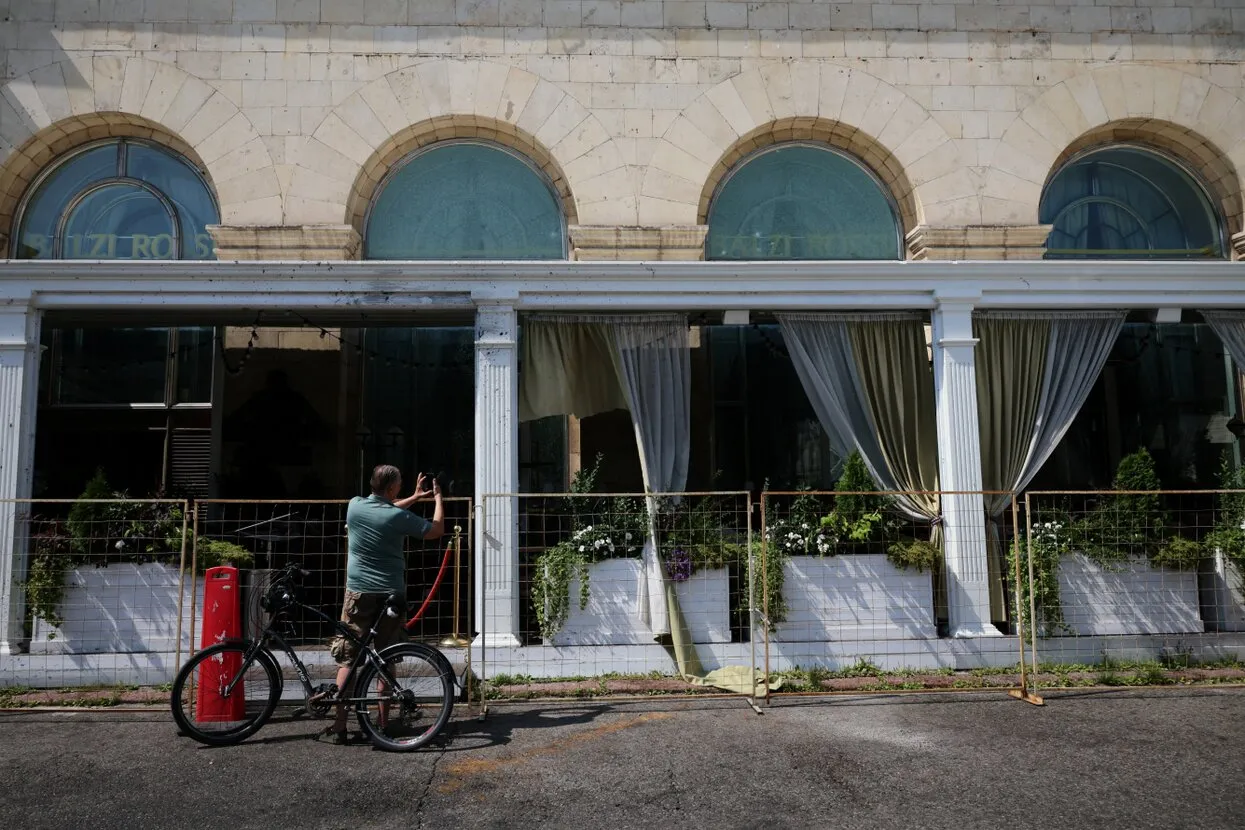
On the evening of August 1, an explosion occurred at the upscale restaurant Balzi Rossi on Kudrinskaya Square in central Moscow. Within two hours, the National Anti-Terrorism Committee officially stated that it had been a bomb explosion, and the next morning Moscow Mayor Sergey Sobyanin called what happened a terrorist attack and promised that those responsible “will definitely be found.” After that, the authorities stopped commenting on the incident altogether, with one exception: a single social media post from the Russian Embassy in Italy. Here are the questions the authorities have yet to answer.
What was the goal of the explosion? The restaurant was reportedly hosting a birthday party for Alexander Chayko, commander-in-chief of Russia’s Aerospace Forces, on the day of the blast. Media outlets have suggested the explosion may have been an attempt on his life, though it remains unclear who might have been behind it. Two days after the explosion, the Russian Embassy in Italy — Balzi Rossi is an Italian restaurant — claimed Ukrainian authorities had organized the attack with the goal of “intimidating Italians working in Russia.” No Russian officials or agencies have offered any other, more plausible account of events. Kyiv has not commented on the explosion or the accusations, directly or indirectly.
How many people died? The National Anti-Terrorism Committee reported that three people died: the woman who delivered the bomb, a security guard, and one of the restaurant’s patrons. Sergey Sobyanin offered his condolences to the victims’ families but did not specify the death toll. The Russian Embassy in Italy’s statement put the number at five, a figure that matches unofficial media reports that two of the injured later died in the hospital.
Who was the woman who brought the bomb? The National Anti-Terrorism Committee described her only as an “unidentified woman.” In the hours immediately after the blast, Telegram channels close to security officials called her a “suicide bomber.” Citing a source, the Russian business daily Kommersant later reported that she was a courier who had simply delivered a package to the restaurant, likely without knowing what it contained. No further information about her has emerged since.
Who were the other victims? Two of the other victims are almost certainly identified: Daniil Peredriy, the son-in-law of Aerospace Forces Commander-in-Chief Alexander Chayko, and Major General Valery Plokhotnyuk. Agentstvo, an independent Russian investigative outlet, found confirmation in state registries that both men died on August 1, the day of the restaurant explosion. VChK-OGPU, an anonymous Russian Telegram channel, reported that Plokhotnyuk was buried at Troyekurovskoye Cemetery on August 5 and Peredriy on August 6. Nothing at all is known about the fifth victim. Media reports had initially suggested that the person buried on August 5 was not Plokhotnyuk but Lieutenant General Igor Yerusalimov — a claim traced to a message about a farewell ceremony posted in a neighborhood chat in Solntsevo — but journalists later determined that Yerusalimov is alive.
How is the investigation going? None of Russia’s security agencies has published even the standard technical statements typical of such incidents — confirmation that a criminal case has been opened, or which agency is leading the investigation. Kommersant reported, unofficially, that a criminal case had been opened under Russia’s criminal statute against terrorism (Article 205 of Russia’s Criminal Code); that remains the only information available about the state of the investigation. The Balzi Rossi restaurant remains closed.
At Meduza, we are committed to transparency about our use of artificial intelligence in the newsroom. The story you’re reading was written by one of our living, breathing journalists and translated from Russian using an AI model configured to follow our strict editorial standards. This translation process is the result of extensive testing and refinements to ensure our English-language coverage is timely and accurate. A Meduza editor reviews every draft before publication.
If you find any errors in this translation, please contact us at reports@meduza.io.
To read Meduza’s exclusive content in English, please subscribe to our newsletter.