How Russia is impersonating French news outlets in a bid to influence France’s next presidential election
Russian disinformation networks have launched an active campaign to interfere in France’s presidential election, which is set for April 2027. Over the past two weeks, at least three cases have come to light in which these networks spread fake news about possible candidates on social media, including by posing as popular French outlets. The attacks target politicians who have previously criticized Russia or expressed support for Ukraine in the war. At the same time, the narratives the Russian networks are pushing are fairly crude and easy to debunk. Meduza explains what’s happening around France’s presidential election and what the disinformation attacks are meant to achieve.
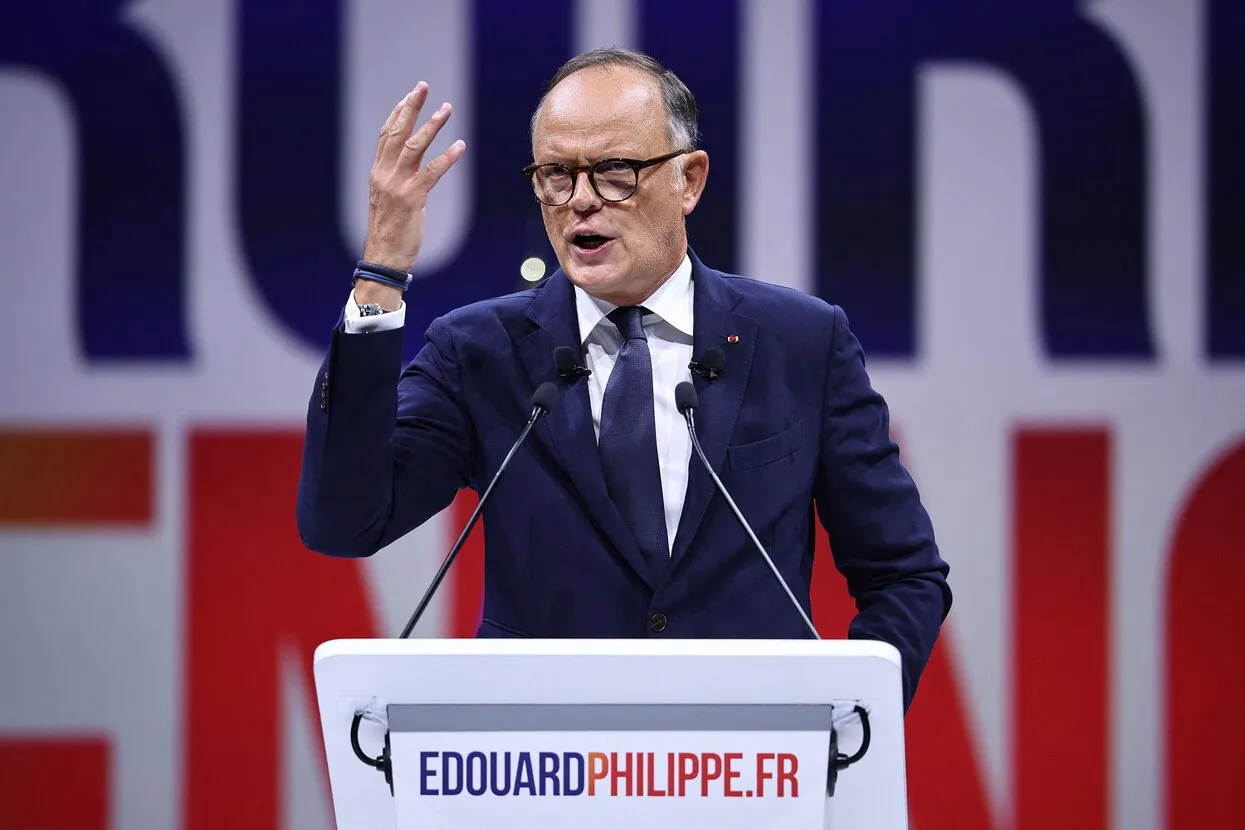
A source in French security services told AFP on July 24 that France had recorded its first disinformation campaign against a declared presidential candidate — the target was former Prime Minister and Le Havre Mayor Édouard Philippe.
According to the source, false claims about Philippe’s health had circulated on social media for a week, spread by the Russian disinformation network Storm-1516. The source did not specify how investigators identified the network or what the posts said.
The Russian disinformation network Storm-1516 has been active since at least 2023. Researchers and journalists believe it is linked to Russian military intelligence, and its ranks include former employees of Yevgeny Prigozhin’s “troll factory.” Storm-1516 has previously been accused of interfering in elections in the US, Germany, and Hungary.
Édouard Philippe served as France’s prime minister from 2017 to 2020, during Emmanuel Macron’s first presidential term, and now leads the center-right party Horizons, which he founded in 2021. He announced his intention to run for president in September 2024.
Philippe has repeatedly voiced support for Ukraine. He traveled to Kyiv in May, where he met with Volodymyr Zelensky, and afterward wrote that Ukraine is “destined to become part of Europe.” He also stressed that Europe’s defense must be ensured together with Ukraine.
In late July, reports circulating on social media said Storm-1516 had launched a similar campaign against Raphaël Glucksmann, a co-founder of the center-left party Place Publique. Glucksmann has not yet announced his candidacy and, according to his own statements, will decide by the end of the summer.
French journalist Edwy Plenel later confirmed that a fake article quoting him, along with a video using a faked version of his voice, was circulating on social media. The piece, which focused on Glucksmann, was falsely attributed to the French outlet Blast.
A few days later, Glucksmann said the Russian disinformation network Storm-1516 had launched a campaign against him, citing information he received from France’s General Secretariat for Defense and National Security (SGDSN).
A fake outlet posing as Blast published an article accusing Glucksmann’s partner, Léa Salamé, of trying to bribe the media — apparently Edwy Plenel — to create a “positive image of her husband,” Le Figaro reported. Glucksmann said the security service confirmed a Russian network was behind the publication.
Like Philippe, Glucksmann is a strong supporter of Ukraine. Le Figaro calls him one of Kyiv’s staunchest allies and someone who has pushed for a firm stance toward Russia.
In May, Glucksmann spoke out against Xenia Fedorova, former editor-in-chief of the Russian state propaganda outlet RT France, after she took a job at the French right-wing conservative channel CNews. He said she wasn’t a journalist but a Russian agent working for the Kremlin. Fedorova was reported in late July to be facing expulsion from France because she “serves as a conduit for disinformation campaigns run by Russian authorities.”
Gabriel Attal, a presidential candidate from Emmanuel Macron’s party Renaissance who officially confirmed his candidacy in May, became the third politician targeted by a disinformation campaign. The independent Russian investigative outlet The Insider reported that the Russian bot network Matryoshka organized the attack against him, citing the Bot Blocker project.
Technically, “Matryoshka” isn’t a network but the name researchers have given to an operation that spreads fake content. It relies on bot infrastructure and anonymous platforms to publish disinformation on social media, creating artificial information noise. Its bots pose as real media outlets or ordinary people.
Researchers identified eight fake videos designed to look like content from popular French outlets — BFM, RFI, Le Parisien, AFP, France 24, Le Figaro, Libération, and Le Monde — all containing false claims about Attal or his family.
One video claims his father died of a cocaine overdose in 2015 and that Attal himself struggles with drug addiction. Another claims he has been diagnosed with Parkinson’s disease. His father’s foundation is accused of laundering money “stolen from Ukraine military aid programs,” and the anti-corruption organization Anticor allegedly lost its accreditation because of an investigation into the case. The foundation is also alleged to have become one of the largest private sponsors of the Israeli military.
Attal is falsely quoted as calling the sharp influx of migrants from Morocco into Spain a “great blessing,” and as saying there are “more gay men among Muslims than in any other religious group,” attributing this to the abundance of religious prohibitions.
The Insider says the Matryoshka bots build their narratives around real facts but surround them with numerous fabrications. Attal, for example, is openly gay, but that has nothing to do with the fabricated statements about Muslims.
Attal’s father did die in 2015, but drugs had nothing to do with it, and his foundation has nothing to do with Anticor’s loss of accreditation, though that event did actually happen. Other claims, including the quotes about migrants and the Parkinson’s diagnosis, have no basis whatsoever.
Like the other two candidates, Attal holds an unambiguous position in support of Ukraine. In 2024, while serving as France’s prime minister, he said Russian interference in the internal affairs of other states “could become our new world war.”
“The reality is that Russia poses a direct and immediate threat to France on every front,” the Russian state news agency TASS quoted him as saying around the same time — even then, as head of government, he was already drawing attention to Russia’s disinformation campaigns.
Russian bots began interfering in France’s presidential election well before the race formally begins. At this stage, the candidates have only announced their intent to run, and it’s not certain they will ultimately gain enough support to make it onto the ballot.
According to Glucksmann, the goal of these attacks is to smear European politicians Russia considers hostile, by any means necessary, and to create an atmosphere of suspicion in France. “So that in the end the famous principle of “there’s no smoke without a fire” prevails, even if that fire was entirely invented in one of the offices in St. Petersburg,” he stressed.
At Meduza, we are committed to transparency about our use of artificial intelligence in the newsroom. The story you’re reading was written by one of our living, breathing journalists and translated from Russian using an AI model configured to follow our strict editorial standards. This translation process is the result of extensive testing and refinements to ensure our English-language coverage is timely and accurate. A Meduza editor reviews every draft before publication.
If you find any errors in this translation, please contact us at reports@meduza.io.
To read Meduza’s exclusive content in English, please subscribe to our newsletter.
Meduza