Moscow’s leaked media playbook: spin Ukraine’s refinery hits as an attack on ‘car owners’
Amid Ukrainian strikes on Russian oil refineries and Wildberries warehouses, Russia’s presidential administration advised state and pro-Kremlin media to persuade citizens that “rallying society around the President is the most important factor in the country’s stability.”
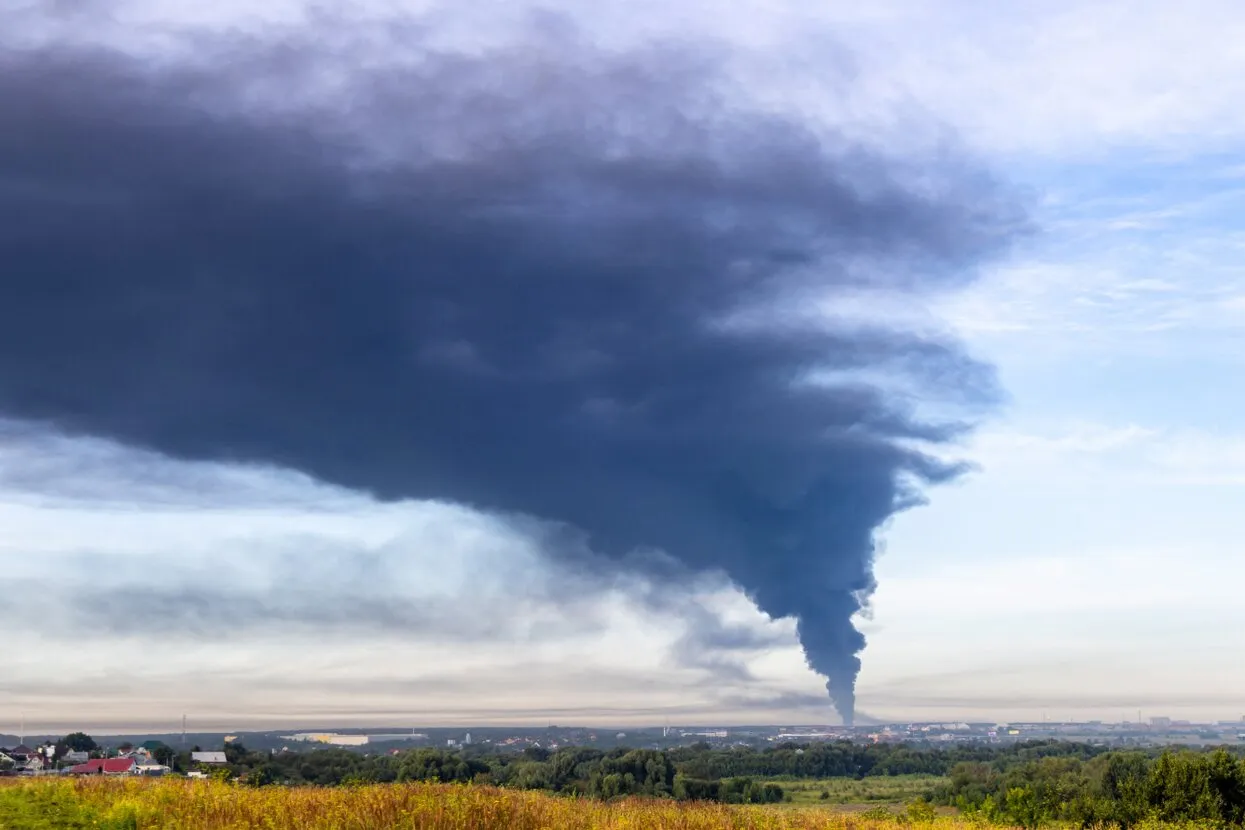
Overnight on July 18, Ukrainian forces struck Wildberries logistics centers in Elektrostal, outside Moscow, and in Kotovsk, in the Tambov region. Official figures put the death toll at eight, with about 80 injured across the two warehouses. Ukrainian drones also hit an oil depot in Noginsk, in the Moscow region.
It was one of the largest attacks on civilian infrastructure in Russia — yet state television ignored it.
Ukrainian President Volodymyr Zelensky later said the operation was a response to Russian military strikes on civilian infrastructure. On the morning of July 17, Russian drones struck a Nova Poshta sorting terminal in Sumy twice; no casualties were reported.
In the early hours of July 20, Ukrainian drones struck the Yuzhnyye Vorota industrial park in Domodedovo, outside Moscow, where a Wildberries warehouse is also located. Wildberries said the warehouse remained operational.
“The main purpose of such strikes is to demoralize people and try to use their anxiety against the country’s leadership and our army. Anxiety doesn’t reduce the likelihood of the conflict dragging on — it increases it: the enemy uses anxiety to gauge the effectiveness of its strikes,” read the guidance circulated to state media employees by the political bloc of Russia’s presidential administration.
According to the document, strikes on oil refineries were intended “to create difficulties for car owners,” while strikes on Wildberries warehouses were aimed “at damaging Russian small business.” The document described the strikes themselves as “PR attacks.”
To distract Russians from the Ukrainian strikes, the document’s authors urged editors and broadcasters to emphasize that “Vladimir Putin has effectively cut Ukraine off from the sea.”
They also recommended covering Russian military strikes on Ukrainian cities. The document urged pro-Kremlin outlets, for instance, to highlight that overnight on July 19, Russia carried out “the most massive ‘ballistic’ strike on Kyiv.” The strike allegedly destroyed munitions that “the enemy wanted to unleash on Russia.” The document also mentions unspecified “drone warehouses,” as well as “factories producing components for the ‘Flamingo’ and ‘Neptun-MD’ missiles.”
Journalists were also advised to report that “Ukraine will be left with no warehouses, no fuel, no trains, no substations”:
The format of the strikes shows that the Russian army aims to finish off Ukraine’s transportation and fuel system — dark times await the enemy’s logistics.
Propagandists were also urged to cover a post by the Defense Ministry on Max — the state messenger app — published on the day of the 2026 FIFA World Cup final. The post featured a photograph of a missile system with the caption: “Today is definitely not the final — we’re loaded and pressing on.”
“A hard war is underway, but in it we are grinding down the enemy and have no intention of letting up. The enemy faces new strikes on Kyiv, the most powerful yet,” the document’s authors said.
An employee at a pro-Kremlin outlet familiar with the document said it left him with the impression that the Kremlin was trying to convince citizens it was “fighting for real” and delivering a “response” to Ukraine:
Can this reduce anxiety? I don’t think so. But they clearly feel it’s a problem, given how directly they mention it.
At Meduza, we are committed to transparency about our use of artificial intelligence in the newsroom. The story you’re reading was written by one of our living, breathing journalists and translated from Russian using an AI model configured to follow our strict editorial standards. This translation process is the result of extensive testing and refinements to ensure our English-language coverage is timely and accurate. A Meduza editor reviews every draft before publication.
If you find any errors in this translation, please contact us at reports@meduza.io.
To read Meduza’s exclusive content in English, please subscribe to our newsletter.
Andrei Pertsev