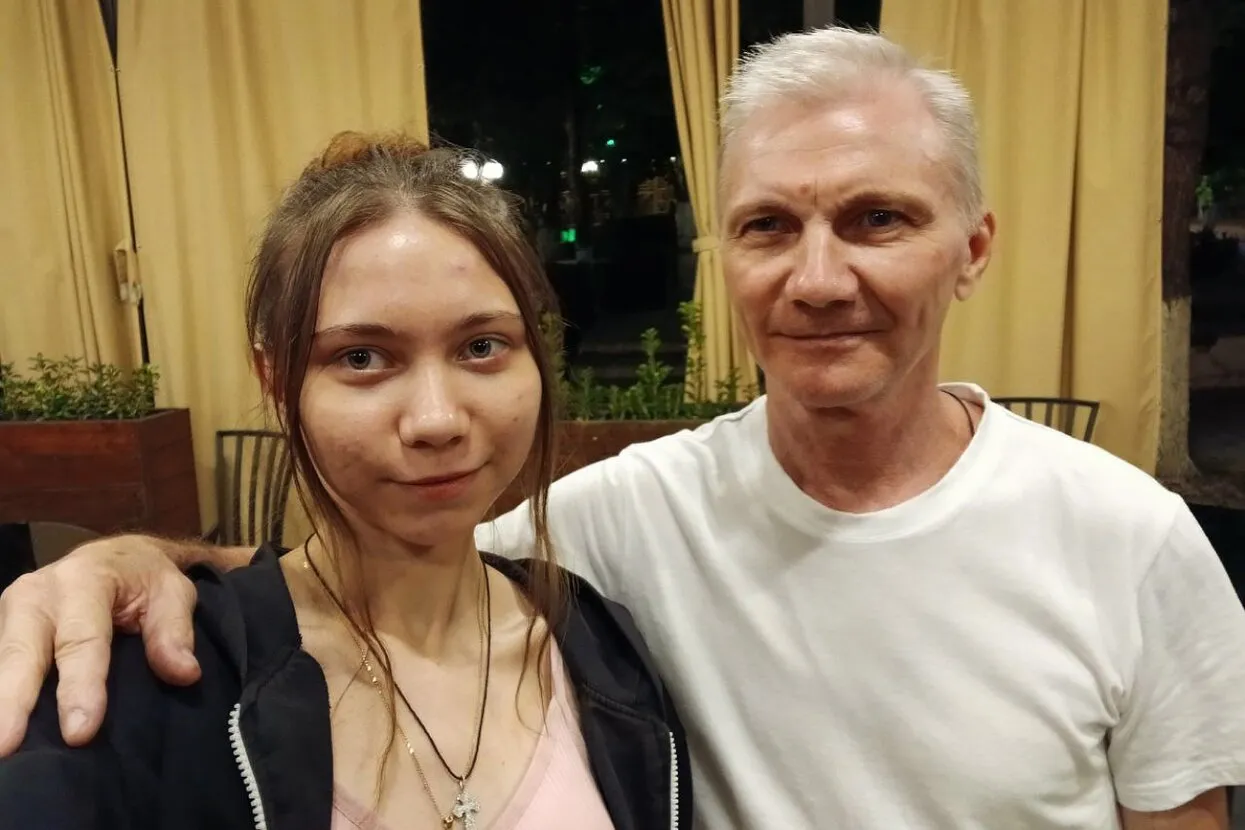
A 12-year-old’s antiwar drawing sent her father to Russian prison. Three years later, they’re starting over in Paris after a stalled bid for asylum in Germany.
In the fall of 2024, Alexei Moskalev — released from prison after being convicted of “discrediting” the Russian military — reunited with his 14-year-old daughter, Masha, and the two moved from Russia to Armenia. There, they applied for a German humanitarian visa. But in 2025, Germany effectively closed that program to Russians. In March 2026, France issued humanitarian visas to the Moskalevs. On July 17, they were granted political asylum. Bereg, a cooperative of independent journalists, spoke with Alexei Moskalev about how the family’s new life is beginning. Meduza is publishing the interview in full.
— Congratulations — finally some good news! What were you doing when you found out you’d been granted political asylum?
— I was at home, making soup and dumplings. Masha was in the city with a tutor — she has a test at the end of August to get into a lycée. I got a text from her: “Dad, we finally got asylum.” She’d received an email notification from OFPRA. I wrote back: “So, Masha, should we celebrate?”
The only problem is we don’t have time right now — we’re busy pulling together the documents we need for our residence permits. We still have to go get photos taken and make copies of our passports.
— How do you feel?
— Obviously, this is huge for us. I want to thank the French authorities for not dragging out the process. As far as I know, some people wait a year and a half, even two years, for political asylum.
— Did you ever get any response from the German authorities to your humanitarian visa application? How did it end up being France instead of Germany?
— No response ever came from Germany — neither positive nor negative. Initially, as far as I know, Germany’s Foreign Ministry approved our case. In the end we waited more than a year for a decision from the German authorities, and in the fall of 2025 they froze the humanitarian visa program for Russians and Belarusians.
I figure Germany was just waiting for people to get worn down and start looking elsewhere. That’s what happened to us — in January 2026 we took friends’ advice and filed our application in France.
— Who helped you — legally and financially?
— From the moment we left Russia, we received financial support from the businessman Leonid Nevzlin. We had never met in person and spoke by video only once. We told him about our situation. The human rights organization inTransit helped with the documents. The lawyer Dmitry Zakhvatov had been there from the very beginning — from the moment I was placed under house arrest.
— Do you know how much the support for your application cost?
— No, I didn’t ask. You know, we left Russia with practically nothing — everything I had built up stayed there. During the search, the security forces took all my cash: $3,150 and 125,000 rubles. I had nothing on me at all.
— Where are you living?
— After arriving in March, we spent the first few days in a hotel while human rights workers found us housing. Then the French authorities gave us temporary housing. It’s good it’s not out in the middle of nowhere. Not in the center of Paris, of course, but I like the neighborhood.
It’s a bit cramped, though — one room for the two of us. We share the apartment with another family: a shared kitchen, toilet, and shower. We don’t know where our neighbors are from; they speak their own language.
— Have you seen much of Paris yet?
— Of course — we’ve been to the Eiffel Tower, to the church where Napoleon is buried. My first impression of Paris was of an open-air museum. Wherever you look — beauty. Just beauty!
Masha and I relax in the parks, ride bikes, swim, and sunbathe. I’ve gotten really tan. I cook at home: obviously, it’s cheaper than going to restaurants.
The Moskalev family archive
— Where and what will Masha be studying?
— In May, she started at a collège to help her adjust. She attended all through May, working mainly on French and math. Now she’s preparing for the lycée entrance test, which she’ll take in August. We were told it will be a math test. As far as I know, it will be a mixed class — both Russian-speaking and French students.
— Have you started learning French yourself?
— No. French is pretty difficult. In Armenia we started learning German, and it’s hard for me to switch from German to French now. I’m counting on Masha — I’ll let her handle it for now.
Of course I’m planning to as well — honestly, it’s tough here without the language. It was especially rough at first, but then I started going to various organizations and the post office on my own. Right now I mostly communicate through an interpreter.
— Have you thought about where you’ll work?
— I don’t want to talk about my plans yet. I will continue my political activities — I have no intention of stopping. But I’ll wait until the day-to-day problems are sorted out, and then I’ll gradually start acting on them.
— Does Masha stay in touch with her mother?
— Her mother very rarely sends Masha a text: “So, how are you doing over there?” She doesn’t even know we’re in France. And while we were in Armenia, she had no idea we were there — almost right up until we left. She has no interest in her daughter’s life.
— In photos from Russia, Masha is holding a little dog. Is it yours?
— That’s a miniature Yorkshire terrier named Molya. A volunteer gave her to Masha while I was in prison. When we had to leave Yefremov, though, we ended up placing her in temporary care with volunteers in the Moscow region — we needed to get documents for Molya, and there was no time for that, of course.
That little dog’s really gotten around: she left Zelenograd for Georgia, and from there she was brought to us in Armenia. Right now she’s staying with a foster family in Yerevan — bringing animals into the EU requires a huge amount of paperwork, and the paperwork is still in progress. But Masha wants to bring her here, of course.
Masha and Molya
The Moskalev family archive
— Has Masha made any friends in exile?
— Her social circle is basically dissidents who left Russia. Mutual friends introduced them. They message back and forth. She has no interest in people her own age. She says: “We’ve got nothing to talk about.”
Right now Masha spends all her time doing what she loves: drawing pencil portraits of politicians, opposition figures, and people who helped us. We sent Nevzlin a portrait too. She also wants to write a book. I don’t know what about. She says: “Let that stay a secret.”
At Meduza, we are committed to transparency about our use of artificial intelligence in the newsroom. The story you’re reading was written by one of our living, breathing journalists and translated from Russian using an AI model configured to follow our strict editorial standards. This translation process is the result of extensive testing and refinements to ensure our English-language coverage is timely and accurate. A Meduza editor reviews every draft before publication.
If you find any errors in this translation, please contact us at reports@meduza.io.
To read Meduza’s exclusive content in English, please subscribe to our newsletter.
Bereg
Office Français de Protection des Réfugiés et Apatrides
The French Office for the Protection of Refugees and Stateless Persons.
What is this?
An anti-war organization that helps people — in particular, activists and persecuted individuals from Russia — obtain humanitarian visas, evacuate, and establish legal status in Europe.
Where is this?
Napoleon Bonaparte’s tomb is located in the Cathedral of Saint Louis. In 1840, the French emperor’s remains were ceremonially brought to Paris from the island of Saint Helena, where Napoleon died in 1821.