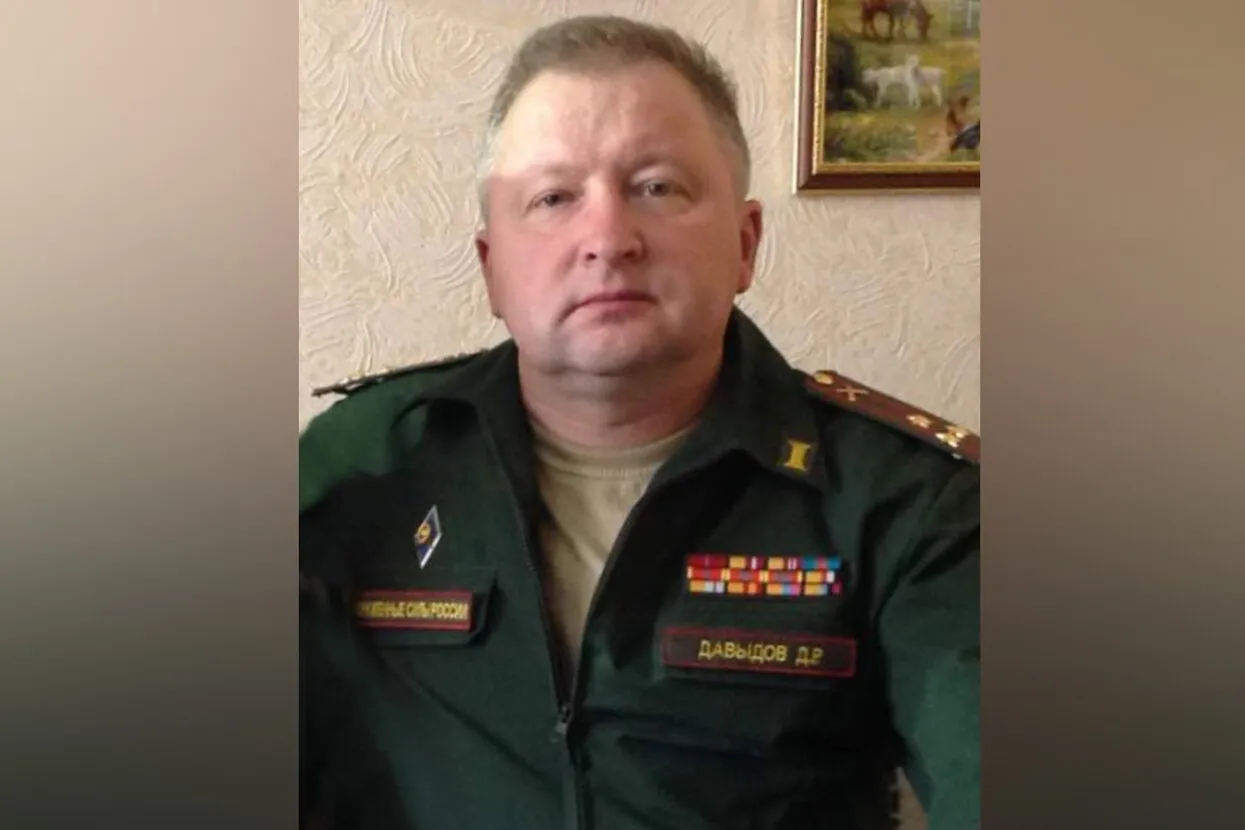
Damir Davydov headed Russia’s missile forces. A car bomb reportedly killed him today. Here’s what we know.
A car bomb killed a senior Russian defense official outside Moscow early Tuesday, June 9. Around 5:30 a.m., a BMW X3 exploded near Koldunova Street in Balashikha’s Aviatorov neighborhood as the driver pulled out of a parking space. Bystanders reached the driver while he was still alive, but he died at the scene.
The Russian federal Investigative Committee and the prosecutor’s office for the Moscow region confirmed an explosion had taken place in Balashikha but did not name the victim. The Investigative Committee said a criminal case had been opened but did not disclose the charge.
Several Telegram channels reported that the victim was Damir Davydov, head of the Main Missile and Artillery Directorate (GRAU) of Russia’s Defense Ministry. The Russian Telegram channel VChK-OGPU, Ukrainian Defense Ministry adviser Serhiy Sternenko, and the Ukrainian outlet Insider UA all reported the same name. A source cited by the independent Russian outlet Astra also confirmed Davydov’s death, saying an improvised explosive device had been placed under the vehicle. The Russian business daily Kommersant reported that the device had the explosive force of up to 500 grams of TNT.
Davydov was listed in the Myrotvorets database. According to Ukrainian sources, Davydov was 57 and grew up in the closed city of Penza-19, also known as Zarechny. His father, Rafail Davydov, worked at the Start production association, which manufactured nuclear missiles. Shot, a Russian Telegram channel with ties to law enforcement, put his age at 62.
A December 2009 article in the Defense Ministry newspaper Krasnaya Zvezda identified Davydov as commander of the Central Test Technical Bureau attached to the 51st Arsenal of the Defense Ministry’s Main Missile and Artillery Directorate, with the rank of colonel. He appeared again in a 2019 article, which placed him in a Russian Defense Ministry delegation to Kazakhstan — by then serving as head of a GRAU directorate.
By the evening of June 9, neither Russian law enforcement nor state media had officially named the victim. The independent Russian investigative outlet Agentstvo noted that in earlier cases involving senior military figures, the victims had been publicly named the same day.
The Aviatorov neighborhood, where the explosion occurred, was originally built as a residential district for military retirees, Agentstvo reported. In April 2025, Lieutenant General Yaroslav Moskalik, deputy head of the Main Operations Directorate of the Russian Armed Forces General Staff, was killed when a bomb destroyed his car in the same neighborhood. The Investigative Committee opened a terrorism case, alleging that the attack was carried out on the orders of Ukraine’s Security Service, and arrested the alleged perpetrator, Ignat Kuzin. In November 2025, Kuzin was sentenced to life in prison.
At Meduza, we are committed to transparency about our use of artificial intelligence in the newsroom. The story you’re reading was written by one of our living, breathing journalists and translated from Russian using an AI model configured to follow our strict editorial standards. This translation process is the result of extensive testing and refinements to ensure our English-language coverage is timely and accurate. A Meduza editor reviews every draft before publication.
If you find any errors in this translation, please contact us at reports@meduza.io.
To read Meduza’s exclusive content in English, please subscribe to our newsletter.
Myrotvorets
The website Myrotvorets publishes information about people whom its administrators consider a threat to Ukraine’s security. After Russia’s full-scale invasion began, the site also began publishing information about alleged crimes committed by Russian military personnel in Ukraine.