Telegram news channels are one of Russia’s few major alternatives to state media. The head of one of the largest says their days may be numbered.
Last weekend, by all appearances, the Russian authorities began blocking the messaging app Telegram across the country. The restrictions promise to deal a heavy blow to what remains of Russia’s media landscape, including Ostorozhno, Novosti, one of the platform’s largest news channels. Launched in 2021 as part of socialite Ksenia Sobchak’s media holding Ostorozhno Media, the outlet continues to operate inside Russia while covering topics that almost every other censored publication avoids.
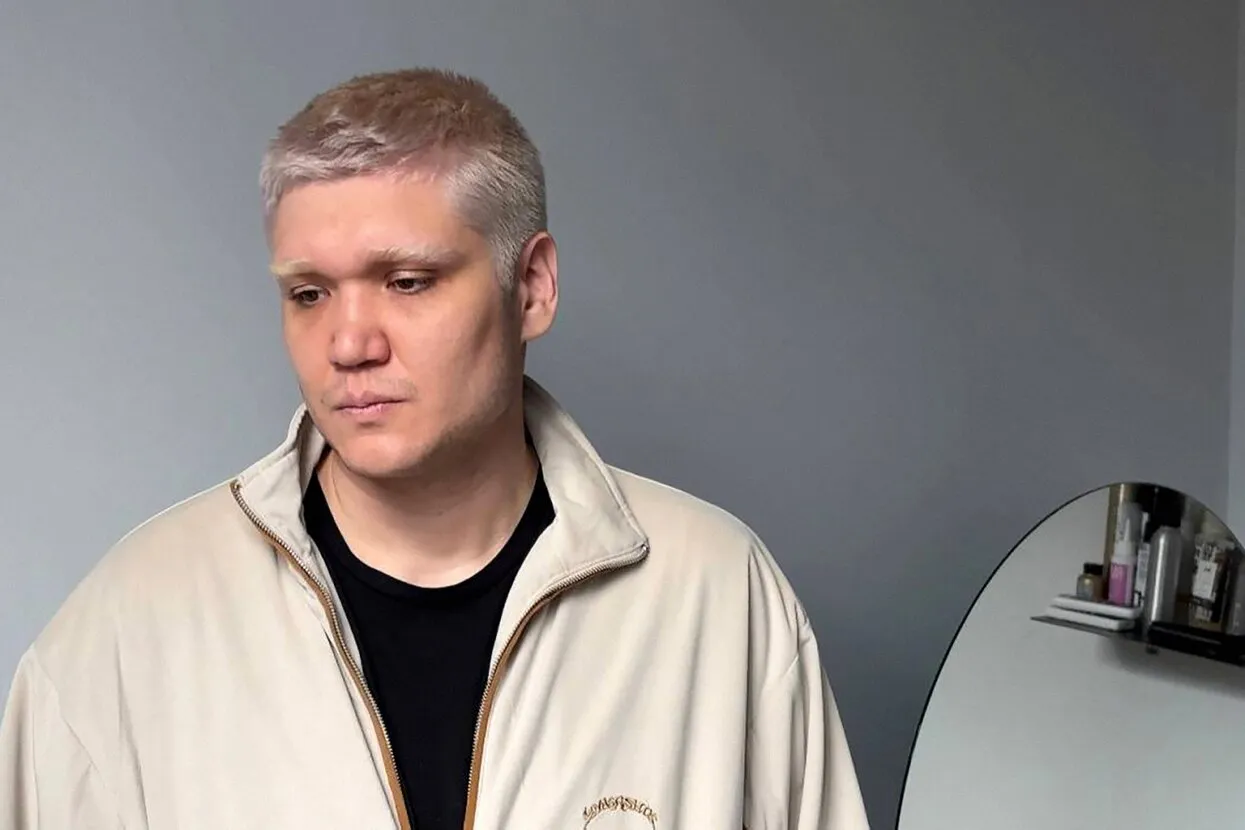
Despite the journalistic community’s complicated feelings about Sobchak herself, Ostorozhno, Novosti has become an important source of information about Russia, even for media organizations operating in exile. At the request of the independent journalists’ cooperative Bereg, Irina Novik spoke with Ostorozhno, Novosti editor-in-chief Sergey Titov about how his team is preparing for a potential Telegram ban — and about censorship, emigration, and the newsroom’s relationship with Sobchak. With Bereg’s permission, Meduza is publishing an abridged translation of their conversation.
— As the editor-in-chief of one of Telegram’s largest outlets, what do you know about a possible Telegram block?
— I don’t have any specific information or dates — I don’t know the people who make those decisions. But things do reach us: back in December, we heard from people close to the presidential administration that Telegram would be blocked by April 1.
I’ve also seen reports from Baza, RBC, and other outlets. But when they say their sources are linked to the Kremlin, it’s usually secondhand or thirdhand — people who heard something somewhere, or maybe the authorities are deliberately floating the idea to gauge public reaction. We made a deliberate choice not to publish that story: I wasn’t sure whether it was a real plan or simply an attempt to test the waters.
At the same time, the people making these decisions clearly do have a plan to build a Chinese-style sovereign Internet in Russia. This isn’t some initiative from a particular political bloc or even the government — it’s coming from specific individuals who, in the current situation, effectively shape all policy in Russia.
— What do you mean?
— I think we’re talking about the security services — people who’ve set themselves the goal of creating a Chinese-style Internet. Most likely, no one in Russia will have access to a free Internet. Everyone understands that the media and advertising market is collapsing — and is already starting to collapse — but that’s still their objective.
Take the ongoing disruptions in Moscow. I was just traveling across the city, and ordering a taxi has become an ordeal because the Internet barely works. Even the Yandex Taxi app — supposedly on the “whitelist” — is nearly impossible to open.
The online backlash to Russia’s Internet restrictions
— What do you think is the logic behind all this, from the security services’ perspective?
— In my view, the country is effectively run by the security agencies, and this is what they see as the right way to structure relations with society: control everything they can to minimize the risk of external attacks via technology, control how people express discontent — and, more broadly, the entire information environment. In short, they want everything in Russia to run by their own laws.
— Has your newsroom started preparing for a possible Telegram block?
— Of course. But it’s important to distinguish between the Ostorozhno, Novosti newsroom and the Ostorozhno Media holding company, which has a specific owner — Ksenia Sobchak — who fully determines the business model. Ostorozhno Media is a commercial operation, and naturally its owners wants to make money. If a ban on advertising on Telegram is introduced, that would essentially mean the end of Ostorozhno, Novosti.
— Are you saying Sobchak doesn’t interfere in your editorial policy?
— She hardly interferes. It’s more that she advises, pushes back. She might say, “Why aren’t we just ignoring this?”
But she can’t just log into the channel and post something herself. She respects editorial policy — saying things like, “You know better what to do.” Though of course we clash over certain topics every couple of months.
A 2020 profile of Ksenia Sobchak
There is a difference between Ostorozhno Media and Ostorozhno, Novosti in their approach to content, and you can see it in the tone. For example, the opening ceremony of the Paris Olympics in 2024 was covered by Ostorozhno, Novosti as a fairly normal event — while on her other channels, Ksenia harshly criticized it in her own voice. Because that’s her personal opinion.
People don’t often grasp this, even within the media industry, but there’s Ostorozhno Media — with its YouTube channel, other Telegram channels, and commercial department — and then there’s Ostorozhno, Novosti, where, when there are grounds for it, we can publish critical coverage of events or individuals, including those the company has business relationships with.
— Ostorozhno, Novosti is already on Russia’s state messenger, Max. When did you launch a channel there?
— In December. At first, we posted deliberately trollish content: cheap AI-generated images, news written in Turkish. We wanted to see if anyone would even notice what we were doing there — and to make our attitude clear.
Read more about Max
Kremlin spokesman says Russia’s state-backed messenger Max needs competition from Telegram and WhatsApp
All signal, no substanceVK’s Max app aims to replace WhatsApp, but the Russian celebrities paid to promote it have found just one selling point: it works
The Kremlin spent years building a messenger to replace Telegram. Now it is reportedly telling soldiers the substitute is too insecure to use at the front.
— And did anyone notice?
— There was no reaction from Max itself or from pro-government channels, which was surprising.
Editorially, it’s pretty dispiriting for us to move to Max, but there’s simply no other way to stay afloat while selling ads.
— Have advertisers already approached you specifically about Max?
— Yes, but only in isolated cases. As far as I can tell, bloggers on Max are actively pitching themselves to brands, while advertisers are mostly brushing them off for now.
You’re currently reading Meduza, the world’s largest independent Russian news outlet. Every day, we bring you essential coverage from Russia and beyond. Explore our reporting here and follow us wherever you get your news.
— You’ve started including notes in your posts to let readers know you duplicate your posts on Max due to the pressure on Telegram. But you’re not aggressively pushing people to move there — unlike other big news channels. Is that an ideological stance?
— Absolutely. It’s purely ideological, and I don’t hide that. It’s also something Ksenia and I argue about, because she — being more forward-looking — has long been saying that nothing good awaits us and that we should develop our presence on Max.
For a long time, the newsroom ignored that. Now it’s becoming clear she may have been right, and we should have listened. We ignored it and took a certain pride in holding out to the very end. If you look at me as a journalist, I think I did the right thing. If you look at me as a media manager, it was probably the wrong call; we could have picked up an extra 40,000 followers in that time.
Yesterday, March 10, we made our first separate post that said, basically: guys, we don’t have a choice. We even got a message from a reader in response: “Damn, you too?” I replied that there wouldn’t be any alternatives left. And the person wrote back, very sadly: “Well, Max it is, then.”
— You have major advertisers, like Alfa-Bank. Are they ready to pay for ads on Max?
— I can’t comment on specific clients. But I can say what I know from working in this environment. After news broke that the Federal Antimonopoly Service may have banned advertising on Telegram (or may soon ban it; it’s still unclear exactly what they announced), major clients in Russia have started pulling back from working with various channels.
If Telegram is officially banned tomorrow, the way Instagram was, the market will collapse. But that’s already happening — budgets are being cut as we speak.
Russia’s Internet blackouts
— Do you think it’s possible to redirect a large audience to a completely different platform?
— A lot depends on the content. The core audiences of outlets like [state media outlets] TASS or NTV are easier to move. Our core audience is people who aren’t particularly happy with what’s going on. But we’re softer in our approach than the émigré media.
Personally, as someone living in Moscow, I’m against Max. Any reasonable person is against Max. Everyone says it’s garbage. We have our own niche, and we know it will be very hard to bring that audience over. Forget 1.6 million — I don’t think we’ll even reach a million on Max.
Max isn’t a competitive platform; it’s a closed one. Telegram was always an open playing field — those who succeeded did so through fair competition. On Max, there won’t be liberal media, no meme pages about real problems, and some of the bloggers people actually follow just won’t be there. So it’s not really a competition anymore. Because of that closed structure, our growth is limited. Everyone understands we’ll never reach the same numbers there as we did on Telegram.
There’s also a built-in system chat on Max that pushes a list of accounts to subscribe to — and it’s all the “right” ones: Simonyan, RIA Novosti. You can’t even delete that chat or leave it.
— What are the chances your audience won’t move from Telegram to Max, but will simply use a VPN to get around the block, the way people did with Instagram?
— There haven’t been many successful attempts to block Telegram, so I have no doubt the Russian state won’t get very far with that. But that’s not the main danger. The danger is that as soon as advertising is cut off, it could have a very negative impact — both on staff, who would have to be let go, and on the entire media environment.
I think émigré media should actually step up their work on Telegram, because they’ll have less counter-propaganda to compete with. As for what we should do — I don’t know.
— Media in exile definitely won’t move from Telegram to Max. What are their chances of reaching audiences inside Russia?
— This is where I’m most critical of the émigrés. Since the start of the ”special military operation,” I’ve spoken with a lot of people working at different émigré outlets, including managers. But I still haven’t managed to get across the point that émigrés still don’t have a proper outlet that delivers news quickly. Meduza works roughly like that, but Meduza has a website you have to click through to [Editor’s note: Meduza also has a Telegram channel]. Astra is another good example. But beyond that, there aren’t really any émigré news outlets.
I think that’s a big mistake. All these years, they should have been trying to build their own Mash, Shot, or Baza [popular news channels based in Russia]. Instead, émigré media chose to focus on investigative journalism. That’s great — people are documenting events that will hopefully make it into history books one day. But you also need to think about reaching a mass audience. No one is doing that, partly because of editorial tastes, and partly because many outlets rely on grants and need to show results that aren’t commercial. That’s not ideal either.
Telegram will remain one way or another, while state media will be pushed onto Max. My advice to émigré media: it would be great to develop fast-turnaround news coverage, because there will be less competition. Maybe one day I’ll manage to convince someone of that.
— Does Max have the potential to replace Telegram for audiences inside Russia?
— In some ways, it already is replacing it. The segment of the security apparatus that makes these decisions sees the population as sheep. And if you drive sheep into a pen with sticks, they don’t have much choice. Maybe some will run off into the forest, but most will go along. In that sense, I think they’ll be partially successful, and Max will grow.
My sense is that Telegram will become a place where people with more liberal views congregate. But Max will still be part of everyday life. So they’re making it convenient; you can already use it to confirm your age when buying alcohol.
— That sounds less like convenience and more like intimidation and coercion.
— There’s an interesting point that many émigrés probably don’t fully grasp. There’s a generation growing up — kids who were 13 or 14 when the [full-scale] war began. For them, showing ID on Max is normal. I have staff who are 21 or 22; they don’t really understand or remember much of prewar Russia. For example, the idea of buying a plane ticket and flying from Moscow to Europe for a weekend is foreign to them. They only know it from the memes of boomers and millennials. So the longer the younger generation grows up with Max, the more they’ll take it for granted.
— Let’s talk about security — or rather, the lack of it — on Max. For example, the messenger has access to passport data and IP addresses. You recently said on your channel that photos deleted from private chats on Max remain on the server.
— A lot of people are afraid that Max is some kind of spyware messenger and that they’ll be surveilled there. I don’t think so — it’s basically a cut-down version of the messenger from [old social from the 20-year-old social media service Odnoklassniki], not some sophisticated espionage tool.
But we do suspect that search within channels is surveilled to some extent, and that reactions to posts are being artificially inflated. We noticed that posts on our Max channel about statements from Iranian authorities on the U.S.–Israel conflict get a huge number of likes — no matter what the Iranians say. But any statement from the U.S. or Israel gets poop emojis and clown faces. Sure, maybe people in Russia feel solidarity with their “brotherly” Iranian nation — but not to that extent.
— Does Ostorozhno, Novosti do anything to protect its subscribers on Max?
— We do what we can. Back when there was a bit more freedom, we used to add disclaimers under our posts saying that VKontakte hands user data over to the security services. We have roughly the same attitude toward Max. What can we actually do? First, we don’t urge people to subscribe to our Max channel and we don’t say Max is the best app in the world. We say the situation is bad, but there’s no alternative.
Second, as an editorial team, we immediately decided we wouldn’t post high-risk stories there. For example, we had a report about a mobilized soldier being tortured by military police; the perpetrators were convicted, and now they’re trying to sign contracts and return to the front. That’s the kind of story we won’t publish on Max.
— Why?
— Because on Max, you can identify the specific journalist who posted the story. And if the authorities have questions, that puts the journalist at risk. So we don’t post political news there, or anything involving the Defense Ministry.
We also wouldn’t post a story about Navalny’s poisoning, for example. That would be suicidal. So what you get on Max is a toned-down version of our channel.
Read more about Alexey Navalny’s death
Ostorozhno, Novosti itself has grown quieter, because there’s even less freedom in Russia now. For a long time, we reported on strikes hitting civilian targets. Just yesterday, March 10, there was a case involving a factory in Bryansk. We have images from multiple angles, we know where the strike hit and roughly how many people were killed. Can we publish it? No. Because of the ban on reporting details of such strikes, it’s too risky. So we wait until state media — or someone like Vladislav Pozdnyakov, a staunch ally of the authorities who posts exact strike locations without blurring anything — publishes it first.
At one point, we covered LGBTQ topics and even used an LGBTQ-themed avatar after the “LGBT movement” was banned. That’s unthinkable now. And in that sense, the Max version of Ostorozhno, Novosti will be even more stripped down.
— Can you give some examples of what you do post — or plan to post — on Max?
— International news, for one, and stories that don’t involve complaints from the mothers and wives of mobilized soldiers or violence against them. Basically, news without anything political enough to trigger the authorities — for example, coverage of [the anti-war documentary] “Mr. Nobody Against Putin” winning an Oscar.
— Have you ever considered that Ostorozhno, Novosti might have to end because Telegram is blocked in Russia?
— I’ve considered everything. But it seems to me that Ostorozhno, Novosti is, in one way or another, the last thing still possible. Again, I don’t want to draw the authorities’ attention if they read this, but how many newsrooms left in Russia can write about people bringing flowers to Navalny’s grave on the anniversary of his death? One or two.
Living in Moscow and seeing everything that’s happening, I think about leaving constantly. Many people who stayed think: “Should I just go? Everyone else left. Why didn’t I leave?” People who left already have education, German residency permits… Many of my colleagues in journalism have gone; I look at their [social media] stories, and they have normal European lives.
— Don’t trust stories.
— Right, then I go into private messages, and people are crying and saying they feel terrible.
My position has always been — and remains — that as long as there’s a chance, you have to do something. Like in the movie “La Haine.” There’s a guy falling from a window, hurtling toward the ground, knowing he’s going to crash. But while he’s falling, he keeps telling himself, “So far so good, so far so good.” That’s how I feel, and a lot of people feel the same. Many young journalists at Ostorozhno, Novosti say they’re grateful to be able, at 20, not to write garbage — that is, not to work in state media. And they feel that if Ostorozhno, Novosti ends, they’ll go work as bartenders, but not at another media outlet in Russia.
We have a privilege — being a Russian media outlet — to cover topics no one else will touch, and in doing so, actually help people. For instance, a Russian soldier was tortured in a military unit; after our publication, a criminal case was opened. That’s a real achievement, in my view.
Read more about ‘Mr. Nobody’
— Do you think you’ll be able to hold onto that privilege if Telegram is blocked?
— If the advertising market collapses, if we grow weaker, if Telegram somehow gets effectively blocked, of course we’ll become weaker. And when we’re weaker, it’s easier to shut us down. In that sense, the risks compound.
I understand that Ostorozhno, Novosti as it exists today will come to an end. It will either be destroyed or end due to circumstances — a Telegram ban, or journalists getting attacked on the streets, or us publishing a story that upsets the wrong people.
— You’ve said before that Russian media in exile are detached from reality. Do you still think that?
— At the start of the war, I spoke very sharply. At times, I felt genuine disgust toward émigré media. Of course, I’m not generalizing, and with every year I become more understanding. I have a lot of respect for Mediazona, Meduza, and Verstka.
But besides people who stand for peace, freedom, and a Russia I recognize — who feel genuinely distressed about everything happening — there are those who support the Ukrainian army or the RDK, identifying with a foreign military force while still holding a Russian passport. I can’t understand that. No matter how liberal I am in Moscow, despite living in this madhouse, it’s our madhouse.
I don’t associate myself with the Russian state; I associate myself with the people. I’m against all of this, but I live here. This is my country; I can’t wish for its destruction and can’t imagine how that would even work. In that sense, there’s a vast divide. Part of the émigré community loses that connection, and that’s inevitable.
Interview by Irina Novik for Bereg
Special Military Operation
The Kremlin’s euphemism for its full-scale war against Ukraine