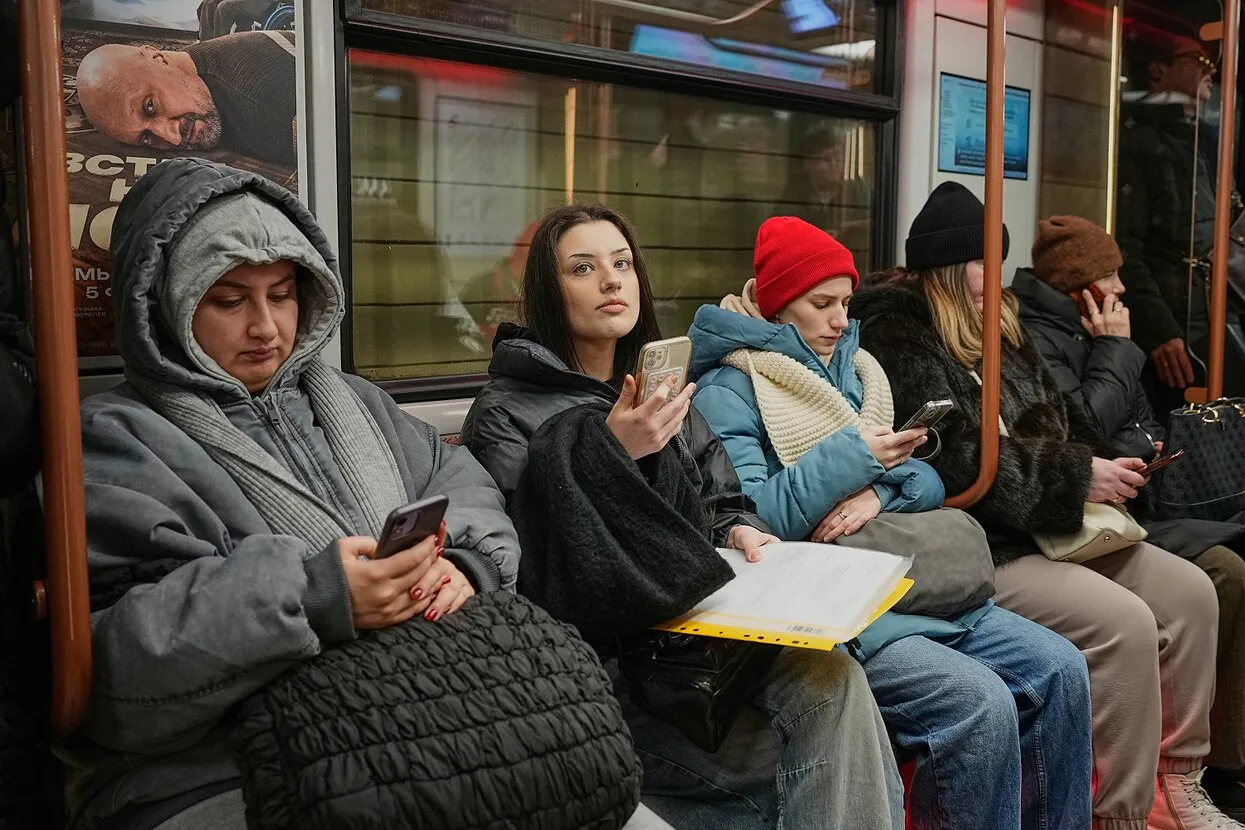
The Kremlin says it’s cutting off mobile Internet access for security reasons. Muscovites say they’re resigning themselves to regular blackouts.
“All of the disconnections and communications restrictions are taking place in strict accordance with current legislation,” Kremlin spokesman Dmitry Peskov said on Tuesday.
The statement came several days after residents of Moscow, St. Petersburg, and other Russian cities began experiencing widespread mobile Internet outages. These connectivity issues, Peskov said, were linked to a “major necessity — ensuring security.”
“As for the problems this poses for businesses, these are a subject for further analysis,” the Kremlin spokesman added. “Of course, various solutions will be proposed to address the problems that unfortunately accompany these restrictions.”
When the ‘big four’ go down
According to Kod Durova, a Russian tech publication, users in Moscow began reporting problems loading websites and apps on the evening of March 5. Some users lost service altogether, leaving them unable to make phone calls.
The blackouts continued in the following days, affecting all of the “big four” mobile operators in Russia: MTS, Megafon, Beeline, and T2. However, connectivity varied depending on location. “Literally, in one part of a district in the [downtown core], everything might work, but a few streets over, the network completely disappears,” a source told Kod Durova.
According to the monitoring websites DownDetector and Sboi.rf, the number of complaints gradually decreased over the weekend, but spiked again across all four major telecom operators on Monday morning.
read more from Meduza
A Moscow resident named Rudolf told Meduza that he and his girlfriend experienced connectivity problems at the Leningradsky Railway Station on March 6. “At the train station, we tried to call a taxi, but neither of us had Internet access inside the building itself or nearby,” he recalled. “I looked around and [other] people were in the exact same situation.”
Rudolf also lost mobile Internet and cell service in the city center on Sunday. “Regular mobile service disconnected periodically,” he said. “We realized this because my girlfriend tried to connect to WiFi, and it required a phone call for authentication, and it didn’t go through.”
“At first, I thought I was having problems with my VPN or something like that,” said Lina, who lost service in downtown Moscow on Saturday. “The Internet only started working when I went outside of the Third Ring Road.”
Lina said she lost Internet access again on Sunday evening and struggled to find a working ATM. “At a certain point, I started to panic because I thought that if something happened to me, I wouldn’t be able to tell my loved ones quickly,” she told Meduza. “In an emergency (for example, if you’re arrested), writing a message is faster and more convenient than calling.”
‘The very idea is unpleasant’
Internet blackouts have been a regular occurrence in Russia since May 2025, as part of what authorities say are efforts to combat Ukrainian drones. For example, after Leningrad Region Governor Alexander Drozdenko reported a drone threat on March 9, users across St. Petersburg lost connectivity for up to six hours.
“The very thought of being unable to use the Internet is unpleasant to me,” a Moscow resident named Elena told Meduza. She lost service in various parts of the capital on Friday and Sunday. “I was walking downtown, and there was no Internet there,” she complained.
“It’s super inconvenient when you want to do something you’re used to but can’t,” said Misha, another Muscovite who lost mobile Internet access on Friday. “It was the first time in my life I’d encountered something like this,” he continued. “I thought mobile Internet wasn’t being restricted as much in Moscow.”
read more from Meduza
Misha also experienced problems making phone calls over the weekend. “The connection was really bad, I could hardly hear anything,” he said.
Following the recent outages in Moscow, Kommersant sources in the telecoms industry claimed that operators had received orders to restrict mobile Internet access in certain parts of the city, which also led to problems with cell service. The reasons certain areas were chosen remain unknown.
Meanwhile, telecom operators such as Beeline and T2 claim their networks are operating as normal, blaming the outages on “external restrictions.”
President Vladimir Putin signed a law in February granting the Federal Security Service (FSB) authority to order shutdowns of communications services nationwide. The legislation, which came into force on March 3, also shields telecom providers from legal liability for outages.
read more about the law
‘The resignation is setting in’
While Moscow residents had periodically experienced communications blackouts before the new law, the interruptions were not as long-lasting or widespread. Misha said he still had mobile Internet troubles on Monday. “The ‘Cheburnet’ is just around the corner,” he predicted, using a slang term for Russia’s sovereign Internet.
“I’m not feeling anxious, I’m feeling angry,” Elena told Meduza. “Last year, before [Victory Day on] May 9, there were advanced warnings about Internet outages, and everyone was prepared for it. But this time it all happened suddenly.”
Lina said she suffered a panic attack during her train ride home on Sunday, after she couldn’t access her ticket information. “I realized that, apparently, only whitelisted resources were working,” she recalled, referring to Russia’s official list of websites that function during Internet blackouts. “I thought: What if this is our new reality? I don’t want to leave Russia, but it seems that free access to the Internet is my red line.”
Other residents who spoke to Meduza were already resigning themselves to changes. “At the moment, the resignation is setting in,” said Misha. “Whatever happens, it can’t get any worse. I’m ready for anything.”
“I’m trying to treat this with a kind of desperate acceptance and not go to extremes,” said Elena. “There are already too many emotional upheavals going on.”
read more from Meduza
Meduza