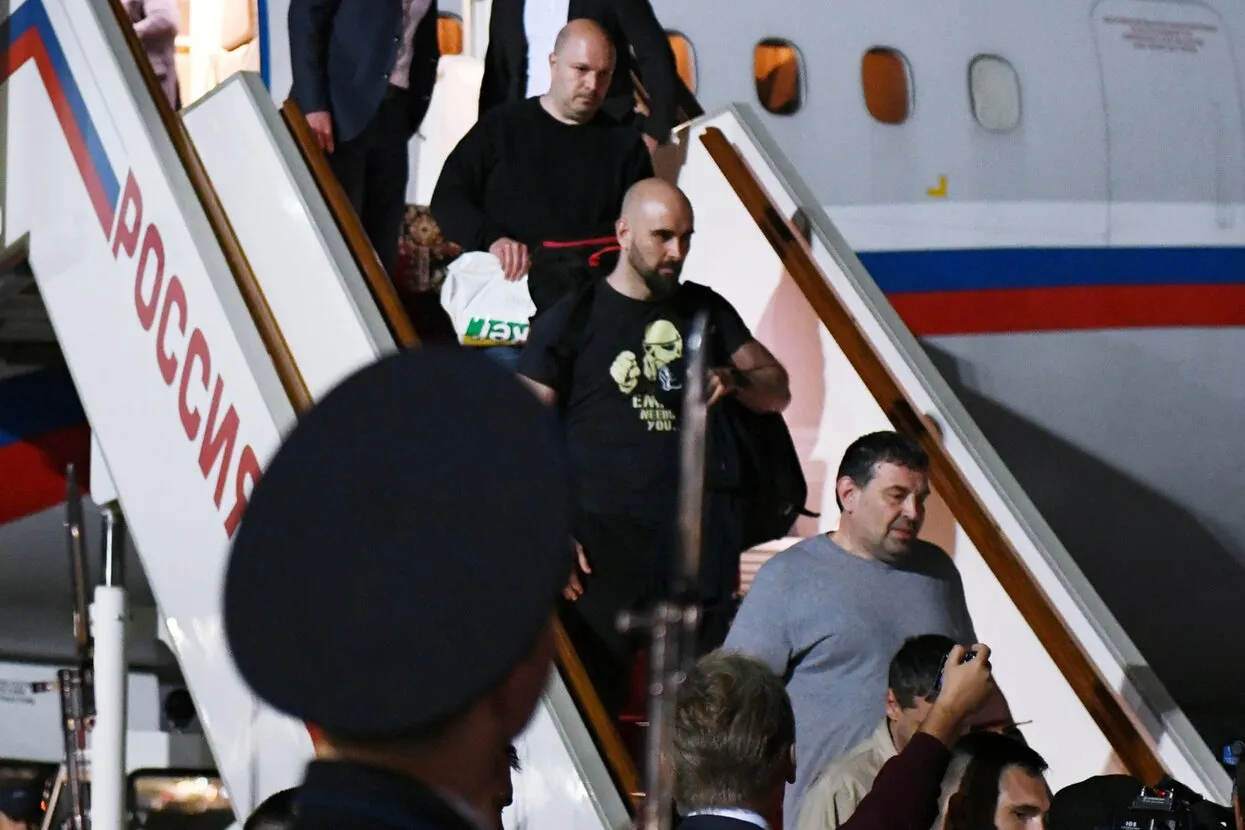
One year later Russian military intelligence agent Pablo González was traded for political prisoners. Now he claims he was one.
One year ago, Pablo González — also known as Pavel Rubtsov — was released from Polish custody and sent to Moscow as part of the largest prisoner swap between Russia and the West since the Cold War. Before he was arrested on suspicion of being a Russian intelligence agent, González had spent years working as a freelance journalist and cultivating ties with Russian opposition figures. Today, according to the Spanish outlet El Mundo, he’s getting divorced, in debt, and suffering from a serious lung condition that he attributes to his time in Polish detention. Meduza summarizes the key takeaways from El Mundo’s report.
Before the August 2024 prisoner swap, Pablo González posed for years as a journalist and political analyst focused on conflict zones in Eastern Europe and the Caucasus. In reality, as Meduza reported previously, he was a Russian military intelligence agent who cultivated ties with Russian opposition figures while reporting on their activities to Russia’s Military Intelligence Directorate, the GRU. He attended soccer matches with Ilya Yashin, had a romantic relationship with Zhanna Nemtsova, and even reportedly monitored Alexey Navalny’s movements in Europe. He also traveled to war zones and attended policy conferences to strengthen his cover as a journalist.
González was arrested in February 2022 near the Polish-Ukrainian border, just days after Russia’s full-scale invasion of Ukraine. The Polish authorities charged him with transmitting sensitive information to the GRU, which they believe he began doing as early as 2016.
At first, press freedom organizations treated González as a journalist who was being targeted unfairly. But his return to Moscow — where he stepped off a plane wearing a Star Wars T-shirt that said “Your Empire needs You,” shook hands with Vladimir Putin, and greeted a senior GRU official — provoked public backlash in Poland, where he still faces criminal charges. According to the Polish newspaper Rzeczpospolita, the exchange was carried out through a legal process “unknown to our criminal justice system,” and hearings in his case are expected to begin this fall.
According to El Mundo, González now expresses open hostility toward Poland, claiming he was mistreated and denied assistance while in detention. He reportedly refused to cooperate with Polish investigators, telling them the Kremlin would secure his release because he was too valuable to leave behind.
González now lives in Moscow, apart from his wife and children who live in Spain, and is reportedly in the process of getting a divorce. Although he still owes legal fees in Poland, he has found work and is working on educational projects aimed at journalists and political analysts in Russia. He also turned down a job offer from the state media outlet RT, El Mundo said.
Additionally, according to the paper, González has pulmonary fibrosis — a condition in which lung tissue thickens, making it harder to breathe. He blames his health issues on COVID-19, which he says he contracted twice while in Polish custody.
González continues to defend himself publicly, claiming in a recent article that he was targeted not for espionage but for his identity and political views: “For being Russian, for being Basque, for holding leftist views, and for not supporting the Kyiv regime.”
He has also claimed that the only evidence against him is the fact that he shook Putin’s hand upon arriving in Moscow. However, according to reporting by The Insider, González used passports with serial numbers from the same GRU-issued series linked to at least 15 known operatives — including the agents behind the 2018 Novichok poisoning of Sergey Skripal in the U.K.