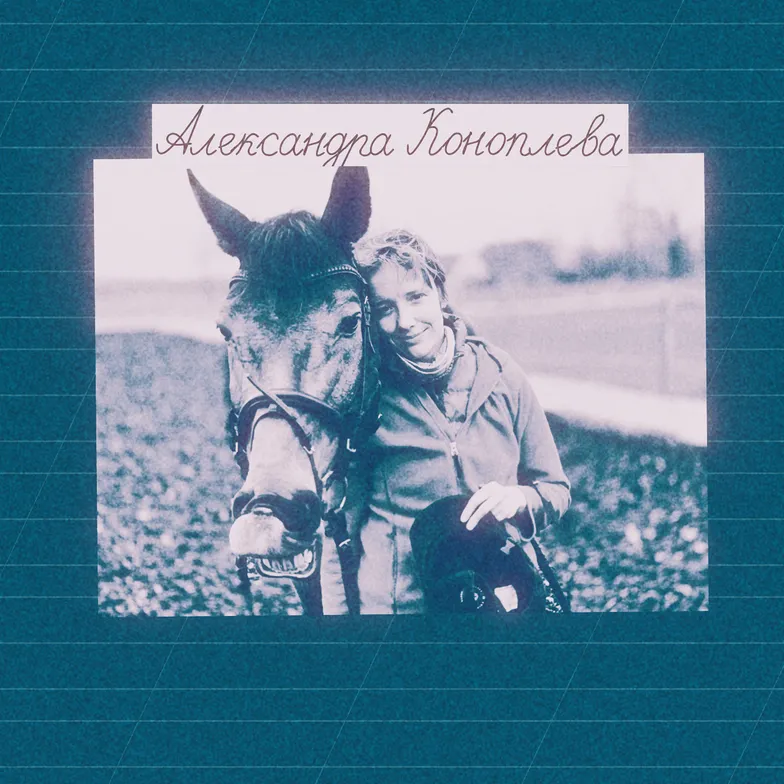
She moved from Russia to Germany to work as a nanny. She ended up founding a learning center for Russian-speaking children — and winning over skeptical local officials.
The new subject of our “Emigrant Questionnaire” column is Alexandra Konopleva, who has lived in Germany for almost 14 years now. In Russia, Alexandra worked in a kindergarten, a school, and summer camps, and she moved to Germany as a nanny under the Au Pair program. Here she completed a master’s degree (even though she couldn’t understand what people were saying to her during her entrance exams) and founded an educational center for Russian-speaking children called Chemodan Skazok (“Suitcase of Fairy Tales”). She also became a volunteer firefighter, made a documentary film, and joined her city council.
What’s your name?
My name is Alexandra.
Where do you live, and how long have you lived there?
I live in a small village outside Hanover and have lived in Germany for almost 14 years.
I moved to Germany almost by accident. In Russia, I studied to become a social worker and psychologist at MPGU. During and after my studies, I worked with children: in a kindergarten, a school, and summer camps. I was good at it, but I didn’t know what I wanted to do next.
Sunset from Alexandra’s window
Alexandra Konopleva’s personal archive
I realized I knew very little about life outside Russia. I’d always loved to travel and had taken plenty of trips abroad, but those were short, budget tourist trips. I decided it would be great to try living in another country.
At first, I spent a long time trying to get into a European youth exchange program. Looking back, I realize my motivation letters were weak and repetitive. On top of that, my written English was poor, and I didn’t know German at all. I applied again and again, but no one accepted me.
I chose Germany for one simple reason: “Why not?” I had vacationed there a few times and remembered the clean streets and the delicious bakery buns.
Moving to Germany for work without knowing the language was unrealistic, so I took what seemed like the easiest path: I moved to a village in Lower Saxony to work as an au pair for an ordinary German family.
I thought I’d work for the family for a year, learn the language, and then decide whether to stay. But I wasn’t prepared for how boring it would be to work as a nanny after my extensive experience at international camps and in other programs. Within a month, I felt like I was withering away in a small village with two young children. Out of melancholy, I’d talk to the baby in Russian, and she’d respond with sounds, while the parents spoke to me in English — so I had no chance to learn German.
I didn’t want to return to Russia without even having lived there a full year, and besides, my girlfriend lived in a nearby town. I got lucky — the family let me go my own way. They said they wouldn’t tell anyone I no longer lived with them and that I could stay in Germany. They simply said, “Good luck! If you survive, good for you.”
My visa only covered work as a nanny, so I couldn’t officially work anywhere else. I signed up as a volunteer through the Bundesfreiwilligendienst program, but I didn’t like that either — the job was essentially cleaning. Luckily, I soon got into a master’s program in music pedagogy in Hildesheim, even though my German was very poor.
A lot of people don’t believe this story, because my German was truly terrible at the time. I’d go to interviews knowing only that if someone spoke to me for a long time in a sad tone and then said “entschuldigung” [sorry] at the end, it probably meant I hadn’t been accepted.
The first entrance exam was a creative one: I put on a nose flute and played the Scorpions song Wind of Change on guitar. The admissions committee loved the performance, accepted me into the program, and agreed, as an exception, to let me submit a language certificate [proving German proficiency] by the end of the year.
Alexandra Konopleva’s personal archive
At first, I barely understood what was happening in class. I always answered last — by the time 18 people ahead of me had spoken, I’d have picked up enough vocabulary to string together a simple sentence. It was hard, but I managed.
The master’s program got me a student visa and later a work permit. At the end of my first year in Germany, I came up with the idea for the nonprofit where I now work as director — and that’s the reason I stayed in Germany at all.
The project began by chance. My girlfriend, Polina, and I were once invited to a Russian-speaking family festival near Hamelin, where we ran a workshop for kids on shooting short films. Some families from Hanover were there and said there was nothing like it in their city — they wanted us to run something similar there.
I soon started noticing that [Russian-speaking children who had moved to Germany with their parents, or who were born there] have no room at all in their lives for a second native language — even at home with their parents, they sometimes speak German. That observation led to our project, Chemodan Skazok, “Suitcase of Fairy Tales,” an educational center in Hanover that offers classes for children in Russian. In our first year, we organized film shoots, an architecture camp, musical performances, and a puppet theater.
At first, Germans — specifically the city officials I tried to build relationships with early on — didn’t understand our idea at all. They’d say, “We actually want migrants to integrate, and to speak German.” We explained that one doesn’t preclude the other: a child who maintains a connection to their own culture and language will feel calmer and more stable.
Alexandra Konopleva’s personal archive
We sometimes hold events in other languages, too, for other diaspora communities, if we can find donations to fund them.
We’re open seven days a week. Young children come in the mornings, followed by schoolchildren, whom we help with homework and feed lunch. In the evenings, we run a range of activities — a theater studio, a media school, a sewing workshop — and on weekends, workshops and sometimes camps.
More than 1,000 children and adults attend our classes each year, even though we have just two and a half staff positions. We rely on volunteers and freelance teachers, who receive a small payment for leading lessons. We’re currently accepting volunteers from other countries, including through the Bundesfreiwilligendienst program, which I once took part in myself. I’m constantly looking for grants and collecting donations.
What do you like most about your new country?
Freedom, first and foremost — the kind that lets you be whoever you want, as long as it doesn’t harm anyone else. Of course, some form of discrimination exists everywhere. But I like that in Germany, so much is simply normal: no one cares who you love or how you look. At most, you might get a compliment.
Second, I love the social system. I’ve rarely had to rely on it, but I know that if something goes wrong — if I lose my job, say — the state will support me, and I won’t end up on the street. That matters running a nonprofit, since my salary comes from donations and I never know what next year will bring.
That said, I only got German citizenship this year. Keeping my Russian passport mattered to me, and dual citizenship has only been allowed since a year ago. As soon as the law passed, I applied for German citizenship.
I also like Germany’s volunteer culture. It feels like about half the people here volunteer — teenagers, retirees, everyone is involved in some kind of volunteer work.
Besides my job, for example, I’m also a volunteer firefighter. I took a special course in my free time, and now I go out on calls whenever I can. I don’t yet have enough training to go straight into a burning building, so I mostly help with smaller tasks: hooking up a hose, calming down bystanders, carrying equipment, providing first aid. We respond not just to fires but also to car crashes and other emergencies.
Alexandra Konopleva’s personal archive
The firefighter training was free — the state offers courses to anyone who wants them. The introductory course lasts three weeks. You can attend in the evenings, though a few times you have to spend a full weekend day training. Then you take a short test on the fire truck, the equipment, and the roles within a fire crew, after which you can start going out on calls — you learn the rest on the job.
Finally, I like that politics in Germany is accessible. You can influence city decisions from the ground up — by joining a district council, for example. Your first actions might be small, like choosing where to put a traffic light, but you’ll see that the system works.
Our city hall, where the mayor sits, is open to anyone. I’m often there for work, and people can simply walk in — through the hallways, to say hello, to use the bathroom. It’s hard for me to imagine that happening at the [Russian] State Duma.
Hi, I’m Katya.
I’ve been running Meduza’s crowdfunding since 2021. Today, supporting Meduza is a crime in Russia. You can be sent to prison just for donating. We’re still able to do our work thanks to thousands of our Russian readers who now live abroad. But even they’re no longer safe.
Imagine you’ve left Russia, but then your mom becomes seriously ill. It could be your last chance to see her, so of course you go home. At the border, you’re interrogated. Officers hack into your phone and search for any trace that you’ve donated to Meduza.
The Kremlin is counting on that fear, and it’s working. People are afraid to donate. I’m afraid for our supporters, because any one of them could end up in prison. And I’m afraid for Meduza. Without crowdfunding, we simply can’t continue. So if you live outside Russia and don’t have to worry that donating to Meduza could keep you from going home to your family, I’m asking for your help. Please support our work.

What was hardest to accept in your new country?
How slowly everything gets done here — for example, how much time passes between a decision at the state level and the actual changes it brings.
There’s plenty of empty talk at every level. I sit on Hanover’s city council for youth policy, and it’s a nightmare. Sometimes, instead of discussing real problems, people will say, “Let’s discuss how best to involve young people in city life” — a great question. But the discussion unfolds like this: “First, let’s discuss what ‘involve’ means. Now, what does ‘young people’ mean. And what does ‘city life’ mean?” Discussions drag on for months until everyone agrees on what to call things.
I find this exhausting to deal with. It’s also hard to accept how much people here struggle to step outside their routines. They live good, stable lives, with familiar food and entertainment, and as soon as something new appears, they look at it warily.
On top of that, neighbors are constantly tattling on each other — that’s classic German life. During the coronavirus pandemic, I remember reading a Facebook discussion about a rule requiring everyone in Germany to wear masks in stairwells. People were asking, “Who’s going to check on that?” Who do you think! The neighbors, of course.
At first, I also felt like people in Germany looked at me as some kind of exotic creature. I moved here at age 22, and among my peers, I was the only one who had already graduated from college — the education system here is different, and people study for much longer. Later, at various city council meetings, I’d often be the youngest person in the room, the only woman, or the only migrant.
What helped me get over that feeling was learning German quickly — I now speak almost without an accent. I think standing out a little actually works in my favor: people remember me better, and it helps in my work.
Alexandra Konopleva’s personal archive
What’s your favorite place in your new city?
My favorite place in Hanover is my workplace, where I see the results of all our efforts. I see children who studied at our center for 10 years and now volunteer with us. I see colleagues from all kinds of backgrounds — some moved as late resettlers, some are refugees from Ukraine, some came for work — and I love watching them all work together for the children and grow as educators.
It also makes me happy to see parents from different social backgrounds talking with each other — a university professor chatting with a former store clerk, for example, finding common ground and supporting each other easily.
The space where our center is located has an interesting history. It was bought by a man whose children attended our classes. When we started looking for a space of our own, he told us he supported our mission and wanted the children to keep studying with us — so he bought the building, we renovated it, and now we rent it from him.
It’s a chaotic, bright place full of light, with just four rooms. At the entrance is an area — built by volunteers with a small wooden house, benches, and a cabinet — where parents wait for their kids. One room, used for the youngest children’s classes, has a creative atmosphere; there’s also a room for teenagers and a kitchen. We’re 10 minutes from the central train station, which is convenient since people travel from other cities for our classes.
What’s your favorite local food?
Honestly, I don’t like cooking, and I never have much time for it, so at home I just make something simple — nothing like local food.
As for truly local food, I love mett — raw ground meat seasoned with salt and pepper and spread on a roll. At first, I was shocked that people here eat raw meat, but then I tried it and fell in love. Germans usually eat mett with raw onions, but I prefer it without.
I also love the small, chubby noodles called spätzle, often made with fried onions and cheese. For something simpler, I love a well-made schnitzel with potatoes. And I love all the food at the Christmas markets — at ours in Hanover, vendors smoke salmon over an open fire, bake medieval-style pizza, and sell stewed mushrooms.
There are things I’m not a fan of — cabbage, for one, and I feel pretty neutral about sausages, even though Germans love them. But there’s plenty of other delicious food here.
Have you picked up a new hobby since emigrating?
Tons — I couldn’t find the things I used to do back home. In Russia, for example, I did equestrian sports and even have a coaching license, but it turns out that here you need your own horse to train seriously, which I can’t afford.
Alexandra Konopleva’s personal archive
I also used to do historical dance in Moscow, but here it’s mostly people over 70 who do it. I went to a couple of sessions but felt out of place, so I started looking for something new. I tried freediving and loved it — I took a pool course that taught basic breath-holding, then went to the sea to try diving for depth. Freediving helps me relax. I’m a very active, energetic person, and freediving, by contrast, is all about calm.
My current record is 35 meters (115 feet) on a single breath. You can practice freediving in any pool, since the main thing is training your breath-holding, but Germany also has a special deep pool for divers and a lake with artificial sunken ships and sculptures on the bottom.
Besides freediving, I spent a year studying for free at an online documentary filmmaking school. For my final project, I made a short film about bilingual teenagers that was shown at a couple of local festivals.
Alexandra Konopleva’s personal archive
When I finally had some free time, I finished writing a book — first in Russian, then I translated it into German, and now I’m figuring out what to do with it. It isn’t about pedagogy at all; it’s about love and coming of age in the early 1990s, following two female cousins who see each other only in summers at their grandmother’s dacha. Through their meetings, the book explores the stereotypes about love passed down to us from older relatives.
Have you managed to make new friends? How?
I haven’t made any truly close new friends, partly because I work a lot, and when I’m not working, I travel to visit old friends, including those who have also left Russia. I almost never go to Russian-speaking events — I get enough of that community through work. Whatever gathering I go to, from a game of Mafia to a jazz concert, I’m bound to run into people I’ve worked with, work with now, or will work with, and the conversation inevitably turns to work, which isn’t exactly relaxing.
I have some good German acquaintances — we get coffee or travel together sometimes — but I can’t quite call them friends, because I still feel a difference in mentality. That’s especially true of Germans from northern Germany, who grow close to people slowly; it can take years.
Alexandra Konopleva’s personal archive
I talk a lot with my friends from Russia online. Right after I moved, we communicated less often, since our friendship depended on my trips back to Russia. That was hard — I could meet with five people, but by the sixth I’d run out of energy, and with 35 people I knew, I had to choose who I’d see and who I wouldn’t.
But then I started messaging with them more and sharing my struggles, and I think it opened their eyes a bit. At first, they thought, “Wow, you live in Europe — everything’s great and easy for you. You make a ton of money and don’t understand our problems.” That passed, and now we have good, deep conversations and sometimes meet up in person in different countries.
Do you have enough money to live in your new country? How do you deal with financial problems?
I can’t say I have enough money. My salary is pretty low — about half what someone in a similar position would make in Germany.
Honestly, I don’t really deal with it. I love my job so much that I keep pushing my financial worries aside, and besides, I just don’t spend much money. My main expenses are my cat and travel.
A year ago, I moved from Hanover to a village nearby. I got lucky and now have an inexpensive apartment, though the commute to work is long — about 40 minutes by car. At first, I thought living in a village would be awful; even Hanover is too small and quiet a city by my standards. The village has only 3,000 people: one store, one bakery, a funeral home, and a fountain.
Fall festival at the nature reserve in the village where Alexandra lives. A woman demonstrates how sheepdogs are trained
Alexandra Konopleva’s personal archive
But over the year I’ve lived there, I’ve come to love the village for its calm. From one window, I can see the sunrise; from the other, the sunset. The house I live in has a garden with apples, pears, and cherries, and I can just step outside and eat something straight off the tree.
If I lived in Hanover, it wouldn’t have occurred to me to join the fire department. But here, a siren under my window once woke me at 3 a.m. — the signal for volunteer firefighters — and I thought, “Since I’m not sleeping anyway, I might as well sign up with them.” I’m now considering moving to a bigger city, maybe Hamburg, where the commute would take an hour and a half. Either way, it will be hard to part with the beauty and calm of the village.
What do you do to learn the new language?
I learned German pretty quickly. I didn’t take any courses — I just tried to survive and make money. I worked first as an assistant caregiver at a nursery, then at a kindergarten, then at a school, and my language skills grew along with the kids.
I’m comfortable speaking German now, though I still get shy sometimes. A couple of weeks ago, for example, I was invited onto a TV show — a channel that covers the work of nonprofit organizations ran a 25-minute segment on our center. I was afraid of blurting out something wrong on air or mixing up endings, but in the end, everyone loved it. Even my German acquaintances said they had nothing to criticize.
How do you deal with acute homesickness? And do you even feel it?
I guess I’ve never really had acute homesickness, because I was too busy surviving. As soon as I moved, I had to think urgently about visas and making money. Of course, I miss things — my friends who stayed in Russia, my sister, my parents, whom I haven’t seen in a year and a half and probably won’t see for a while longer. I’m anxious about traveling to Russia because of reports of phone checks at the border.
I miss the food, and I miss childhood memories, like the forest near the village or the lilacs at the dacha. I miss bookstores — every time I visited Russia, I was amazed at how many great, modern books were on the shelves, and I used to travel there with an empty suitcase just so I could bring back a pile of books. It also makes me sad now that I traveled so little around Russia while I lived there; back then, I wanted to see other countries more. Now I realize I’d love to visit Chukotka or the White Sea, places I’ve never been.
Alexandra Konopleva’s personal archive
It also makes me sad that my grandfather never got to see how I live here. He was from a small village in Smolensk himself and worked his way up to become a well-known engineer. He was proud that I had opened a children’s center here, but I never managed to bring him over [before he died].
What helps me cope with homesickness is a subscription to MyBook and Litres. I got a library card in St. Petersburg the last time I was in Russia, a year and a half ago, and it came with a subscription to those platforms — I didn’t even know something like that existed, but now I read books in Russian there. I sometimes go to Russian stores, but it feels more like a trip into the past; they have this awful post-Soviet atmosphere, and people eye each other accordingly. It’s funny and sad at the same time. Honestly, almost all the foods I miss — buckwheat, pelmeni — are available in regular stores, too. Germany even has blini, though mostly with sweet fillings. I really miss Teremok, where they called me “sudar” and had great savory fillings.
Do you feel like you’re losing touch with your homeland? And is it possible not to lose it?
I don’t feel like I’m losing touch with my homeland. Of course, I now see some things from the outside rather than the inside, but I actually like that — I notice things I didn’t notice before. When I worked with children in Russia, for example, I had to hide the fact that I was dating women. That felt completely normal — all my colleagues did the same, inventing a boyfriend with a convenient name like “Zhenya” or “Sasha” and keeping several social media profiles. It didn’t bother me back then. I understood things could be different elsewhere, but I was fine living that way.
When I moved to Germany, my boss at one of my first jobs once asked, “How was your weekend? Did you go anywhere with a boyfriend, or maybe a girlfriend?” I was like, “What?!” At first, I felt awkward talking about it, and even now, speaking Russian, it still feels uncomfortable. But here I realized nobody cares [who you’re dating], and it doesn’t matter who I work with — children, the elderly, or dogs. It’s really my own business.
But some things work the other way around, too — Russia has a lot of technology and digitalization that Germany is still far from.
You can’t lose that connection completely. You can be critical of social and political processes, but a person’s original sense of belonging stays with them. A lot of what’s inside me — in my cells, my blood — comes from there.
Are you happy as an emigrant?
Mostly, yes. To some extent, my happiness is tied to emigration and to finding my life’s work here — if it weren’t for the job, I probably wouldn’t have stayed in Germany. I’m also happy because of the freedom I’ve discovered here.
Alexandra Konopleva’s personal archive
I felt truly happy here when we bought the building for our center at auction. There were a lot of interested buyers who kept raising the price, and our benefactor was about to give up, but his final bid — the most he was willing to pay — was never topped.
How do you picture returning home (if you do)?
In my first years in Germany, I seriously thought I’d live here for a while, get citizenship, make some money, and then go back to Russia and live a great life in Moscow, working as the director of some language school. I think those thoughts are forgivable — I was young and foolish.
Over time, I came to better understand the difference between the two countries, and I realized I won’t move back to Russia for good. I’d like to, but I don’t think the political situation there will change in my lifetime. Even if something does change, it will be minor, and I’ll still have more freedom and more ability to influence the world around me here.
I’d like to visit Russia someday — to go to the village where I spent summers as a child, to see my family and friends. By then, I imagine, many of my friends will have kids; some will have moved, bought an apartment, or gotten married. I think we’ll stay up all night talking in the kitchen, reminiscing about old times, and eating Olivier salad.
At Meduza, we are committed to transparency about our use of artificial intelligence in the newsroom. The story you’re reading was written by one of our living, breathing journalists and translated from Russian using an AI model configured to follow our strict editorial standards. This translation process is the result of extensive testing and refinements to ensure our English-language coverage is timely and accurate. A Meduza editor reviews every draft before publication.
If you find any errors in this translation, please contact us at reports@meduza.io.
To read Meduza’s exclusive content in English, please subscribe to our newsletter.
Meduza
Au Pair
A cultural exchange program. The term is also used for a nanny (usually young and from another country) hired by a family to help with children and housework. The au pair almost always lives with the family, which feeds her and pays her a stipend for personal expenses. Many European countries have separate visa rules for people moving under the Au Pair program, and it is often easier to get this kind of visa, since the hosting family takes on all obligations to cover the nanny’s expenses and “vouches” for her. An au pair can live with a family for anywhere from a few months to several years (for example, while studying at a university).
MPGU
Moscow State Pedagogical University.
What’s this?
Alexandra is referring to the European Solidarity Corps, a European Union-funded program that lets young people take part in volunteer, social, and humanitarian projects promoting EU values. Applicants must go through a selection process and meet age and citizenship requirements — Russians have been barred from the program since 2022. Those selected receive a small stipend and housing.
District council
A body of municipal government in Germany responsible for deciding matters within municipalities. District councils vary in function and size across German states, but everywhere, members are elected and cannot pass or enact laws, though they take part in decisions that directly affect life in the district, such as road and building construction, park lighting, and other matters.
Bundesfreiwilligendienst
Alexandra is referring to the European Solidarity Corps, a European Union-funded program that lets young people take part in volunteer, social, or humanitarian projects promoting EU values. Applicants must go through a selection process, and those selected receive a small stipend and housing.
Freediving
Diving underwater while holding one’s breath. Freediving includes several competitive disciplines, mainly divided between diving for distance and diving for depth.