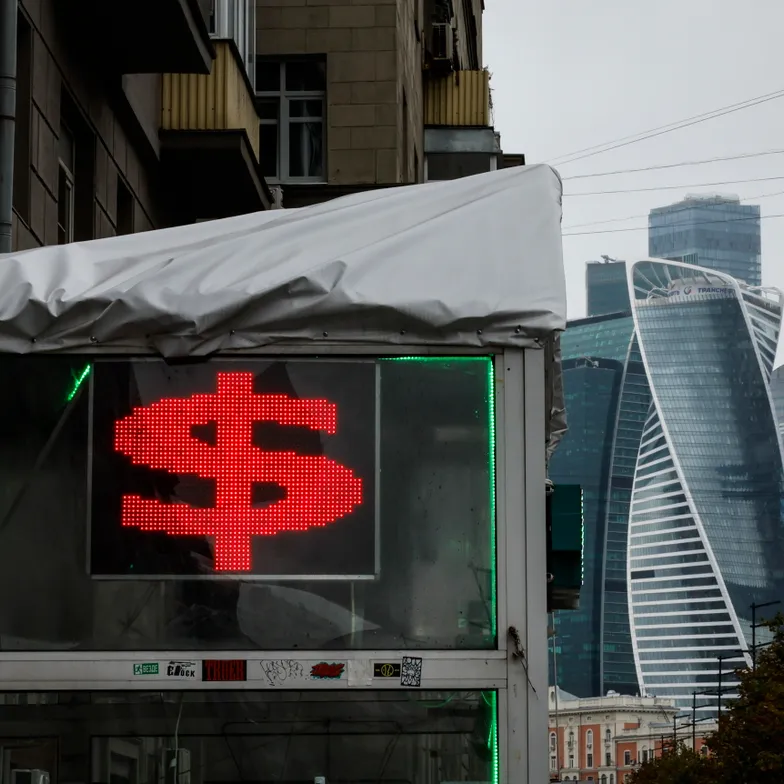
Russia’s economy is suffering under the weight of war and sanctions. So why is the ruble still one of the world’s strongest currencies?
The full-scale war remains a heavy burden on Russia’s economy. This year’s budget deficit will turn out to be roughly twice as large as authorities had expected, and will remain significant in the coming years. Because of the sanctions, the state is missing out on trillions of rubles. Ukrainian strikes on Russian oil refineries and other targets deep inside the country are also inflicting substantial damage. Nevertheless, the ruble has been strengthening against the dollar and the euro in recent months and has regularly ranked among the world’s strongest currencies in 2026. Why hasn’t it been affected by all these problems? Will the Republican defeat in the U.S. midterm congressional elections affect the ruble? And what will the exchange rate look like going forward?
What’s happening with the ruble’s exchange rate?
On October 29, the dollar fell below 80 rubles on the interbank market for the first time in two and a half months. It climbed back above that threshold by the end of the day and hasn’t dropped below 80 since. The official exchange rate for the U.S. dollar stood at 81.79 rubles on November 6.
Still, the dollar has weakened against the ruble by almost 5.5% since early September. The euro has weakened even more, dropping by almost 10 rubles over the same two months; its official exchange rate stood at 92.16 rubles on November 6.
And these aren’t even the lowest exchange rates of 2026: In late May, for example, the dollar fell below 71 rubles and the euro below 82. Those rates are close to prewar levels — the two currencies were last cheaper in 2021.
Currency trading data has been collected differently since June 2024, when the Moscow Exchange suspended trading in euros and dollars under sanctions. Trading moved to over-the-counter markets, where participants — mostly banks — negotiate directly with each other. Russia’s central bank calculates the ruble’s official exchange rates from that data and bank reporting, a mechanism that isn’t especially transparent.
Dollar trading resumed on the Moscow Exchange in February 2026, and the results are publicly visible there. However, the trades are recorded in rubles, which isn’t genuine currency trading. These operations aren’t particularly transparent either, though their dynamics largely match the central bank’s data.
The exchange rate set by Russia’s central bank or the exchange can differ significantly from rates at currency exchange points, including both banking apps and physical exchange offices, where the dollar and euro can cost several rubles more than the official rates.
But why isn’t the ruble collapsing despite the economy’s problems?
In short, these problems currently aren’t among the priority factors affecting the exchange rate. The factors that drive the ruble’s movements fall into two categories: fundamental and current.
- The first are driven mainly by the balance of supply and demand for currency. They set the ruble’s exchange rate over a period of several months and change fairly slowly.
- Current factors include investor sentiment, assessments of geopolitical risk, tax periods, and more, and they can change very quickly.
In October, the main factors favored the ruble’s strengthening. Businesses were buying rubles to pay quarterly taxes, and news emerged of negotiations among Russia, the United States, and Ukraine aimed at ending the war — another likely factor behind the ruble’s gains. That doesn’t mean investors necessarily believe the talks will succeed, but the exchange rate reflects the hope that accompanies every fresh attempt by Washington to push Moscow and Kyiv toward a compromise.
The situation changed in early November, when Republicans’ defeat in the midterm congressional elections weakened Donald Trump’s position and his prospects for brokering peace. Oil prices are also falling because of a reduced risk of escalation in the Middle East conflict, still an important current factor for the ruble.
None of these temporary conditions, however, is causing sharp swings in the exchange rate — a sign of how much Russia’s currency market has changed since before the war. Before 2022, any new sanctions or unfriendly rhetoric from Western leaders could trigger a sharp drop in the ruble.
There are simply fewer investors in the market now, since many of the foreign players who might have reacted strongly to the news have left the country. And the toughest sanctions have already been imposed: Russia’s financial system is cut off from the global one, so each new set of restrictions no longer shocks the economy or Russian businesses.
Fundamental factors, however, play a much bigger role.
And what are these factors?
The main one is the restructuring of all Russian trade that the war forced. Before 2022, dollars and euros entered the country largely through oil and gas exports, while businesses created steady demand for currency: many foreign companies operated in Russia, and goods were imported not just from China but also from EU countries. Dollars and euros were constantly needed to pay for that trade.
The situation is different now. Russia still trades oil and gas, but mostly with Asian countries, and it’s still earning currency from that trade. The war in the Middle East helped the Kremlin in recent months by driving up commodity prices. Revenues would have been even higher if not for Ukrainian strikes on oil refineries, ports, and shadow fleet tankers, but Russia has still managed to earn money.
Imports haven’t fully recovered since 2022, and China has become Russia’s main trading partner, allowing settlements in yuan. As a result, Russia simply doesn’t need dollars and euros in the volumes it did before the war, creating a currency overhang that strengthens the ruble.
This balance has held roughly since mid-2022. Few factors could disrupt it — a collapse in commodity prices, effective secondary sanctions against buyers of Russian oil that would force them to abandon the trade, or a rise in imports.
In other words, the ruble remains strong, with no signs of weakening noticeably. That doesn’t contradict the fact that the economy faces serious problems in the war’s fifth year — the very factors keeping the ruble stable against the dollar and euro are, in essence, not positive ones. Weak imports are driving inflation and a decline in consumer demand, while dependence on Beijing risks subordinating the Russian economy to China’s.
High interest rates from Russia’s central bank also pull excess rubles out of the market. People are putting money into deposits, which helps strengthen the ruble. The central bank is using the rate to offset budget policy against its enormous military spending, and the public and businesses are paying the price as loans become too expensive.
Demand for currency is also shaped by various restrictions tied, one way or another, to the war and sanctions. Foreign players left Russia’s financial markets after the full-scale invasion began and no longer need to buy currency to move it abroad. Russia, meanwhile, doesn’t issue debt securities in euros or dollars, so demand for currency to service government and corporate debt has also fallen.
Russians are also traveling abroad less because of various restrictions, another factor reducing currency demand and strengthening the ruble.
And how much longer will the ruble stay strong?
Fundamental indicators are unlikely to change in the near term, an argument against the idea that Russia’s currency could fall sharply or that the dollar or euro could reach 100 rubles, unless there are some black swan events: poorly predictable events that would completely upend the economic or geopolitical situation.
Economist Dmitry Polevoy believes the ruble is unlikely to start falling before the end of the year. Macroeconomists polled by Russia’s central bank expect the dollar to average 80 rubles this year, suggesting it’s unlikely to depreciate significantly by year’s end. Alfa-Bank expects a slight decline, forecasting the dollar will rise to 85-87 rubles by the end of 2026.
The current factors affecting the ruble are already changing this week. The tax period has ended — the main deadline fell on October 28 — so businesses won’t be buying rubles.
The New Year holidays are also approaching, and imports usually rise in the months leading up to them.
On November 5, Russia’s Finance Ministry announced the volume of its planned currency purchases, which it makes when oil prices are high to replenish reserves under the budget rule. Starting December 4, it plans to buy 15.6 billion rubles worth of currency and gold per day, up from 12.7 billion previously — purchases that could weaken the ruble, though probably not significantly.
But if we look further into the future, can we say what will happen to the ruble in the coming years?
Making such forecasts is a fairly thankless task, since many unplanned events can occur over a long period that affect even the fundamental factors. These forecasts should be treated with skepticism — they tend to show the general direction of the exchange rate’s fluctuations rather than precise figures. Still, specific figures do appear in analysts’ reports.
Alfa-Bank, for example, believes the ruble will still weaken over the next 12 months, to as much as 90-91 rubles per dollar. The bank expects oil prices — and with them revenue from commodity sales — to fall while imports rise, shrinking the currency overhang and changing the fundamental factors.
The new budget also assumes the Finance Ministry will buy more currency for reserves, which would further weaken the ruble.
Economists polled by Russia’s central bank, however, aren’t forecasting such a sharp weakening — the dollar will average more than 90 rubles only in 2028 and 2029, according to that survey.
Russia’s Economic Development Ministry expects a similar scenario, with the ruble gradually weakening from an average of 79.5 rubles in 2026 to 87.4 in 2027 and 96 in 2029, apparently reflecting a gradual decline in oil prices.
A ruble that’s too strong isn’t beneficial for either the Russian budget or businesses, so authorities may be betting on a weaker currency. That doesn’t mean their long-term forecast will necessarily come true.
At Meduza, we are committed to transparency about our use of artificial intelligence in the newsroom. The story you’re reading was written by one of our living, breathing journalists and translated from Russian using an AI model configured to follow our strict editorial standards. This translation process is the result of extensive testing and refinements to ensure our English-language coverage is timely and accurate. A Meduza editor reviews every draft before publication.
If you find any errors in this translation, please contact us at reports@meduza.io.
To read Meduza’s exclusive content in English, please subscribe to our newsletter.
Meduza
Это как?
На Мосбирже появился новый производный финансовый инструмент USDRUB_TOM. По сути он представляет собой срочный контракт, при котором стороны фиксируют валютный курс, но в дату исполнения не меняются валютами, а лишь проводят взаиморасчет в рублях. Купленные таким образом «доллары» нельзя вывести на счет или перевести на другую площадку.
What is this?
A period established by law (a month, quarter, or calendar year) at the end of which the tax base is determined and the tax owed to the budget is calculated.
How exactly?
High interest rates make bank deposits more attractive and loans less so, pushing people toward saving and holding back consumer spending.
What is this?
An imbalance in the currency market in which excess foreign currency accumulates unused, or, conversely, pent-up demand for it builds up — a condition that can sharply move the national currency’s exchange rate once conditions change.
What is this?
The rule accounts for two oil prices. The first is a baseline price set by law that determines how much oil and gas revenue the budget can count as its own. The second is the actual price oil fetches on the market. If the actual price is higher than the baseline, the difference counts as windfall revenue, and the Finance Ministry uses it to buy currency for the National Wealth Fund (NWF). If the actual price is lower, the rule calls for the reverse: selling currency from the NWF and putting the rubles into the budget. The goal is to keep budget spending from swinging along with oil prices.
Why?
Because a strong ruble means businesses and the budget receive less revenue from exports.
How does it affect the ruble?
When global oil prices rise, Russian exporters earn more foreign currency. The increased supply on the domestic market drives down that currency’s value and strengthens the ruble. A drop in oil prices has the opposite effect, weakening the ruble.
You can actually make money on these, by the way
For example, today you can earn up to 140,000 rubles by depositing one million rubles in a bank for a year. If you had exchanged dollars for that million a year ago, then withdrawn the deposit after 12 months and bought currency again, you would have earned more than 1,600 dollars.
Разве это не должно было бы ослабить рубль?
В теории должно было: обычно массовый исход инвесторов с рынка означает, что они конвертируют свои доходы в валюту и таким образом увеличивают предложение местной валюты, что способно привести к ослаблению ее курса. Однако российские власти с 2022 года максимально затруднили крупным зарубежным компаниям вывод средств из РФ. Любые сделки по продаже местного бизнеса должны согласовываться на правительственном уровне. Так капиталы оказались заперты внутри РФ.