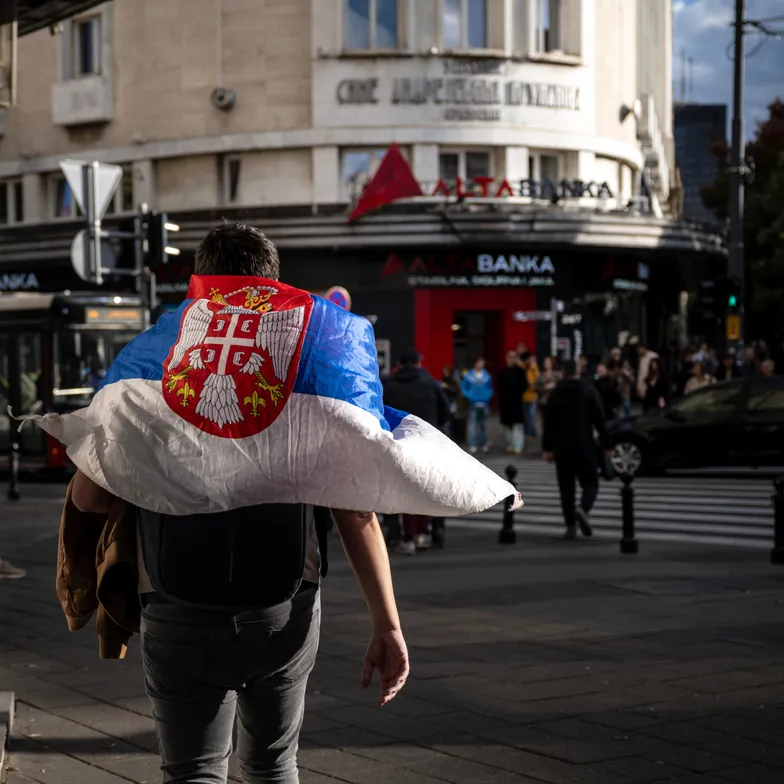
Russians in Serbia organize mutual aid after Alta Bank collapses, freezing their savings and salaries
Many Alta customers lost access to their money after the National Bank of Serbia revoked the bank’s license. Alta was one of the few local banks that opened accounts for Russians who had emigrated. Customers’ salaries, savings, and money for monthly expenses are frozen. Serbian authorities have promised to repay up to 50,000 euros in lost deposits once bankruptcy proceedings formally begin, which is expected on November 2. Local prosecutors are investigating why the bank collapsed shortly after parliamentary elections and the nature of suspicious transfers made through it in its final days. Its owner, businessman Davor Macura, has close ties to the leadership of the Serbian Progressive Party, which was in power until recently. Meanwhile, people in Serbia are helping one another cope with Alta’s collapse.
- Over the past weekend, Russian-speaking communities launched several mutual aid efforts. The Left Club of Serbia organized an aid drive for affected Alta customers at the DC Loža club in Belgrade. The Telegram channel “Serbian Citizenship, Laws on Foreigners” announced aid drives in the capital, Novi Sad, and Kragujevac. Volunteers are collecting food, diapers, baby food, pet food, household cleaning supplies, and hygiene products.
- Emigre communities are urging people to support venues and other businesses run by Russian speakers in Serbia, while business owners try to open new accounts to pay their taxes. A Serbian-language spreadsheet titled “Zajedno uz ruske biznise” (“Standing with Russian businesses”) has appeared online. It lists business owners whom people can support by visiting their businesses and paying cash for services. Serbs are compiling the list, which reportedly includes only businesses vetted by its moderators.
- After Alta lost its license, The Ark (Kovcheg), an organization that helps Russians abroad, joined local human rights advocates in appealing to the National Bank of Serbia. The activists demanded that it “stop discriminating against Russians on the basis of citizenship,” look into cases in which people were denied bank accounts without justification, and ensure that Russian citizens with residence permits can open accounts.
- In Telegram chats, members are sharing stories about helping one another with groceries. Some said their Serbian neighbors had expressed sympathy. “There was a knock at my door at 10 p.m. I got nervous — what if my vlasnica [landlady] had turned up to check how many dogs I have? It turned out to be my neighbors, a Serbian couple who live across from me. They said they’d heard about our bank and [asked] if I needed help, food, or money. They said they were really sorry the country was in such a mess,” one chat member wrote.
- The revocation of Alta’s license and the freezing of Russians’ accounts have sparked discussion among Serbian users of X. The Telegram channel Volna Serbia published a roundup of the discussions (1, 2). Some people in Serbia expressed sympathy. Others mocked the Russians and wrote that they did not understand why they should sympathize with emigrants from Russia over the collapse of a “mafia bank” linked to the country’s former government.
- On October 29, posts bearing the slogan “Rusi napolje” (“Russians out”) also appeared on Serbian X. It is unclear whether this is a coordinated campaign, but Volna reported that pro-Vučić media outlets had begun using the campaign to accuse the Student List, which won the election, of preparing sanctions against Russia. These same outlets are also mocking Russians who supported the change of government and were then hurt by Alta’s closure.
- Russians who moved to Serbia are taking to social media to explain to locals why they left Russia, the difficulties they faced in emigrating and opening bank accounts, and how the loss of Alta’s license has affected them. “Keep writing about your experiences so that people in Serbia can understand you better,” Serbian users are replying.
Russians abroad
‘I have two days until the food in my fridge runs out’: Thousands of Russian emigrants left scrambling after Serbia shuts down Alta Bank, freezing their savings
Tens of thousands of Russians have made Serbia their home. A change in government raises new questions about their future.
Leaving Russia doesn’t necessarily mean leaving trouble behind. Fortunately, help is out there: Meduza has compiled a list of organizations that support Russians abroad.
At Meduza, we are committed to transparency about our use of artificial intelligence in the newsroom. The story you’re reading was written by one of our living, breathing journalists and translated from Russian using an AI model configured to follow our strict editorial standards. This translation process is the result of extensive testing and refinements to ensure our English-language coverage is timely and accurate. A Meduza editor reviews every draft before publication.
If you find any errors in this translation, please contact us at reports@meduza.io.
To read Meduza’s exclusive content in English, please subscribe to our newsletter.