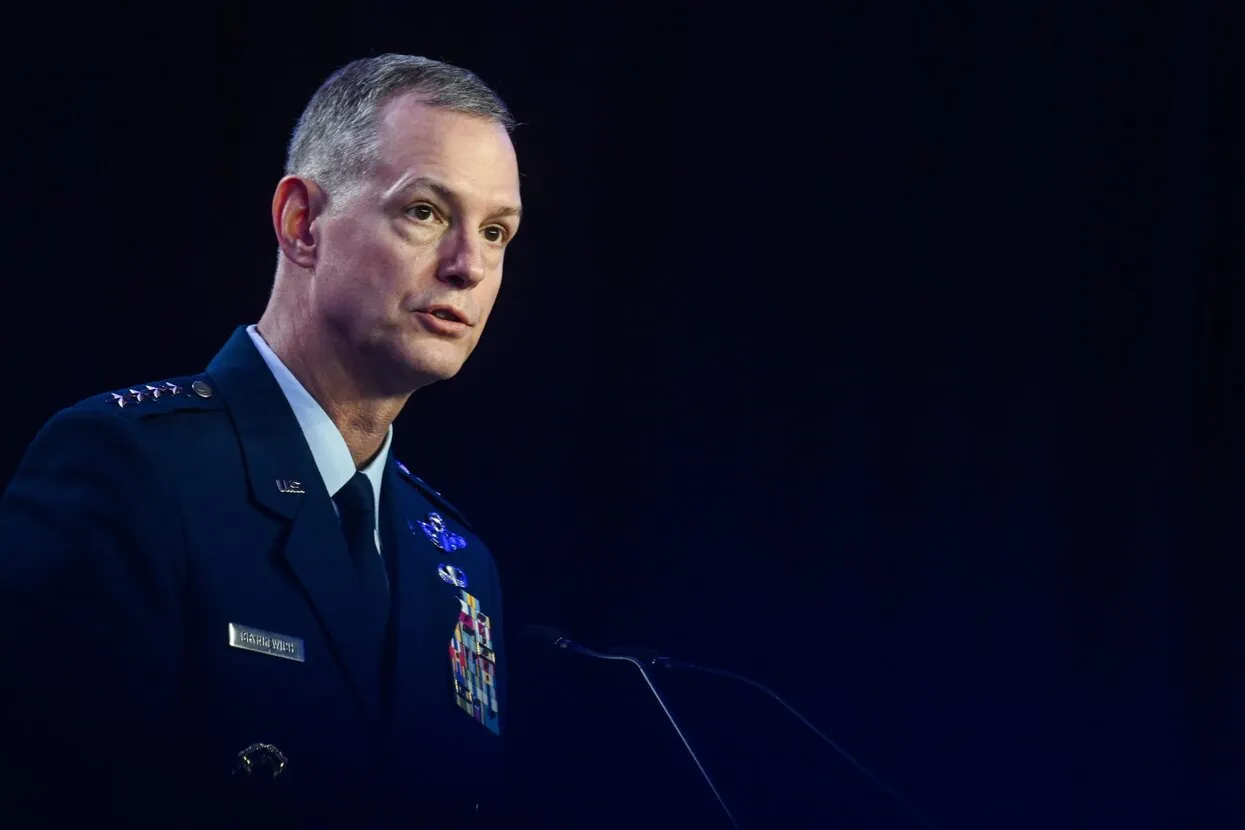
How would NATO defeat a Russian invasion? Its top commander envisions a wall of drones, a counteroffensive, and missile strikes deep behind Russian lines.
General Alexus Grynkewich, NATO’s Supreme Allied Commander Europe, said NATO forces would destroy “anything and everything” involved in any Russian attack on the alliance’s territory. He presented his “theory of victory” at a security conference in Warsaw.
Bloomberg reported a week earlier that Grynkewich would present a “quick victory” strategy for responding to a Russian advance on the alliance’s eastern flank. Reuters reported that he did not explicitly mention Russia in his speech, but his message was clearly directed at the Kremlin.
Grynkewich said NATO is a defensive alliance but will thwart, repel, and crush any attacks on its members:
If someone is foolish enough to attack us, we will fight. […] We will, in short, ensure any attack, against any ally, proves utterly futile.
In Reuters’ assessment, the general signaled to Moscow that, if necessary, NATO would launch large-scale retaliatory strikes against both the forces directly involved in the attack and facilities beyond the area under attack. “Should the adversary choose to press the attack or commit his reserves, we will break the warfighting system engaged against us,” Grynkewich said. “This includes not just the attacking force itself, but anything and everything that supports, sustains, and controls that force.”
He said that if NATO territory comes under attack, its forces would not allow the enemy to gain a foothold on the alliance’s territory. The aim, he said, is to reduce the enemy’s offensive capabilities until it can no longer continue fighting. Grynkewich believes this approach should underpin a deterrence strategy in which any escalation by the aggressor backfires.
Grynkewich said a key factor in deterring Russia is consistently and unambiguously showing that NATO is ready to repel any aggression.
From Meduza’s archives
The Wall Street Journal reported details of Grynkewich’s “theory of victory.” The plan calls for creating an extensive “autonomous zone” on the eastern flank, where drones and “ground robots” (probably ground drones) could hold back a Russian advance without heavy losses among NATO troops.
At the same time, long-range missiles would strike Russian command posts and air defense systems in the Kaliningrad region, near St. Petersburg, and in Belarus. The strikes are intended to undermine Russia’s ability to control the skies and allow the U.S. Army’s V Corps and other NATO ground forces to counterattack.
NATO aircraft would also need to strike Russian reinforcements quickly as they move toward the battlefield, along with other targets in the rear.
A system allowing NATO allies to share classified targeting data instantly through cloud infrastructure would make these strikes possible. Some elements of the system have already been tested in the Middle East during the U.S. attack on Iran.
The German tabloid Bild reported on a similar NATO plan in mid-August 2026. The article said NATO has a plan for a military response to a Russian attack on the Baltic states. Among other things, it calls for the alliance’s missiles and drones to disable Russian missile systems, including those in Kaliningrad.
The Wall Street Journal reported that while Grynkewich was speaking in Warsaw, more than 20,000 military personnel from various NATO countries were taking part in a 10-day command-post exercise called “Steadfast Duel.” The exercise was intended, among other things, to simulate one million NATO troops repelling an invasion from the east by an army of comparable size. The newspaper reported that other exercises also rehearsed strikes with ground-launched missiles to disable enemy command posts.
In late September, Russia’s embassy in Ireland claimed its diplomats were receiving information about NATO preparations for an air and naval blockade of the Kaliningrad region. The diplomats said that if this happened, Russia would be prepared to use any weapon, including nuclear weapons. The same warning appears in a document Russia sent to NATO that Reuters obtained. In it, Moscow accuses the alliance of pursuing a “dangerous and reckless course” that carries “high risks of the outbreak of a direct armed conflict.”
Vladimir Putin later made a similar statement:
If it comes to a direct attack on the Russian Federation — in this case, we mean Kaliningrad, perhaps other territories as well — then, of course, Russia’s use of all the weapons at our country’s disposal will inevitably and immediately be on the table. That is inevitable.
In its written response to the Kremlin, NATO said none of the alliance’s exercises or activities pose a threat to Russian territory.
At Meduza, we are committed to transparency about our use of artificial intelligence in the newsroom. The story you’re reading was written by one of our living, breathing journalists and translated from Russian using an AI model configured to follow our strict editorial standards. This translation process is the result of extensive testing and refinements to ensure our English-language coverage is timely and accurate. A Meduza editor reviews every draft before publication.
If you find any errors in this translation, please contact us at reports@meduza.io.
To read Meduza’s exclusive content in English, please subscribe to our newsletter.