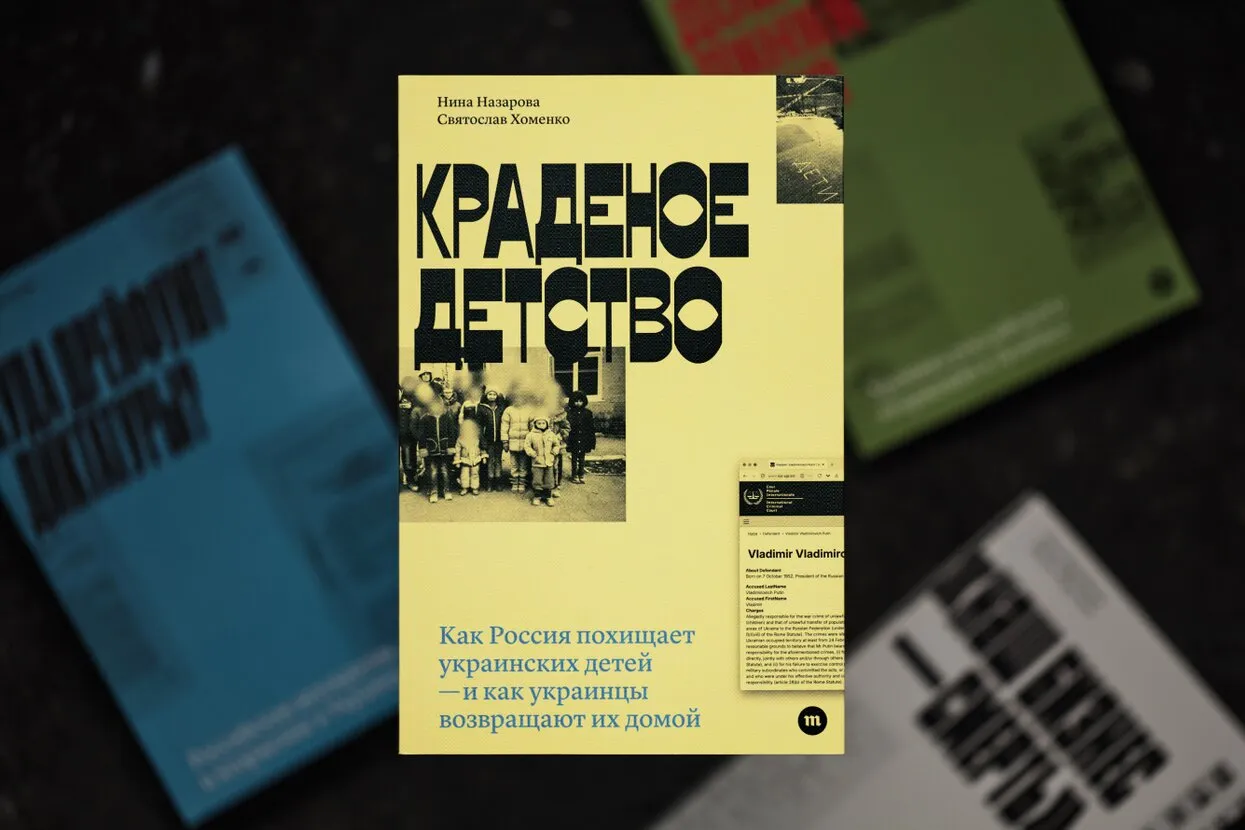
Four families, four stories of separation. The authors of ‘Stolen Youth,’ a new book from Meduza about how Russia abducted thousands of Ukrainian children, explain why they wrote it.
Since the start of the full-scale invasion in 2022, thousands of Ukrainian children have ended up in Russia. The scenarios varied: some fled the combat zone, and the only way out led through the Russian border; others were taken from occupied territories deeper into the occupying country, often under false pretenses, such as a school trip; still others were sent by their own parents to Russian children’s camps to escape the danger, only for the parents to later find they couldn’t get them back. The Russian state made active use of this: it placed the children with new families and even issued them new passports on an expedited basis. In 2023, the International Criminal Court in The Hague ruled that the removal of children from Ukraine was a war crime. Journalists Nina Nazarova (Russia) and Sviatoslav Khomenko (Ukraine) have collected in their book ”Stolen Youth: How Russia Kidnaps Ukrainian Children — And How Ukrainians Get Them Back” four different stories of families who fell victim to this crime, and have also described in detail those who organized the removal of children, and those who are still helping bring them home.
We published this book together with the StraightForward Foundation, which helps create uncensored nonfiction about Russia.
Nina Nazarova, coauthor of ‘Stolen Youth’
This book began in April 2022. I was watching a conference of Russian officials live on YouTube for work — usually a dreary spectacle. But this video stunned me: For the first time, I heard officials openly acknowledge that they had brought thousands of Ukrainian children into Russia, including from Ukrainian cities that the Russian army had just destroyed.
At that moment, a year before the International Criminal Court issued arrest warrants for Vladimir Putin and Maria Lvova-Belova on suspicion of unlawfully deporting Ukrainian children, some journalistic instinct told me that these children would become a central issue in this war.
Our book puts a human face on the legal term “unlawful deportation.” It tells the stories of four families, the four very different ways their children were separated from their loved ones, and how difficult, sometimes impossible, it was for them to get home. These are stories of human resilience — children’s resilience, too — that even the most unpredictable circumstances couldn’t break.
Whatever happens on the battlefield and in negotiations, thousands of Ukrainian children are already living as Russians, their identities altered, their citizenship changed. In any event, the consequences will be felt for years and decades to come — simply because people live a long time, and traumas like these rarely heal without leaving a mark. Our book is a first attempt to show and make sense of what happened through the lives, experiences, and suffering of individual people. It’s important to remember that behind every figure officials cite are real children, each of whom deserves to be with their loved ones and grow up in peace in their home country.
Sviatoslav Khomenko, coauthor of ‘Stolen Youth’
By the time Nina called and suggested we write a book together about how Russia steals Ukrainian children and how Ukrainians try to bring them back, I had already written or co-written several articles on the subject. It’s probably what most sharply distinguishes the war Russia unleashed from other wars of our time. An investigator from the International Criminal Court and staff from the Office of the U.N. High Commissioner for Human Rights had already contacted us with questions about it.
From the first days of the full-scale invasion, it was clear that Russia’s goals went beyond parading its troops down Khreshchatyk, Kyiv’s main street, removing Ukraine’s defiant president, and forcing the neighboring country into the “Russian fold.” Ukrainian children were a separate target.
Russian officials were positively proud that their state was bringing thousands of Ukrainian children into Russia, giving them new names, finding them new families, and then turning little Ukrainians into little Russians using manuals written specifically for that purpose.
Realizing the scale of what was happening sent a chill down my spine. Russia claimed it was rescuing the children — children it had stolen itself — from the hardships and horrors of war and all but expected gratitude for its actions. This was pure gaslighting, and it made me question my own grasp of reality.
Still, for me, writing this book felt like putting together a puzzle. The tears of a woman from Balakliia whose teenage son didn’t come home from a children’s camp; Vladimir Medinsky’s boorish remarks about the children Russia had stolen; new school curricula for Ukrainian children in occupied territories; the International Criminal Court’s arrest warrant for Vladimir Putin — as we wrote the book, these and many other details came together into one big picture. A picture that simply cannot be ignored or overshadowed by the other, perhaps more obvious, consequences of the war Russia unleashed.
Sometimes I imagine that someday I’ll tell my daughter a fairy tale about an evil sorcerer who fancied himself ruler of the world, stole children, and wanted to turn them into his servants. In the fairy tale, though, the children’s moms and dads and the many good people who helped them managed to free them all and bring them home.
But the story told in this book has no happy ending. Russia has taken the lives of hundreds of Ukrainian boys and girls and stolen the childhoods of thousands. And now, as I write these words, it continues to hold thousands of Ukrainian children on its territory.
If this book helps bring the world’s attention back to the children who can still be helped, then we won’t have written it in vain.
At Meduza, we are committed to transparency about our use of artificial intelligence in the newsroom. The story you’re reading was written by one of our living, breathing journalists and translated from Russian using an AI model configured to follow our strict editorial standards. This translation process is the result of extensive testing and refinements to ensure our English-language coverage is timely and accurate. A Meduza editor reviews every draft before publication.
If you find any errors in this translation, please contact us at reports@meduza.io.
To read Meduza’s exclusive content in English, please subscribe to our newsletter.