Ukraine touts gains from Operation Vivaldi as Russia claims major encirclements. What’s really happening on the battlefield?
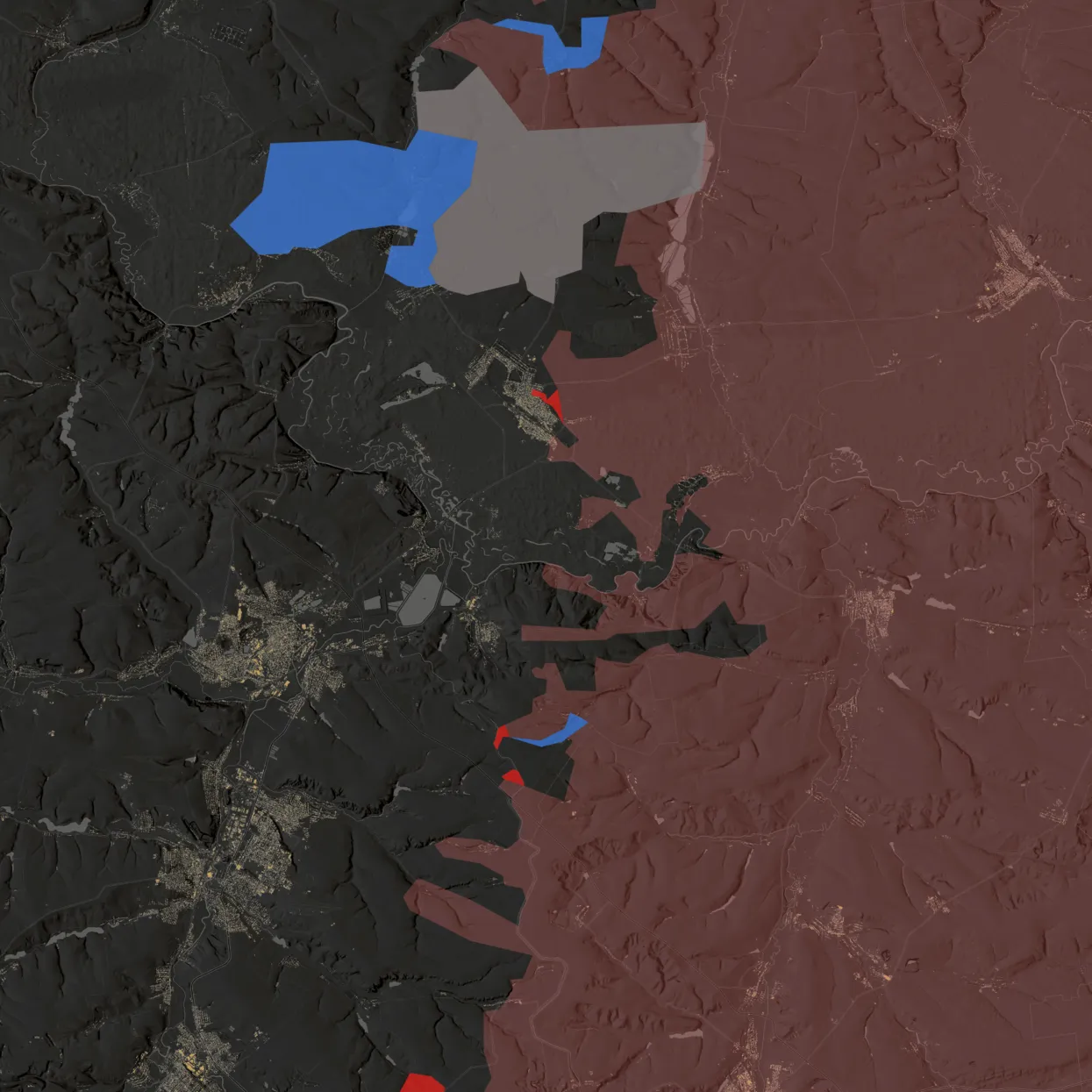
The Russian and Ukrainian armies continue their offensives in different sectors of the front. Because these operations have coincided with a new burst of activity in the negotiations mediated by Donald Trump, they have been accompanied by loud public relations campaigns. The Russian command describes its offensive as “destroying encircled groupings,” though in reality it has failed to encircle any major Ukrainian forces. Ukrainian military officials claim they have already moved on to the third phase of “Operation Vivaldi” near the city of Lyman in Donetsk region. Judging by open-source videos, however, they are still working — successfully — to push Russian forces off their first line of defense. In reality, the nature of the fighting has not changed. The Russian army is trying to break through to the Kramatorsk-Sloviansk urban area from different directions, while Ukrainian forces are trying to stop this advance with counterattacks. This battle is of decisive importance for the course of the war even without the additional public relations campaigns, which are more likely to mislead.
Vladimir Putin, speaking last week at a meeting of the Valdai Discussion Club, said “the authorities in Ukraine and Europe themselves believe they’ll be able to hold Donbas for only a year and a half to two years.” Russian forces, he said, will capture it “much sooner.” Putin assured the experts gathered at the event that the pace of the offensive is “accelerating.”
In reality, the Russian army captured Pokrovsk and Siversk by early 2026 and Kostiantynivka that summer, but over the following nine months failed to break through into the cities defending the Kramatorsk urban area from the south, northeast, and southwest. In the northeast, around Lyman, Russian forces lost much of the territory they had captured the previous year.
‘Operation Vivaldi’ and fighting on the Siverskyi Donets
- Andrii Biletskyi, commander of Ukraine’s 3rd Army Corps, who recently took charge of all forces defending Kramatorsk and Sloviansk from the north, east, and south (the newly formed “Center” grouping), said troops have begun the next phase of “Operation Vivaldi.” The goal of the operation — which, like the Italian composer’s famous work, is supposed to have four parts — remains unclear. Ukrainian forces are likely planning to push Russia’s 20th and 25th armies back across the Chornyi Zherebets, a tributary of the Siverskyi Donets. As a result, Russian forces risk losing all the gains they have made in this sector since the summer of 2025, when they crossed the Chornyi Zherebets along a broad front.
- Biletskyi has described the operation’s progress only in general terms, but many in Ukraine, unofficially, see it as something close to a harbinger of a new tactic that could help Ukrainian forces defeat the Russian army. The pace of “Vivaldi” so far shows no sign of such a shift: Ukrainian troops, who began the offensive in mid-summer, have advanced no more than 10 kilometers (6 miles) in different sectors.
- Videos that surfaced in recent weeks were meant to confirm Ukrainian successes. They show Ukrainian forces liberating several villages on the perimeter of the Russian salient around Lyman — Novoselivka, Shandryholove, and Nove — and attempting to gain a foothold in Serednie, Karpivka, and Katerynivka, villages that had been on the line of contact for months.
- Russia’s 20th Combined Arms Army, which faces Ukrainian forces in this sector, was previously thought to have largely withdrawn across the Chornyi Zherebets. Now, if the published videos mark the farthest extent of the Ukrainian advance, the 20th Army appears to still hold positions on the western bank of the Chornyi Zherebets near Zarichne and in the surrounding forests and ravines. The Russian position is worsening, however: Ukrainian assault troops have pushed deep into the flanks at Nove and Kolodiazi.
- To the south, meanwhile, Russia’s 25th Army continues to hold positions on the outskirts of Lyman. One video shows Russian assault troops back in the city center, which had largely been cleared of them earlier in the summer after a failed assault. Problems facing the neighboring 20th Army are worsening conditions on the 25th Army’s northern flank, and if Ukrainian forces capture the Chornyi Zherebets crossings at Torske and Zarichne, the 25th Army will have to withdraw from Lyman.
- The Russian offensive on Lyman was meant to support the 3rd Combined Arms Army’s advance along the southern bank of the Siverskyi Donets toward Sloviansk. That plan worked until Russian forces were stopped near Lyman and on the approaches to Sviatohirsk, farther west. Problems facing its neighbors on the northern bank have recently forced the 3rd Army to fight its way toward Sloviansk alone. By late summer, its troops had reached the city of Mykolaivka, 10 kilometers (6 miles) from Sloviansk, but failed to take it in a quick assault, though Russian assault troops did reach its eastern outskirts.
- In recent weeks, Ukrainian forces have tried to eliminate the threat to Mykolaivka through counterattacks near Rai-Oleksandrivka, reaching the village center, where heavy fighting has broken out. Russian forces still control the southeastern approaches to Mykolaivka, though, and are trying to outflank the Ukrainian units advancing on Rai-Oleksandrivka near the Siverskyi Donets–Donbas canal in the Yurkivka and Orikhuvatka area.
- These battles will determine whether Russian forces get closer to Sloviansk’s outskirts in 2026. Biletskyi’s troops are likely to try a larger counterattack on the southern bank of the Siverskyi Donets.
Dobropillia and Druzhkivka
- Russian forces are trying to go around the Kramatorsk urban area from the west. In their path is one of Ukraine’s “fortresses”: the city of Dobropillia. Russian troops spent the first half of the year covering the 10 kilometers (6 miles) from Pokrovsk, which they had already captured, to Dobropillia’s southern outskirts. Forces in this sector needed significant reinforcement: the 76th Airborne Assault Division was redeployed to the area from other sectors first, followed by the 90th Tank Division.
- In September, the Russian Defense Ministry unexpectedly announced that Dobropillia had been encircled. A month earlier, Putin had expressed displeasure with the slow pace of the advance to the commander of the 76th Division. Judging by that conversation and the place names mentioned in it, Russian forces were only about five kilometers (3 miles) from the city at the time and were not even contemplating an encirclement.
- In the two weeks since the encirclement announcement, no evidence has emerged that Dobropillia has been outflanked from the west or east. Ukrainian forces, judging by published videos, managed to regain control of Hannivka, the city’s northeastern outskirts. Russian assault troops did enter Dobropillia itself from the south, however, beginning an assault on the city.
- At the same time, Russian forces are widening the front of their offensive around Dobropillia. The 90th Tank Division and its neighbors advanced several kilometers north in the sector between Dobropillia and Druzhkivka, while units of the 2nd Combined Arms Army pushed southwest of the city in the Hrushynka River valley.
- Although Dobropillia isn’t encircled, the situation around it is growing increasingly difficult for Ukrainian forces. Russian forces, after redeploying large reserves, now hold a significant advantage in the area.
- In September, Biletskyi described Russia’s plan for the Donbas offensive this way: the Russian “northern pincer” was meant to cut supply routes to Kramatorsk and Sloviansk by crossing the Siverskyi Donets near Sviatohirsk and Lyman and blocking the roads to Izyum and Kharkiv, while the “southern pincer,” advancing through Dobropillia, was meant to cut the road out of Kramatorsk near Barvinkove and complete the encirclement of the Kramatorsk urban area. The “defeat of the northern pincer” near Lyman, Biletskyi said, eliminated that threat. Russia’s plan now appears far more modest, however: after capturing Dobropillia, Russian forces want to push directly along the Dobropillia–Kramatorsk road toward the center of the urban area, as well as from Chasiv Yar toward the heights south of Kramatorsk. Defending Dobropillia and the territory east of the city will require Ukraine’s military command to urgently redeploy additional forces.
The ‘Vovchansk encirclement’
- The Russian command has announced another “encirclement” far beyond the Donbas front. In May 2024, when Russia launched a new invasion of the Kharkiv region using forces of the Leningrad Military District (the “Sever” grouping), the Russian General Staff likely planned to combine this offensive with the assault on Donbas: after capturing Vovchansk, troops were supposed to push through Velykyi Burluk into the rear of Ukrainian forces defending Kramatorsk and Sloviansk. This mirrored the Russian operation in 2022, when Russian forces reached Izyum within the first days of the full-scale invasion, crossed the Siverskyi Donets after heavy fighting, and advanced almost to the northern outskirts of Sloviansk. Russian forces lost all of this territory in the Kharkiv region in the fall of 2022.
- The 2024 offensive was stopped in the center of Vovchansk itself, after which it lost any connection to plans for capturing Donbas. The “Sever” grouping’s forces, however, maintained contact with the “Zapad” grouping, which had spent years unsuccessfully attacking nearby Kupyansk. The top priority became reaching Velykyi Burluk, in the rear of the Ukrainian grouping defending Kupyansk.
- In the fall of 2025, Ukraine’s command decided to push Russian forces back from Kupyansk, using units that had been defending Vovchansk. Ukrainian forces managed to temporarily liberate central Kupyansk, but at the cost of a sharp escalation around Vovchansk: Russian forces crossed the Vovcha River in the city center and, by year’s end, had begun a slow advance toward Velykyi Burluk.
- In the summer of 2026, Russian forces unexpectedly launched an offensive across the state border east of Vovchansk. At the same time, groups of Russian assault troops began infiltrating south from Vovchansk toward the village of Bilyi Kolodiaz. In September, the Russian Defense Ministry announced that its troops had “closed the encirclement of a major Ukrainian grouping near the border” east of Bilyi Kolodiaz.
- Since then, no evidence has emerged that this encirclement actually exists. Russian assault troops have been spotted in Bilyi Kolodiaz (more precisely, a single assault trooper with a Russian flag). Russian units advancing from east of the border have reached Blahodatne, but a 17-kilometer (11-mile) “gap” remains between Bilyi Kolodiaz and Blahodatne, where no Russian troop presence has been recorded so far.
- Ukrainian forces haven’t experienced any supply shortages so far at the positions supposedly encircled. Judging by published videos, Ukrainian armored vehicles are still operating inside the hypothetical “pocket” even a month after Russia announced that supply lines had been cut.
- Despite all the Russian command’s exaggerations, the situation for Ukrainian forces in this sector continues to deteriorate: they clearly lack the strength to eliminate the Russian assault troops that have broken through into their rear. Ukrainian troops periodically counterattack with small groups of two or three tanks — a pattern that, given how this war is being fought, may point to a serious shortage of infantry and even drones.
- About 15 kilometers (9 miles) separate Velykyi Burluk from the positions where Russian assault troops have been recorded. Because fighting here is taking place without a stable front line, Russian forces could break through to this city, which is critical for supplying Ukrainian forces on the Vovchansk and Kupyansk fronts.
Interactive map of the fighting
Black marks the approximate line of contact as of the update date. Red and blue areas mark territory held by Russian and Ukrainian forces — click on them for additional information. A panel will open on the right where you can search by event description. To get a link to a specific source, click on a point on the map. If something isn’t working, try opening the map in your browser using this link.
At Meduza, we are committed to transparency about our use of artificial intelligence in the newsroom. The story you’re reading was written by one of our living, breathing journalists and translated from Russian using an AI model configured to follow our strict editorial standards. This translation process is the result of extensive testing and refinements to ensure our English-language coverage is timely and accurate. A Meduza editor reviews every draft before publication.
If you find any errors in this translation, please contact us at reports@meduza.io.
To read Meduza’s exclusive content in English, please subscribe to our newsletter.
The Razbor (“Explainer”) Desk
Which one?
Ukraine’s military named the operation after Antonio Vivaldi, the Italian composer and violinist best known for the four violin concertos titled The Four Seasons.