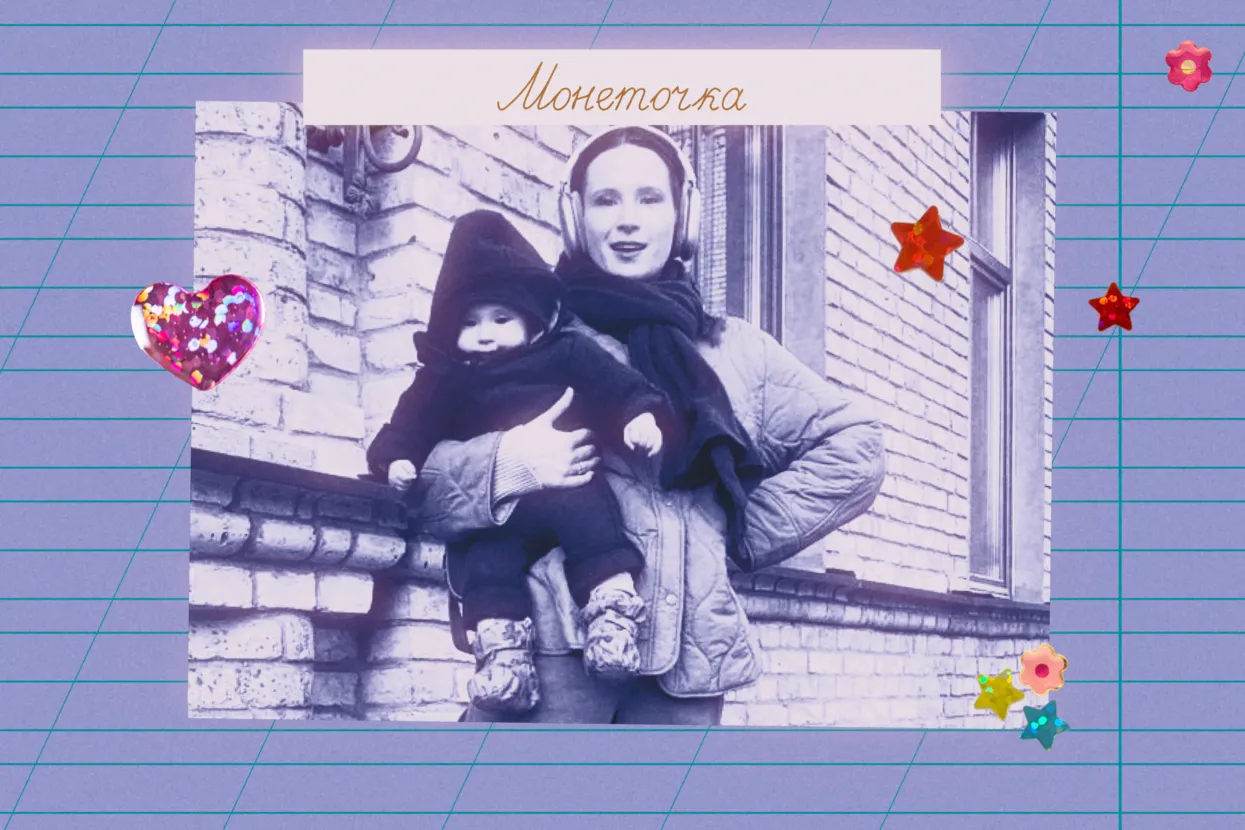
Life in exile: Russian singer Monetochka thought Vilnius would be a stopover. Four years later, she says she may stay forever.
First things first: We love those questionnaires kids fill out at school. Second: despite today’s grim circumstances in Europe, we’re curious about how emigrants from Russia are settling into their new homes. We put the two together and concocted a series in which people who interest us at Meduza will talk about their lives since leaving Russia. We hope these stories will offer you some support. Singer Monetochka, who has lived in Vilnius since the start of Russia’s full-scale invasion of Ukraine, filled out our first questionnaire. She also wrote an anthem for this wave of emigration, so she gets to go first. (Thanks, Liza!)
What’s your name?
Liza.
Where do you live, and how long have you lived there?
I’ve lived in Vilnius since the start of the war. It just so happened that I moved here. I thought Vilnius would be a stopover, but I ended up loving the city so much that I decided to stay — maybe forever.
Four years in, I’ve come to feel comfortable here. Maybe even more comfortable than I felt in Moscow, where I didn’t live as long. I’m quite the food expert — I can recommend restaurants, cafés, shops, and markets in Vilnius for whatever you’re in the mood for. I know where to see a children’s play in Russian and which playgrounds and concert venues are the best in town.
I often ride my bike during the day, with the kids in the trailer, taking them around the city. Vilnius is a very green, bike-friendly city. I love that, even though it’s small, there’s always some new corner to discover.
Still, I can’t say I feel like I “belong” in Vilnius. I think I’ll never feel like I “belong” anywhere again, except in my own home or with my friends, family, and listeners. Home, for me, is the world I can now take with me.
From a personal archive
What do you love most about your new country?
Every year, Vilnius hosts a big fair called “Kaziukas.” I always look forward to it and wait until the fair to buy the things on my wish list. Shopping there is much more fun than ordering things online or going to a regular store. They sell everything: food, clothes, dishes, health supplements, and children’s toys. Everything is tied to the traditional crafts and customs of Lithuania and nearby countries — craftspeople come from Latvia, for example. You can buy an unusual folk instrument or traditional clothing there.
I’ve bought lots of things I love there: wonderful dried fruit and berries that I eat all year, mustard oil, and ceramic plates. At every “Kaziukas,” I make sure to buy at least one little plate. Whenever I see it throughout the year, it reminds me of the market. Actually, I count my years in Lithuania by how many “Kaziukas” fairs I’ve been to. I moved to the city right when one of the fairs was happening.
I don’t think my kids know what they like about Lithuania. They’ve never been to Russia, so they have nothing to compare it to — they were born in Lithuania and have spent their whole lives here. And my husband is happy wherever I’m happy.
What was hardest to adjust to in your new country?
Getting used to a new language and making new friends wasn’t easy. Life in Vilnius also moves at a completely different pace than in Moscow. Lithuania is a very calm country, with an unhurried way of life. I adjusted to the pace in Vilnius pretty quickly, and now I have lots of good friends here. It turns out that such a peaceful place makes it easier to be creative and balance work and life. After a busy tour, it’s the perfect place.
What’s your favorite place in your new city?
Kalvarijos Market. It’s an ordinary market where you can chat with everyone, haggle, find out about seasonal fruit and vegetables, or ask a local chef for a recipe or cooking advice while he’s shopping for his restaurant. It’s one of the places where people recognize me now just as a regular customer, without knowing my music.
I’ve made friends with the people at the butcher’s shop and the women at the vegetable and berry stalls. Kalvarijos Market also has the best pirozhki in the world. I don’t know who makes them, but right next to my favorite butcher’s shop, there’s a little shop that sells nothing but cheese pirozhki, meat pirozhki, and broth. I usually get a little cup of that broth with a cheese pirozhok — I enjoy that combination so much that I’d go to the market just for it.
I go to the market once a week, sometimes even more often. My friends and I go together, so it’s also a way to catch up and spend time with them. I often go with my neighbor, or with other friends after Pilates or hanging out at a café. Sometimes we just decide on the spur of the moment that we need to go.
My friends and I feel like real hunters when we go to the market. I love that — it’s exciting. You can’t just buy whatever you need there. If you want the tastiest produce, for example, you have to wait until it’s in season or a new delivery comes in. And if you want eggplant or unusual, delicious tomatoes at a good price, you have to get to the market early.
What’s your favorite local food?
My favorite food in Lithuania is šaltibarščiai — Lithuanian cold borscht. It’s a really beautiful, delicious, healthy dish. I love how that ice-cold pink kefir goes with the hot potatoes that usually come with the soup. It’s incredibly good.
My kids love šaltibarščiai too. It’s one of the few healthy dishes they like. Lots of places make good šaltibarščiai. I think the best thing to do is come to Lithuania for the cold borscht festival, pick up a map there, and try a few places.
My personal favorite is the šaltibarščiai at “Neringa.” It’s a famous restaurant in Vilnius that Joseph Brodsky loved too. He even dedicated a poem to the restaurant, titled simply “Café Neringa.” He didn’t mention my favorite soup in it, though. I’ve tried making soups at home too, but mine don’t taste very good.
Time departs in Vilnius through a café door accompanied by sounds of clinking forks and spoons, while space screws up its eyes from booze the night before and stares at Time’s retreating spine.
A crimson circle, its interior vanished, now hangs moored in utter stillness over roof-tiles and the Adam’s apple sharpens, quite as if the whole face had been transformed into a profile.
Obeying commands like Aladdin’s lamp, a waitress decked out in a cambric halter saunters about with legs so lately clamped around the neck of a local footballer.
Translation by Tomas Ventslova, The New York Review, 1978
Besides cold borscht, I love all the dairy products in Lithuania. The sour cream, tvorog [fresh curd cheese], milk, eggs, and cream here are so good. Their quality and taste just blew me away. I love going to markets, but I mostly buy meat, fruit, and vegetables there. I think the best dairy products are in regular grocery stores.
Have you taken up any new hobbies since emigrating?
I got into Pilates. I like it because I go with my friends. And I’ve gotten a little older — my body needs regular workouts and stretching. Pilates is a great way to get all of that.
I have a favorite studio and a favorite instructor. If he’s on vacation, I just skip classes. He’s Lithuanian, he tells funny jokes, and he really looks after us: he knows whose back hurts, whose arm hurts, and how to adjust the springs for each of us. He works around our needs so we don’t push ourselves too hard.
At first, I tried going to Pilates alone. Then I brought a couple of friends, and then it turned out some of my other friends were going to a different instructor. So little by little, we all got together and settled on the days and times we’d go. And we decided that after every class, we’d have coffee and a delicious breakfast at a café.
The café is an essential part of the ritual, and breakfast often lasts longer than Pilates itself. We go to the same place every time — my hobbies in Lithuania are about feeling grounded and calm, so I like going back to the same places.
Besides Pilates, I’ve started making a big deal of my birthdays. I never used to, but now I start organizing them six months in advance, planning how the day will go and what we’ll do. Guests come from different countries. This year, I got everyone together at a café, we had appetizers, and they gave me presents.
After that, we took a bus to a stable — the guests didn’t know we were going there. All I’d told them was to wear comfortable athletic clothes in the style of British aristocrats going hunting. We rode horses, brushed them, and relaxed. The kids rode ponies and brushed them. Then we went to an outdoor space by the water, where we finished with dinner and a competition. I always come up with a big quiz that the guests enjoy taking part in, and they really try hard. I come up with different categories, with questions worth 300, 500, and 800 points. For example, I did ballet for 10 years, so I include a category about that.
I try to make sure the questions aren’t all about me. Sometimes I make categories about my guests — someone might get lucky and get a question about themselves or a friend. It ends up being something like the TV show “Svoya igra” (“Your Own Game”). Making quizzes is a hobby of mine now. Friends sometimes even ask me to make them for other people’s birthdays, New Year’s, and other celebrations.
Have you managed to make new friends? How?
I’ve grown closer to friends I already had. They were already close friends, and now they’re almost like family. I can’t live without them. I mean the Alekseyev family: Vanya Noize, his wife, and their kids. I adore all of them, and I’m rooting for them in everything they do. Now it’s hard when they leave town for a month — I don’t feel right without them.
I also have friends who live in Russia and friends who moved to other countries. I keep in touch with everyone, and now when I plan trips, I try to arrange them so I can see my friends too. I’ve adjusted and realized that you can stay friends even if you live in different countries. You work around each other’s schedules and remember to keep in touch — that’s a new skill for me. We also spend time with couples who have children here in Vilnius. I’ve noticed that kids and pets help you meet people. We’ve met lots of people through preschool.
From a personal archive
I’ve also become really good friends with my neighbor across the hall, who moved here from Belarus. We like playing backgammon in the evenings. I’m great at making friends with neighbors — and I always get lucky with them. With neighbors, you can take your rugs to the dry cleaner together, go to the hardware store for flowerpots, go swimming in a lake in the morning, or get to an urgent care clinic when someone breaks a bone. My neighbor and I do all of that together. For me, it’s a new kind of friendship, built around doing things together and sharing everyday experiences rather than special occasions.
I’m working on getting my driver’s license. Recently, I went to sign up for driving school and asked my neighbor to come with me because I was scared to go alone. I kept thinking: what if they don’t understand me, what if I don’t know the language well enough, what if something goes wrong? So I recommend taking friends along on outings like that.
Do you have enough money to live in your new country? How do you deal with financial problems?
We considered moving to other countries, and one of the things that stopped us was the cost of living elsewhere. We’re used to Moscow prices, so we’re comfortable financially in Vilnius.
Our new home also gives me a sense of calm and security. When we first got here, we rented a place before we really knew Lithuania. We didn’t pick the best location, so later we were much more careful about choosing a neighborhood. What matters most to me is that our neighborhood is very safe. We have a safe courtyard and a safe entrance to our building.
What are you doing to learn the new language?
I took language classes for a long time after moving here. I learned enough Lithuanian to get by: I can pay for things at a store and tell a taxi driver where to go. Then I stopped taking classes because work got really busy and I had my second child. But I hope to get back to learning Lithuanian soon. I’m really looking forward to it, because sometimes I don’t know enough. At the hospital, for example — I don’t have the vocabulary to explain things to the doctors.
I speak Lithuanian every day, but usually it’s just short conversations. A couple of times, people have complimented me — they said I spoke really well. I really do try hard, and even if I’m not sure exactly what some words mean, I try to use them so I can learn through practice. But I probably don’t know enough to pass a language exam right now.
Sometimes we have funny conversations. Once, a Lithuanian plumber we’d worked with tried to ask me about the connection between the Russian words “golub” [pigeon] and “golubets” [stuffed cabbage roll], which made me laugh. His Russian isn’t perfect — and I really enjoy learning about Lithuanian from him, while he enjoys learning about Russian from us.
If you have children, would you like them to make this country their home?
It doesn’t matter to me. I want my kids to build their lives however they like. Maybe they’ll want to settle in some other city or country.
My kids are already starting to ask interesting questions, like “What’s this place called Russia?” and “When will I go there?” My mom still lives there, and sometimes she comes to Lithuania to look after her grandchildren. She brings us souvenirs and treats, and Nina [Monetochka’s daughter] asks when she’ll finally get to visit her grandma.
I tell her that soon Grandma and Grandpa will be able to take her with them — she’ll visit and see what this place called Russia is like. Nina gets mad and says, “I don’t want to go with Grandma, I want to go to Russia with you.”
Of course, I can’t explain to her yet that I can’t go there. Especially given how much she and Petya [Monetochka’s son] love “playing cops.” In their game, there are the police and someone they call the “bad guy.” The police catch the “bad guy” every time and put him in jail. I don’t think Nina is ready for a conversation about how her mom is also, in a way, a “bad guy.”
In Lithuania, the kids go to an English-speaking preschool, where they also learn Lithuanian. But we speak Russian at home. For now, they’re more comfortable speaking it, although they speak English fluently.
From a personal archive
How do you cope with intense homesickness?
First, I don’t hold my feelings in — I let them out. I might tear up when I think about my grandma or sing lines about her at a concert. I don’t push the sadness away or try to be the most successful, independent emigrant who’s got everything figured out. I don’t want to bottle up my feelings and have them come back to bite me later.
But I’ve realized that my path is to create meaning on my own. Rather than waiting for the meaning in my life to come from somewhere, I make it myself. I have children, make friends, stay grounded, live this life, and love it. I try to spend more time living in the present than remembering the past, dreaming, or comparing myself to others, including my past self.
Of course, I still miss people. My grandma did come to visit recently, though. She’s elderly and can’t travel much anymore, but we managed to bring her here — she saw the grandchildren, and it was great. But I miss being able to spend the night at her house, on her perfectly clean, ironed, beautiful old sheets, the kind you can’t buy in stores anymore. She’s had them since Soviet times, and they’re always so perfectly crisp. I miss being able to have tea at her place from the Soviet crystal cups I remember from childhood.
I often feel nostalgic and miss the past. When I moved from Yekaterinburg to Moscow, I missed home a lot then too. I’m getting older, and I miss what it was like to be a carefree teenager. I don’t think it’s a bad feeling — it’s just there, that’s all.
Do you feel like you’re losing your connection to your homeland? Is it possible to keep it?
I haven’t felt like I’m losing my connection to my homeland. I think Russia is a very big, complicated country. I know for sure that my people are there — people who listen to my music and fly to my concerts in Belgrade or Chișinău. They send me greetings from a bootleg premiere of “Spider-Man” in Russia, where the film doesn’t include my music. But they reassure me and post photos from the theater along with my song to show their support.
Of course, there’s a part of Russia I’ve deliberately distanced myself from. Everything connected to war, shows of force, and imperialism. But there are things no one could ever take out of me — things I love dearly and keep safe inside me. I don’t do anything special to keep that connection. I just keep being myself.
I was born in Yekaterinburg, and first and foremost, I’m a girl from the Urals, much more than I’m a Moscow girl or a Vilnius girl. I felt like I was losing touch with my roots back when I moved to Moscow. That move was hard for me, and I wrote a lot of songs about it. But I found my own Ural backbone somewhere inside me — and now it’s with me forever. It was always there, but I didn’t know it before. Then people started telling me I had a strong Ural accent. I immediately felt proud of it and didn’t try to get rid of it.
Then I watched other people from my region and noticed that we have similar personalities. We make decisions in similar ways. And that’s when I realized that no one can ever take my homeland out of me, even if I leave it for a while.
There are also tangible things that remind me of home, like the crunchy bread snacks “Tri Korochki” and “Kirieshki.” I get hold of them any way I can. I track them down and ask friends to bring them from Russia. Now I can have a bag of horseradish-flavored “Kirieshki” or caviar-flavored “Tri Korochki” whenever I want.
Are you happy living abroad?
Yes. Almost always, except for unpleasant moments — like today’s staff meeting, which was really stressful. Or when I didn’t plan my day well and ended up somewhere inconvenient with crying kids and no spare diapers. The rest of the time, I’m happy. I have a perfect husband, really awesome kids, and work I’ve devoted my life to. That’s what makes me happiest.
From a personal archive
How do you imagine coming home?
For some reason, I sometimes picture myself leaving the airport, crossing the border. I try to imagine what I’d feel at that moment. Would I cry? Would I kiss the airport floor? Fall to my knees? Who would be there to meet me? I don’t know why I have these fantasies, but they’re there in my head.
If I’m ever able to return, I want my listeners to be there to meet me. I want to hug and kiss them. I’m sure I’ll cry.
At Meduza, we are committed to transparency about our use of artificial intelligence in the newsroom. The story you’re reading was written by one of our living, breathing journalists and translated from Russian using an AI model configured to follow our strict editorial standards. This translation process is the result of extensive testing and refinements to ensure our English-language coverage is timely and accurate. A Meduza editor reviews every draft before publication.
If you find any errors in this translation, please contact us at reports@meduza.io.
To read Meduza’s exclusive content in English, please subscribe to our newsletter.
Meduza
Does that really exist?
Yes! The festival, called the Vilnius Pink Soup Fest, takes place every year in the Lithuanian capital in late spring. This year, more than 170,000 shaltibarshchiai fans attended.
What spring?
Pilates is often done on a reformer — a special machine with a moving platform and various springs and straps that work different muscle groups.