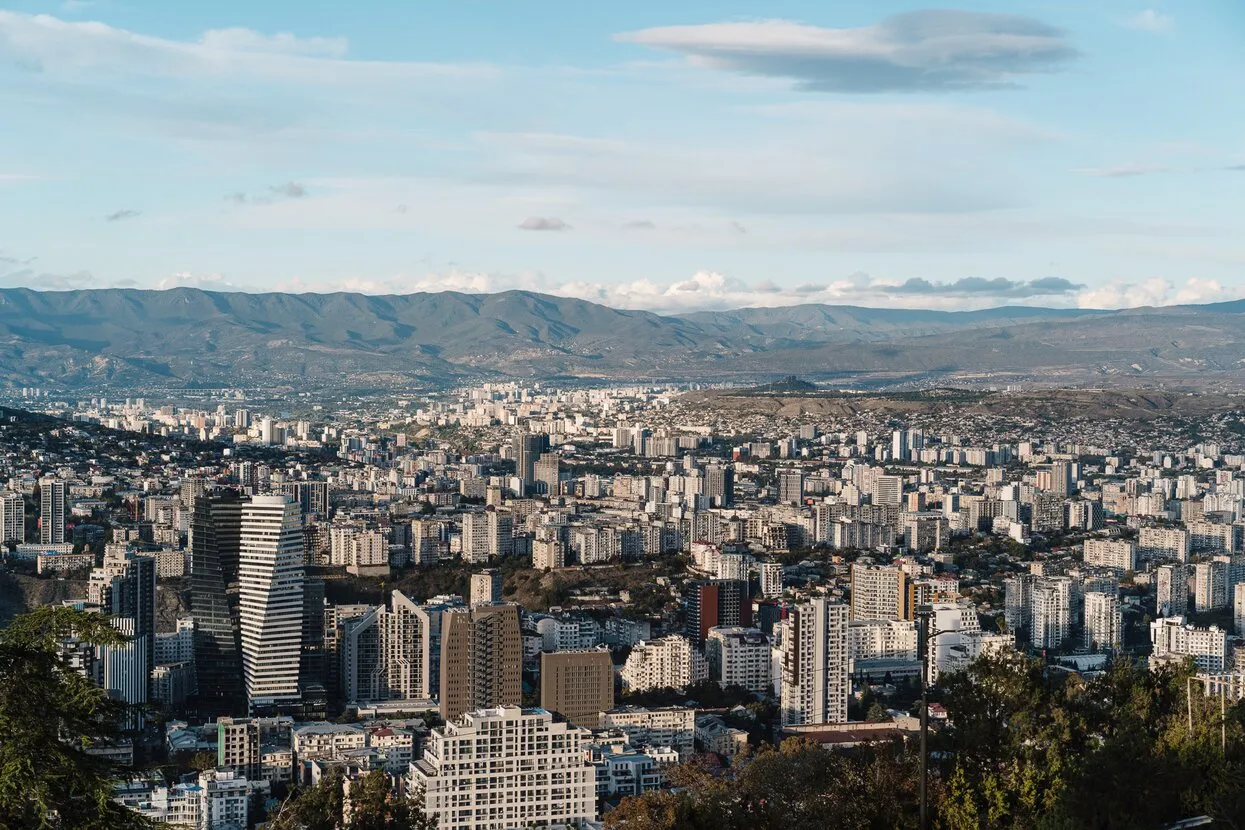
Russians are leaving the country again amid fears of another mobilization. In Georgia, Serbia, and Armenia, the housing rush has already begun.
Since the summer of 2026, rumors have been circulating in Russia that the authorities might announce a new wave of mobilization. Vladimir Putin has called the rumors “nonsense” and says there’s no need for a draft right now, but many Russians are leaving the country anyway, just in case. Since the start of the full-scale invasion, Georgia, Armenia, and Serbia have remained the most popular destinations for relocation. Local real estate agents are among the first to notice the mass emigration of Russians to these countries. Meduza asked real estate agents in Tbilisi, Yerevan, and other cities whether demand for rental housing has increased in recent months, how much prices have already risen, and how the new clients differ from the emigrants of 2022.
Names of the interviewees have been changed at their request.
Georgia
‘No one wants a repeat of 2022’
Russia’s two largest waves of emigration occurred in the first year of the full-scale invasion of Ukraine: the first in February and March, the second in September, when Vladimir Putin announced “partial” mobilization. Georgia took in more Russian citizens that year than any other country and has remained one of the main hubs of Russian emigration for the past four years.
About 1.5 million Russians entered Georgia in the first year of the full-scale war, according to data from Georgia’s Ministry of Internal Affairs. Georgia’s National Statistics Office (“Geostat”) considers 62,300 of them migrants.
More than 37,700 Russian citizens still live in Georgia in 2026, according to data from Geostat, out of a total population of 3.9 million.
Anna, a Russian citizen, moved to Georgia a long time ago and has worked as a real estate agent in Tbilisi for nine years. She has seen demand for apartments among Russians grow since late July, and now receives up to five inquiries an hour — a lot, she says. New clients find her through word of mouth.
”[People who want to rent apartments] are arriving in a panic, without a plan, and exhausted after the move. Their budget is mostly $500,” Anna says.
The agent says her new clients are younger than the ones she used to work with — many are not yet 30, and most have no experience looking for housing.
Rental prices haven’t risen much so far, Anna says — only by $50 to $100. At the start of 2026, an apartment in Isani or Saburtalo, large residential districts of Tbilisi, rented for $550. Now even apartments in buildings still under construction go for $600 to $700. Renting apartments in unfinished buildings is common practice in Georgia, where such units typically go for below market rate.
Landlords have also grown reluctant to work with real estate agents, Anna says, believing they can rent out their apartments on their own — likely to save money, since in Georgia it’s property owners, not tenants, who pay real estate agents.
“No one wants a repeat of 2022, but prices will definitely go up,” Anna says confidently. She predicts that apartments now renting for $600 to $700 could go for $900 to $1,100 within a few months if more people arrive in Georgia and demand for housing keeps rising.
Hi, I’m Vladislav Gorin.
I’m the host of Meduza’s daily Russian-language daily news podcast. This summer, the Russian authorities opened a criminal case against me — not for committing a crime, but for telling the truth about Russia and its war against Ukraine.
Because the Kremlin has branded me a criminal, I can’t go home. I also can’t safely travel to countries like Turkey — even though it’s a NATO member — because I could be arrested and extradited to Russia. I can’t even renew my passport at the consulate anymore.
None of this is going to stop me. I know there are hundreds of thousands of people in Russia who don’t want this war and who still believe in freedom and democracy, and they deserve access to independent journalism. Please support Meduza so I can keep reaching them.

Irina, a Russian citizen and another Tbilisi real estate agent who spoke with Meduza, has worked in the city since 2022. She noticed the number of Russians in Georgia — and, in turn, demand for rental housing — rise in late summer. The market was stable in the first half of 2026: renters could choose among various options and pick whatever they liked. Over the past month, though, “good, decent options only stay on the market for a day or two,” Irina says. Apartments that rented for $600 to $700 a month a year ago now go for $800 to $900.
“You can go see an apartment listed at $700, only to find it’s already been rented — for $800. Because someone wanted that place and offered a higher price. Or the owner raised the price and people agreed to it,” Irina says.
Russians, Belarusians, and Ukrainians have become more interested in buying apartments in Georgia, the agent says. She adds that sale prices for apartments in Georgia are also rising this year, attributing it to increasing costs for building materials and furniture. “If in August of last year a finished apartment in a completed, good building in the popular Saburtalo district could be bought for $120,000, now such an apartment will cost around $130,000 and could sell quickly — within a month at most,” the agent explains.
According to her, many Russian-speaking clients who left for Europe and Asia didn’t like it there and decided to return to Georgia. Most are young IT specialists around age 25 with families, Irina says.
The Meduza source doesn’t expect demand for housing in Georgia to reach the levels seen in 2022. She predicts the situation will soon stabilize: many clients say outright that they left Russia for just two or three months. Some plan to return, while others will try to move on to Europe.
“In my experience, in three or four months everything will start to gradually decline, just as it has before,” Irina says.
The influx of Russians has made it hard to handle every request or guarantee that clients end up happy with their new home. ”[It’s hard] when you’ve come to an agreement with the owner and the client, you go see the apartment together — and half an hour later it’s already been rented [to someone else],” the agent complains. “Or you might not even make it to the apartment before it’s already rented.”
Serbia
‘If this continues, people here will soon start disliking Russians’
Serbia has also become a popular destination for emigration from Russia since 2022. More than 140,000 Russian citizens registered in the country from February 24 to November 2, 2022, according to Serbia’s Ministry of Internal Affairs. From 2022 through 2025, nearly 70,000 obtained Serbian residence permits.
Demand for rental apartments rose in Serbia in the summer of 2026, just as it did in Georgia. Andrei, a Russian citizen who has worked as a real estate agent in Novi Sad, Serbia’s second-largest city, since 2022, tells Meduza that he has been getting far more requests to view long-term rentals since late July — several messages a day. Before that, he could go about a week without hearing from a potential client.
Apartment prices in Serbia haven’t risen much so far, Andrei says. Rent in Novi Sad currently runs from 400 to 700 euros, actually down from 2022, when the same apartments cost 800 to 1,000 euros. Since late July, though, it has become harder to rent an apartment: an entire line of interested Russians forms for a single unit, regardless of its condition. Many of them, as in Georgia, are willing to pay more than the asking price for a place they like.
“Right now the number of apartments is far below the number of people who want to rent them. In the spring you could go around, compare, think it over. Some apartments could sit on the market for a month. Now my colleagues and I go to a viewing and literally pass the next group in the doorway, with more people waiting downstairs. In the end, the apartment gets rented immediately by whoever is ready not to think it over,” Andrei describes the situation.
The agent attributes the surge in demand to rumors of a new mobilization after elections to the State Duma, the lower house of Russia’s parliament, as well as to internet outages in Russia. He says people who previously “weren’t too concerned about the war, the sanctions, and the moral dimension of all this” have now started coming to Serbia. Over the past month, Andrei says, several users with Russian coats of arms and flags in their usernames have messaged him, saying that in Russia “everything is fine, it’s just inconvenient to work, so they decided to move.”
Andrei stopped promoting his services on social media in August because he already had enough clients without advertising. Some of his colleagues are considering raising their commissions, he says: “There are too many people and fewer apartments, so you can charge 100% of the rent instead of 50%, and people will still rent.” He says demand for housing among Russian emigrants has now reached its highest point since early 2024, when it began noticeably declining.
Andrei believes whether demand and prices keep rising will depend on the situation in Russia and whether mobilization is announced after the elections. Even people who are only preparing to leave Russia are contacting him now. ”[In the summer] some people were asking about apartment availability for mid-September,” the agent explains.
“My sense is that a larger share of those coming now will end up going back. If nothing extraordinary happens and things stay roughly as they are now, I think many will stay here for a while and leave before the end of the year. Maybe early next year,” Andrei suggests.
Pyotr, a real estate agent who works in Belgrade, agrees. He says “a lot of Russians” have been arriving in Serbia since the second half of August, making it harder to rent an apartment.
“Nothing like this has happened here since 2022. Often we go with clients to view an apartment, and there’s already a line of five or six people ahead of us. The first ones inside see the line and immediately put down a deposit. The demand right now is enormous. This wave of arriving Russians has coincided rather unfortunately with September, when Serbian students come to Belgrade and are also looking for apartments to rent,” the agent says.
Housing prices in the Serbian capital have risen by about 20% to 30% since late July, Pyotr says. An apartment in central Belgrade now costs between 600 and 1,000 euros.
Most of the new emigrants from Russia are under 45, Pyotr says. Both single people and entire families are arriving. Quite a few find they don’t like the country from the moment they arrive.
“The problem is that Serbia is a small country, and a strong influx of people can stir resentment among locals. Many people refuse on principle to rent to foreigners — they worry that because of the Russians, a Serbian student won’t be able to find an apartment. If this continues, people here will soon start disliking Russians. I hope it doesn’t come to that,” Pyotr says.
Armenia
‘The typical tenant has changed’
Armenia has also become one of the most popular destinations for Russians who left the country over the war and mobilization. Many were drawn there because a Russian internal ID document is enough to cross the border.
Armenia’s Migration Service reported in August 2024 that about 40,000 Russian citizens were in the country with legal residency status or valid residence permits. Russians aren’t required to obtain these documents, and many live without them.
Real estate agents again noticed increased interest in rental housing among Russian citizens in the summer of 2026. Alexander, a Russian emigrant who has worked as a real estate agent in Yerevan since 2022, noticed an uptick in demand in the second half of July. August and September, he says, “were very active.” Clients find him through a large Telegram channel where he posts rental and sale listings.
Alexander tells Meduza that “not a very pleasant crowd is now entering the market,” referring to the new Russian emigrants. “They’re very different from the people who used to rent here — they’re a specific kind of people. They’re marked by insularity, wariness, and a muddled mindset around the idea that ‘it’s not all so clear-cut,’” the agent explains.
He also says, “a lot of young people who were about 17 in 2022 are also coming from Russia.” “Those are the ones I want to help. These young people behave reasonably, but many of them don’t realize they’re moving to the Caucasus. And some older Armenian landlords are put off by boys with painted nails. Although in terms of communication, young people are more tactful and polite than many arrivals aged 35 to 40 who show off and say things like ‘That’s not how we do it in Russia,’” Alexander says.
Rental prices in Yerevan have risen by about 30% to 50% compared to the start of the year, the agent says. A good two-room apartment in the center now costs around $1,000 a month, he says, though as recently as this spring such housing rented for $700. Agents expect prices to peak in October and predict a decline in nine to 10 months — though that may not happen because of the summer tourist season, which temporarily reduces the amount of available housing in Armenia.
Kristina, a Russian citizen and real estate agent who has lived in Armenia since 2018, confirms that demand for long-term rentals in Yerevan has risen since late July. She says there are now twice as many people looking to rent apartments as there were in winter and spring, and she often hears from people who are still in Russia and just planning their move.
Apartments in Yerevan are cheaper than in 2022 but more expensive than in 2024, Kristina tells Meduza. For example, in March 2022, housing on the outskirts cost $800 to $900, and units in the center went for $1,200 and up. Prices dropped in 2024, when an apartment on the outskirts of Yerevan could be rented for $500 to $600, and units in the center started at $800.
The problem, Kristina says, is that many apartments in Armenia don’t match the price landlords are asking — owners are now demanding $700 to $800 for units with outdated renovations or in remote areas.
Like her colleagues in other countries, the Meduza source points to how “the typical tenant has changed” as well:
At first [in 2022], mostly remote workers came from Russia, but now among relocated Russians you increasingly find people considering work, for example, in the service industry. In 2022, people emigrated with a more or less ready plan for life here: their job, housing budget, and future location were clear. Now it’s a bit different. Some arrive even with credit cards — just to make it here and rent housing for the time being.
Kazakhstan
‘The number of Russians hasn’t grown by even one percent’
Kazakhstan was among the top destinations for emigration among Russians four years ago. According to official data, 406,000 Russian citizens entered the country in September 2022. But the government soon tightened its migration policy and the rules for obtaining residence permits, and by 2026 Kazakhstan had turned into a country dangerous for emigrants from Russia, where they can be detained and deported at the request of Russian authorities.
All this appears to have affected Kazakhstan’s popularity among Russian emigrants: real estate agents who spoke with Meduza report no increase in housing demand from them.
“There was a rush four years ago, but not now. It’s not like people are buying up apartments, and the rental situation hasn’t changed either. Russians come and go, everything as usual,” says real estate agent Tamara from Almaty.
Dmitry, a real estate agent who also works in Almaty, tells Meduza his colleagues expected an influx of Russians into Kazakhstan after news of the fuel crisis and rumors of mobilization in Russia. But demand never rose. Dmitry attributes this to the growing difficulty of legalizing emigrants in the country: “It used to be that 90% of clients were emigrants from Russia. Now we’re lucky if it’s 10% of the total flow. People just aren’t coming here.”
Real estate prices in Almaty have risen 10% to 20% over the past couple of months, but Dmitry attributes that to the start of the school year and the influx of students into major cities. Unlike their counterparts in Georgia, Serbia, and Armenia, Kazakhstani real estate agents won’t be able to earn more this year, the Meduza source laments:
This is painful for us: all the agents expected a lot of people to come to Kazakhstan. But the number of Russians hasn’t grown by even one percent. In fact, it feels like there were more of them six months ago. Now we’re getting more inquiries from locals. And there aren’t any more Russian arrivals than there are foreigners from Europe.
At Meduza, we are committed to transparency about our use of artificial intelligence in the newsroom. The story you’re reading was written by one of our living, breathing journalists and translated from Russian using an AI model configured to follow our strict editorial standards. This translation process is the result of extensive testing and refinements to ensure our English-language coverage is timely and accurate. A Meduza editor reviews every draft before publication.
If you find any errors in this translation, please contact us at reports@meduza.io.
To read Meduza’s exclusive content in English, please subscribe to our newsletter.
Marina Kiryunina
How was this counted?
Georgia’s Ministry of Internal Affairs counts the entries and exits of Russian citizens, then compares the data for a given period to estimate how many Russians remained in the country during that time. The National Statistics Office uses a different methodology that takes into account, among other things, how much time a person actually spent in the country: a migrant is defined as someone who has lived in Georgia for at least 183 days over the 12 months following entry.
How exactly?
In 2026, Kazakhstan tightened the rules for obtaining permanent residence permits for foreigners. The country introduced additional screening for applicants, including a test of proficiency in the state language, a questionnaire, digital scoring — a point-based assessment of age, education, language skills, work and study experience, professional skills, and other factors — and an interview. Authorities also set separate, more favorable conditions for investors, in-demand specialists, and certain other categories.