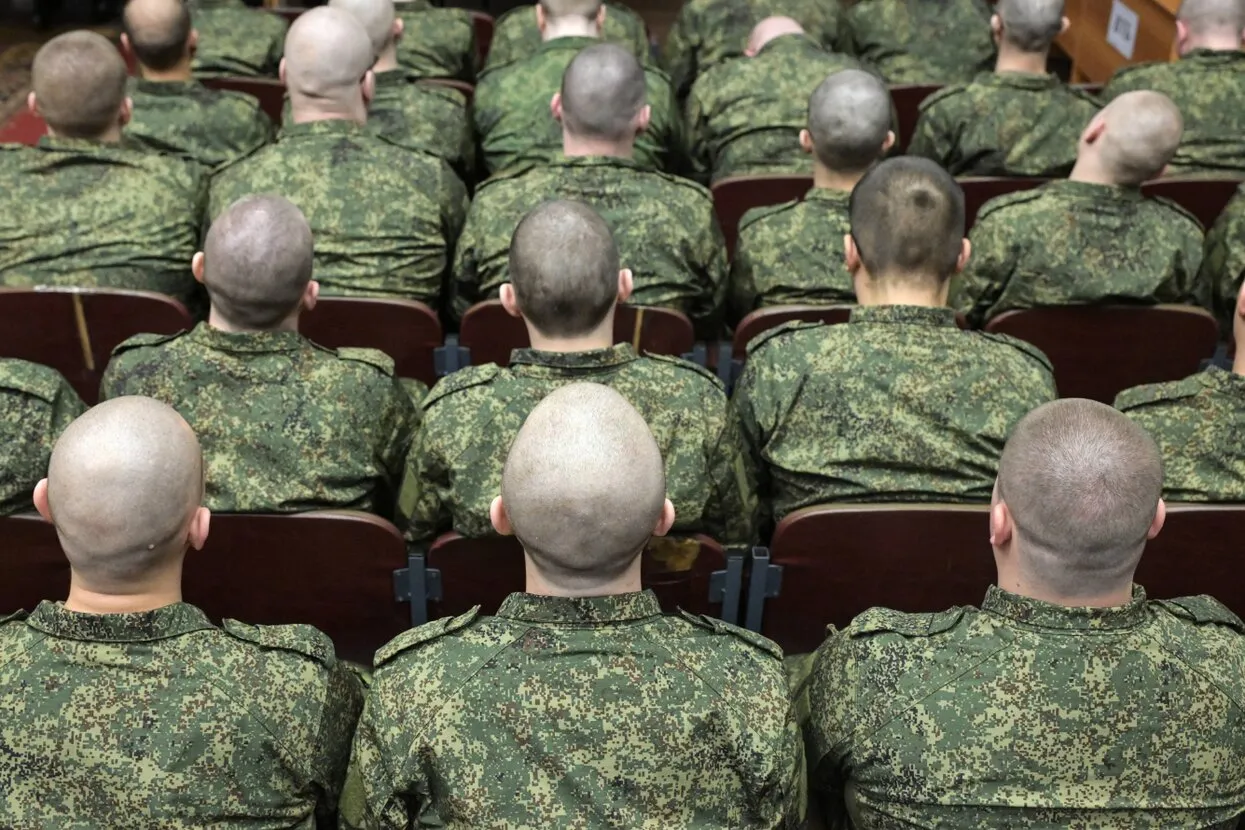
Putin dismisses rumors of another mobilization as ‘nonsense.’ But can Russia keep fighting without another draft?
Vladimir Putin and his subordinates have recently been actively denying rumors of an impending mobilization. This has only made many people more anxious: trust in official statements is low, and speculation about plans to forcibly draft hundreds of thousands of recruits into the army shows no sign of letting up. Meduza’s Razbor (“Explainer”) desk has tried to answer the main questions surrounding mobilization. Why has the frenzy picked up specifically toward fall? Is it true that Ukrainian authorities are waging an information attack on the Kremlin with these rumors? And are there objective grounds for mobilization?
Why fall is the predicted timing for mobilization, and how the rumors snowballed
One fact is worth remembering up front: the “partial” mobilization Vladimir Putin announced on September 21, 2022, technically remains in effect. He never signed a decree ending it. The forced draft that sent hundreds of thousands of Russians into the army has ended only in name. Even today, authorities could legally issue someone a mobilization summons.
In practice, though, no one has been drafted that way since late fall 2022. But rumors of a “new wave” of mobilization keep resurfacing with striking regularity. Rather than catalog every failed forecast from 2023 through 2025, this piece focuses on the current “wave.”
Russian officials routinely accuse Ukraine of fueling these rumors to destabilize the country. Kyiv’s motive isn’t hard to explain: Ukrainian military strikes on oil refineries and market warehouses appear, at least in part, to serve the same purpose. The more Russians feel the war’s practical consequences — and the anxiety over a possible draft — the greater the odds of a social explosion and public pressure to end the fighting.
Public opinion polling shows no sign of a “pacifist” trend: data from the Levada Center shows the share of Russians who favor peace talks has been falling since February and March, while the share favoring continued war has been climbing. Still, polling conducted in a country under wartime censorship deserves considerable skepticism.
Either way, Ukrainian officials have genuinely kept the mobilization talk alive. The most prominent voice is President Volodymyr Zelensky, who has made more than a dozen public predictions over the past six months about an impending forced draft into the Russian armed forces. Sources in Western intelligence agencies and government bodies have repeatedly echoed him behind closed doors.
- In mid-April 2026, Zelensky linked the Kremlin’s decision to block Telegram in Russia to an anticipated forced draft of hundreds of thousands of Russians. He later repeated the point publicly: internet blackouts, he said, are a tool for preventing a “revolt” over the coming mobilization.
- Later that same month, Zelensky said the head of Ukraine’s Main Intelligence Directorate (HUR) had briefed him on Russia’s mobilization plans.
- In mid-May, Zelensky cited HUR figures putting Russia’s mobilization need at 100,000 people. European intelligence services lent support to the rumors around the same time: sources told The Wall Street Journal the move reflected the Kremlin’s desire to expand the conflict beyond Ukraine. EU foreign policy chief Kaja Kallas told the outlet: “If you just mobilize for this war, then you would send a signal that you are not really winning this war. So […] they need to escalate in order to justify the mobilization. And that’s a very dangerous point.”
- Later that month, Zelensky clarified that additional mobilization in Russia would affect “at least tens of thousands of people” and said Russian authorities had stepped up issuing mobilization notices. Around the same time, the first leaks surfaced suggesting the Kremlin might take the unpopular step in the fall, after elections to the State Duma, the lower house of Russia’s parliament, according to European officials who told The Washington Post as much on condition of anonymity.
- Zelensky’s next reference to mobilization in Russia came in early June, in his widely covered open letter to Putin, where he described his opponent’s intention to “launch a second wave” of forced conscription.
- In mid-July, Zelensky offered another forecast, this time about the possibility of “increased mobilization” after the State Duma elections.
- By the end of the month, Zelensky made a statement saying a faction within Putin’s inner circle was pushing him toward expanding mobilization, then followed up with another prediction of “a fairly significant wave” of recruitment into the Russian armed forces.
- A few days later, Zelensky added details, saying mobilization could happen in October and that the number mobilized could reach half a million people, or amount to at least 300,000. Soon afterward, sources in Washington backed the rumors for the first time: anonymous American officials told The Wall Street Journal they didn’t rule out the Kremlin soon having no way to reach its battlefield goals except through forced conscription.
- In early August, Zelensky again repeated his estimate that Putin needs half a million troops at the front, though he allowed that there might be no official mobilization announcement at all: recruitment could instead happen through “shadow” contracts. He followed that with a clarification: the information, he said, came from certain “internal Russian documents” obtained by Ukrainian intelligence.
- By the end of the month, the Ukrainian president gave a more detailed picture: “peripheral” mobilization in Russia “will not take place in major cities” and will be capped at 300,000 recruits in 2026 before continuing into 2027. Around the same time, The Wall Street Journal, citing Western intelligence sources, reported that Russia’s armed forces were intensifying drills for mobilization procedures.
- Zelensky’s last remark came on September 8: he continues to forecast 300,000 mobilized “after the elections,” whether in “covert or overt” form.
How justified are these forecasts, and does Russia’s military actually need mobilization?
One caveat upfront: we don’t have clear answers to either question, and in all likelihood, neither do the people making these forecasts.
Let’s start with the official denials. Since roughly midsummer, Russian lawmakers, diplomats, and top officials have regularly accused Ukraine of “planting” disinformation, waging “information attacks,” and otherwise trying to “destabilize” the country. Members of the State Duma’s defense committee have said as much, as has Russia’s U.N. envoy, Vasily Nebenzya; presidential spokesperson Dmitry Peskov; the deputy chairman of Russia’s Security Council, Dmitry Medvedev (more than once); and, of course, Vladimir Putin himself.
But these denials shouldn’t be taken as reassuring. Nebenzya, for one, said mobilization isn’t needed “at this moment.” Putin, in his last statement, ruled out the scenario only “for today.” Hedges like these would let the authorities walk back their assurances after the State Duma elections — exactly what happened in 2022, when State Duma defense committee chairman Andrey Kartapolov assured Russians two days before the “partial” mobilization was announced that they had no reason to fear “general” mobilization. “General” mobilization indeed never happened, only because the authorities hid it behind the euphemism “partial.”
There are other, indirect reasons to suspect that mobilization plans are being concealed.
- Since 2022, Russia has passed numerous laws closing loopholes for potential draft dodgers ahead of any future wave of forced conscription — though that alone doesn’t mean specific plans exist.
- Many observers have viewed this summer’s roundups of men in the Penza region as a testing ground for a coming “peripheral” mobilization. Local authorities there detained potential recruits under all sorts of pretexts and, through various methods — including violent ones — forced them to sign contracts and go to war. But an equally or even more likely explanation is that local officials were simply trying to catch up on contract-soldier quotas handed down from Moscow: sources who spoke to the Financial Times put the overall recruitment target at 409,000 people for 2026. What happened in Penza may reflect “excesses on the ground” by a region falling behind on its quota, rather than a model to be replicated nationwide. (In fairness, similar detentions have occurred in other Russian regions as well.)
- Possible mobilization preparations have also been linked to drills for mobilization procedures in the Kaliningrad region, an increase in job postings for military registration specialists, the distribution of mobilization notices Zelensky mentioned, and other developments. As with the laws above, none of this directly indicates whether mobilization will actually happen.
One argument deserves closer scrutiny: the central case Ukraine has been making for months. Zelensky and other Ukrainian military and political leaders have insisted that Russia needs mobilization not to expand its force at the front, but simply to replace its losses there. According to Kyiv’s account, that’s tied to the Ukrainian military’s success inflicting casualties on Russian forces. In this telling, the Ukrainian army has learned to kill or severely wound more Russian soldiers each month than Russia’s military can recruit.
Is that actually true? Probably not, though we can’t say for certain. There’s no reliable estimate of Russian military losses for 2026. The dispute centers on a benchmark figure of 30,000 people a month; Ukraine claims Russia loses more troops than that. This fall, we’ll test that estimate as part of a new round of our research into Russian military losses, drawing on data from the Registry of Inheritance Cases and named lists of the dead. But none of our previous rounds have come anywhere close to that level.
In August, German economist Janis Kluge wrote that the influx of new recruits into Russia’s armed forces in the second quarter stood at roughly a thousand people a day — the same 30,000-a-month figure. Kluge draws on regional budget data, which fund the large lump-sum payments made to contract soldiers and offer one of the most reliable metrics for tracking Russian army recruitment. In his view, the need for a new mobilization isn’t as acute as Ukrainian and Western sources claim.
But Putin may not be guided solely by “objective” criteria for maintaining the status quo. To reach the “victory” he envisions in the war, he could well opt for a “proactive” buildup of the army through mobilization.
We’ve already described the problems with this step in a recent series of answers to readers’ questions about the war.
- Formations and larger units — brigades, divisions, corps, armies — need support elements: air defense, electronic warfare, logistics, artillery, and so on. Contract-soldier recruitment quotas are set at their current level because that’s how many people the army can actually “absorb,” meaning train and equip. Units fight, not individual soldiers, and those units need officers — both combat and staff officers. There are now also drone-operator units numbering in the thousands.
- The Kremlin has already seen forced mobilization spark public discontent and drive people to flee the country. The social and political risks are real. There’s a financial dimension too: for, say, 300,000 newly mobilized troops, the federal budget alone would have to pay out more than a trillion rubles in the first year alone, by a conservative estimate, in signing bonuses, salaries, supplemental payments, and death and injury benefits.
Despite those risks, Russia’s Defense Ministry may well have a clear interest in mobilization: it appears dissatisfied with the recruits it’s currently getting. It’s hard to build the high-tech units of the “army of the future” out of people who risked their lives for money out of financial desperation, and without mobilization, there’s no alternative to them.
- Over the past year, Russia’s military has tried to recruit several tens of thousands of drone operators from among students and other young people, promising a guaranteed short-term contract with no possibility of transfer to other branches of service. Students apparently didn’t trust the military, and the campaign fell flat.
- The Defense Ministry has similarly tried to recruit people for mobile firing teams that combat drones in the rear, this time prioritizing cost. It tried to staff the teams with reservists — people who receive small payments from the army in exchange for short annual training stints. That campaign hasn’t shown signs of success either, though some reservists do turn up in mobile firing teams.
The Kremlin could well conclude — especially if Putin himself favors the idea — that mobilization would solve the recruit-quality problem. But that, too, remains purely speculative for now.
One last point: alarmism versus rationality.
The 2022 mobilization inflicted deep trauma on Russian society. Hundreds of thousands of people were sent to the front; hundreds of thousands of their family members lost loved ones (named lists alone show more than 20,000 mobilized soldiers have already died in the war, and the true toll is likely far higher); and hundreds of thousands fled the country in a hurry, with nowhere to go. Almost no one wants to relive that experience, save for a small camp of the war’s most die-hard supporters. Even reporting the news triggers irritation among Russians. We feel it every time we’re accused of alarmism after publishing an article, a YouTube show, or an Instagram post about mobilization.
Unfortunately, we can’t say for certain that this anxiety is entirely unfounded, if only because we don’t know what’s going on inside the head of Vladimir Putin, the main (and perhaps only) “decision-making center” on the Russian side. One can only assume he’d suffer serious reputational damage if, after soothing statements dismissing mobilization rumors as “utter nonsense,” he turned around and announced a forced draft of hundreds of thousands of recruits.
But does Putin actually care about his reputation? Is he guided by rational arguments in pursuing his goals, and what does he even want the war to achieve in the end? Only he knows the answers. And the vertical power structure he has built over the course of the war has done a great deal to ensure that any new mobilization goes as “seamlessly” as possible — for the authorities, if not for citizens.
At Meduza, we are committed to transparency about our use of artificial intelligence in the newsroom. The story you’re reading was written by one of our living, breathing journalists and translated from Russian using an AI model configured to follow our strict editorial standards. This translation process is the result of extensive testing and refinements to ensure our English-language coverage is timely and accurate. A Meduza editor reviews every draft before publication.
If you find any errors in this translation, please contact us at reports@meduza.io.
To read Meduza’s exclusive content in English, please subscribe to our newsletter.
The Razbor desk
Это какие?
Мы не знаем. Вероятно, президент Украины имел в виду контракты, которые россиян вынуждают подписывать по результатам облав, как было этим летом в Пензенской области.
Что это такое?
Официальный документ в форме вкладыша/вклейки в военном билете, который обязывает гражданина, пребывающего в запасе, самостоятельно явиться в военкомат или на сборный пункт при объявлении мобилизации без получения дополнительной повестки.