‘Piter FM’ is back in Russian movie theaters. Its director, Oksana Bychkova, is in Barcelona, shooting a queer film that she says makes it risky to go home.
Oksana Bychkova’s debut film, Piter FM, came out in 2006 and became a huge hit. Since then, the director has made several more features — “Plyus odin” (Plus One), “Eshche odin god” (Another Year), and “Nina.” In 2022, she left Russia for Barcelona. She’s now working on a new project, a short film called “Elio,” about a queer flamenco dancer. Miloslav Chemodanov is a journalist with the queer outlet Just Got Lucky and the author of “Normalnyi malchik. Kak ya byl geem v Rossii” (A Normal Boy: How I Was Gay in Russia). He spoke with Bychkova for Meduza about filming in a new country and about how she chose her new protagonist.
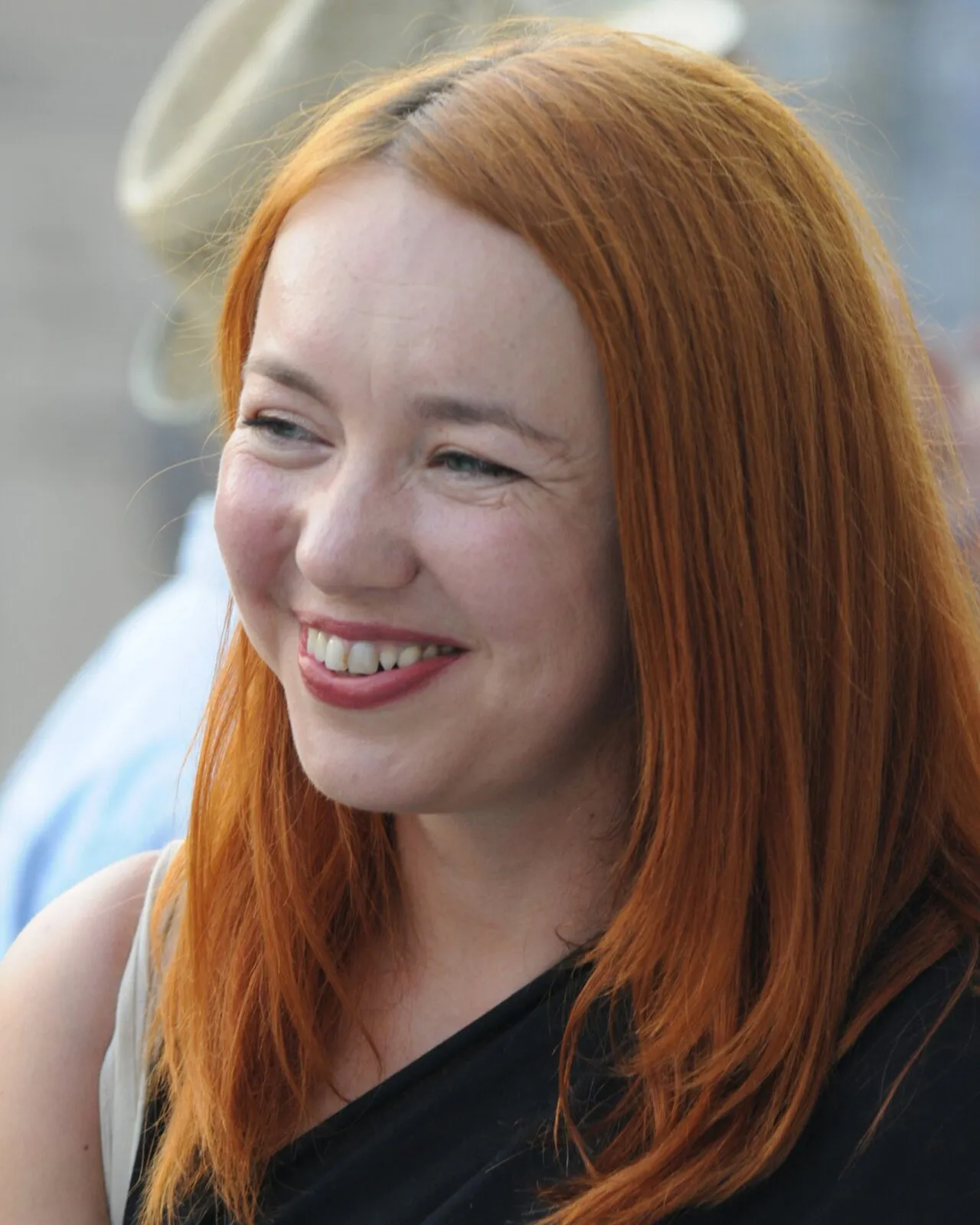
Oksana Bychkova
Alexey Filippov / the Russian state news agency TASS / Profimedia
Piter FM was an instant nationwide hit in 2006, grossing about $8 million on a $1 million budget. Ten years later came the anthology film Peterburg. Tolko po lyubvi (Petersburg: Only for Love), whose directors were clearly inspired by Bychkova’s debut: women shot every segment, and Bychkova herself took part. The anthology, however, drew less public interest than the original.
In 2025, Piter FM enjoyed a second wave of popularity, including among a new audience. Riding this wave of interest, they even brought the film back to.
By then Bychkova was living in Barcelona; she had left Russia in 2022. She takes her debut film’s new success very calmly:
Yes, I know, it’s been in theaters for a second year now, and it’s making some money. They’ve even made a sequel. I understand why that’s happening. Not because the film is outstanding. It just reminds people of certain details of their lives in 2006. For them, it works like a time machine — for nostalgia.
Bychkova says she has no plans to return to Russia on the strength of her debut’s renewed success. She’s fully absorbed in her new project.
In 2026, Bychkova received a grant from the URST foundation to make a short film in Catalan. The film is called Elio, and its protagonist, a young queer flamenco dancer, leaves the city after his mother’s death and returns to his home village to care for his grandmother, who has dementia.
Here’s what Oksana Bychkova told Meduza.
On moving to Barcelona
I have two favorite cities: St. Petersburg and Barcelona. I suppose I’m a very lucky person. Immigration is a complicated business, and it helps enormously when you love the place where you’re starting a new life. For me, Barcelona is a warm, big-hearted place that holds you up and takes the sharp edges off a new life. I first came here in 2013 and fell in love immediately.
A team has now come together [to work on Elio] — we’ve found producers, and we’re deep in preparations for the shoot. The whole team is working for free, and I’m hugely grateful to them. Filming begins in late October, in the Ebro Delta in Catalonia. It’s an incredibly picturesque, cinematic place.
I’m getting help from a group of people I trained myself, as it happens. Starting in 2024, I ran directing workshops here for Russian-speaking students, simply to be doing something rather than sitting on my hands. I spent four months teaching them the basics of directing, and a community of Russian speakers passionate about film grew out of it. Many of them went on to study at local film schools.
Two women from my workshops, like me, received URST grants and are shooting their own shorts this year — so I guess I wasn’t doing it for nothing.
On choosing the protagonist
Why is my protagonist a queer person? Everything that happens to him could happen to anyone, regardless of gender, sexual orientation, identity, ethnicity, skin color, or religious beliefs. But for the ending — and I don’t want to give away the details — his queerness matters a great deal.
The film was inspired by the real story of a queer person who worked at well-known theaters in Moscow, then went back to his home village in Siberia to care for his grandmother, who had dementia. Unlike his story, though, mine takes place here in Catalonia and ends in a slightly magical way, in the spirit of magical realism. The film’s tone isn’t nearly as tragic as it would be if we were filming real events in Russia.
Of course I know about Russia’s homophobic legislation, and of course I’m afraid. My mother lives in the Moscow region. She’s quite old, and at any moment, if she suddenly feels unwell, I’ll have to travel to Russia. Because of my film — and because of that legislation — that would obviously be risky. But I shouldn’t refuse to make a film just because I’m afraid. I really love my protagonist and his story, so I’m going to make this film anyway. And if, God forbid, something happens to my mother, I’ll go to Russia anyway.
I have to say that it has always been very important to me to make films about subjects that sincerely interest me, that really move me. I’ve never made anything opportunistic, so it’s very funny to be talking about “the agenda” [povestochka, a dismissive Russian shorthand for progressive social causes] now.
For example, when I was making Piter FM, I really was a fairly naive person, and that’s exactly why I was able to make such a childishly naive film. It wasn’t opportunism — it was a real reflection of my picture of the world. And it was very sincere. I couldn’t make that same film today, because the way I see things has changed quite a lot over the years. And I’m not at all afraid of losing viewers, because I’ve never made films for anyone in particular. I just love making films.
Yes, unlike my protagonist, I’m not a 25-year-old queer person with Catalan, Romani, and Andalusian roots — I’m a Russian immigrant “over 50.” But he and I are united by vulnerability — and so, it seems to me, are a great many people in this world. Especially now, when everything that once seemed stable has turned out to be incredibly fragile. I’m fascinated by how we can be strong and fragile at the very same moment, and by how, despite all the upheavals, life can still remain just as magical, just as wondrous. It never stops surprising me.
I never divide people into queer and non-queer — to me, everyone is just people. I dream of living in a world with no divisions at all, where people could simply love whoever they wanted, and it wouldn’t provoke hostility in anyone. I hate homophobia, and I’m very glad I live in Barcelona, where you almost never encounter it. Quite the opposite — there’s a lot of kindness and tenderness in the air.
My Elio is a wonderful, delicate young guy, an incredible dancer, an incredibly beautiful person. That’s all.
On working in Catalonia
The local film world is very closed off — it’s hard for a foreigner to break in, even with experience. People here would sooner work with someone they already know well, someone whose family has been friends with theirs for years.
I’m trying to work with locals, too. Honestly, it’s proving a bit difficult. I’m used to working fast and precisely. In Russia, after all, the filmmaking process runs 24/7 — you never switch off, and you’re constantly on your toes. Here, people live at a more relaxed pace. It’s not that they don’t switch off; it’s more that they have trouble switching on.
They might not answer a message for days. Or not answer at all. They might say, “Yes, we’re very interested in your project” — and then never respond again. To me, that “Yes, we’re interested” sounds like a readiness to work together, but in reality they just don’t like saying “unpleasant things” to your face.
Casting in Spanish isn’t easy either. I speak decent Spanish, but you have to know the finer points. In Russian, of course, I can express myself far more freely. So I’ll definitely bring a Catalan interpreter to the shoot to avoid any inaccuracies.
We’ve already signed our star for the role of Elio: Mitch Martín, an actor from Madrid. Before this, he played the lead in Romería, which was in the main competition at Cannes in 2025. It’s a wonderful film by the Spanish director Carla Simón. Mitch is an extraordinary presence and a terrific actor. Today he has his first flamenco lesson for our film, and he’ll also have a Catalan coach.
Finding an actress to play his grandmother has turned out to be harder — we’re still looking. I believe it will all work out. We’ve also set up a crowdfunding campaign to raise additional financing, because the grant I won to shoot this story isn’t enough on its own so far.
At Meduza, we are committed to transparency about our use of artificial intelligence in the newsroom. The story you’re reading was written by one of our living, breathing journalists and translated from Russian using an AI model configured to follow our strict editorial standards. This translation process is the result of extensive testing and refinements to ensure our English-language coverage is timely and accurate. A Meduza editor reviews every draft before publication.
If you find any errors in this translation, please contact us at reports@meduza.io.
To read Meduza’s exclusive content in English, please subscribe to our newsletter.
Interview by Miloslav Chemodanov, “Just Got Lucky”
What is this project?
A sequel titled Piter, lyubov moya “Piter, My Love” was announced in 2025, with filming planned for 2026. The film’s director is 26-year-old Polina Kondratyeva.
Unlocking Russian-Speaking Talents
A charitable foundation that helps Russian-speaking filmmakers living abroad establish themselves in the global film industry.
Romería
A 2025 drama written and directed by Spanish filmmaker Carla Simón (Alcarràs). The film follows a woman trying to learn the truth about her deceased biological father. It premiered on May 21, 2025, in the main competition at the Cannes Film Festival.