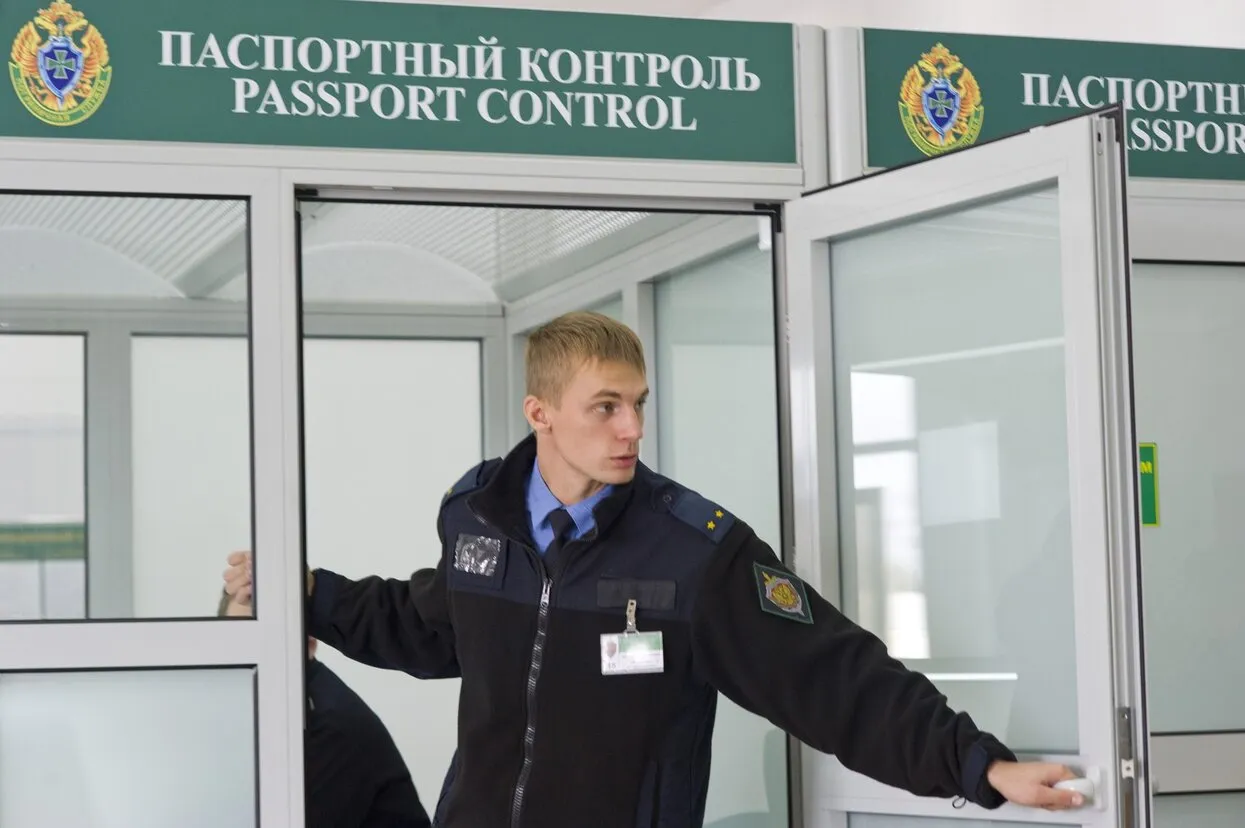
‘The most terrifying 11 hours of my life’: What really happens when you cross Russia’s border? Meduza’s readers share their stories.
Crossing Russia’s border has become an increasingly fraught experience in recent years, whether you’re returning home or leaving the country. Last week, Meduza asked Russian readers to share their experiences crossing the border. While we expected to hear mostly from Russians living abroad, we also received dozens of accounts from people who still live in Russia and travel overseas. Not every crossing involved questioning or delays — some readers told us they passed through without incident. Here’s what they had to say.
Anton
I live in Russia but travel abroad for vacations. Border guards have questioned me twice in the past two years — the system flags me for additional screening, and both times were unpleasant. I live in Russia 11 months out of every 12, so it’s incredibly disappointing that this keeps happening. Why can I travel to any country in the world and get let in without a problem, but get interrogated when I come home?
Dmitry
In the four years since I left, I’ve been to Russia three times, to set up my business and visit my parents. Crossing the border went smoothly all three times, without incident or extra interrogation. They always ask on what grounds I live in Europe, and I show my residence permit. Surprisingly — and unfortunately — I have nothing unpleasant to report, except that every time, I feel like a tourist in my own country.
Anatoly
I travel once a year, for a couple of months. Every time I arrive, they ask the same questions: why, where to, where from, what do you do. My tip: bring your internal passport. They always ask for it, and things go faster if you have it. Nothing ever happened at departure — until the last time I left.
In August, they didn’t stop at [questioning me] at the booth — [the border guard] took me to a room and interrogated me for half an hour: who I am, what I do, where I live, with whom, where my relatives are, hand over your phone (I gave him a clean one), who I talk to, do I have anyone in Ukraine? I decided I would not go back to Russia again.
Zhenechka
My last entry was in the fall of 2024, when I waited 11 hours to be screened. I was lucky my laptop stayed with my wife, who had time to wipe it clean while I called her from other people’s phones. Those were the most terrifying 11 hours of my life — primal fear brings on all kinds of thoughts, and I had chat histories and payment records [that could get someone prosecuted].
Arkady
I traveled [to Russia] once, in December 2025 — the only [time] since I moved to Israel in 2022. I came for New Year’s, to visit friends, walk around familiar places, and pick up some belongings.
I prepared thoroughly for the trip. I have no history of detentions or prosecution in Russia, but I do have plenty of posts, photos, and donation records (to Meduza, for example!) that I wouldn’t want Russian authorities to see. I’m also transgender and have a nervous system disorder, which creates extra problems at any checkpoint — tremors and nervous reactions mean I get searched for drugs more often. In Israel, it took a 20-minute body scan for officers to find the organs needed for my passport, which was pretty funny, but fairly safe.
For the trip, I took my brother’s old phone and installed Russian apps I used to use — Yandex Mail, Russian Railways, 2GIS, and so on. I loaded some music for the trip, downloaded wallpaper pictures and plane tickets, made sure I had no Ukrainian contacts, searched for random things on Google, and poked around on YouTube to build up a search history — just to have one — and went.
The plane landed at Domodedovo at seven in the morning, and I spent the next five hours at the airport going through checks of every kind. At passport control, they asked a lot of strange questions: what were you doing in Poland? Is this your passport? You’ve changed so much — my Russian and Israeli passports have photos from before and after HRT — but the personal data matched, since I’d managed to change it before the repressive laws took effect, which made things easier.
After passport control, they took me to a security checkpoint, where I sat for four hours in a fenced-off pen of chairs. Officers called people by last name from there into an office for questioning and a phone search. My conversation with the border guard went something like this:
“Where are all your messaging apps? How do you communicate, by phone calls?”
“Yeah.”
“Where’s your social media?”
“I don’t use it.”
“You’re sure you don’t have a second phone?”
“I’m sure.”
“And if I find one?”
“You won’t.”
Then another officer came in and said, “Just take it to Igor, let him run it through his [some abbreviation, I don’t remember], it’ll take five minutes.” They carried my phone off to another office to “run it through” some kind of plug-in device.
I sat in the pen without my phone or passports, talking with the people around me — most of those waiting for screening had some connection to Ukraine or lacked Russian citizenship. I remember a mother and her adult daughter who had left Crimea in 2010; the mother carried Ukrainian and Israeli documents, while the daughter had only Israeli ones. “They ask why we don’t have Russian passports since we’re from Crimea. But we left before Crimea became Russian, and try explaining that to them now.”
Some people there travel on business every year and go through these checks every single time. […] After four hours of waiting, they returned my phone and passports and told me I could go. Next came a baggage search that took another hour — they emptied my backpack and suitcase completely, filmed the process on a department camera, and inspected every single item. […] After that, I was finally let out of the airport.
Anatoly
For family reasons, I’ve visited Russia six times since November 2025. Each time, I expected some kind of problem at the border, but nothing serious ever happened.
The real problem is the car line to enter Russia — the fastest crossing took about four hours, the longest about 17.
They checked my phone only once, and since I don’t bring my work phone, no additional questions came up. Maybe I’ve just been lucky, but I’ve had no problems with border guards over all these trips. Given that the country is at war, checks like this strike me as understandable, even a necessary security measure. But things could have been much worse.
Ksenia
I fly once a year to visit family, and it usually goes smoothly. But in October 2025, I was pulled in for questioning that lasted four hours. They went through all my things, checked my phone, and took my fingerprints. The interrogation covered who I talk to, who my relatives are, whether I know anyone in Ukraine, and so on. They asked about social media but didn’t check it. It worked out — but I won’t be going again.
Oleg
I come to Russia twice a year to visit relatives — and to buy medicine, tea, and so on. I usually have to answer unpleasant questions: where did you come from, what were you doing there, with whom, what’s your job, where do you permanently live.
The last time, in July, I landed at a regional airport and wasn’t let through because officers didn’t like my answer of “tourism” after a six-month absence from Russia. After waiting 10–15 minutes, I was called into an office for a talk. A different officer let me explain everything fairly quickly, and they didn’t try to look at my phone. It’s also annoying that customs officers X-ray luggage on arrival, and in some places there’s a full customs search on departure as well.
Anna
I mostly live in Russia, but I go to Italy for a month every year to see relatives there. There are other trips sometimes too, but the experience is roughly the same overall. I get through passport control fine, but I’ve noticed more questions lately — and I’ve heard from others that questioning has increased in general, especially for men (purpose of the trip, return tickets, and so on).
The last time — and this wasn’t even at the border, just going through the green channel exit at Pulkovo — they asked a lot of questions: purpose of the trip, how many days I’d flown for, where I’d originally flown in from. Fine. But then they suddenly asked how many euros I’d entered the country with and how much I had left, including how much I’d spent on purchases. I said “definitely under 500 euros in purchases,” and then they asked how much I’d entered with — the difference came out to around 250–300 euros. The young border guard said, “the math doesn’t quite add up, but fine,” and let me through.
I guess I’ll need to keep my receipts so the math works out next time. Before this, there were no questions of this kind, and in general I was rarely questioned at all.
Andrey
I come to Russia once a year to see my parents, and every time I depart from Moscow, the electronic passport control system flags me for additional screening by a border service officer. That’s when the real ordeal begins. Already in line, it’s clear many other passengers are in the same situation — they’re leaving Russia on one-way tickets.
The border guard’s own behavior adds to the tension: he scans the passport on several computers, cross-checks the data against every available database, keeps swiveling in his chair, and every so often stares intently at me, as if gauging my reaction. The atmosphere is so tense that you can’t help feeling he’s hunting for the smallest detail that might look suspicious.
Compared with passport control in other countries, the wariness and suspicion toward passengers here feels especially acute.
Anton
I travel once or twice a year to see my family, always arriving and departing through Moscow.
Fortunately, I’ve never had any problems — no questions, ever.
Alexander
I live in Russia and travel abroad a couple of times a year. I was tried for discrediting the military in 2023 and fined 40,000 rubles. In the fall of 2025, I flew to Paris and passed through passport control with no problems.
In August 2026, I decided to fly from Mineralnye Vody to Armenia for three days, just to walk around. Going through passport control there, a female officer told me to wait for additional screening and kept my passport. I was called into an office, where two officers asked me to unlock my phone and hand it over, which I did. One scrolled through it while the other asked questions: why are you flying, what’s your job, who are your parents, which countries have you visited since 2014, have you ever been convicted, do you have access to state secrets?
Inside, I was panicking that they were scrolling through my phone — personal messages, browser history — but I didn’t let it show. They wrote down my phone’s IMEI number and asked me to sign a paper agreeing to take a polygraph test whenever summoned. They said that if I didn’t sign, I’d stay there another three hours and miss my flight, so I signed. Then they told me to wait outside but kept my phone. As I understand it, they copied all the data off it to study later — or maybe installed something of their own on it too. Who knows.
On the way back to Russia three days later, there was no interrogation, but they again took my unlocked phone and carried it off to an office for about 40 minutes.
Khaidar
After I moved to Germany, I wanted to keep visiting my parents. In Russia, they usually just asked where I’d come from and where I was going. [Then they would say]: have a good trip!
In April 2025, they took my passport and examined it: Why Foreign Ministry of Russia? I live and work in Berlin! They took the passport and [said]: wait. The whole busload of us waited eight hours! Then came the interrogation: How did you get your passport? What’s your attitude toward the war in Ukraine? Toward Putin? Toward [the] Crocus [City Hall terrorist attack] (I’m Muslim)? Do you pray? And a phone check.
Ivan
I’ve lived in Germany for seven years now but go to Russia about once a year to see my parents. I’d never had problems at the border, so I didn’t prepare much — I didn’t wipe my phone or delete any messages, figuring I had nothing to hide. This time, after passport control, they asked me to wait. An officer came over and asked if I had a second phone. I said no.
“What about old phones?”
I said there was an old iPhone with a cracked screen lying at home.
He asked:
“Where exactly at home?”
At first I thought it was just a routine question, so I said it was in a desk drawer. They took me to a separate room and asked me to unlock my current phone. The officer scrolled through the photos for quite a while. There was nothing special there: trips, food, friends, screenshots. Then he stopped on a photo of me standing next to trash bins in Berlin.
“Why did you take a photo with trash bins?”
I explained that a friend had just happened to photograph me on the way home.
“Just happened?”
He asked me to open the photo’s date. Then the geolocation. Then he zoomed in on one of the bins. There was a sticker on it that said, “No to war.”
I hadn’t even noticed that sticker before. The officer asked:
“Do you agree with what it says?”
I said I sort my trash. He asked again:
“What do you mean?”
I had to explain the German waste-sorting system. After that, the conversation somehow shifted to plastic for a long while. He asked why bottle caps are now attached to the bottles and whether that annoys me. I said it sometimes does. He wrote something down. Then they found a photo of breakfast. There was bread, cheese, coffee, and a jar of jam.
“What kind of jam?”
I said French.
“Why French?”
I said it was on sale. He asked me to open my banking app and find the jam purchase. We couldn’t find the purchase, because my girlfriend had bought the jam. Then the officer asked for my girlfriend’s last name. I told him.
“Is she a German citizen?”
“Yes.”
“Why does she buy you French jam?”
I no longer knew what the right answer was, so I said:
“Because we live together.”
After this he first looked at me very closely.
“So you have a shared household?”
I said, probably, yes. He wrote something down again. Next they opened Telegram. Among the recent messages was a conversation with my mom. Mom had written: “Everything’s ready for your arrival.” The officer asked:
“Ready for what, exactly?”
I said the room.
“What room?”
“My old room.”
“Why is it still yours if you’ve lived in Germany for seven years?”
I said that’s just what my parents call it. He asked me to call my mom.
Mom picked up and immediately asked:
“Did you get through?”
The officer raised his eyebrows.
“Get through what?”
Mom explained she meant the border. Then, for some reason, she added:
“We’ve already put the potatoes on.”
The officer asked:
“Why did you put potatoes on?”
Mom said:
“To boil.”
After that, he asked to put the call on speaker and spent about 10 minutes talking with my mom about how many potatoes she’d bought, exactly where, and why she’d decided to boil them before I even arrived.
At one point, mom asked:
“Young man, would you like some potatoes?”
Pavel
[I go to Russia] once every six months to a year. There have never been problems on entry — border guards usually let me through quickly and rarely ask questions, maybe because my arriving flights are from Yerevan or Istanbul. There are usually more questions on departure, about the purpose of the trip and how long it’s for, but even those feel like they’re asked out of boredom.
The only unpleasant experience was in 2022, when they made me turn out all my pockets and flipped through all my books and notebooks looking for cash. Otherwise, everything always goes smoothly. The most interesting moment: border guards once asked to see my foreign diploma, just out of curiosity.
Yekaterina
I come once a year to visit my mom and see friends. This summer I traveled alone with two children (ages 3 and 7) through the Estonian border, at the Koidula crossing. To get there, we took a ferry from Helsinki to Tallinn and spent the night there. In the morning we took a commuter train and rode four hours to Koidula. This used to be probably the most deserted border crossing, located somewhere in the middle of nowhere.
But at the start of summer, hours were cut at the other Estonian crossing point, Narva (where people almost always stand in line for a whole day or longer), and apparently some people decided to look for other routes. So by the time we got to the border, there was already a line, though it seemed small — you have to walk about a kilometer from the train station along the road and then through the bushes, and everyone tries to hurry there right away, so it turns into this sad race of people with suitcases and rolling bags.
The line moved gradually, and the Estonian border guards and customs officers at Koidula are pretty nice, friendly people. But then a double-decker bus arrived, and all its passengers — about 50 people, probably — were let ahead of the line. Still, credit to the Estonians: everyone got through in about an hour, probably. We got through without any problems too, and started moving toward the Russian checkpoint.
And then, around a bend, we saw a strange crowd of people gathered in front of a closed gate. It turned out the Russian border guards didn’t want people crowding up there, because of that bus we’d seen, plus an earlier one, and they were checking them for an extremely long time. So people were standing in front of this ridiculous gate in the heat, waiting. An hour, two hours — some had already been waiting four hours.
It was simply unbearable. Elderly people, families with children in the heat. And about 50 meters (about 164 feet) away was the Russian checkpoint, this nice big building with trees and shade… But no, you wait here. People were outraged, people talked to “the person in charge,” but they weren’t authorized to split up the crowd. It was very hard and upsetting.
Anonymous
I flew from Serbia to Nizhny Novgorod to see my parents, glad they’d introduced direct flights. Next time I’ll fly through Moscow, screw it. They pulled aside almost half the people for questioning. They asked whose Crimea it was, whether I supported the SVO, why I’d left the country, and asked to see my Instagram, Facebook, Telegram. They asked me to explain visible tattoos.
Everything on my phone was clean, and I showed all of it — I had the feeling that if I refused, it would only get worse, but still, the fact of it. They searched my contacts for numbers starting with +380. Then they said “welcome home” with this little smirk. It felt like they just enjoy terrorizing people. I read afterward that this happens a lot in Nizhny Novgorod. The woman behind me in line had children with her.
Klim
Since the war began, I’ve been to Russia four times by plane and twice by car. There was a two-and-a-half-hour interrogation in Zhukovsky about my attitude toward the SVO, an examination of my phone contacts and reading of my Telegram messages, and then they took my phone away entirely for “technical analysis.”
Ivan
I should start by saying that I’m a citizen of Kyrgyzstan, one of the Central Asian republics with especially close political, economic, and cultural ties to Russia. Russian has official status there, Russian media occupies a prominent place, and the republic pursues a fairly accommodating policy toward Russia. Kyrgyzstan has even repeatedly found itself at risk of secondary sanctions because of its trade and economic ties with Russia.
We have relatives living in Russia, so from time to time we visit and stay with them in the Kaliningrad region. I’ve been to Russia in 2021, 2023, and 2025. During the first two trips, nothing came up at the border at all — everything went completely routinely: I said hello, handed over my passport, got a stamp, and moved on to my next flight. But 2025 turned out differently. That was when I first felt, through my own experience, what I had previously only known as other people’s stories about bias against migrants and people from Central Asia.
My mother and I arrived at Sheremetyevo together. At passport control we ended up in different lines. Mine was moving more slowly, hers faster, so at some point I moved closer to her and ended up at the neighboring window. Her turn came. She handed over her passport, the border guard stamped it, and let her through. I submitted my passport right after. My mother stepped a bit further away and waited for me by the exit. The border guard took my passport and said dryly, almost angrily: “Go wait. You’ll be called.” That was it — no explanation of where to go, what to wait for, how long it would take, or why I was even being held. We had no phone connection; connecting to Wi-Fi at Sheremetyevo without verification through a Russian phone number was impossible at the time.
When my mother realized I wasn’t being let through, she asked the border guard not to send her on ahead and to let her stay next to me. He replied irritably: “No. You go ahead, he stays.” The door closed. We ended up on opposite sides of it: without contact, without explanations, in complete uncertainty. What felt especially humiliating was not understanding what I was even guilty of. I hadn’t broken any rules — I had registered in advance with ruID and come to the country on an ordinary private visit, to see relatives. So why was I being treated as if I were some kind of suspect?
Meanwhile, right in front of me, citizens of Russia and Belarus were let through without any trouble, while many people with Central Asian passports and features typical of the region were sent to wait. The border guard’s window was free for a while, so I decided to go up again and ask what I should do, who exactly was supposed to call me, and for what reason. “I already told you: you’ll be called!” he barked. I had to step back. I stood near the passage and waited. After a while, through the general noise, I heard an announcement over the loudspeaker: someone was being called by name to go to a room with a specific number. That’s how I first learned there were special rooms nearby for additional screening.
I went looking for them. People had already gathered near these rooms, most of them from Central Asia. And at that moment it felt especially strange to think about all the talk of customs unions, economic integration, friendship between peoples, and “allied relations.” At the level of official rhetoric, we’re partners and friends. But standing there, I didn’t feel any of that at all. The situation was made worse because we had a connecting flight from Sheremetyevo to Kaliningrad three hours after landing. By that point, only about an hour and 40 minutes remained before departure, and there was still no clarity.
People were called into the rooms one by one. From those waiting, I heard that officers there ask detailed questions about the purpose of the trip, demand that phones be unlocked, and go through their contents. I was never called into one of those rooms myself. But I remember very clearly the feeling of total helplessness — when your passport is somewhere with someone you don’t know, no one explains anything, you can’t reach a loved one, and you don’t even know if you’ll make your next flight.
Time passed. Finally a border service officer came out with a whole stack of passports and started reading off names. After that, they took us back to passport control. About 40 people stood waiting for their names to be called, then went up to the window one at a time. When I was finally let go, about half an hour remained before the flight to Kaliningrad. I ran out into the terminal with two heavy bags. My mother was waiting there, in tears. That moment, I think, stuck with me more than anything else — not the screening itself, not the lost time, not even the fear of missing the flight, but how easily a person can be left in complete uncertainty, separated from a loved one, without anyone bothering to say even a few human words to them.
At that moment I felt a lot of anger. I wanted Russian citizens to one day be met with the same “hospitality” in our country: to have their passports taken without explanation, to have border officers bark at them the same way, to be separated from relatives, sent to wait for who knows what, have their phones checked, and be made to feel like criminals before they’d even done anything.
But setting emotions aside, the problem runs deeper than a simple wish to respond in kind. I understand there’s serious tension in Russia around migration — problems with crime, illegal migration, the integration of newcomers, the work of law enforcement, and flaws in the migration system itself. All of this can and should be debated. But responsibility for state migration policy lies, first and foremost, with the state. And if a system is built over years that simultaneously draws in millions of foreign workers, poorly controls migration flows, allows abuses, and then tries to make up for its own failures with suspicion toward everyone with the “wrong” passport or appearance — that is not a solution to the problem.
An ordinary person legally crossing the border shouldn’t automatically become a suspect just because they were born in Dushanbe, Bishkek, Tashkent, or any other city in Central Asia. A state’s border has every right to be strict. But strictness and humiliation are not the same thing, just as screening and contempt are not the same thing. And security doesn’t require giving up basic human decency.
Anonymous
Over the past two years, I’ve traveled to Russia for family reasons about once every six months. In my case, the red flag for Russian border guards is that I renounced my Russian citizenship. At passport control, I’m always asked about it, both on entry and on exit.
The most unpleasant case was when I was sent for a conversation with an officer from Russia’s Federal Security Service, or FSB. The conversation lasted about 15–20 minutes. They asked me about my reasons for renouncing citizenship, my job, connections to government agencies in my new country of citizenship, whether I’d traveled to Ukraine, and my attitude toward the war.
They tried to look at my phone, but I’d brought a clean one. When the FSB officer realized that, he immediately lost interest in it — though I still had to explain why my phone was clean. Toward the end of the conversation, they even asked how I had a child if I’d never been married…
My advice to people who have renounced Russian citizenship and travel to Russia: always carry a copy of the certificate confirming you renounced citizenship. They may ask for it at passport control.
Dmitry
I travel every six months, mostly crossing the border by car from Belarus through Lithuania into Kaliningrad; I have dual citizenship with visa-free access to the Schengen area. The Belarusians have always conducted fairly perfunctory interviews on entry into Belarus, and on exit there are usually no questions and only a basic search, or none at all.
But in July, entering the Kaliningrad region from the Lithuanian side at Chernyakhovsk, I went through an extremely unpleasant screening — effectively an interrogation with fingerprinting and biometric sample collection and a four-hour interview, during which FSB border service officers read through all my messenger correspondence, went through all my contacts and photos, compiled my entire life story, and took very detailed notes on four typed pages. They probed my political views, asked whether I belonged to any banned movements, in particular the LGBTQ+ movement, asked about my job, and took my boss’s contact information.
I left demoralized and humiliated, fully aware that I would never cross a Russian checkpoint by car again. After that, the 12–19-hour wait at Belarusian customs, with surprisingly friendly staff, doesn’t seem so bad.
P. S. My phone wasn’t always in my line of sight — officers stepped out with it several times — so I can’t guarantee that no third-party software was installed on it.
Nailya
I flew to Russia for two weeks in the second half of May. It was time to renew my internal passport. I’d last been there in December 2021, so this was my first trip since the [full-scale] war began. Before that I used to fly twice a year, even during the pandemic, and nothing abnormal ever happened — it was always calm. This time, too, nothing happened to me.
I flew out of Kazan at the end of May. The room with the border guard booths is very small. There were something like four or five booths, I remember four lines, and people were packed tightly together because there wasn’t much space, the border guards worked slowly, and crowds built up.
Apparently, one line was specifically set aside for “non-Russians.” There was one family, Tajik I think, with a child, age 3 or 4, standing there for about 15 minutes. The man answered questions in fairly good Russian — the room is small, you can hear everything — but then they picked the child up, and the border guard started asking the child something, and the little girl couldn’t answer.
Then the border guard just started stupidly yelling across the whole hall: “Where did you get this certificate? You bought it, didn’t you? She doesn’t even speak Russian. Admit it — did you buy the certificate? How much did you pay, where did you buy it?”
He kept shouting like that for another five minutes, accusing and insulting this family, who were simply frozen with fear, in front of everyone. And no one came over to him, no one told him to stop; all his colleagues and superiors just kept working as if nothing were happening. It became unbearably disgusting and repulsive, both toward my fellow citizens and toward the country as a whole, where civil servants allow themselves to “talk” to people like that. Shameful.
Andrey
I was traveling from Russia to Kazakhstan in June 2025 when I was pulled off the train for additional screening. They demanded I unlock my smartphone — I refused. They held me at the station for almost a full day, beat me, and tortured me. I ended up having to give them access to all my devices. An X-ray eventually showed two broken ribs.
Nastya
I try to go to Russia every year. I love my hometown and my family and loved ones, and it’s very hard for me when I don’t see them for a long time. It’s always a little nerve-wracking, because since the war began I’ve openly spoken out against it on social media. My friends and relatives know my position. So do random people online.
Every time, I prepare my gadgets, wiping chat histories and browser history. I’ve never been checked. But sometimes there are unpleasant questions — unpleasant mainly because of the tone the border guards use. For some reason, women seem especially prone to this. Very hostile looks, as if you’re guilty simply for coming home to visit.
I really want to keep being able to come to Russia, and I’ll keep doing it for as long as I can.
Besides the rudeness and hostile looks from border guards, it’s unsettling when someone from the line gets taken off to a separate office. I’ve seen that happen a couple of times over my five trips.
Sonya
I hadn’t been back since 2022. In 202-something, I flew into my hometown with my young son. We got off the plane and were first in line for passport control. After the standard questions about my residence and permanent residence permits, the female border guard sent me to “sit off to the side.” After that, they questioned me at length about whether I’d had plastic surgery, whether I had a twin sister. They took me into a separate room and, shining a flashlight in my face and enlarging my passport photo, compared every millimeter.
Then they asked whether my son spoke Russian, went up to him, and asked who he was flying with. He was nervous and stayed quiet. They asked him my name, and he used the pet name he calls me at home. After that, yet another — the fourth — customs officer tried to scrutinize me, whispering to a colleague that “there used to be a mole on her cheek, and now there isn’t,” implying the passport wasn’t mine. They suggested I log into Gosuslugi to verify my identity. I refused, offering instead to show my internal passport. Finally, after about an hour and a half, they let us through.
At Meduza, we are committed to transparency about our use of artificial intelligence in the newsroom. The story you’re reading was written by one of our living, breathing journalists and translated from Russian using an AI model configured to follow our strict editorial standards. This translation process is the result of extensive testing and refinements to ensure our English-language coverage is timely and accurate. A Meduza editor reviews every draft before publication.
If you find any errors in this translation, please contact us at reports@meduza.io.
To read Meduza’s exclusive content in English, please subscribe to our newsletter.
Meduza
HRT
Hormone replacement therapy.
IMEI
A unique 15-digit code that every phone has.
What does this mean?
This refers to where exactly the passport was issued. Those who live abroad have theirs issued at consulates, in which case the passport says “Foreign Ministry of Russia.”
+380
This is Ukraine’s country calling code.
Special Military Operation
The Kremlin’s euphemism for its full-scale war against Ukraine