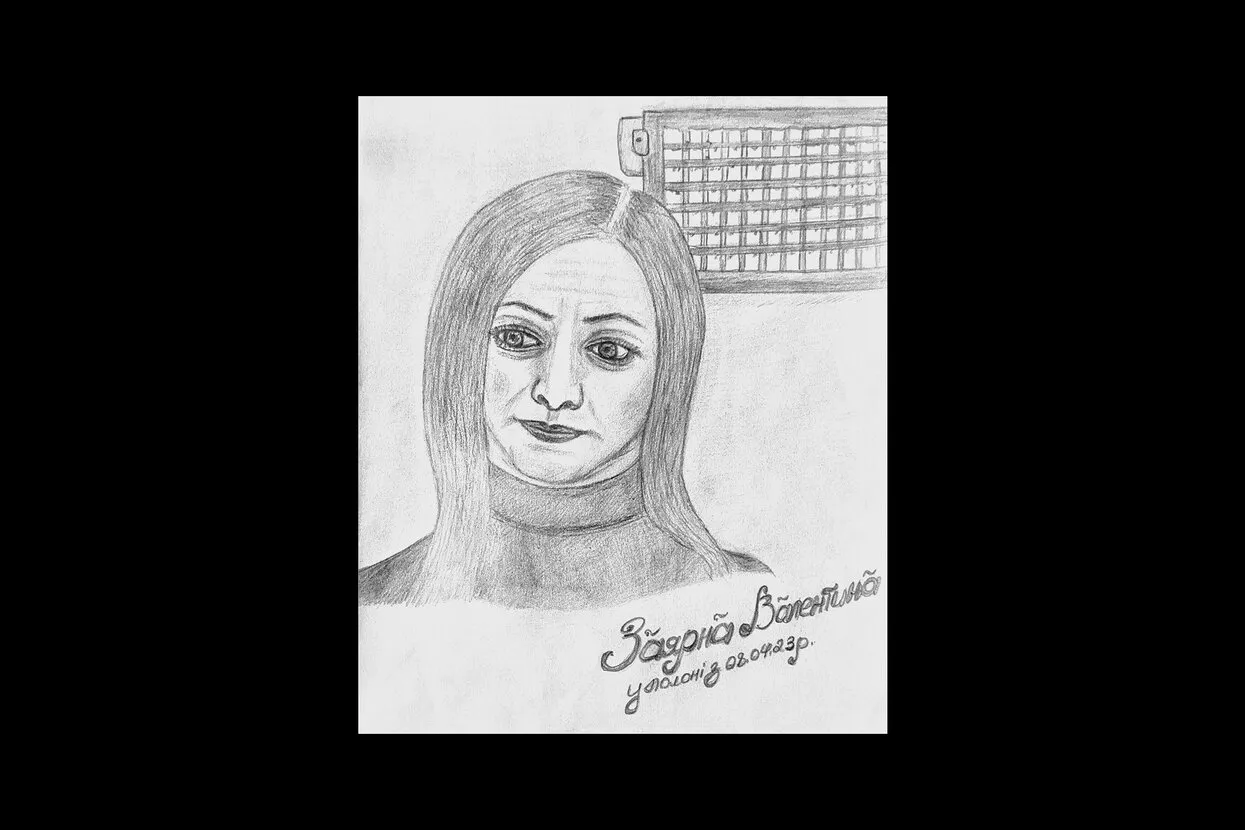
Inside Russia’s new gulag: what The New Yorker found in a Rostov cell of Ukrainian women
Since 2014 — and especially since 2022 — Russia has seized and still holds at least 1,878 Ukrainian civilians. These are only the confirmed cases; the real number is likely far higher. At least 223 of them are women. Like Ukrainian prisoners of war, many civilian hostages from Ukraine have been tortured and are held in inhumane conditions. But unlike military prisoners, they have little hope of going free in an exchange. Ukraine, citing the Geneva Conventions, insists they should never have been detained at all. Russia points to rulings from its own courts and says they are serving sentences for terrorism, treason, and other serious crimes. The two sides do not trade military prisoners for civilians, which leaves the return of these detainees unresolved.
The New Yorker has published a long piece about Ukrainian women who ended up sharing a cell at Rostov pretrial detention center No. 1. For the story, the magazine’s Joshua Yaffa spoke with former inmates and exchanged letters with several of the women still held there. Some had served in Ukraine’s armed forces; others had no ties to the military. The first group has been exchanged; the second is still in custody. Meduza retells the stories of two of them.
Warning: This article contains descriptions of torture.
Valentina Zayarnaya, 66
Zayarnaya taught English in Amvrosiivka, a small city near Donetsk. Two months into the full-scale war, she got a call from an old acquaintance, a former Ukrainian border guard whom she knew only as Dima. They had met in 2018 at the Hnutove crossing, on the de facto border between the self-proclaimed Donetsk People’s Republic (“DNR”) and the Ukrainian-controlled parts of the Donetsk region. They struck up a conversation, exchanged phone numbers, and stayed in regular touch over the following years. Zayarnaya had once lost a child she had wanted to name Dima, and she came to think of this second Dima not simply as an acquaintance but as family.
Dima was not his real name. The man who introduced himself to Zayarnaya that way is Denys Storozhuk. At the start of the full-scale war, his border-guard unit was sent to defend Mariupol. Storozhuk spent three weeks hidden in a utility shaft deep inside the Azovstal plant, then made it out of the city and called Zayarnaya. When she told him she had gotten her son Kostya out of the embattled city, Storozhuk asked her to get him out, too. He lied, telling her he had taken no part in the war. She drove down the very next day and brought him from Mariupol to Amvrosiivka. They got lucky at the checkpoints: no one searched the car or asked for their documents.
Valentina Zayarnaya in court
the independent Russian news outlet Mediazona
Storozhuk lived with Zayarnaya for nearly a year. One day, he asked her to pick up a package for him at an address in Donetsk. Inside was a forged passport that would have let him leave occupied territory. When she arrived, FSB officers were waiting and quickly arrested her. Under questioning, Zayarnaya learned the truth about him: He was a lieutenant colonel in the Ukrainian military and had fought at Azovstal, escaping before Ukrainian forces surrendered. He had also stayed in touch with fellow servicemen, and investigators said he had hidden weapons and explosives at her house. Zayarnaya was accused of helping Storozhuk plan an assassination attempt on a “DNR” lawmaker and was sentenced to 12 years. Storozhuk was detained as well, but he was exchanged in the fall of 2024, before the trial; he was later sentenced in absentia to 22 years.
Zayarnaya’s cellmates were frustrated that Storozhuk had concealed his identity. But by their account, she always defended him — even though, during the investigation, FSB officers had beaten her son and threatened to send him to a mental hospital unless she gave them the testimony they wanted. She signed a confession, then tried to kill herself.
In a letter to The New Yorker, Zayarnaya called Storozhuk a second son and wrote: “The most important thing is that my boys are alive and free.” She said she considers prison “a school of survival, a test of the humanity and decency in each of us.” In custody, she has gone on teaching English — now to her cellmates.
Natalia Vlasova, 44
Vlasova has been in detention for more than seven years. In court, she said it all began in 2018, when an acquaintance who worked for the SBU, Ukraine’s security service, asked her to go to Donetsk and fill in for Serhii Hruzinov, an agent working at a chandelier shop who needed to travel to Kyiv. Vlasova agreed because, in return, she was promised help with a criminal drug-possession case against her. Soon after that trip came another: this time, she was asked to check whether Hruzinov had switched sides. She was detained trying to enter the “DNR” on a forged passport.
Vlasova was taken to Izolyatsia, a former insulation-materials plant in Donetsk that was turned into a secret prison in 2014. There, she was tortured for months. Her captors stripped her, bound her with tape, and shocked her with electricity. A doctor was present at many of these sessions; when she lost consciousness, he revived her by shoving a cotton ball doused in ammonia up her nose, and the torture started again. She said that one of her torturers was Vasily Yevdokimov, an official in the “DNR” state security ministry who is believed to have created Izolyatsia. “He personally filed my teeth with a metal file, twisted my nipples, and tried to force a bottle into my vagina,” Vlasova said in court.
Natalia Vlasova
the Telegram channel Sota
A person who heard her testimony told The New Yorker that when Vlasova finished describing the torture, a judge asked whether she wanted to enter her written notes into the court record. “We were in shock,” that person said. The judge’s reaction seemed to be a quiet signal: “It was a gesture on the scale he was allowed.” But despite the gesture — and despite the fact that Vlasova recanted her earlier statements in court, saying they had been extracted under torture — she was sentenced to 18 years. Her conviction included the attempted assassination of Yevdokimov, the man she said had tortured her.
Over her seven years in custody, Vlasova has watched countless times as other women were freed and she was left behind. At the Rostov detention center, she kept a bag of clean clothes at the ready, in case she, too, was one day told, “Pack your things — you’re leaving.” So far, that has not happened.
Her daughter, Yulia, who lives with her father in Kyiv, is now 11. Her father and other relatives tried to keep Yulia from seeing news of her mother’s torture, but within days of the testimony she had read the coverage. She had only one question, The New Yorker reported: “What are nipples?” Last year, Yulia took part in a rally in Kyiv’s Independence Square to call attention to Ukrainian women held prisoner in Russia. She brought a sign that referred to one of her last memories of her mother: “Mom, remember you promised me a kitten?”
At Meduza, we are committed to transparency about our use of artificial intelligence in the newsroom. The story you’re reading was written by one of our living, breathing journalists and translated from Russian using an AI model configured to follow our strict editorial standards. This translation process is the result of extensive testing and refinements to ensure our English-language coverage is timely and accurate. A Meduza editor reviews every draft before publication.
If you find any errors in this translation, please contact us at reports@meduza.io.
To read Meduza’s exclusive content in English, please subscribe to our newsletter.