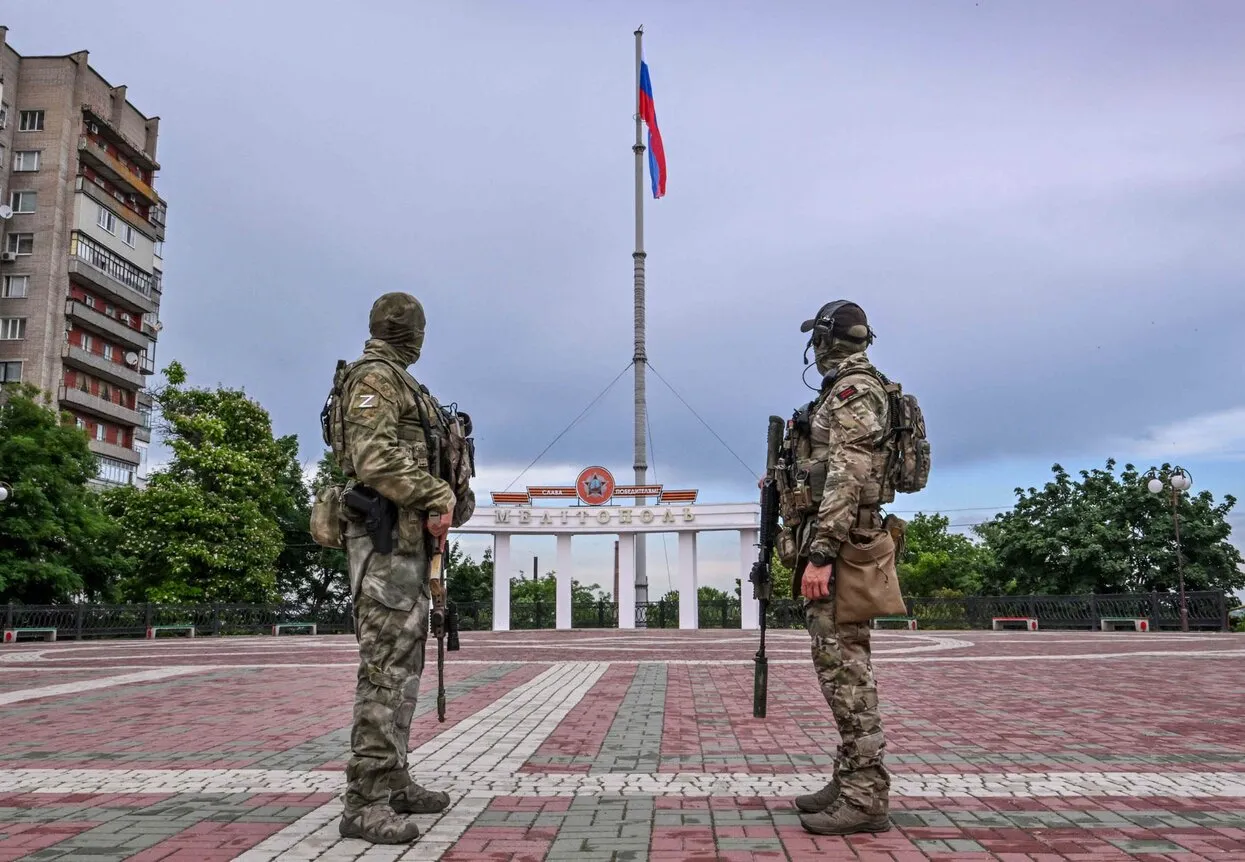
‘We’ve seen this somewhere in history before, haven’t we?’ Inside Russia’s plan to resettle 114,000 of its people in occupied Ukraine.
Over the next 20 years, Russian authorities plan to resettle nearly 114,000 Russians in the occupied Ukrainian territories. Despite the grim circumstances, some people really are moving there. The independent journalists’ cooperative Bereg took Melitopol as its example — a city in Ukraine’s Zaporizhzhia region that Russian troops entered as early as February 25, 2022 — to understand what kind of people move from Russia to the seized regions, and what occupation means for Ukrainians. Bereg talked with Russians who have resettled there, with lifelong Melitopol residents, and with the Ukrainian nonviolent resistance movement Zla Mavka (“Angry Mavka”). Meduza is translating the story in full.
‘I thought, “God, my business is closed.” I didn’t yet know what they would do to my family’
Lyudmila Plachkova, 34, was born and raised in Melitopol. She left for Bulgaria because of the occupation. Officers of Russia’s Federal Security Service (FSB) abducted her parents, Tatyana and Oleg.
We’re a family of entrepreneurs. In Melitopol, we lived through good times and bad. The city was alive and growing, and we grew with it — new businesses, public gardens, parks, and fairs kept appearing. The COVID years were hard on business, but we all helped one another.
In 2013, my parents rented a space and opened their own business: a café. My mom had worked as a cook and had always dreamed of a restaurant of her own. The café became her baby. We had no real capital, so we took out loans.
It was hard at first. I worked there as a waitress, and my dad did all the physical work himself. My mom’s friends, cooks themselves, took jobs in the kitchen. Eventually it all grew into a fairly successful venture — a large banquet hall, where you’re constantly dealing with guests. My mom was very outgoing, and everyone in town knew her. A lot of people came to the café partly because of her. They’d all say, “We want to see Tanya.” I think the café became popular because of how open she was.
My parents were always like two lovebirds, together all the time. In 2023, the business turned 10. That was part of why my mom didn’t want to leave [the occupied territory] while she still could. She’d grown too attached to it.
When they started bombing us [on February 24, 2022], I froze and didn’t know what to do. Then [Russian] troops took up positions outside Melitopol, waiting for the order to move in, since Ukrainian forces were still in the city.
My dad said there would be a mop-up phase, but I didn’t know what that meant or what they’d do to us. As a young woman, I was terrified, especially given the news from Bucha and the stories about Kadyrov’s men. At that point, we [Lyudmila, her husband, and several relatives and friends — Bereg’s note] moved in with my parents. We huddled together and waited. My parents lived near a school, and when things got really frightening, we’d go to the bomb shelter there. Somehow it was all easier to bear when we were together.
Russian soldiers guard a site where residents apply for Russian citizenship. Melitopol, July 14, 2022.
AP / Scanpix / LETA
Then Mariupol happened, and people started fleeing that city. We helped where we could, gathering supplies and food for them. In March and April 2022, pro-Ukrainian rallies were held in Melitopol, and I went out to them.
Looting had started in the city, and it mattered to me to show that decent people lived there. We [the protesters] said we didn’t want Russia here, and at first the soldiers even told us they might leave soon. Later, once Russian flags started going up around the city, I realized nothing good would come of it.
Melitopol changed. Business owners and young people left. I remember my dad saying at one point, “We’re back in the 1990s.” Makeshift markets sprang up (half the entrepreneurs had gone), and a lot of people of “eastern nationalities” arrived. The streets filled with strangers. It’s a small city — a lot of faces used to be familiar. Moscow plates, Krasnodar plates… You’d walk around and realize this wasn’t your city anymore.
I had little direct contact with the occupiers before I left. I just watched our city fill up with people who’d never lived in it. It frightened me: strangers had arrived and started imposing new rules on me. Before I left [the occupied territory], I was afraid even to go outside.
Russian flags fly over Melitopol. November 27, 2022.
Alexander Ermochenko / Reuters / Scanpix / LETA
Leaving was frightening too — there was no telling what to expect at filtration. Vasylivka was still open then, the only crossing into Ukraine. I was afraid to go through it after hearing terrifying stories about people being taken to a basement. And you had to travel under shelling. I didn’t risk it. Vasylivka was later closed, and we left through Crimea, Russia, and Turkey.
In Crimea, [FSB officers] questioned us. The filtration drags on, and you don’t know whether your husband will come out of it at all. You drive across Russia not knowing whether you’ll make it… In the end, surprisingly, my husband got through.
My husband had a clothing store; I had a decor studio. We had to close it all and leave. At the time, I thought, “God, my business is closed.” I didn’t yet know what they would do to my family.
Overnight into September 26, 2023, FSB officers broke into my parents’ apartment. I had already left by then. I later learned from my mom’s cellmates that she’d been beaten on the head with a mop.
My grandmother was home too. They locked her in a room and told her, “Don’t try anything.” After my parents were taken away, two FSB officers stayed behind to search the apartment. She sat locked in that room from 11 p.m. to 11 a.m., without food or water.
I think my mom and dad were taken because they refused to recognize Russian rule. They believed the occupation would end — my mom especially.
Shortly before the abduction, a post about my mom appeared on the Telegram channel Zhduny. It said she was pro-Ukrainian. That was the first warning sign.
My mom was sure they wouldn’t touch her — she wasn’t doing anything, just living her life. Besides, my grandmother had just come through surgery, and my parents couldn’t leave her alone. In our last conversation, my mom said that if nothing changed, they’d leave in November. She held out hope to the very end that the occupation would be pushed back. My mom was always a huge optimist.
A Russian soldier and local residents on a street in Melitopol. March 25, 2022.
Sputnik / Profimedia
Everything I know about what happened to my parents afterward, I learned from my mom’s cellmates. My parents were taken to a basement room in Melitopol, in the building the FSB now occupies. They were tortured in captivity. My dad was beaten, and my mom was made to watch. As I understand it, that’s how they tried to force a confession out of her.
From September 26 until her birthday on October 2, my mom was held in that basement room. As far as I understand, it had no windows and no doors, and they kept her there without food. She was then moved to a women’s cell. There was no water, no shower, and no toilet, and the temperature was around 10 degrees Celsius (50 degrees Fahrenheit). Many of the women were still in the summer clothes they were taken in. Guards would starve my mom, then give her scraps and tell her, “Be glad for the leftovers.” They made her learn the anthems of Russia and of the self-proclaimed Donetsk and Luhansk People’s Republics.
On February 8, 2024, my mom was brought to a hospital in Melitopol already in critical condition. She was in a coma, with no clothes on and bedsores on her body. Where she’d been before that is unknown — possibly another hospital. She was put in the infectious disease ward after being diagnosed with the flu. She wasn’t breathing on her own; she arrived already on a ventilator.
I think her condition [the coma — Bereg’s note] came from the blows to the head [during torture at interrogations] and the lack of timely medical care.
Her cellmates later told me my mom started feeling ill back in December. When she asked for help, she was told, “You’re not at a resort.” She was vomiting, couldn’t eat, and couldn’t even drink. She kept getting worse, and toward the end she just lay there. The women said they once begged the guards for a piece of bread, cut it into small pieces, and dried them for her, but she couldn’t even eat those.
By late December, my mom had stopped coming to. There was no help. She wasn’t brought up from the basement until early January, when she began foaming at the mouth.
An FSB investigator let my grandmother visit my mom in the hospital for 10 minutes at a time, under strict supervision. They even mounted cameras over her, [although she was] in a coma. The investigator said that once she recovered, she’d be tried for espionage. I don’t know whether he really believed she could recover…
My mom died on May 23, 2024. I couldn’t say goodbye — investigators made it clear to the family that if I came, they’d do the same to me. All of it broke my grandmother. She lost her daughter.
A monument at the Brotherhood Cemetery in Melitopol. February 13, 2025.
Alexander Polegenko / TASS / Profimedia
Very little is known about my dad. For a time he was held on the other side of a wall from my mom, and she heard him being tortured with electric shocks. Where he was taken after that is unknown. My mom’s cellmates said she believed to the end that he’d been released and was home. She looked for him, and managed to write him notes. Some of the guards — mostly Kadyrov’s men — told her he’d been let go. We don’t know where he is.
There’s hope that he’s all right… As far as that’s possible. He may be held incommunicado. There are a great many such people, held for years. People say there are penal colonies in the occupied territories where they’re kept for years on end, unable to say anything about themselves.
I’m sending inquiries to detention facilities and to the FSB. The Investigative Committee has opened a case to find my dad. Investigators there don’t say he’s in their custody. They often reply that we should wait — that we may learn something once he’s charged with something.
One time when we went to the local Investigative Committee, officials told us, “Well, you understand where he is [the FSB — Bereg’s note]. There’s nothing we can do.” They also said something like, “Today we’re here, and tomorrow we could be where your parents [ended up].” But these were all unofficial conversations.
Officially, they write that they know nothing and are searching. The FSB says, “We have no information on him; no one detained him.” Every detention facility says he isn’t there — though there are plenty of cases where people are being held and their relatives told otherwise.
I personally know of six cases of abduction, torture, or arbitrary deportation of civilians in Melitopol alone. Many of us have people close to us in captivity, held without charge and with no way to communicate. Some have gone missing. Others have been convicted — and they’re people we know. And we’re ordinary people.
What's known about the abduction and torture of Melitopol residents by Russian security forces
In October 2023, the independent Russian outlet iStories detailed the system of abductions, torture, and terror in Russian-occupied Melitopol.
Journalists described the abduction by Russian troops of school principals and teachers who, as of fall 2023, were still teaching to Ukrainian standards, along with residents suspected of partisan activity.
Maksym Ivanov, a 29-year-old landscape designer from Melitopol, was abducted while putting up flyers for Ukrainian Independence Day, the outlet reported. His ribs were broken during questioning at a police station, and he was then driven — with a bag over his head — to “the garages under the bridge,” where he was beaten with rebar and given electric shocks.
The mother of 24-year-old Melitopol resident Leonid Popov told iStories that Russian troops abducted and tortured her son three times. He had been diagnosed with schizophrenia earlier, and his health became critical in captivity. Three months after his abduction, Popov weighed 40 kilograms (88 pounds) at a height of 195 centimeters (6 feet 5 inches). The FSB later charged Popov with espionage; he faces up to 20 years in prison.
Russian soldiers in Melitopol. July 14, 2022.
Olga Maltseva / AFP / Scanpix / LETA
They’re simply destroying people and covering it up. I still can’t fully understand why they do it. I could understand it if this were about a pool of prisoners for military exchanges, but they’re taking civilians — not by the dozens, by the thousands. They charge them with nothing and don’t exchange them. Why? What kind of terrorism is this?
A classmate of my husband’s is now being held somewhere in Siberia, without charge and with no way to contact his family. He was taken in 2022.
After what happened to my parents, [people still in Melitopol] are afraid to talk to me. It can be dangerous — they’re hunting for “traitors” there.
Russian passports were introduced for everyone. If you don’t get one, you’re called in for a talk; an acquaintance of mine was deported over it. My parents never had Russian passports.
If the occupation ends, I’ll go back. Though that’s hard to imagine right now, because everything there is steeped in memories of my parents. I can’t look at photographs from there. It hurts too much. I’m 34 now, but my life stopped in 2023. The two people closest to me were taken from me, and I don’t understand how to go on living.
The Russians did what they set out to do. They frightened everyone and showed what they’re capable of. They broke me. They broke my family. My dad is being held somewhere, unable to say anything about himself, and I can’t find him or help him. That’s a particular kind of torture, when you can’t do anything. But I keep fighting. I’ve switched on my mom’s optimism, and I’m still looking for my dad. I believe he’s alive.
‘I never managed to get used to this lack of civilization’
Darya, 30, moved to Melitopol from Izhevsk but went back home a year later.
We moved at the start of 2025, when my youngest child was two months old. After nearly a year, we went back — we didn’t like it.
I’m probably not giving away any great secret if I say that plenty of people are moving to the “new territories.” The main reason is simple: military personnel qualify for their pensions faster there, because a day of service counts as two or three days. And pay overall is a bit higher than outside [the “new territories”].
My husband was in the military, and we moved so he could qualify for his pension sooner. I didn’t really have doubts about it. The idea came up fairly spontaneously and was settled in a single night: my husband suggested it, and I didn’t say no.
We have two children, our own apartment in Izhevsk, and my parents nearby. So when my husband brought me to Melitopol, to a house in the Semenivka neighborhood where everything was old and in terrible shape, of course I cried.
A bridge over the Molochna River between Melitopol and the village of Kostiantynivka, partially destroyed in the fighting. December 19, 2022.
Evgeny Biyatov / Sputnik / Profimedia
It was very hard for me to adjust. Then I started looking for an apartment in Melitopol itself and ran into catastrophic prices. Insane ones.
Melitopol wasn’t badly damaged [during Russia’s military offensive]. It’s just that all the buildings are old; there’s no new construction in the city. To rent a two-room apartment, you need 60,000 [rubles] up front, and landlords may ask for a deposit on top.
Because Avito wasn’t operating [in Melitopol] at the time, you had to look through Telegram channels, go to real estate agents, or find listings from owners. I ended up finding an apartment for 30,000 rubles, which counts as cheap there. It hadn’t been renovated — everything was Soviet-era — but you could live in it. In Izhevsk, for that same 30,000 rubles, I was renting out my own two-room apartment, perfectly renovated.
What surprised me was that no store in the city had reasonable prices. Selection was limited, and grocery prices were catastrophic — multiply [Izhevsk prices] by three. And a lot of the food was expired. The markets were very popular.
Since May 1, 2022, payments in Melitopol have been made in hryvnias and rubles.
Alexei Konovalov / TASS / Profimedia
Melitopol’s Central Market. May 1, 2022.
Alexei Konovalov / TASS / Profimedia
It also surprised me that there were practically no banks, and you had to pay cash for everything. Readjusting to the old way was hard. It felt like I’d gone back to the 1990s, to a complete absence of civilization.
The power went out fairly often, whenever there were incoming strikes. You get used to them, and in the end they’re not that frightening. But at those moments you can’t go to a store unless it has a generator. A beauty salon without a generator won’t take you either. Banks close. And no electricity means no water.
To see a doctor, you need a compulsory medical insurance policy, but a new one issued under the Russian system, because the insurer there is Russian.
I ran into one big problem: there isn’t enough medical staff. There simply are no doctors. My child is a year old, and we can’t see all the doctors [required for a checkup at that age]. There are no cardiologists at all, for instance — the nearest are in Crimea or Rostov. Traveling to another city just for a checkup… And I needed to see a neurologist myself; the earliest appointment was two months out. All in all, I wasn’t thrilled.
The locals treated me pretty well. We had good relations with people, and thankfully there were no misunderstandings. I didn’t ask about what had happened in the city before. It’s tactless. It’s not right. I’m for neutrality, after all.
In the end we decided to leave. The trouble with doctors wore us down, and besides, my husband had become a [military] retiree. And I never managed to get used to this lack of civilization.
Maxim Gorky Melitopol City Park of Culture and Leisure. November 28, 2025.
Alexander Polegenko / TASS / Profimedia
‘Occupation means living in constant fear of searches, detentions, and denunciations’
An activist with the Ukrainian movement Zla Mavka, familiar with the situation in Melitopol.
For us, occupation isn’t a change of government — it’s living in constant fear. People are afraid to speak and afraid to move around. They lose their jobs, their homes, and contact with their families, as though their lives are being taken apart piece by piece. The most painful part is the sense that you can be stripped of everything you spent years building.
The occupation has changed almost every area of life. Above all, people have lost their sense of security. You live in constant fear of searches, detentions, denunciations, and persecution for no reason at all. Simply to keep everyone afraid.
People have lost their jobs and their access to decent medicines, reliable communications, banking services, and a working legal system. Prices have risen, goods are often in short supply, or the goods are there but of terrible quality (that goes for everything, textiles and food alike). Many go months without income; others survive on odd jobs or help from relatives.
Russian soldiers in Melitopol. April 20, 2022.
Sputnik / Profimedia
Enormous pressure is applied through [the forced issuance of Russian] passports, and through education, medicine, and work. People were effectively made to take Russian documents, move their children into the Russian education system, and work under Russian rules. For many, the choice wasn’t between “good” and “bad” but between survival and even bigger problems.
Some residents were forced to leave, abandoning apartments, houses, businesses, and belongings.
The occupiers have built a system that forces owners to re-register their property under Russian law. If someone has left, can’t return, or refuses on principle to go through these procedures, the property is declared “ownerless.” It can then be handed to someone else or registered as state property of the occupation administration.
If someone hasn’t been seen at their home for a long time and the occupation administration notices, officials leave a warning that the documents need to be updated. A month or two later, they come back with paperwork putting the property on the administration’s books — a peculiar sort of privatization.
For people leaving because of the war, it means risking their only home. Many can’t come back just to handle paperwork because that could mean checks, filtration, or persecution.
Regional residents brought by soldiers to Melitopol to get Russian passports. July 14, 2022.
Sergei Ilnitsky / EPA / Scanpix / LETA
Formally, this is presented as putting the registries in order, but for many Ukrainians it’s a mechanism that legalizes the confiscation of any property. It isn’t only the loss of money as such; it’s also a way to pressure people into either accepting Russian rules and resigning themselves, or facing the risk of losing what they own.
It’s especially cynical, because a person can lose a home for the very reason that war and occupation drove them out.
To me, this looks like a deliberate policy of pushing Ukrainians out and replacing the population. In effect, they’re simply driving Ukrainians out and settling the cities with their own citizens. We’ve seen this somewhere in history before, haven’t we?
Large-scale propaganda has become a problem of its own. The occupation authorities construct a picture of normal life, but it doesn’t reflect reality. It’s especially painful to watch Russians move into Melitopol — most of them gangsters and thieves of one kind or another. And they’re untouchable by local law enforcement.
A poster with a quote from Vladimir Putin in Melitopol. November 25, 2022.
Alexander Ermochenko / Reuters / Scanpix / LETA
‘Military vehicles drive around, but otherwise I forget where I am’
Ruslan, 34, came from Rostov-on-Don on a work assignment lasting several months.
I’m a surveyor, working on the construction of a gas distribution station. I came to Melitopol in early February and will be here until around winter, going home every couple of months.
Housing is a bit hard to find, but easier with a real estate agent. Everything here is priced in rubles. Prices vary: you can find a one- or two-room apartment for 30,000 [rubles a month], or pay 45,000. And the apartments are identical — as far as I can see, the price depends on whether the owners have the paperwork.
I need a lease and an extract from the state property register so the rent will be reimbursed [at work], but not everyone is willing to provide those documents. Plus, most places are rented by the day — apparently a lot of people come for short stays.
I had a hard time forming a first impression. I’d been driving a long time and was simply glad to have made it. When I drove in, it felt like an ordinary Russian city: small, quiet, clean.
The only difficulties on the ground were finding an apartment and repairing my car, which started breaking down while I was here. The repairs went fine in the end.
A Russian soldier in Melitopol. February 14, 2024.
Alexei Konovalov / TASS / Profimedia
From what I noticed, the power went out about four times in two months. I wouldn’t say it was a problem for me. In some neighborhoods it may be worse than where I am. But I could have missed outages at night or while I was at work. The water [in my rental] was shut off once.
I’ve seen a couple of destroyed houses. Nothing else caught my eye. What makes Melitopol different from the life I’m used to is probably the curfew, from 10 p.m. to 5 a.m., plus stores and some businesses closing early. Sometimes you hear “pops” [drone strikes and air defense fire — Bereg’s note], and military vehicles drive around. And there are checkpoints on the way out of town. Otherwise I forget where I am. I live in Rostov, which gets hit often too, so I don’t see a big difference.
There’s a curfew here, and people observe it. Without a pass, you can be jailed for 24 hours and fined. Even alcohol is sold only until 8 p.m.
The people who come to the city are usually [military personnel and] civil servants. Or just people who decided to take a spot that had opened up. Many come from Krasnodar, Volgograd, and Rostov.
I think you need a Russian passport to live here.
I haven’t noticed problems with the locals, and blending in is possible. Not everyone can tell I’m not from here.
Souvenirs handed out to guests at Russia Day celebrations in Melitopol’s Gorky Park. June 12, 2026.
Alexander Polegenko / TASS / Profimedia
‘Sometimes you hear drones and explosions, but otherwise everything’s calm’
Timur (name changed), 29, came from Uzbekistan to earn money.
I came to Melitopol in February from Uzbekistan; back home I do decorative plastering. Before that I lived in Nizhny Novgorod, working as an electrician from August 2025 until January 1. I heard about the job in Melitopol from an acquaintance.
They’re planning to open a hospital here, and the developer, the Russian company Profstroy, brought in workers from Uzbekistan: electricians, plumbers, and concrete workers.
As an electrician, I was promised a steady salary of 110,000 rubles a month and a day off every two weeks. Shifts run 11 hours, nine on Sundays. They say the paperwork is dragging on because of the influx of migrant workers. On the job it’s all bearable — nobody leans on you or pushes you.
A lot of the people I work with are from Central Asia — probably 90%. Usually from Uzbekistan, but there are Tajiks too. Russians and Turks work here as well, mostly in management and as security guards.
The construction site of a multidisciplinary children’s medical center in Melitopol, with a Russian flag hanging on the structure. June 27, 2025.
Alexander Polegenko / TASS / Profimedia
It’s an ordinary old provincial city, a little dirty. There are sometimes problems with water, but everything comes back quickly. Same with electricity.
Sometimes you hear drones and explosions, but otherwise everything’s calm. Nobody hides from the drones — everyone’s used to them, I guess. I see them about once a day. There are more at night, but I’m usually asleep and don’t notice. They fly around, and that’s that.
At the construction site, the electricity and water get shut off for an hour or two, then come back on. They have generators.
The internet works very poorly here; even the “whitelisted” sites load slowly. You can’t always spend time on VK or RuTube the way you’d want.
Prices in Melitopol are a little higher than in Nizhny Novgorod. Housing is hard to find here, as in other Russian cities, and especially for Uzbek citizens. In that respect, I don’t see any difference from Nizhny Novgorod.
And then there’s the red tape. You have to carry all sorts of documents, so that if you’re detained, you can prove to the police that you’re here legally.
As for the Ukrainians, I don’t know anything about that.
At Meduza, we are committed to transparency about our use of artificial intelligence in the newsroom. The story you’re reading was written by one of our living, breathing journalists and translated from Russian using an AI model configured to follow our strict editorial standards. This translation process is the result of extensive testing and refinements to ensure our English-language coverage is timely and accurate. A Meduza editor reviews every draft before publication.
If you find any errors in this translation, please contact us at reports@meduza.io.
To read Meduza’s exclusive content in English, please subscribe to our newsletter.
Elizaveta Antonova for Bereg
Siege of Mariupol
Russian troops surrounded Mariupol in early March 2022. The siege lasted until May, cutting off electricity, water, gas, and food supplies. Fighting concentrated in April around the Azovstal steel plant, which Ukrainian troops defended while civilians sheltered there as well. Human Rights Watch found that at least 8,000 people died in Mariupol between March 2022 and February 2023, and more than 90% of residential buildings in the city center were destroyed. Ukraine estimates the death toll at up to 22,000.
What’s this about?
Probably a reference to the group “Zaporizhzhia Region Waiters.” “The channel was created to showcase the ‘waiters’ still hoping for the return of what it calls the ‘Ukrreich’ ” — a coinage that casts Ukraine as a Nazi state — the description reads. Styled as a stream of informant tips, the channel posts information about Zaporizhzhia region residents who do not support the occupation.
Incommunicado status
A regime of complete isolation in which a person is denied any means of communication with the outside world, including the right to calls, letters, and visits, and often access to a lawyer.
The Center for Civil Liberties in Ukraine created a map of forced disappearances of Ukrainians. As of March 2026, the center says Russia has unlawfully deprived roughly 1,900 identified civilians of their freedom, often without charging them. Human rights activists estimate the total number could reach 16,000.
What are these colonies?
The Ukrainian Center for Civil Liberties knows of approximately 200 such facilities, Mikhail Savva, an expert with the center, told Radio Svoboda. These are facilities run by Russia’s Federal Penitentiary Service, which are “scattered across Russia, all the way to the Far East,” he said, and Russia hides information about these people — and, accordingly, about where they are being detained.
How does this work?
Service in the occupied territories guarantees Russian troops social and financial benefits. A presidential decree issued December 31, 2022, made it possible to reach military pension eligibility twice as fast for certain tasks, though these rules apply only to certain categories of service members and types of duties.
Service in the occupied territories also generally pays more than service at permanent bases in Russia, though there are plenty of caveats here too — much depends on the service member’s status, the nature of the duties, and departmental orders.
Is that true?
Yes. According to Zla Mavka, people in Melitopol mostly paid in cash in 2025. Banks existed in the city, but it was hard to call it a full-fledged banking system — card terminals, transfers, and cash withdrawals worked only intermittently or under serious restrictions. So people went where it was easiest to pay: markets and small shops that took cash.
Is that true?
Not always. It depends on how the water supply is set up in a particular building — water goes out only if the pumps distributing it between floors run on electricity.
О чем речь?
Собеседница имеет в виду политику советской власти, которая, по ее мнению, изменила этнический состав отдельных регионов Украины: переселение жителей в опустевшие после Голодомора районы, депортацию крымских татар в 1944 году и организованное переселение работников из других регионов СССР в Донбасс.
Deportation of peoples in the USSR
Before and after World War II, the Soviet government carried out mass deportations of Soviet citizens along ethnic lines. At various points, it forcibly resettled Volga Germans, Koreans, Crimean Tatars, Greeks, Armenians, and others, along with several peoples from the Caucasus and the Baltic states. The places of exile included the Urals, Siberia, and Central Asia.
Note
The correct term is Central Asia.