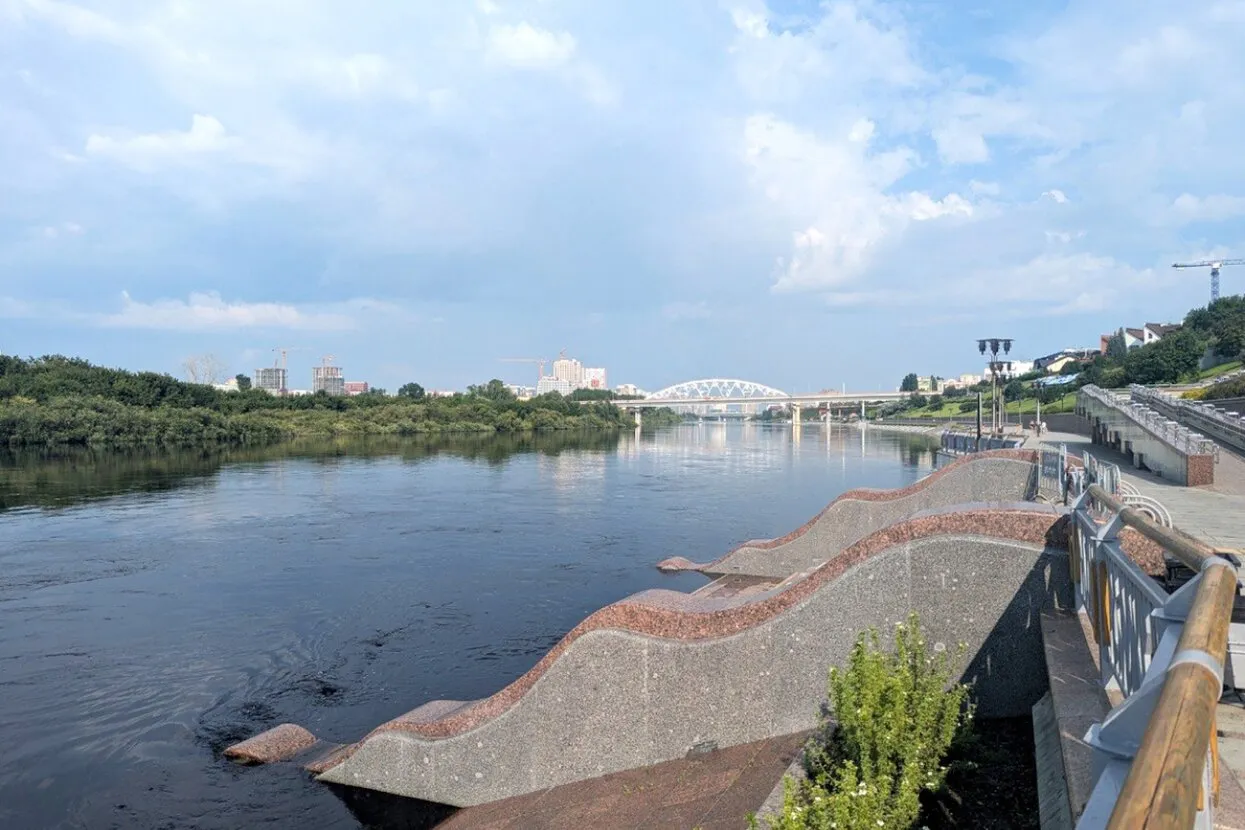
Dead fish, foul tap water, and a criminal investigation: what’s happening to the Tura River in Russia’s Tyumen region
For more than a week, residents of Tyumen have been posting on social media about the state of the Tura River, which runs through the city. They complain of a strong, foul smell near the river, and they have posted photographs of dead fish heaped along the banks. Residents also describe a foul smell coming from the tap water in their apartments, and some say the water has given them conjunctivitis, cystitis, and intestinal infections. On July 24, after a woman in the city raised the issue on social media, Russia’s Investigative Committee, the country’s main federal criminal investigation agency, opened a criminal case over the provision of services that fail to meet safety requirements. The committee’s chairman, Alexander Bastrykin, demanded a report on the progress of the investigation.
The water situation in Tyumen began deteriorating in mid-June, when residents first noticed fish dying in lakes around the region and in the Tura itself. Fish were found floating belly-up both in Lake Andreyevskoye, just outside the city, and along the city’s embankment.
By July, local specialists had begun looking into it: the Federal Fisheries Agency’s Lower Ob branch and the Tyumen office of the Russian Federal Research Institute of Fisheries and Oceanography (VNIRO) collected water samples at several points along the Tura. On July 17, local authorities blamed the die-off on “oxygen starvation”; the river’s oxygen content was reported to be close to zero. The specialists found no trace of industrial waste. Officials at the treatment plants promised to increase their use of powdered carbon tenfold and to add more reagents.
The Federal Fisheries Agency and VNIRO blamed the oxygen shortage on record rainfall: in June, the Tyumen region recorded 260% of its normal monthly precipitation, Nash Gorod reported, citing the fisheries agency. The downpours washed soil into the river, and the Tura “could not purify itself” — organic matter began oxidizing in the water, consuming all the oxygen.
By July 25, the Tura’s water level had reached 846 centimeters (27.8 feet), just short of the 850-centimeter (27.9-foot) mark considered critical. A total of 146 homes lie in the potential flood zone, and authorities said they were preparing temporary shelters in case the river overflows its banks.
Gennady Umansky, an infectious disease specialist, warned people not to swim in the Tura or other bodies of water for the time being, citing the risk of intestinal infections, hepatitis A, rotavirus, and other illnesses. Any contact between the water and the eyes, mucous membranes, or open wounds is dangerous, he said, adding that people should also avoid touching the dead fish.
In mid-July, residents began complaining about a strange smell in their tap water. The news outlet 72.ru quoted several of them:
I live downtown. I’m scared to wash in whatever is coming out of the tap! Yesterday I decided to do some laundry, opened the machine, and the drum smelled like rotten algae — when it’s supposed to smell like vanilla and cinnamon! As always, the test results are nonsense, and all we get are brush-offs saying everything is fine.
Today there’s a swampy smell mixed with chlorine, though you can barely smell the chlorine. My son just took a shower. He says it reeks of kerosene. Neighbors in the building chat have complained about the taste and smell of the tap water over the past two days, too.
Veter, a news outlet that spoke with Tyumen residents, quoted them as well:
What comes out of the tap is sludge — you can’t drink it, and you can’t even wash with it… I’m going to try installing filters today, but I doubt it will help.
Even with fabric softener, the laundry comes out smelling rotten. The dishes smell the same after they’re washed. My body smells after a shower, though the smell fades eventually. But washing in that stench is miserable. Yesterday, July 22, I drove across the Melnikaite Street bridge over the Tura, and the smell there was just hellish. I wrote to the management company and the state housing inspectorate, and got a form letter back. I wrote again to say I wasn’t satisfied with the answer, and they’ve gone quiet.
On July 20, citing Rospotrebnadzor, Russia’s consumer protection agency, the Tyumen regional government said the water met the required standards:
Since July 16, the agency has stepped up laboratory monitoring of the Tura River — the surface source of the drinking water supply — and of the water in the distribution network. The drinking water and the source water are tested daily, including for the “toxicity index,” at the accredited laboratory of the Center for Hygiene and Epidemiology in the Tyumen Region.
Even so, three days later, Rospotrebnadzor recommended that residents drink only bottled water and boil tap water before using it. Some residents have linked their ailments — conjunctivitis, cystitis, and stomach trouble — directly to the tap water, though the connection cannot be confirmed: no outbreaks of these illnesses have been officially reported in the city.
A woman in the Siberian city of Tyumen took to social media to complain to Alexander Bastrykin, the head of Russia’s Investigative Committee, about the poor quality of her tap water. On July 24, the committee opened a criminal case, accusing a service provider of violating safety standards meant to protect the life and health of consumers.
At Meduza, we are committed to transparency about our use of artificial intelligence in the newsroom. The story you’re reading was written by one of our living, breathing journalists and translated from Russian using an AI model configured to follow our strict editorial standards. This translation process is the result of extensive testing and refinements to ensure our English-language coverage is timely and accurate. A Meduza editor reviews every draft before publication.
If you find any errors in this translation, please contact us at reports@meduza.io.
To read Meduza’s exclusive content in English, please subscribe to our newsletter.