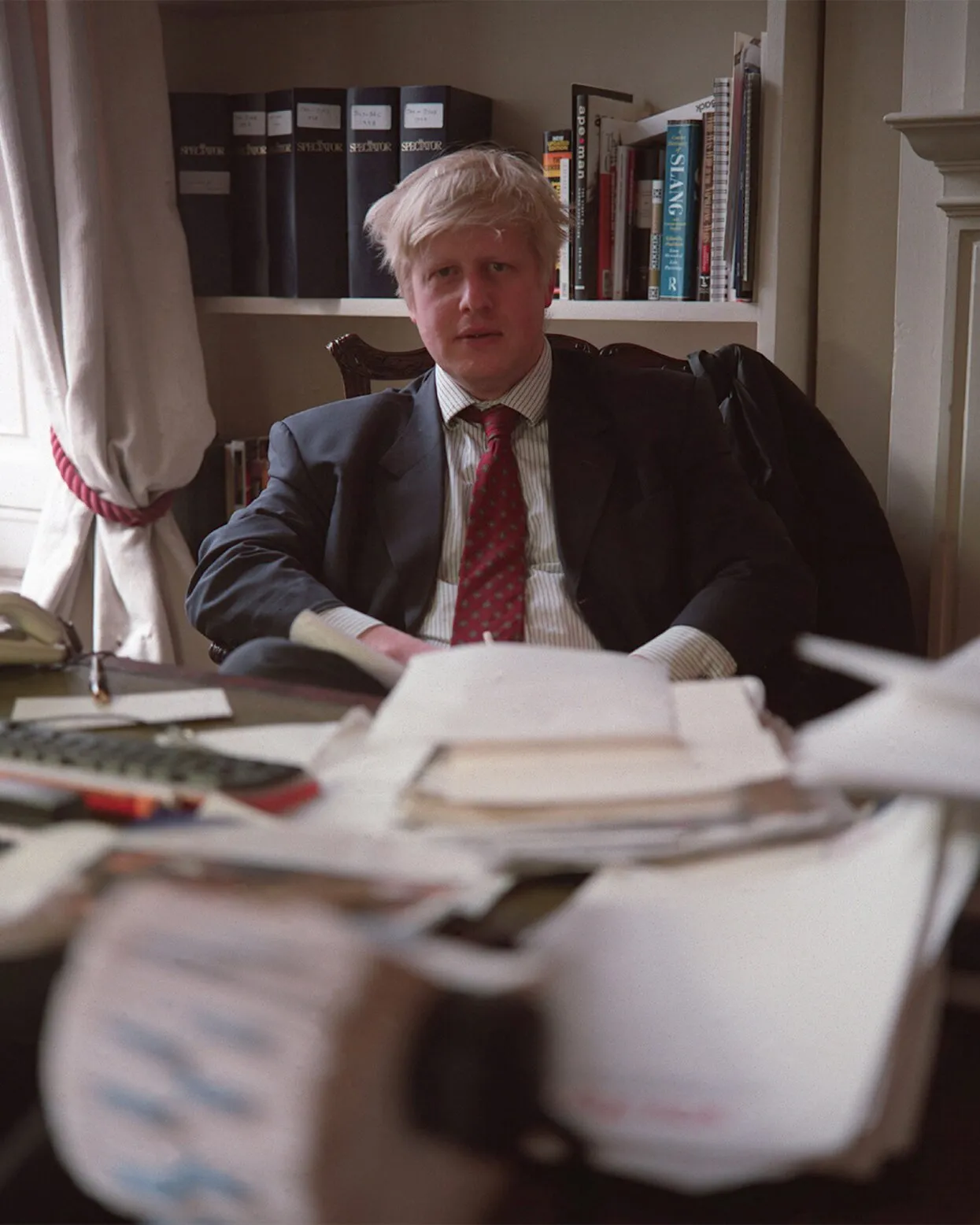
Soviet spies flagged young Boris Johnson as a potential UK leader in the 1980s — then wrote him off as a ‘manic self-promoter’
Russia’s Foreign Intelligence Service (the SVR), successor to the Soviet KGB, holds a file on Boris Johnson dating to the 1980s, when he was a student at Oxford, The Telegraph reported.
A private dossier on Russian influence operations in the United Kingdom, prepared by the former British intelligence officer Christopher Steele, describes the Johnson file in detail.
Even during Johnson’s student years, Soviet intelligence believed he might one day lead the United Kingdom, having taken note of a young man who “was highly active in his educational and social activities and showed signs of a political career that might be useful to us.”
A Soviet document described Johnson as “likable but not trustworthy” and “an eccentric, odd man, full of wit, charm, and brilliance.” He was pleasant to deal with, the document said — a man of strong character, attentive to logical arguments and facts, though one who “could be easily manipulated” and experienced “startling flashes of instability.”
Steele’s report states that Soviet intelligence saw Johnson as “an individual of a comic nature, but still with strong intellectual capital.” His “unusually optimistic, feel-good behavior is often allied with no principles,” the dossier says, and his “irresponsible attitude” left him with “no major unbreakable affiliations to any one idea or ideology.”
Soviet intelligence concluded that Johnson would not make a useful source. According to the dossier, a “manic self-promoter such as Johnson can’t really be taken seriously as a candidate for any deep and lasting intelligence connection.”
The former prime minister was astonished to learn that Moscow had been watching him from such an early age, The Telegraph reported. Johnson told the newspaper: “It seems incredible to me that the KGB was compiling zapiskas [memos] on Oxford undergraduates in the 1980s. No wonder they lost the Cold War.”
Steele’s report also names other British political figures — among them the political strategist Dominic Cummings, who served as Johnson’s adviser and the director of the pro-Brexit Vote Leave campaign; the Reform UK leader Nigel Farage; and the former Labour leader Jeremy Corbyn.
Russian intelligence took an interest in Cummings in the 1990s and, according to the report, opened a file on him even as it suspected he was “already in contact or even collaborating with MI6.” He later fell out with Moscow over an affair involving a Russian cargo plane crash. Farage, meanwhile, drew the attention of General Igor Sergun, who championed him within Russian military intelligence, though other agencies were split over whether he was worth the effort. After Sergun’s sudden death in January 2016, the Kremlin’s interest in Farage faded.
At Meduza, we are committed to transparency about our use of artificial intelligence in the newsroom. The story you’re reading was written by one of our living, breathing journalists and translated from Russian using an AI model configured to follow our strict editorial standards. This translation process is the result of extensive testing and refinements to ensure our English-language coverage is timely and accurate. A Meduza editor reviews every draft before publication.
If you find any errors in this translation, please contact us at reports@meduza.io.
To read Meduza’s exclusive content in English, please subscribe to our newsletter.
Who is Christopher Steele?
A former MI6 (British intelligence) agent who prepared reports on the connections between Donald Trump and his associates and the Kremlin. In October 2022, as part of Project Fish, Mr. Steele compiled a report on Russian influence operations in Britain that was reviewed by journalists at The Telegraph. The data in the report has never been published anywhere, the newspaper notes.