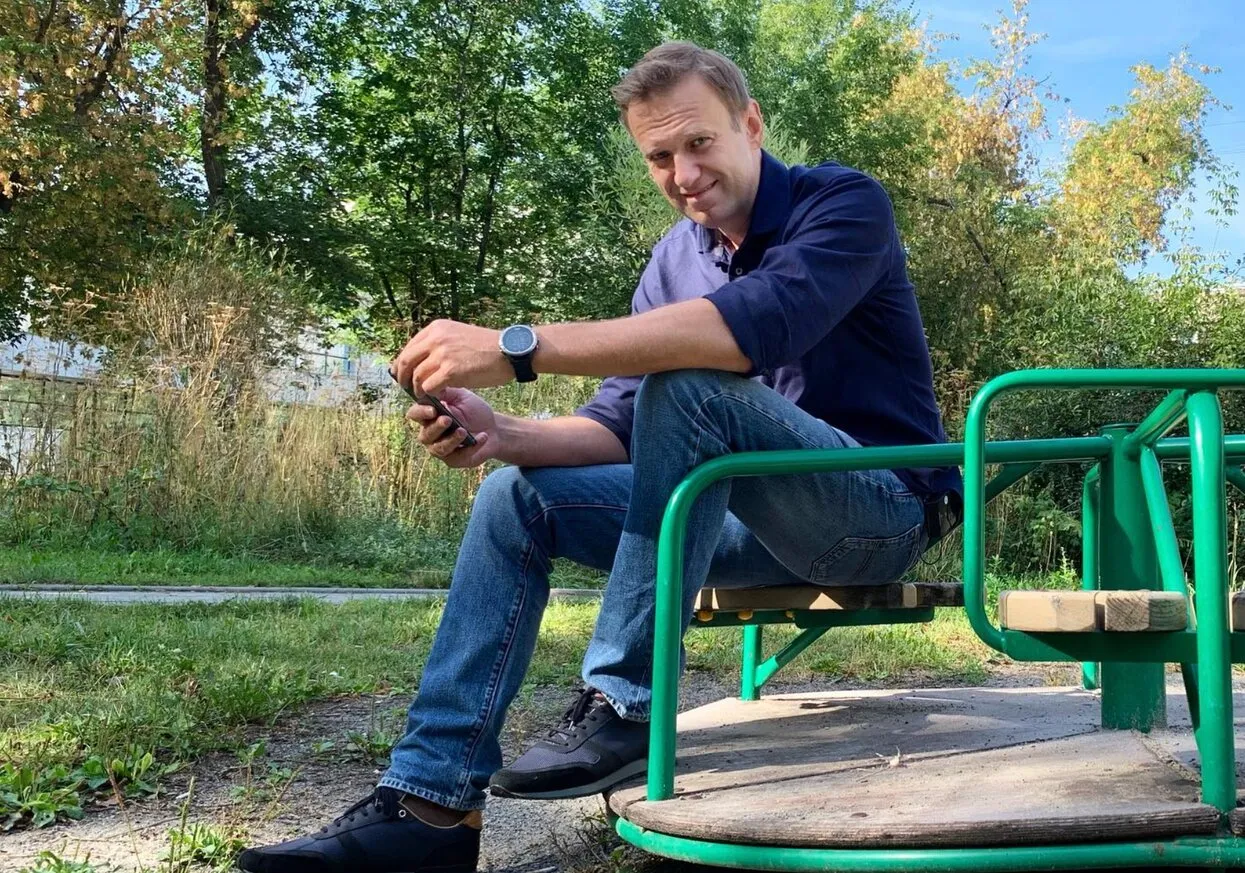
On what would have been Alexey Navalny’s 50th birthday, his friends remember who he was beyond politics
Sergei Guriev
Economist
Alexey Navalny entered politics because he wanted to help people. He genuinely cared about how they lived, what worried them, what they lacked. Meduza’s readers have likely already heard about his 2013 mayoral campaign and his 2017 presidential campaign, so I’ll tell a different story — about the time Alexey and [his wife] Yulia came to visit our country house in France in February 2020.
We live in a simple French village, with a baker, a butcher, a doctor, a veterinarian, and a pharmacist. Alexey asked to be taken to the baker — not just to buy croissants, but because he wanted to understand how a village baker lived: what time he got up (French bakers always rise before dawn so fresh bread is ready early in the morning), and how he achieved such consistently perfect quality (a craft, naturally, passed down from generation to generation).
The baker, of course, could not vote for Navalny. Then again, in 2020, no one could vote for Navalny. But Alexey was genuinely curious about how an ordinary French person lived — and why he loved his work.
For as long as I can remember, Alexey asked questions rather than gave lectures. He talked with the French baker for a long time about ordinary French village life — so that he could later try to understand what could be done for the Russian countryside.
Alexey and Yulia Navalny visiting Sergei Guriev and Ekaterina Zhuravskaya in France. February 2020
Sergei Guriev’s archive
Lyubov Sobol
Navalny associate
Let me tell you about Alexey and music. We talked often about pop music and new tracks. I even sent him song lyrics while he was in prison — among the stranger choices: tracks by Instasamka and Shaman. Some might call that sophisticated torture on my part. Maybe they’re right.
Alexey also loved to sing, or at least that’s how it seemed to me. During the FBK [Anti-Corruption Foundation] hike through Krasnodar Krai in 2016, he sang songs by Ivanushki International around the campfire. At one of his birthday celebrations, he suggested that everyone take turns playing their tracks — each person could put on a set number of songs.
A few of the guys gave me their turns, and my playlist ran for about half an hour before the complaints started. I remember Zhora Alburov protesting what he called an illegal monopoly, so I had to yield and retreat. Then someone put on karaoke. Alexey sang Aria and Ulitsa roz. Loudly, with feeling. These memories will stay with me forever. And it’s so strange, every time, to read about Navalny’s “cult of leadership.” He was always open — not only to close friends, but to his whole team.
Alexey Navalny, his brother Oleg, and his wife Yulia
Alexey Navalny / Instagram
Ivan Zhdanov
Navalny associate
Once we flew to Germany and needed to drive to France. It was 2019. Alexey loved driving, but in Russia he never got behind the wheel — to avoid setups. Abroad he always did it with great pleasure. Somewhere around the halfway point, we realized we were being followed — a black Mercedes. We very much wanted to shake it, but we couldn’t break any rules.
The [surveillance] guys don’t like being filmed. So when traffic backed up at an interchange, Alexey pulled over to the shoulder. The Mercedes stopped behind us.
I jumped out and started walking around the Mercedes, filming it on video. The Mercedes began slowly moving along the shoulder. Germans and French all around watched in bewilderment, completely unable to understand what was happening. Alexey was laughing — the situation was fairly absurd. But the surveillance team drove off and didn’t appear again that day.
There were very many episodes like that. Being constantly followed was a heavy part of life, one that had become fairly routine for us, especially in the last years in Russia. The surveillance was practically constant.
Navalny with FBK lawyers. 2018
Ivan Zhdanov’s archive
Nikita Kulachenkov
Former FBK staffer
Alexey was always the same. The way millions of people knew him from videos and public appearances — that’s exactly how he was in person. From the moment he called me in 2013 and said “come in for an interview,” joking around from the start, to the last time we spoke in the summer of 2020, he never lost his irony, his self-irony, or his openness.
And his interest in people. Such an important quality. Among politicians, I’ve rarely encountered someone for whom any person they were talking to was genuinely interesting — whether that person was in a crowd, at a gas station, or in an office. It was very valuable, very pleasant, and probably why people loved him.
Once we were in Strasbourg for a hearing at the ECHR. This was before the 2018 [Russian presidential] elections, and we were trying to overturn the conviction and get Alexey admitted to the elections, including through pressure on the ECHR. Back then it was still possible to hope for that.
We’re riding in a tram after the hearing, and Alexey says: “Look, there’s a woman standing there — remember her.” I thought, well, okay, a woman is standing there, nothing remarkable about her to me. A few hours later, already in the evening, we’re leaving the hotel — and he says: “Look in the café.” The same woman is sitting in the café. He somehow knew how to spot surveillance. Could just glance around a tram and understand who was following us.
Alexey Navalny in Sicily. 2018
Nikita Kulachenkov’s archive
We eventually developed a whole system for shaking surveillance abroad. These people would fly on the same plane as Alexey or would already be waiting at the gate when he landed somewhere like Istanbul airport. We had clever schemes for losing them — for example, jumping into pre-rented cars.
Once we were supposed to meet in Italy. I arrived first, we pulled off the scheme of Alexey jumping into a car right after the gate, and then we were supposed to meet Masha Pevchikh somewhere in the city.
Masha and I had agreed to play a prank on Alexey. I was supposed to go with him into a church, and Masha was supposed to come and sit somewhere nearby — in a headscarf, so she’d be impossible to recognize. The problem was that the church we’d chosen turned out to be closed. Masha was walking around nearby.
For some reason Alexey took a selfie with me — I don’t remember why anymore. Masha was sitting in the background. He looked at the selfie and said: “You know, some strange woman has been walking behind us for several minutes already.” He didn’t realize it was Masha — but he had noticed the surveillance nonetheless.
In that same city, some guy was following us whom even I noticed. We were a bit surprised at how they’d tracked us — we’d deliberately not been using our phones. Anyway, he followed us for a long time and in the end, very shyly, introduced himself. He said he was from Tajikistan and asked for an autograph.
Apparently he couldn’t believe that in some small Italian city he’d run into Alexey. Alexey, of course, took a photo with him and gave him an autograph. I hope that guy still has it somewhere.
Alexey Navalny was a runner. In this photo he is on a run in Germany — during his treatment after being poisoned with Novichok
Alexey Navalny / Instagram
Dmitry Gudkov
Politician
For me, Alexey was always associated with his sense of humor. I remember one moment during the trial in the Kirovles case [on July 18, 2013]. He was sentenced that day and immediately taken into custody — then unexpectedly released the following day.
In the courtroom during the reading of the verdict, everyone was in tears. I was shocked — it was still 2013, and jailings were still a rarity. Only the Bolotnaya case had made a big splash. Everyone was certain that morning would bring a verdict — and Alexey would be transferred to custody.
As a State Duma deputy, I was allowed in to see Alexey. What I found was a completely calm person who seemed unbothered by anything. He was sitting there cheerful, as if he’d just stepped out for a smoke — joking, while everyone else was crying. He said: “Everything’s fine, don’t worry. Go out into the street [to protest].” And he told me a joke.
He said and Nemtsov had once been sitting together in a detention facility, and Nemtsov was always getting on his nerves by being able to do pull-ups and push-ups many times in a row. Now, Alexey said, he’d finally have enough time to get in shape too. I was amazed by his attitude at the time.
Alexey Navalny and Dmitry Gudkov
Dmitry Gudkov’s archive
In our family archive there’s a video with a toast that Alexey gave at my wedding. I edited it back in 2012 — I overlaid a clip from his speech at Sakharov Avenue, where he says: “We know why we are here, why we have gathered. I can see there are enough people here to take the Kremlin and the White House right now. But we are a peaceful force — we won’t do that just yet.”
The two of us never managed to watch that video together — it just never worked out. But our family watches it often. That’s how I remember him. And that’s how everyone in my family will remember him.
Dmitry Gudkov’s archive
Maria Gaidar
Politician
Two things touched me [in my interactions with Alexey]. The first — when he told me he cries at animated films. For example, at the scene in The Lion King where Simba’s father dies. The second — when he spoke very seriously about the film Brokeback Mountain, when it had just come out. He said: “I thought about it for a long, long time after watching it and finally understood that it’s a film about love.” I understood then that he was not a fascist, not a homophobe, not a misogynist, but simply a sensitive, empathetic person. I don’t know whether I could have entrusted Navalny with the country, but I would have entrusted him with my child. He was a good person — of that I am certain.
Alexey Navalny with his son Zakhar. 2018
Alexey Navalny / Instagram
Christo Grozev
Investigator
It was the evening after that phone call to Konstantin Kudryavtsev — the call in which Alexey had just received what amounted to a confession from his poisoners. No doubts remained: this was not a mistake, not an attempt to intimidate or maim. Putin had genuinely tried to kill him.
We had gathered at a rented house in the Black Forest, which served as both the investigation’s headquarters and the base for the film crew. I cooked dinner for everyone: for Alexey’s family, Masha [Pevchikh], Kira [Yarmysh], and the film crew.
Alexey, Yulia, and Dasha Navalny with the crew of the documentary film “Navalny”
Christo Grozev’s archive
At the table I proposed a thought experiment. Imagine we found ourselves in a boat with Putin in 1999, and each of us had the opportunity to push him overboard, knowing everything that would happen afterward: wars, repressions, killings, poisonings — including the poisoning of Alexey himself.
I won’t recount the others’ answers. But Alexey said immediately:
— No, I would not push him overboard.
— Even if it would save your own life?
He shrugged:
— It’s not Christian. It’s not for me to decide.
And that’s when the irony of the moment struck me. Alexey refused to take the life of a man who would later give the order to have him killed. And that man, who spoke the loudest about Christian values, apparently reasoned quite differently.
The FBK office on Alexey Navalny’s birthday in 2012
Alexey Navalny / Instagram
At Meduza, we are committed to transparency about our use of artificial intelligence in the newsroom. The story you’re reading was written by one of our living, breathing journalists and translated from Russian using an AI model configured to follow our strict editorial standards. This translation process is the result of extensive testing and refinements to ensure our English-language coverage is timely and accurate. A Meduza editor reviews every draft before publication.
If you find any errors in this translation, please contact us at reports@meduza.io.
To read Meduza’s exclusive content in English, please subscribe to our newsletter.
Interviews recorded by Elizaveta Antonova
What’s this about?
On November 15, 2018, the European Court of Human Rights issued a ruling on Alexey Navalny’s lawsuit. The politician complained about seven incidents between 2012 and 2014 in which he was detained, arrested, and found guilty of administrative offenses. The court found his detentions and arrests to be politically motivated and ordered the Russian authorities to pay Navalny 63,700 euros in compensation.
Navalny was only able to fly to Strasbourg on his second attempt — due to a sudden “unpaid debt” of two million rubles.
Which one exactly?
The formal reason for barring Alexey Navalny from the 2018 presidential election was the existence of an unexpunged criminal conviction in the Kirovles case.
The Kirovles case
In May 2011, the Investigative Committee opened a criminal case against Alexey Navalny for causing damage through fraud to the company Kirovles. On April 10, 2012, the case was closed for lack of corpus delicti, but a few weeks later it was reopened on orders from the Investigative Committee’s leadership. According to the prosecution, Navalny and Pyotr Ofitserov created the “Vyatka Timber Company,” which purchased timber products from Kirovles at below-market prices and sold them at market prices. On July 18, 2013, the Leninsky District Court of Kirov sentenced both defendants to five and four years in prison respectively — by that point Navalny had already been registered as a candidate for mayor of Moscow. They were taken into custody in the courtroom, but spent less than a day in pretrial detention. Spontaneous rallies in their support took place in Moscow, St. Petersburg, and other Russian cities. The following day, the court, on the prosecution’s motion, issued a ruling releasing them on their own recognizance pending the verdict’s entry into force. On October 16, 2013, the court converted both defendants’ actual sentences to suspended ones.
The Bolotnaya case
On May 6, 2012, Moscow held the “March of Millions” — a protest march that ended in clashes between participants and police. After that, the Investigative Committee opened criminal cases on charges of participating in mass disorder and violence against representatives of authority. More than three dozen people became defendants — civic activists and ordinary participants in the march. Journalists and human rights defenders repeatedly pointed to the political motivation behind the “Bolotnaya case,” procedural violations, and the bias of the judges handling the case. The majority of defendants received guilty verdicts and actual prison sentences; many of them were recognized as prisoners of conscience.
О чем?
По словам Кулаченкова, Навальный в шутливой форме спрашивал его, готов ли тот из западной компании перейти работать в политическую организацию со всеми вытекающими рисками.
What happened in Italy?
In December 2018, an FBK staff meeting took place in Sicily. “Alexei had never been to Sicily, and we organized a meeting there,” Kulachenkov notes.