Moscow State University opens AI school tied to Putin’s daughter, with links to China and FSB oversight
On April 21, Moscow State University (MSU) held a presentation for its new artificial intelligence (AI) school. The new program is part of an infrastructure that Russian state news agencies describe as the “unified AI ecosystem of MSU.” It also includes an AI research center at the university, a supercomputer called “MSU-270,” and the MSU Institute of Artificial Intelligence. That last organization is officially headed by Vladimir Putin’s daughter Katerina Tikhonova, who sources familiar with the structure of MSU’s AI infrastructure also consider the curator of the entire “ecosystem,” according to the independent science-focused outlet T-invariant. Meduza summarizes T-invariant’s investigation.
What is known about MSU’s new AI school
- The school is headed by Ivan Oseledets, a doctor of physical and mathematical sciences and a professor of the Russian Academy of Sciences who also serves as general director of the AIRI Artificial Intelligence Research Institute. His deputy for research is Anton Konushin, a candidate of physical and mathematical sciences and academic director of the MSU AI Research Center.
- No information about school instructors has yet appeared on the school’s website. T-invariant’s sources believe students will be taught by staff from the MSU AI Institute and the university’s AI research center. Oseledets said the teaching staff’s average age is just 30.
- The first cohort will include 36 incoming bachelor’s students and 36 incoming master’s students, each group with 20 state-funded places. Commercial tuition will cost around half a million rubles per year.
- The school was established with the support of billionaire Oleg Deripaska, whose affiliated structures had previously also partially funded the AI Center and the MSU AI Institute. Deripaska primarily sponsors the “ecosystem” through the Intellekt charitable foundation, though a separate nonprofit he controls — Volnoye Delo — backs the school.
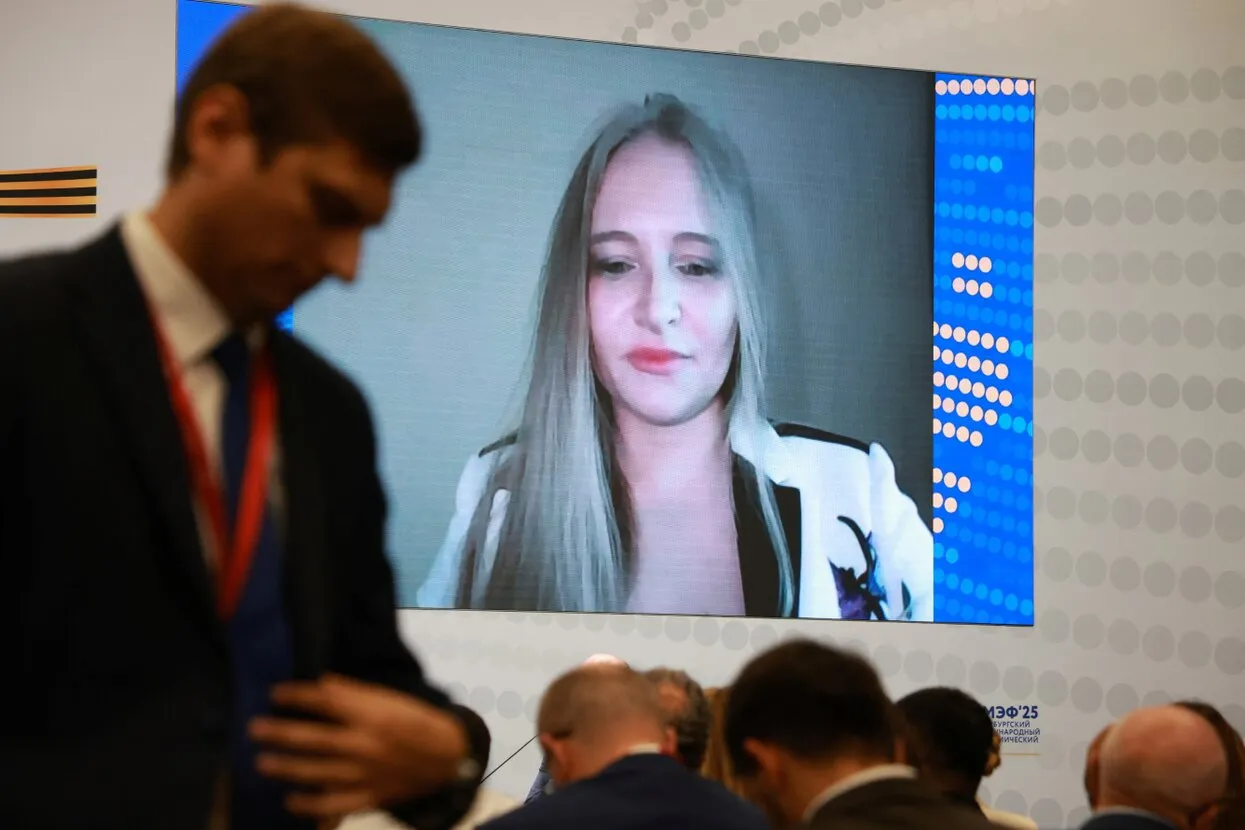
- VTB is another sponsor of the “ecosystem.” Katerina Tikhonova works with the state bank both as director of the MSU AI Institute and as head of the Innopraktika foundation, and the institute uses VTB money to hold the annual Data Fusion Awards forum. The last edition took place in April 2026, with all of MSU’s key AI speakers in attendance; Tikhonova herself spoke about the importance of fundamental education for specialists. Putin’s daughter has in recent years appeared exclusively via video link — whether at the St. Petersburg International Economic Forum or at Innopraktika’s anniversary conference.
How the school is connected to China
- The new AI school building is expected to house a “robot park for developing technologies to control such systems.” “We intend to bring in robots of various kinds — from robot dogs to androids and drones. We already have a list,” Konushin said at the presentation, according to the Russian state news agency TASS. The creation of joint laboratories with the Russian-Chinese MSU-BIT University in Shenzhen is also being discussed.
- Engagement with China is likely an important direction for the new school and the broader “ecosystem.” “We are discussing the creation of joint educational programs and dual-degree programs with our Chinese colleagues. We will absolutely be doing this,” Konushin said.
- Cooperation with Beijing is already underway. As early as November 2025, the website of MSU-BIT University in Shenzhen published a news item about the creation of two laboratories, one of them — a laboratory for artificial intelligence algorithms and their applications — falling squarely within MSU’s “AI ecosystem.”
- Researchers at MSU-BIT University in Shenzhen are working on training AI for drones, Dmitry Shtarev, the university’s head of science and research, said in May 2024 at the Russian-Chinese EXPO in Harbin, China, describing it as one of the “actively developing scientific fields.” “We brought several drone models to the EXPO that we are developing. These include conventional drones better suited for delivering large cargo, as well as miniature models,” he said.
Why almost nothing is known about Tikhonova’s ‘AI ecosystem’
- The entire “unified ecosystem,” of which Putin’s daughter is considered the curator, is sealed off, one of T-invariant’s sources said. “If you watch the Vremya news program’s segment [on the new AI school], they show the old Lomonosov-2 supercomputer, not MSU-270 at all. That means the film crew wasn’t allowed in. The Lomonosovs have nothing to do with Tikhonova’s work. There’s a clear separation. And it’s not just because the new one was assembled entirely from gray-market components. Nobody is allowed near the new supercomputer — not even people inside the university, except for a narrow circle of insiders,” the source told the outlet.
- A second scientist familiar with the situation at the university confirmed this to T-invariant: “For the second year running I’ve been asking colleagues at the MSU Research Computing Center what’s going on over at Tikhonova’s. They just throw up their hands — they’re not allowed in. They find out about the school’s creation, and about the launch of MSU-270, from the news.”
- MSU-270 continues to be used exclusively for AI-related tasks while Lomonosov-2 has grown more outdated and breaks down regularly, sources interviewed by T-invariant confirmed. “Effectively, colleagues are being told: stay in your lane: in other words, do your calculations on Lomonosov-2. Nobody has access to MSU-270 except a narrow circle,” one source said.
What the new school is for
- In an interview with the Russian state-controlled television channel Channel One, MSU rector Viktor Sadovnichy laid out the new structure’s goals: “First and foremost, we will study questions of artificial intelligence in medicine, genetics, computer vision, and those deep questions that require a solid grounding in mathematics, computer science, and other fundamental subjects.”
- Across the core research and development work of the AI ecosystem Tikhonova is building, the potential for dual use is apparent, T-invariant says — something that will become fully clear once the customers for these technologies decide how exactly to deploy, for instance, “conventional drones better suited for delivering large cargo.”
- In the meantime, the entire secrecy infrastructure is already in place: above all, a closed vetting system for all civilian science research, under FSB oversight — one that operates even more harshly than it did in the Soviet Union, T-invariant concludes.
At Meduza, we are committed to transparency about our use of artificial intelligence in the newsroom. The story you’re reading was written by one of our living, breathing journalists and translated from Russian using an AI model configured to follow our strict editorial standards. This translation process is the result of extensive testing and refinements to ensure our English-language coverage is timely and accurate. A Meduza editor reviews every draft before publication.
If you find any errors in this translation, please contact us at reports@meduza.io.
To read Meduza’s exclusive content in English, please subscribe to our newsletter.
Meduza
What kind of organization is this?
An autonomous nonprofit organization engaged in fundamental and applied scientific research in the field of AI. The institute actively collaborates with leading Russian scientific and educational centers, including Skoltech and MSU.
What university is this?
BIT stands for the Beijing Institute of Technology. The BIT-MSU project is the first joint university established by China and Russia. A memorandum on its creation was signed during Putin’s official visit to China in May 2014. The first classes were held in September 2017. Student enrollment could reach five thousand in 2026.