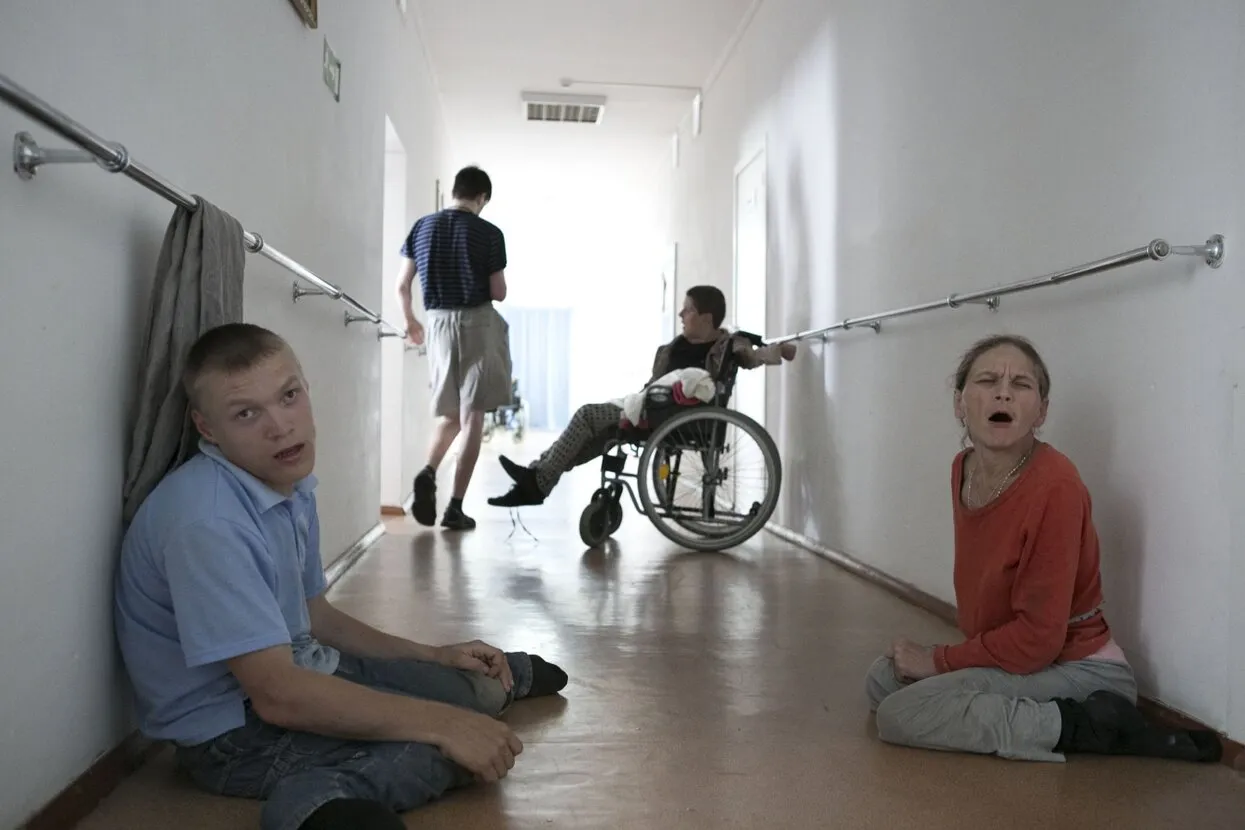
Around the world, residential institutions for people with disabilities are being shut down. In Russia, reform has stalled.
Across much of the world, governments have been moving away from large residential institutions housing people with disabilities, where the very structure of care can foster abuse — and where many residents could, with the right support, live and work independently. In Russia, however, change has been slow and often superficial, despite years of pressure from nonprofits. A new analysis by the think tank To Be Precise, based on official data, expert interviews, and policy documents, takes a closer look at how these institutions operate in Russia today — and what kind of support is actually available to the people who live in them.
One in ten residents confined in Russia’s “neuro-psychiatric” homes is fully dependent on staff care. As of 2024, some 139,000 people lived in these institutions across Russia, in 466 facilities. The total number of institutions has declined in recent years, but experts say this reflects administrative consolidation rather than real closures: facilities are being merged, with some reclassified as branches of others.
Since the late 1990s, the number of residents in state neuro-psychiatric institutions had generally been rising, peaking at 161,000 in 2018. But in 2023, the figure dropped sharply by 26,000 — a 16 percent decrease. Analysts from To Be Precise say they found no clear explanation for the change, suggesting it may be due to shifts in reporting methods.
Russian neuro-psychiatric institutions house people with and without intellectual disabilities — including those with conditions such as epilepsy or cerebral palsy. About 74 percent have been declared legally incapacitated by a court, meaning that in most cases their legal guardian is the institution’s director.
As of 2022, the latest available data, 65 percent of residents are over the age of 45. One in ten is completely dependent on staff, confined to bed and unable to move independently — at least under current conditions.
Efforts to reform the system began in the 2010s, but so far they’ve brought little real change
In the second half of the 20th century, many countries began to move away from large institutional facilities. One reason was that the closed nature of such institutions fosters abuse and does little to help people live ordinary lives. Alternatives have centered on independent living with varying levels of social support, or small group homes.
In Russia, systemic reform efforts gained momentum in the 2010s, as reports of abuse in these institutions increasingly surfaced in the media. The underlying principle of such reforms is a shift in perspective: a person is no longer defined primarily by a diagnosis or “deviation from the norm,” but as someone capable of living much like anyone else — provided they are given the necessary support. In other words, the main barrier to integration is not a person’s condition, but the lack of adequate social support.
A decade after the Ministry of Labor and Social Development began drafting its first reform roadmap, experts interviewed for the study say that only the earliest signs of this shift are now emerging — and even these changes may be largely superficial. In 41 regions, neuro-psychiatric institutions have been renamed “social care homes,” “social houses,” or similar terms, in an effort to remove references to medical diagnoses and institutional regimes.
Some cities — including St. Petersburg, Nizhny Novgorod, and Moscow — have made more progress than others. But in smaller towns and rural areas, experts say, institutions lack the resources to implement such changes.
At the same time, the state continues to invest in building new large-scale institutions that function much like the existing ones. Meanwhile, the size of current facilities has been reduced only marginally. In one St. Petersburg neuro-psychiatric institution, for example, the number of places was cut to 996 — after which officials declared that the city no longer had any institutions with more than 1,000 residents, the study’s authors note.
According to To Be Precise, the average institution houses 289 residents. As of 2022, Russia’s neuro-psychiatric institutions were operating at 98.6 percent capacity.
Most of the staff in Russia’s neuro-psychiatric institutions are medical, not educators or social workers
About 74 percent of personnel in these institutions are healthcare workers: nurses, orderlies, doctors, and lab technicians. At the same time, the number of educators — whose work is key to helping residents integrate into society — has been slowly increasing. In 2017, there were eight educators per 1,000 residents; by 2024, that number had risen to 15.
Care aides are also part of the core staff. Experts say their duties largely overlap with those of junior nurses. But unlike purely medical staff, their professional role is supposed to include communication with residents and support for their cognitive abilities.
Overall, however, staffing shortages are severe. As a result, residents may not receive enough food and, in some cases, die of malnutrition. With too few staff to care for them, some are restrained — tied to beds or bound at the hands — or given drugs that suppress activity. Others develop bedsores after being left in the same position for long periods.
Few people are given the chance to live in supported housing
The concept of supported housing — where individuals live in their own apartments or homes but receive care from specialists — was formally incorporated into Russian law in 2023, though non-profits and volunteers have been developing similar programs since the 1990s.
On paper, regulations now lay out in detail how supported living should function. In practice, however, the model can take questionable forms. As of early 2024, about 7,000 people were in “supported living” arrangements — 2.6 times more than in 2018. But roughly 4,000 of them were not living independently in the community. Instead, they were placed in “training apartments” located on the grounds of the institutions themselves. In other words, they were learning to live independently while still remaining behind the fences of a closed facility, rather than navigating real-life environments with shops, public transport, and unfamiliar people.
By To Be Precise’s estimate, no more than 1,800 people in Russia are actually in permanent supported housing. This is despite the fact that, even from a financial standpoint, supported living is more cost-effective for the state than maintaining the institutional system — not to mention that it clearly offers a higher quality of life.
Alongside supported housing, workshop-based employment has also become more common. The number of residents working in sewing, ceramics, weaving, and similar workshops within neuro-psychiatric institutions has nearly doubled, reaching 9,700 people. There are also workshops run by non-profits, though these were not included in the data.
Residents can also work in auxiliary farms on institution grounds — in greenhouses, gardens, and small-scale agricultural operations. In 2024, there were 207 such facilities, employing about 5,100 people.
But experts note that these opportunities are available primarily to those who can get to the workshops on their own and carry out tasks independently. Those who require more intensive support are effectively excluded, as there are neither enough staff nor sufficient resources to assist them.
Beyond these barriers to life outside institutions, there are also legal obstacles. Many residents have been stripped of legal capacity — often without proper grounds — and restoring it can be difficult. Without legal capacity, a person must have a guardian to live outside an institution. One potential solution, a system of shared guardianship involving multiple individuals or organizations, was rejected in 2025.
“What matters is not only helping people leave institutions, but preventing them from entering in the first place,” To Be Precise writes. “If in-home care were improved, families wouldn’t have to place their relatives in neuro-psychiatric institutions simply because they lack the resources or capacity to care for them themselves.”